
300 Zimbabweans stuck at Joburg consulate
Hundreds of people have been displaced by weekly March and March protests
 Add GroundUp on Google
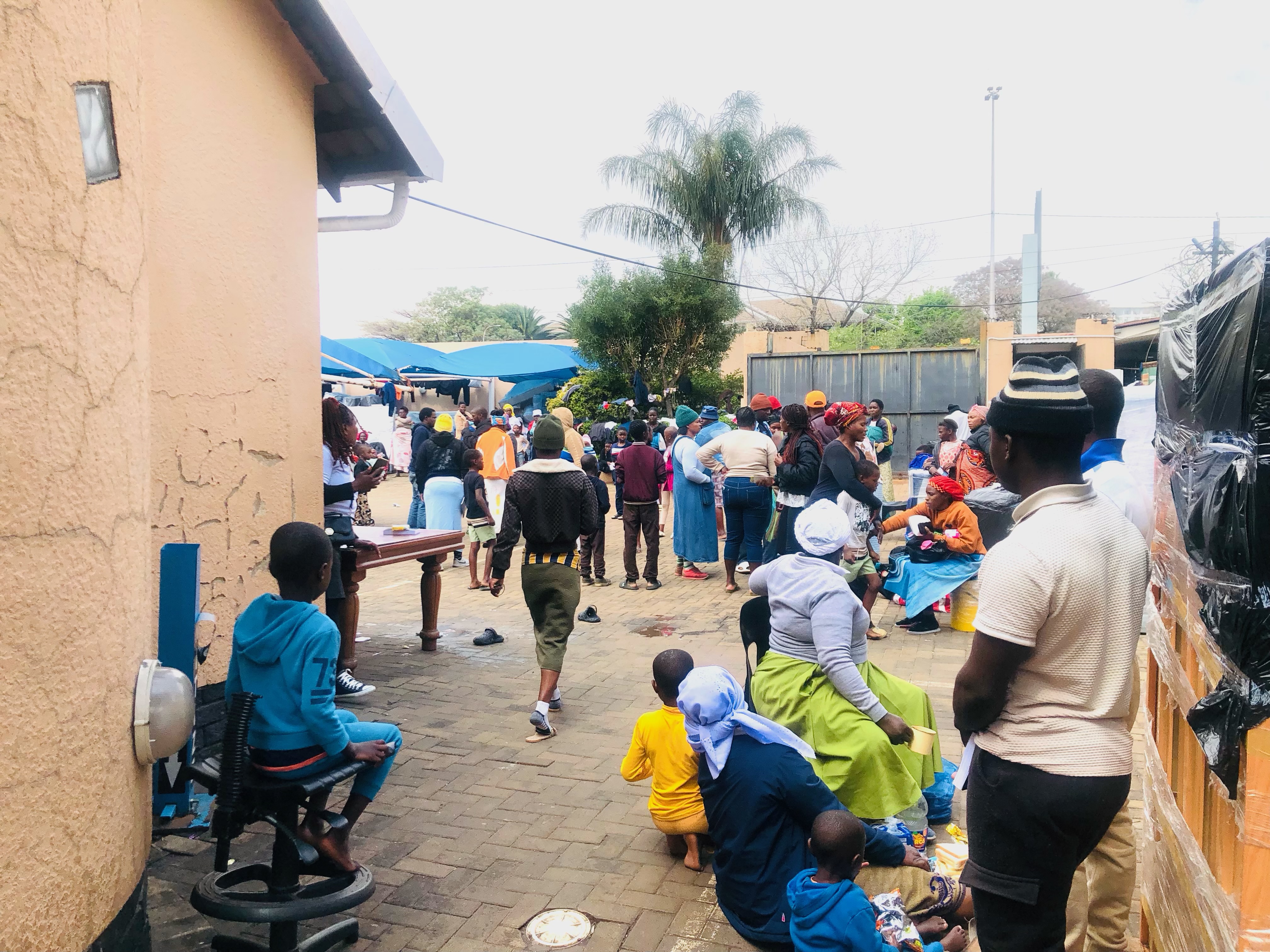
Hundreds of people are stranded at the former Zimbabwean Consulate in Bruma, Johannesburg. Photos: Kimberly Mutandiro
- Weekly March and March protests across Gauteng have forced hundreds of people to leave their homes.
- More than 300 people are living at the former Zimbabwean consulate in Bruma, Johannesburg, waiting to be repatriated.
- The Zimbabwean government has stopped providing buses for displaced immigrants.
Simpiwe Ndlovu, a Zimbabwean woman from Esigodini, near Bulawayo, was in her flat in Hillbrow in mid-August when a group of men, supporters of March and March, barged in and ordered her to leave. She was seven months pregnant.
She begged to stay until after the birth, but her landlord – who said he was put under pressure – told her to leave.
She is now one of over 300 people waiting to be repatriated at the former premises of the Zimbabwean Consulate in Bruma, Johannesburg, after March and March protests. Most of the families have come from Pretoria, Johannesburg and Vereeniging.
Piles of neatly wrapped furniture and luggage surrounded the consulate building.
Civil society groups under the Siyafana Sonke Action Campaign have been assisting with food, medical supplies, hygiene products and other provisions.

The campaign’s Tessa Dooms said they became aware of the situation at the consulate about a week and a half ago. She said that the Zimbabwean government had organised buses regularly over the past few months, but these had stopped in recent weeks.
Dooms said consulate officials had not been forthcoming with information about when buses will be provided.
Dooms called for urgent intervention by the South African and Zimbabwean governments to fast-track the repatriation process.
“There are water shortages and only a few toilets. The circumstances pose a serious health risk, especially with children around,” she said.
Ethel Musonza, founder of Zimbabwe Isolated Women in South Africa, said there has been a diarrhoea outbreak. She also said a woman gave birth at the consulate last week. The woman who gave birth reportedly received donations to return to Zimbabwe.
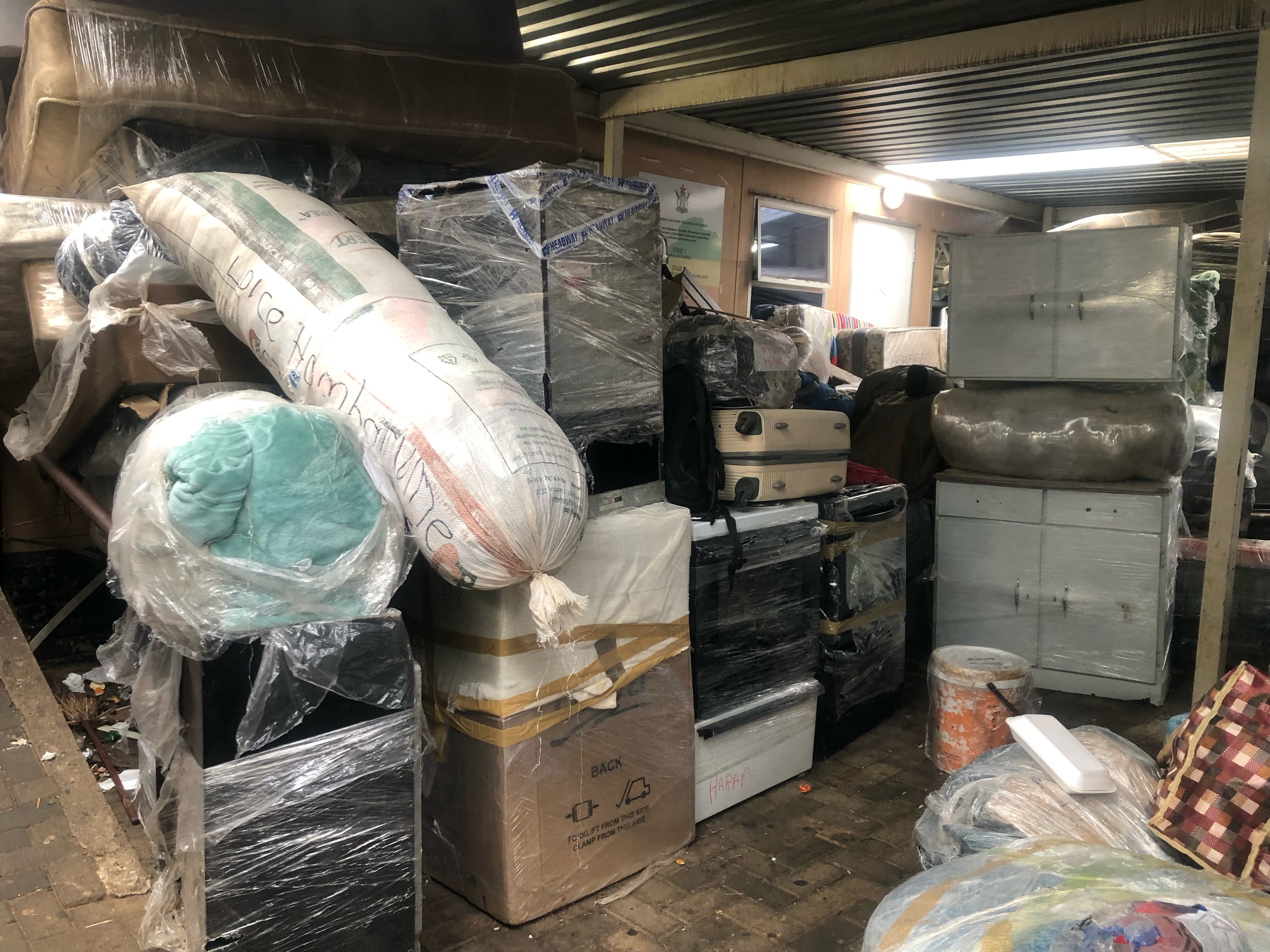
Belongings of displaced families stored at the former Zimbabwean consulate.
“All I want is to go home”
A 15-year-old who lived in Vereeniging with his family, said that in early August he was chased away from school during an anti-immigrant protest. Weeks later, the landlord chased the family away from their home.
“All I want is to go home. I can’t wait for buses to come,” he said.
Hanani Nleya, a self-employed carpenter, made cupboards, beds and sofas. On 15 August, he left his backyard shack in Sebokeng to work in the Free State. When he returned on 19 August, he found that his shack had been burnt down with everything in it, including his TV, radio, sofas, bed, phone, and R1,500 cash that he had hidden under the carpet.
“We never had any real threat of xenophobia in the area until word started going around that foreigners must leave the place, with neighbours playing the Abahambe song,” he said.
Nleya said he borrowed money to go to the consulate. He arrived with nothing but a pair of slippers and the clothes he was wearing. He has since been donated clothes.
Abel Ndlovu lived in Tembisa and specialised in tree felling. March and March protesters came to his workplace and demanded that all immigrants leave. Ndlovu’s employer fired him because he did not have documents. His landlord told him to leave immediately. He asked to be given a few days, but the landlord refused, claiming that he had already found a local tenant.
Ndlovu said, given a choice, he would not choose to remain in South Africa due to the hostility he faced.
“I was a loyal tenant for more than five years, and at work I was very skilled. Just like that, they chase me away,” said Ndlovu.
He said for the past three weeks, consulate officials had been silent on when repatriation would take place.
General Sithole from the Civic Engagement Forum of Zimbabwe said there were a total of 3,000 Zimbabweans awaiting repatriation nationwide. Sithole said the lack of buses was due to budget constraints.
He said further delays were being caused by the closure of the Musina Temporary Repatriation Centre, where the Zimbabwean embassy and the Department of Home Affairs had collaborated to ensure a smooth repatriation process. People first have to be screened for criminal records.
Talks are underway between the Civic Engagement Forum of Zimbabwe and the Zimbabwean embassy to fund the remaining people to be repatriated, he said.
“We urge people who are currently awaiting repatriation to be patient while logistics are being prepared,” said Sithole.
The Zimbabwean Consulate did not respond to requests for comment.
The Department of Home Affairs had not responded at the time of publication.
Support independent journalism
Donate using Payfast

Don't miss out on the latest news
We respect your privacy, and promise we won't spam you.
Next: Cape Town “killing field” to be used for housing
Previous: Court blocks planned bus driver strike
© 2026 GroundUp. This article is published under the GroundUp Republication Licence Version 1.0. Email [email protected] to request permission to republish.