
The broken system behind our worst cattle epidemic
The state neglected its duties and this led to foot and mouth disease spreading across the country
 Add GroundUp on Google
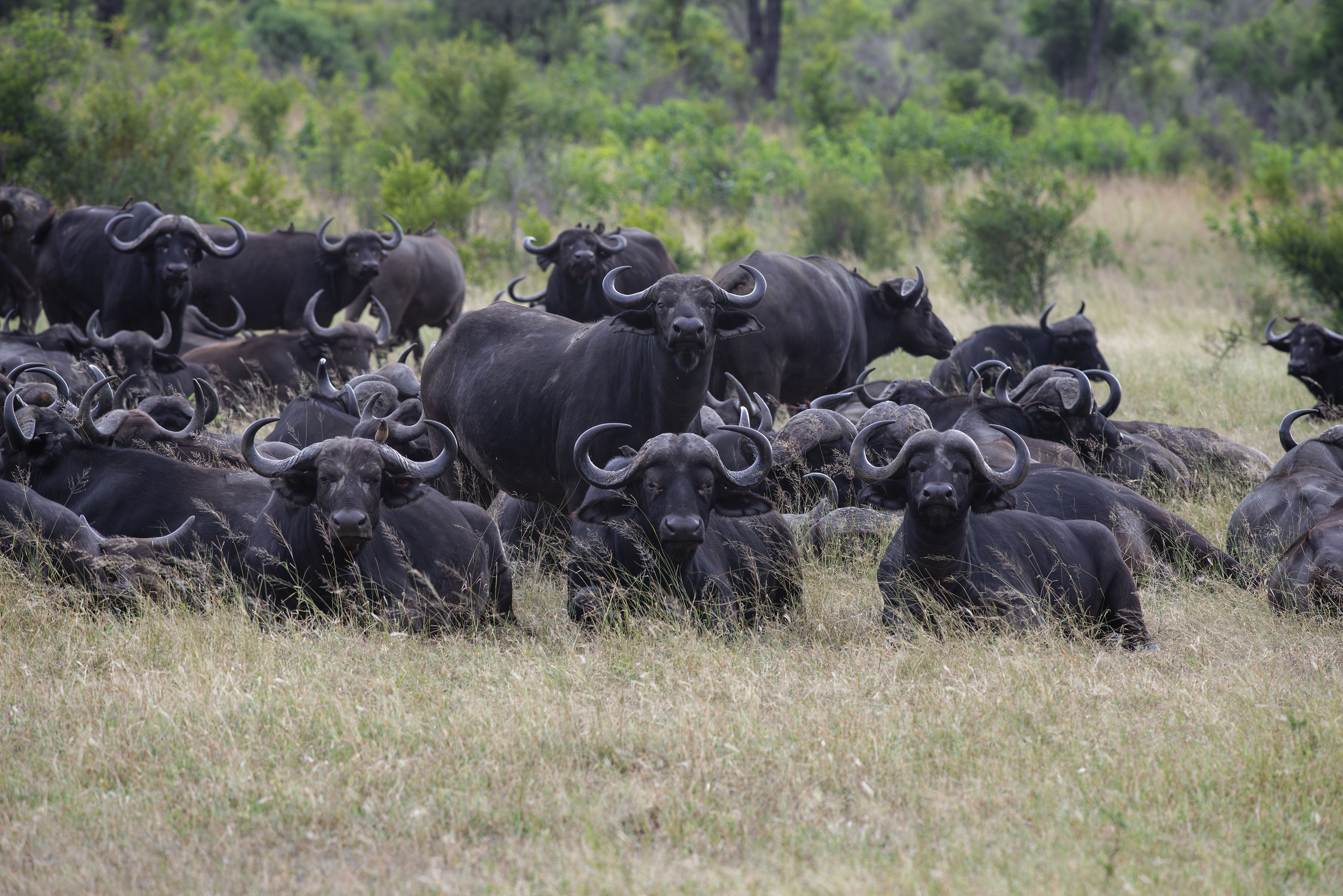
Buffaloes are one of the main attractions in the Kruger National Park. They carry the foot and mouth disease virus but seldom get sick from it.
- Buffaloes of the Kruger National Park are carriers of foot and mouth disease. This is why cattle on the border of the park sometimes get infected.
- The Department of Agriculture used to control the disease by establishing a protection zone around Kruger. This resulted in most of South Africa being declared an area free of foot and mouth disease.
- But the state neglected its duties and by early 2019 the protection zone system was broken, eventually giving rise to our current epidemic.
- A scathing 2022 report by a task team appointed by the Minister of Agriculture found that animal biosecurity in South Africa “is in a crisis”.
Richard de Bufanos’s dairy farm is opposite Zonkizizwe township, south-east of Johannesburg. A state vet told him in May 2025 that the deadly foot and mouth disease (FMD) had been detected in the cattle of an informal farmer across the road.
De Bufanos asked if the herd had been quarantined, as per regulations. No, because the state had no capacity to feed the animals. And the Department of Agriculture wouldn’t or couldn’t vaccinate De Bufanos’s animals, at least not yet.

De Bufanos took measures to prevent FMD infecting his cows. No cattle were allowed to enter the farm. There was already a two-metre trench around the farm’s border to help prevent this.
But it is nearly impossible to prevent FMD infecting your cattle if a neighbouring herd is infected. The disease spreads too easily. A critter like a mongoose could stand in infected dung and scurry to the next farm, dragging the virus on its paws. A worker or visitor to the farm who has had peripheral contact with an infected cow, sheep or pig could unwittingly bring it in. Even the tyres of a car entering a farm might carry it. Scientists also suspect the virus moves across substantial distances in fog. It’s possible that birds spread it.
FMD can incubate in a cloven-hoofed animal for two to 14 days before the animal gets sick. De Bufanos’s herd may already have been infected when he chatted to the vet. So it was unsurprising when a few days later, on 26 May, the first cow on his farm started to show symptoms. Four days later, 180 were infected. On 30 May, the state finally vaccinated the farm’s herd, but by then it was almost pointless.

A large bull at the University of Pretoria Onderstepoort Campus, north of Pretoria.
De Bufanos owns or has partnerships in other farms in Gauteng and one in Free State. He asked if the animals on those farms could be vaccinated. No, was the reply. Could he buy vaccines and do it himself? No again. On 3 June 2025, animals on his second farm got infected. On 6 June, the third farm was hit. On 9 June, the department vaccinated animals on the second farm. And this pattern continued until FMD had infected the cattle on all six farms.
“They couldn’t help and they prevented us from helping ourselves,” de Bufanos recalled, exasperated. He pointed out that though the DA is the party that champions public-private partnerships, it was the DA minister responsible for agriculture – in fact the then head of the DA – John Steenhuisen, who blocked farmers from buying their own vaccines. (Our next article deals with this. Steenhuisen has not responded to our request for comment.)
All the farmers we spoke to were disappointed with the way Steenhuisen responded to the FMD epidemic. But the systems responsible for preventing the epidemic had already broken down over many years under ANC rule.
How the system was meant to work
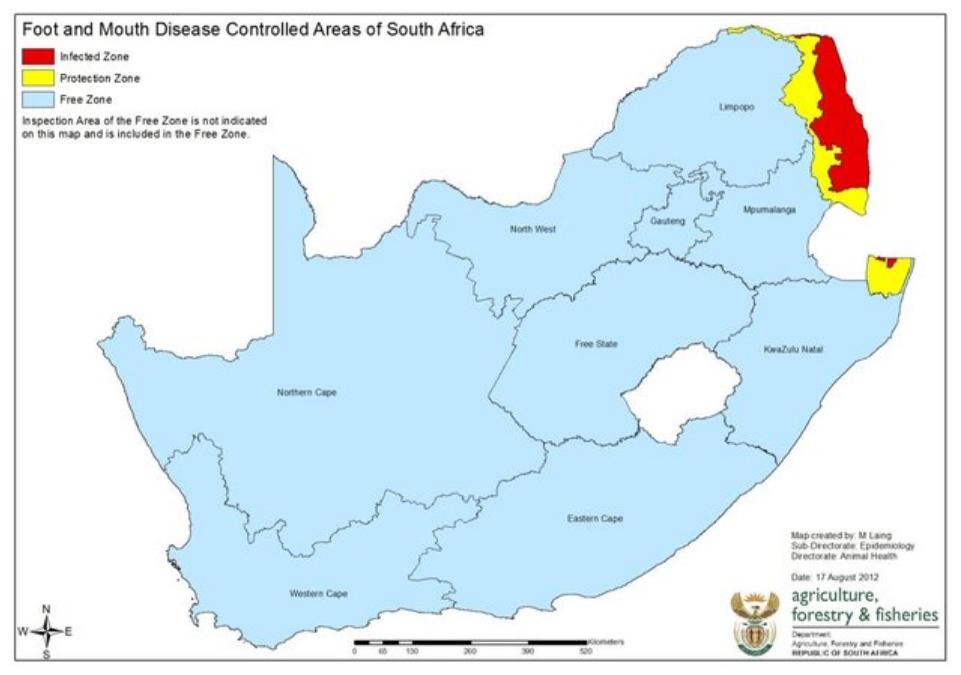
Department of Agriculture map showing the FMD protection zones. Not shown in the map is that there is an inspection area on the border of the free zone, in which the state must carefully monitor cattle movement and be on the lookout for possible infections. This zone-based system has completely broken down.
Buffaloes in the Kruger National Park are FMD carriers. In contrast to cattle, they seldom get very ill from the disease. Informal cattle farmers surround the game reserve, and sometimes buffaloes transmit FMD to their animals.
So a protection zone was established in the region bordering Kruger. Once a week the informal farmers in this zone are supposed to take their herds to state-managed dip tanks. Their cattle are supposed to be de-ticked and checked for signs of disease, like FMD. Apparently it’s typically a lively community gathering and the farmers attend because it keeps their animals healthy.
If FMD is found, the herd is supposed to be quarantined and a sample of blood taken from the sick animal and sent to the Agricultural Research Council in Onderstepoort for testing. The herd, and perhaps nearby herds, are supposed to be vaccinated. Samples from infected animals are also supposed to be sent to The Pirbright Institute in the UK, the world’s reference laboratory for FMD. Pirbright then assists vaccine manufacturers to update their vaccines to protect against new strains, if necessary. The better matched a vaccine is to the strain of virus that is spreading in an area, the more effective it is.

Entrance to the Agricultural Research Centre at Onderstepoort.
Also, cattle in the protection zone are generally not allowed to move out of it. So movement has to be monitored and controlled.
This system divides the country into zones: infected zones (the Kruger Park and a small section of northern KwaZulu-Natal), protection zones neighbouring the infected zones, and an FMD-free zone — most of the country. The World Organisation for Animal Health (WOAH) recognised South Africa’s FMD-free zone in 2014. (It was first recognised in the mid-90s, then lost and restored a couple of times after that.) That meant that most of South Africa’s cattle and cattle products could be much more easily exported.
The signs that the system to control FMD had broken started to show in January 2019. The Department of Agriculture confirmed the disease had been detected in cattle in Vhembe in Limpopo, in the FMD-free zone. WOAH immediately suspended the country’s FMD-free status.
The department frantically negotiated with countries to whom we export meat and dairy products, including our neighbours, with mixed success. Several thousand cattle in nine villages within a 20km radius were vaccinated using a vaccine produced in Botswana. That vaccine is only effective for a few months, and its efficacy against the circulating strain of FMD was unclear because, it turned out, we hadn’t sent FMD strains to Pirbright since 2011.
It would all be too little too late.
Over the next few months, the department published sporadic reports showing how it was trying to contain the epidemic. Vaccines were unnecessary, the department said, because the disease was mainly spread through the transporting of animals between commercial farms.
In November 2020, the department claimed that more than ten months had passed since the last clinical sign of FMD.
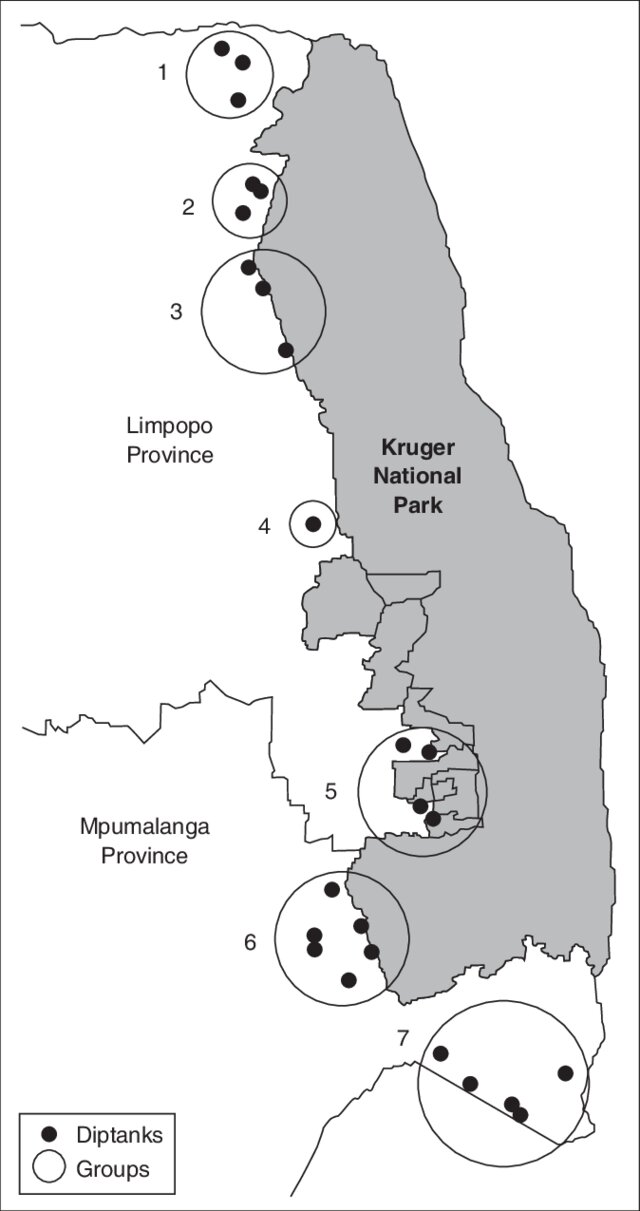
This map from a 2007 scientific paper shows the then locations of the 25 communal dip tanks in the protection zone bordering the Kruger National Park. Managing the dip tanks well is vital for protecting and monitoring the health of the cattle of informal farmers. Map from Stevens et al. (CC BY 4.0)
But in May 2021, an outbreak of FMD was confirmed at a dip tank in KwaZulu-Natal, and since then the epidemic has escalated. Today FMD is still spreading across the country. Some farms have been infected two or even three times.
We will likely never know the precise events that led to the collapse of the protection zone. But scientists, vets and farmers we spoke to suspect the main reasons are a failure by the government to monitor infections at communal dip tanks and control cattle movement out of the protection zone.

A sign at the University of Pretoria Hillcrest Campus where dairy cows are kept as part of the Hatfield Experimental Farm.
The damning report
In September 2021, agriculture minister Thoko Didiza appointed a task team to look into animal biosecurity. This followed the outbreak of a number of farm animal epidemics, such as African swine fever, avian influenza and FMD, “with consequent severe negative socio-economic impacts,” explained the task team’s report published in May 2022. “These include the loss of livelihoods for many poor communities and the loss of market access on local, national, and international markets.”
The report is scathing. “A common thread running through all the interviews of the task team with industry stakeholders, government officials, and research establishments, is that the veterinary system and animal biosecurity system is broken. … The evidence of the broken system can be ascribed to systemic (institutional) issues, legislative constraints, budget problems, a trust deficit, non-alignment between stakeholders, and execution and implementation failures.”
The report lists many problems: “poor and unscientific decision-making by officials”, “poor coordination between national and provincial governments and slow response to emergency situations”, poor maintenance of laboratories, a lack of vaccines, poor disease surveillance, lack of movement control of animals, and lack of understanding of the needs of informal farmers.
It criticises the unclear chain of command “largely because of duplication and overlapping responsibilities in the management and coordination functions”. It says there is not enough transparency in policy formulation, insufficient contingency planning, and poor communication.
The report also points to a lack of trust between the public and private sectors.
It states:
“It is our observation that everyone – farmers, auctioneers, abattoirs, feedlots, industry bodies, veterinarians, education institutions, the Minister, Director-general, provincial authorities, traditional authorities – all agree that animal biosecurity in South Africa is in a crisis, and they all correctly diagnose the elements of the crisis. On top of that everyone agrees on the reasons for the crisis, but it seems there is no dedicated plan to deal with the crisis and no effort to implement the corrective actions that have been recommended time and again. There is thus a need for strong action, for consequence management and for a strong political will to affect change in leadership and to be results driven. These actions are needed, not only to improve the economic fortunes of all livestock producers, but to restore some pride in and amongst our veterinary and animal health officials.”
Four years later, the new Minister of Agriculture, Willie Aucamp, told GroundUp that the report’s conclusion that animal biosecurity is in crisis was “spot on”. He said the report’s recommendations are “receiving attention” through FMD task teams, “engagements with National Treasury”, “amendments of the Animal Health Act” and regulations to allow public-private vaccination partnerships.

Drone photo of cows on a dairy farm in the KwaZulu-Natal midlands. Dairy farms have lost well over R1-billion to the FMD epidemic.
Since Aucamp became minister on 30 June, relations between cattle farmers and the agriculture department have improved. An agreement has been reached to allow farms to vaccinate their animals. Last week, Aucamp said that 23-million FMD vaccines have been imported. (There is much still to be done, which will be covered in an upcoming article.)
But many farmers have wondered why the department, for so long, was so reluctant to allow them to vaccinate.
Partly this may have been a perception by some officials — and even some farms — that being certified FMD-free without vaccination by WOAH, as we used to be, rather than FMD-free with vaccination, would make it easier to negotiate agreements with countries that import from us.
Read Why FMD-free with vaccination should be equivalent to FMD-free without vaccination by Pedro Moura and others
But a more compelling reason for the reluctance to vaccinate is that officials probably thought we still had an effective protection zone around the Kruger Park, that a limited number of vaccines could be used sparingly to control the occasional outbreak, and that the department had control over FMD. For years that system worked. But when it stopped working, neither civil servants nor their political leaders adapted fast enough.
The protection zone system is utterly broken. We asked a vet who has been treating FMD if we could ever get back to it. She responded: “Expect the second coming first.”
Support independent journalism
Donate using Payfast

Don't miss out on the latest news
We respect your privacy, and promise we won't spam you.
Next: Pollution from Sasol’s Secunda plant could cause 1,000 deaths a year, study finds
Previous: Two years into her tenure, Gwarube faces a R140-billion school infrastructure crisis
© 2026 GroundUp. This article is published under the GroundUp Republication Licence Version 1.0. Email [email protected] to request permission to republish.