
Court blocks planned bus driver strike
Golden Arrow workers will not be able to proceed with protected strike on Thursday
 Add GroundUp on Google
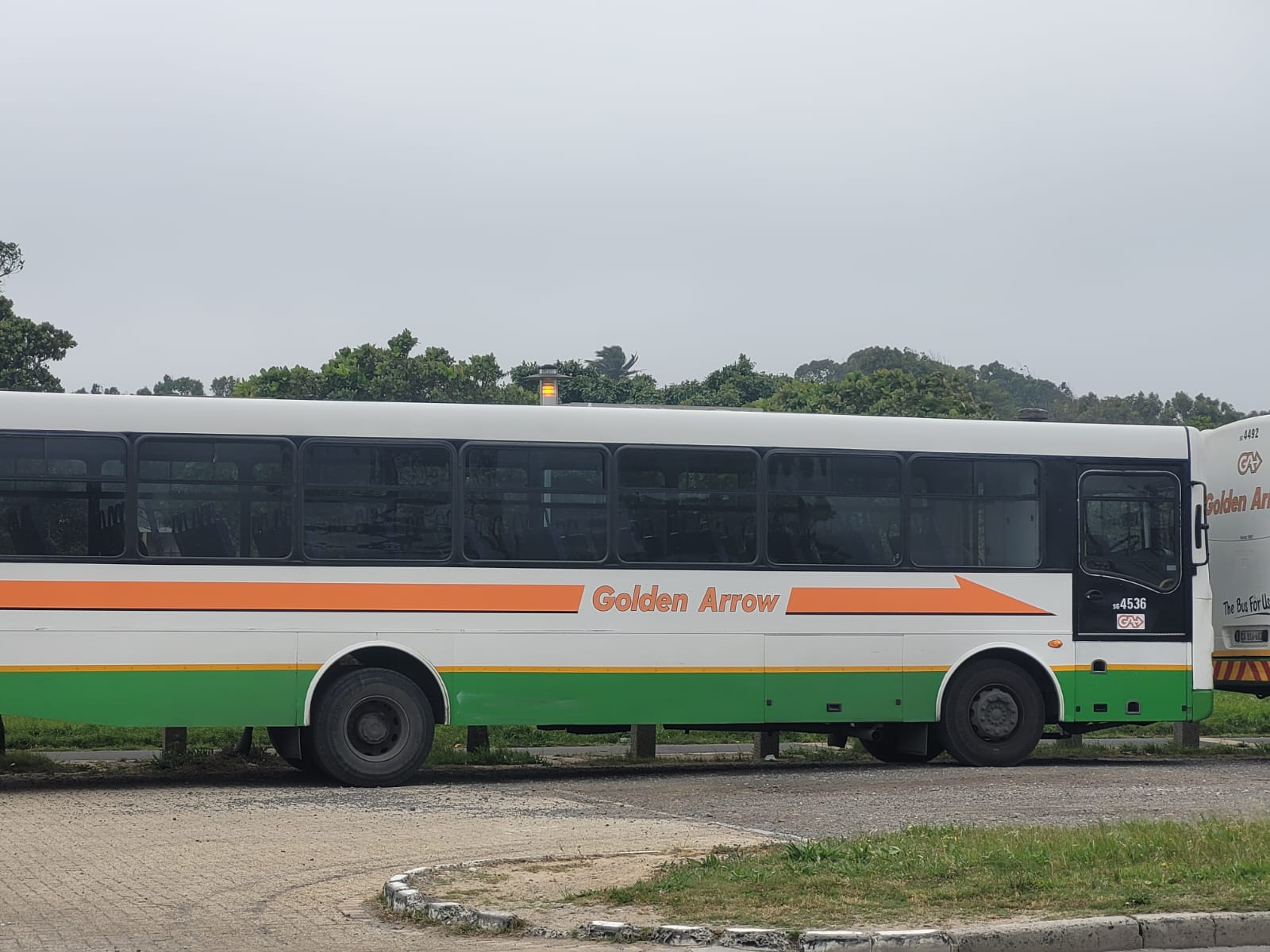
The Labour Court has ruled that a planned strike of bus workers on Thursday would not be protected. Photo: Greg Dor
- The Labour Court has ruled that a planned strike of bus workers in Cape Town on Thursday would not be protected.
- Bus company Golden Arrow had applied to the court for an interdict against a protected strike announced by the National Union for All Sectors (NUFAS).
- The dispute between the union and the company centres on the use of cameras in disciplinary procedures.
Bus workers who participated in a planned strike in Cape Town on Thursday would not be protected against dismissal, Labour Court Judge Z M Lallie has ruled.
Judge Lallie granted an interim interdict to bus company Golden Arrow on Wednesday, ruling that a planned strike by the National Union for All Sectors (NUFAS) would be unprotected.
The strike is the result of a dispute over the use of monitoring cameras and disciplinary procedures at Golden Arrow.
Golden Arrow was represented in court by advocates Graham Leslie and Stuart Harrison. NUFAS advocate Solomon Montshioa was not able to attend the hearing. The union’s general secretary Mncedi Xego said he had asked for a virtual hearing, but Lallie said she had not received reasons for this. She ruled that the case would proceed in open court, as this is the venue in which most cases should generally be heard. As a result, the court did not hear an argument from NUFAS. Lallie did review some of the union’s documents during a recess before making her judgment.
This interim interdict follows weeks of legal disputes.

On 14 August, Labour Court Judge RGO Lagrange granted an interim interdict to Golden Arrow with a hearing on a final interdict set down for 28 August, Leslie said. But at that hearing Labour Court Judge R Daniels dismissed Golden Arrow’s application, finding that the company had not established a clear right to the interdict. Golden Arrow appealed against that decision, and the appeal is still pending.
Meanwhile, this week NUFAS served Golden Arrow with notice of a protected strike.
In response, Golden Arrow urgently approached the courts to ask for an interim interdict to halt the strike until the appeal against Judge Daniels’ decision was heard.
During Wednesday’s hearing, Leslie said a strike would shut down commuter bus services in the Western Cape. This would cause Golden Arrow to lose R3-million a day and leave an estimated 180,000 commuters without transport.
Leslie said many of the commuters who use Golden Arrow buses came from low-income backgrounds, and their jobs would be on the line if they could not get to work. He said some might walk long and unsafe distances to and from work during a strike.
Golden Arrow also argued that allowing the strike to proceed would nullify the company’s appeal.
Lallie said she was satisfied that Golden Arrow had “proved the urgency of the situation”.
Xego told GroundUp the cameras had been introduced around 2007, when Golden Arrow was experiencing high levels of crime, including robberies of buses and drivers.
In terms of a policy introduced in 2014, he said, a first offence such as speeding or going through a red traffic light would result in a warning lasting six months. A second offence would result in another warning lasting 12 months, while a third offence could lead to dismissal following a disciplinary hearing.
But, he said, the company had changed how the policy was applied. “Now it’s the case that on the second offence it goes straight to a hearing, and that leads to dismissal,” he said. “There are quite a few workers who have been dismissed like this.”
In a statement, Golden Arrow said its policies, driving standards and disciplinary processes were intended to ensure that its buses are operated safely and responsibly.
It said its policies complied with labour legislation, collective agreements, company procedures and principles of procedural fairness. Employees who believed disciplinary action has been unfairly applied could approach the South African Road Passenger Bargaining Council, the company said.
“They are abusing the process because they filed the interdict previously,” Xego said. “The application was dismissed because there’s no merit, and then we have a right to strike. And then this again, they have filed another interdict.”
Xego said workers could currently be punished not only for reckless driving but also for distractions while driving, including using a cellphone, eating, drinking, or counting money.
“You cannot even drink water when you drive in the bus,” he said. “The company and its policies make workers operate like robots.”
Support independent journalism
Donate using Payfast

Don't miss out on the latest news
We respect your privacy, and promise we won't spam you.
© 2026 GroundUp. This article is published under the GroundUp Republication Licence Version 1.0. Email [email protected] to request permission to republish.