
Who holds acting judges accountable for late judgments?
The Legal Practice Council says it has taken action but it has not yet amended its code of conduct to reflect this
 Add GroundUp on Google
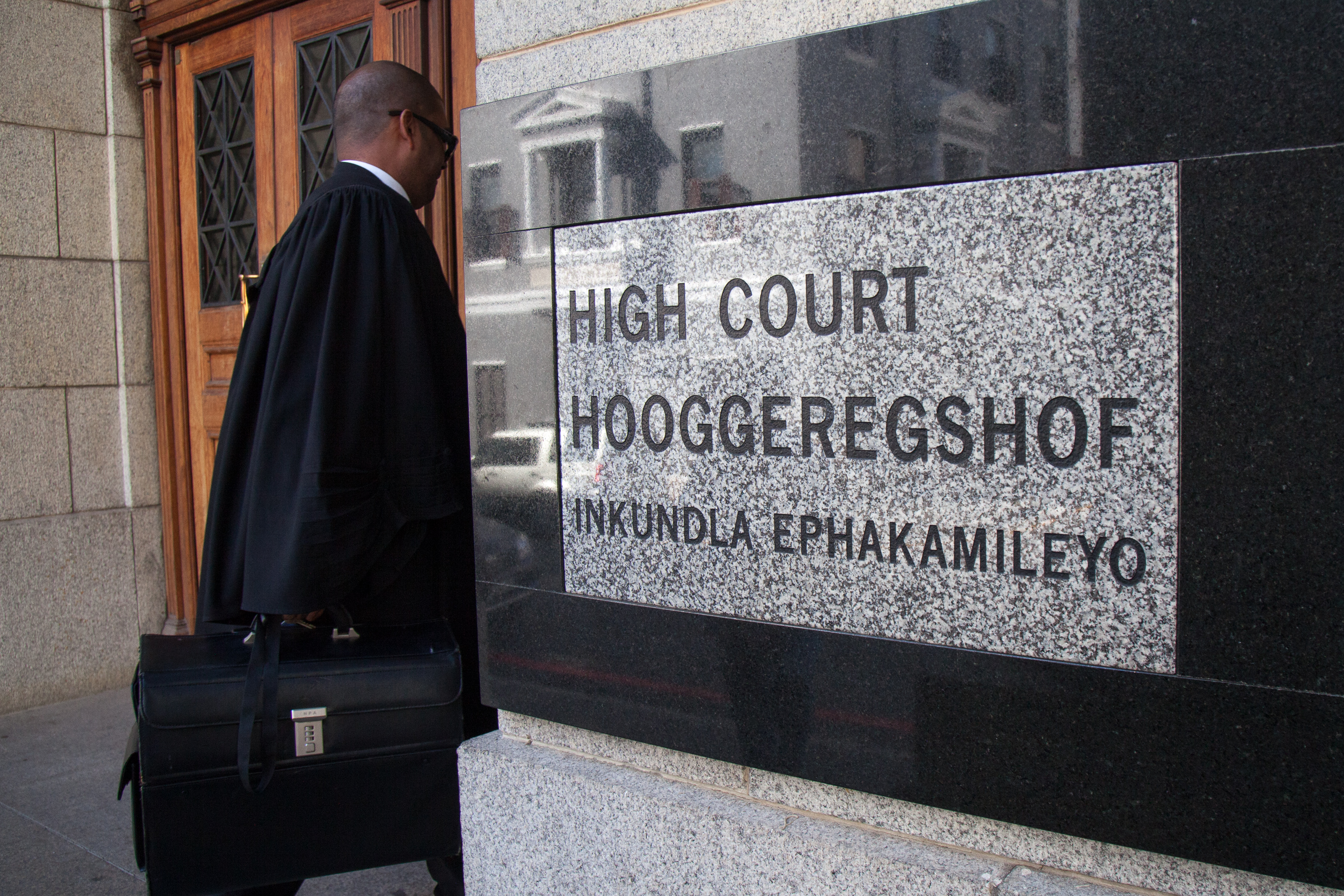
Legal Practice Council says it has disciplined legal practitioners who fail to deliver judgments after their terms as an acting judge end. Archive photo: Ashraf Hendricks
- Acting judges account for more than half of South Africa’s late court judgments, including nearly all late judgments in the Labour Court.
- When acting judges leave the bench with judgments outstanding, a legal opinion says neither the judiciary nor the Legal Practice Council (LPC) has the clear power to hold them accountable.
- The LPC, however, says it has disciplined legal practitioners who fail to deliver judgments after their acting terms end, but it has not yet amended its code of conduct to reflect this.
- Judges Matter warns that without formally amending its code of conduct, the LPC’s position could be vulnerable to court challenges.
Acting judges are responsible for more than half of South Africa’s late court judgments. But when their terms end, holding them accountable for outstanding judgments becomes complicated.
According to the last available report, there were 302 reserved judgments outstanding for more than six months, of which 163 were from acting judges.
The problem is particularly stark in the Labour Court with 102 late judgments across its divisions in Cape Town, Durban, Johannesburg and Gqeberha, of which acting judges were responsible for 96. Durban’s Labour Court had 31 late judgments, all by acting judges. In Johannesburg, acting judges were responsible for 50 of the court’s 51 late judgments.

Acting judges are temporarily appointed to assist courts, often to address workloads, vacancies or backlogs. Many are practising advocates or attorneys who return to legal practice once their acting terms end.
The Judicial Norms and Standards state that judgments should be handed down within three months of a hearing. Permanent judges who fail to do so can face complaints through the judicial disciplinary system. But difficulties arise when an acting judge leaves office with reserved judgments still outstanding.
The accountability problem came into focus in 2024 when KwaZulu-Natal Judge President Thoba Poyo-Dlwati filed a complaint against a former acting judge who had five reserved judgments outstanding. The Judicial Conduct Committee (JCC) declined to recommend a tribunal hearing, finding the conduct did not meet the threshold for gross misconduct.
“It would be procedurally irrational to recommend a tribunal where it is apparent that there is no office from which the respondent [acting] judge is to be removed,” the JCC said.
The ruling highlighted concerns about what mechanisms exist to hold former acting judges accountable.
Accountability gap
A legal opinion prepared for the Legal Practice Council (LPC) by the Democratic Governance and Rights Unit at UCT concluded that an accountability gap exists.
The opinion found that once an acting judge leaves office, the Judicial Service Commission no longer has jurisdiction over them.
It further advised that the LPC “currently does not have general jurisdiction over all legal practitioners who fall foul of their duty to deliver judgments within a reasonable period”.
Legal practitioners who leave judicial office with outstanding judgments therefore “fall into an accountability gap”, the opinion stated.
But the LPC disagrees that it lacks jurisdiction. Acting executive officer Pearl Mfusi said the LPC had “resolved to accept responsibility for disciplining acting judges where they are also legal practitioners, thereby contributing to closing any perceived accountability gap”.
Mfusi said the council believes it has jurisdiction to discipline attorneys and advocates who served as acting judges, even after their acting terms have expired, where their conduct amounts to unprofessional or unethical behaviour.
“This position aligns with the LPC’s statutory mandate to regulate the professional conduct of legal practitioners,” she said.
Mfusi said the position was adopted at a council meeting in March following deliberations within the LPC and talks with the judiciary.
The LPC’s jurisdiction, however, is limited to legal practitioners. “The LPC’s does not extend to individuals such as academics who may be appointed as acting judges,” Mfusi said.
She said the LPC had received fewer than five complaints involving former acting judges with outstanding judgments over the past two to five years. It currently has one ongoing disciplinary matter involving an attorney who allegedly failed to deliver a reserved judgment while serving as an acting judge. The LPC declined to identify the attorney, saying details would be made available once the matter was finalised.
Mbekezeli Benjamin, of Judges Matter, welcomed the LPC’s position as “a positive development”. But, he said, without embedding the obligation in the Legal Practice Code itself, enforcement remains on uncertain legal grounds and could be vulnerable to court challenges.
The LPC’s own response suggests the question is not yet fully settled. Mfusi said the council was considering whether additional regulatory changes are needed.
“While no formal amendment to the Legal Practice Code has been finalised at this stage, the LPC remains open to considering whether further clarification or codification may be necessary to strengthen accountability and provide greater certainty regarding professional obligations in such circumstances,” she said.
Benjamin said legislative and policy reform was needed to provide clarity about the consequences facing acting judges.
Support independent journalism
Donate using Payfast

Don't miss out on the latest news
We respect your privacy, and promise we won't spam you.
Next: Msunduzi cannot say how much it spent on this vandalised community centre
Previous: Youth Day legacy: 76 Hours in Soweto
© 2026 GroundUp. This article is published under the GroundUp Republication Licence Version 1.0. Email [email protected] to request permission to republish.