
South African jobs at stake as March and March close immigrant shops in Mdantsane
“We came here to create jobs, not to take them,” says hardware store owner
 Add GroundUp on Google
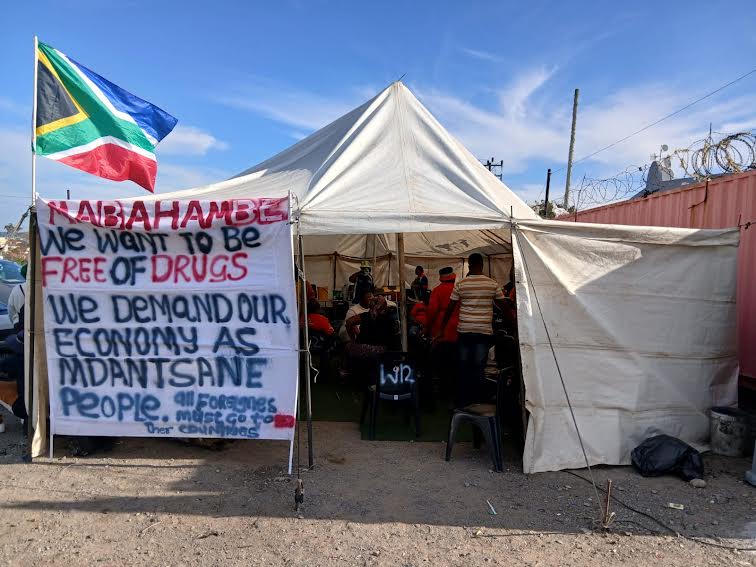
March and March members camp outside the Highway shopping centre in Mdantsane. Photos: Nombulelo Damba-Hendrik
- March and March protesters have camped outside the Highway shopping centre in Mdantsane, KuGompo City, warning immigrant shop owners in the centre to leave.
- The protesters left the site at the weekend after being told to leave by police.
- Immigrant shop owners say they are harassed by March and March members regardless of their legal status in the country.
- South Africans employed in the shops are afraid the protesters will return and that the shops will close permanently and they will lose their jobs.
South Africans employed by immigrant shop owners in Mdantsane, KuGompo City, fear for the future of their jobs after protests by March and March closed down several salons, hardware stores and food outlets in Highway shopping centre.
March and March members have warned immigrant shop owners to close their shops and leave the country. Dozens of members of the organisation camped outside the shopping centre. They left on Saturday, 8 August, after being told to leave by police. But not all the shops have opened again, and workers say they are afraid for their jobs.
Lona Twayise, 23, works at a hardware store in the shopping centre. She said she was thrilled to get the job in 2025 after years of unemployment.

A few weeks ago, she said, members of March and March visited the hardware store and warned that they would close the shop if the owner failed to produce proper documents stating that he was in South Africa legally, and proof that he had invested R500-million in the country.
The store owner, Anish Patel, originally from India, has been in the country for more than 20 years. He told GroundUp he employs seven South African workers, three of them permanent and four casual.
“We came here to create jobs, not to take them. If we continue like this, we will lose money and that will affect the workers,” he said.
“When they came here, those people [March and March] forced us to close the shops. They called the police, saying we do not have proper documents. Police came and left with us to verify our documents at Home Affairs. They saw that everything was in order. I treat my workers very well,” said Patel.
“I’m scared of those people. I can’t open a case against them. They are aggressive and shout at the workers,” he said.
Twayise said she did not know when the March and March members would be back.
“Before, I usually looked forward to coming to work every morning, but now I fear because I don’t know what will happen. When those people come here … they swear at us, calling us names and saying we are sleeping with foreigners,” she said.
Twayise said eight people depended on her salary. Her brothers and sisters worked piece jobs, also in shops owned by immigrants, she said.
She said the March and March members told them that the spaza shops, hardware stores and furniture shops owned by immigrants should belong to South Africans.
But, she said, “we are happy here, we are not being exploited and our boss respects us.”
“I need this job. I just can’t afford to sit at home again doing nothing,” she said.
JB Abdi, who owns a food shop and has lived in South Africa since 2002, said police also verified his documents.
“March and March members have come here three times. I don’t know why they keep coming back because Home Affairs has already verified our documents,” he said.
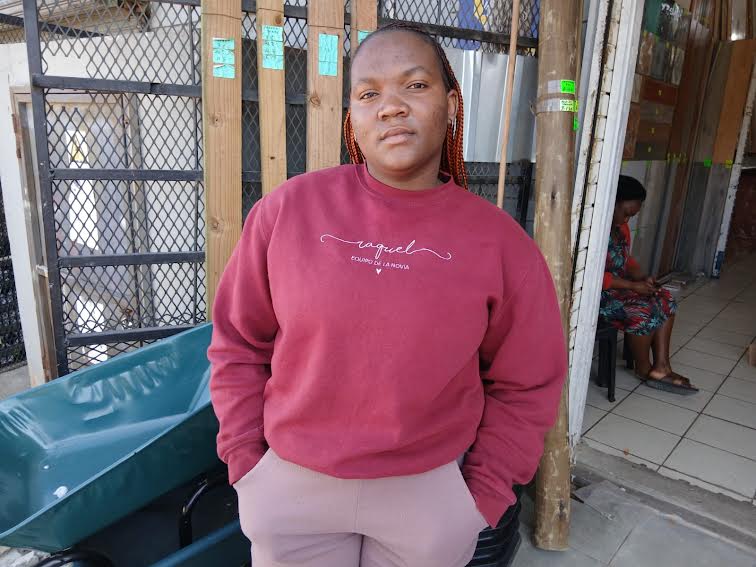
Lona Twayise is afraid her employer will have to close his shop and she will lose her job.
When GroundUp visited Highway last week, there were about 10 Zimbabwean women standing around. They said the hair salons they run were closed. They keep going back, hoping March and March have gone home so they can re-open.
We also saw one woman running towards the main road, leaving her belongings behind. The woman was inside a salon when she saw the protesters approaching.
Mbulelo Somatika fears his 84-year-old mother will lose the R500 a month from the hair salon she rents out at the centre. He said the money has been very helpful to the family.
A 34-year-old mother of three told GroundUp that she had been in South Africa for three years. She said she would like to return home, but she has no money and her children are still at school.
“We tried to ask March and March to give us until December for our children to finish school and for us to make enough money so we can go home, but they refused to listen to us. We no longer enjoy being here, but we don’t have money to go back home,” said the woman.
“All of us that you see here have permits. Those with no permits have left already. But the March and March people do not care, they just want us gone. They do not bother to check our documents.”
Early last month, one of the March and March leaders, Siyabonga Mxhiya, 40, was arrested. According to NPA spokesperson Luxolo Tyali, Mxhiya faces nine counts of assault by threat, alternatively intimidation, all involving immigrant shop owners at Mdantsane.
He is currently out on R3,000 bail and expected to return to court on 24 August.
March and March organiser Solomzi Ntenteni said businesses identified by the group would remain closed and the campaign would move to Nompumelelo township from Mdantsane. Immigrant business owners in Nompumelelo were told on 30 June to leave within 14 days.
But when GroundUp visited the township last week, many were still there.
A 34-year-old Zimbabwean mother told GroundUp she wants to return home but cannot afford to do so.
“In Durban we saw Malawians being assisted to return home, but nothing like that has happened here. Also, many people in this community have no problem with us being here. It’s only members of March and March, and they are few,” she said.
Eastern Cape police spokesperson Hazel Mqala said business owners who are forced to close their shops should open cases at the police station. She said patrols had been increased at the centre.
“The police cannot, however, post members at all shops, and business owners have been sensitised to employ their own private security,” Mqala said.
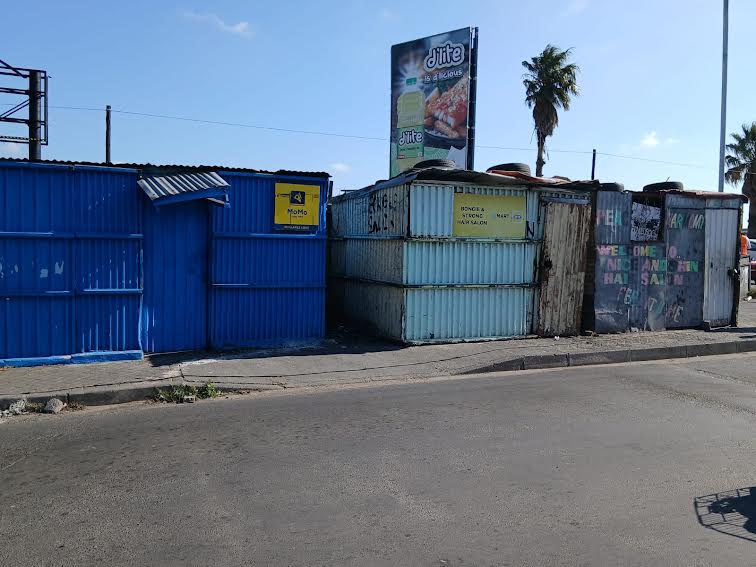
Small hair salons at the centre owned by immigrants were closed when GroundUp visited.
Support independent journalism
Donate using Payfast

Don't miss out on the latest news
We respect your privacy, and promise we won't spam you.
Next: Lucky Montana no-show leaves his two properties legally frozen
Previous: Six months after Philippi mass murder, state asks for time to investigate
© 2026 GroundUp. This article is published under the GroundUp Republication Licence Version 1.0. Email [email protected] to request permission to republish.