
AI data centres could make electricity more expensive
Power-hungry hyperscale data centres could lock us into fossil fuel dependence, says Open Secrets
 Add GroundUp on Google
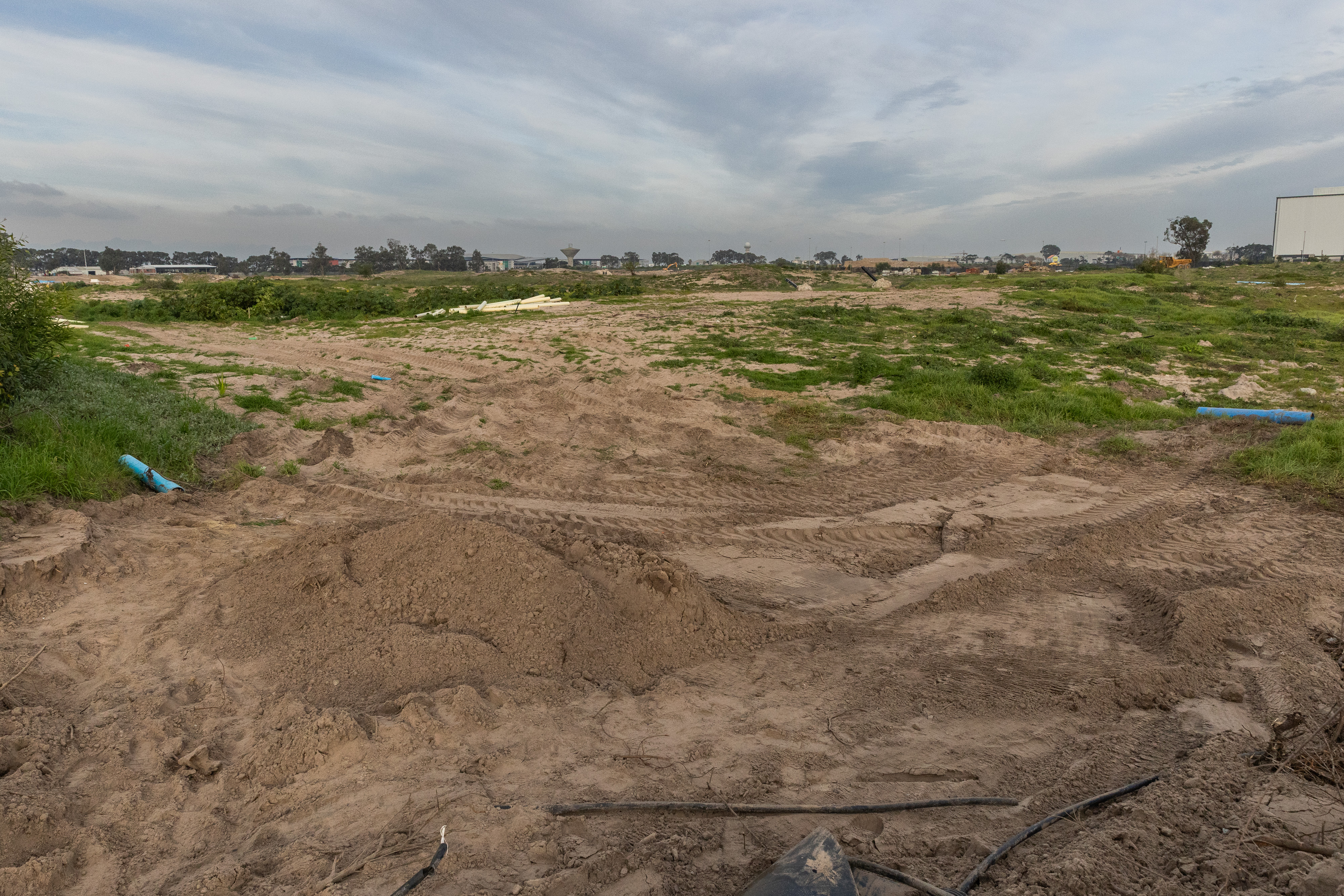
Land near Cape Town Airport where two huge data centres are planned. Archive photo: Ashraf Hendricks
South Africa’s energy problems will be exacerbated by the introduction of new power-hungry data centres. Given the planned expansion, data centres need regulation to protect human rights.
Access to reliable, clean, and affordable energy remains a persistent problem in South Africa. It is a problem that affects access to food and water, a healthy environment, housing, dignity and equality – rights enshrined in the Constitution. Yet, the rapid expansion of power-hungry data centres is progressing while energy poverty remains unresolved.
While South Africa already has many standard data centres, hyper-scale data centres are new to our digital infrastructure landscape and are on an entirely different scale. The need for these new hyper-scale data centres is the result of the acceleration of artificial intelligence (AI). Companies seeking to use AI technology in their systems require infrastructure that can handle high-intensity AI workloads. This high intensity, in turn, requires massive amounts of electricity to train and run AI large language models.

Currently, plans are underway to build new hyper-scale data centres in Durban, Cape Town and Johannesburg. Combined, they will have an electricity capacity of over 1000MW. This demand for power is significant for South Africa. For instance, documents before eThekwini council refer twice to a 400MW data facility, though the City has since said megawatt figures are not confirmed. 400MW would be about 25% of Durban’s current electricity demand. Meanwhile, residents in informal settlements in Durban do not have electricity or rely on illegal connections.
One lingering question is whether data centres will receive the same preferential treatment as other industrial power users. Consumers of large energy in South Africa have tended to be in the minerals-energy complex (MECs), such as metal smelters. These intensive energy users have received massive electricity discounts, even during the loadshedding crisis. For example, South32 received a roughly 50% discount from Eskom under a negotiated pricing agreement approved by the National Energy Regulator of South Africa (NERSA).
Eskom is in discussions with Amazon and Microsoft, some of the leaders in the ‘’AI race’’ with data centres in South Africa. The utility identified data centres as a huge new opportunity, given that they now enjoy a power surplus. The surplus comes as a result of the utility’s improvement in supply and a significant drop in demand from other parts of the economy, leaving about 6GW in offline power. With energy poverty and high prices remaining for millions in South Africa, it’s essential that data centres do not get preferential treatment.
Even in the absence of discounts, data centres can contribute to increased electricity tariffs. In the US – the current epicentre of this sector – experts are already concerned that data centres will cause a rise in residential electricity prices.
If electric power demand from data centres starts exceeding national capacity, there will be a need for new generation. The construction of new and improved transmission and distribution may affect rate design changes and defer data centre operator costs to residential customers through special contracts and incentive packages.
Eskom is the largest power producer in South Africa, and most of this power is generated from coal. In 2024, coal accounted for 83% of local electricity generation. If data centres depend on Eskom, their rapid expansion will lock us in to emitting toxic air from burning coal.
Some proponents of data centre expansion have touted them as a way of driving new renewable energy projects. However, the reality is that Eskom is aggressively marketing its current 6GW surplus – almost all generated through coal power stations – as a vital and cheap supply option. Nothing requires data centre operators to build new clean generation to match their demand, and huge new demand on the coal-based grid ultimately works against our efforts to decarbonise.
Some data centre developers have started producing their own renewable energy, but this raises its own challenges. Teraco, Africa’s largest data centre provider, has invested in solar power in the Free State, with the solar farm expected to generate 120MW intended to power its data centres. This new development means land that should be used for food production or to produce clean energy for the national grid is used to expand digital growth in urban centres.
While most South Africans struggle to keep up with the costs of living, including the cost of electricity, the role of data centres in adjusting our energy landscape requires scrutiny. The public must have more of a say in developments that affect their communities. The state must develop a regulatory framework for data centre developments that puts people and their rights before the interests of major technology companies.
Support independent journalism
Donate using Payfast

Don't miss out on the latest news
We respect your privacy, and promise we won't spam you.
Next: Roodepoort families find strangers living in their subsidised flats
Previous: How foot and mouth disease ran amok
© 2026 GroundUp. This article is published under the GroundUp Republication Licence Version 1.0. Email [email protected] to request permission to republish.