
SIU asked to investigate farm worker equity schemes
Nearly R700 million was disbursed to equity schemes. Most of them have failed.
 Add GroundUp on Google
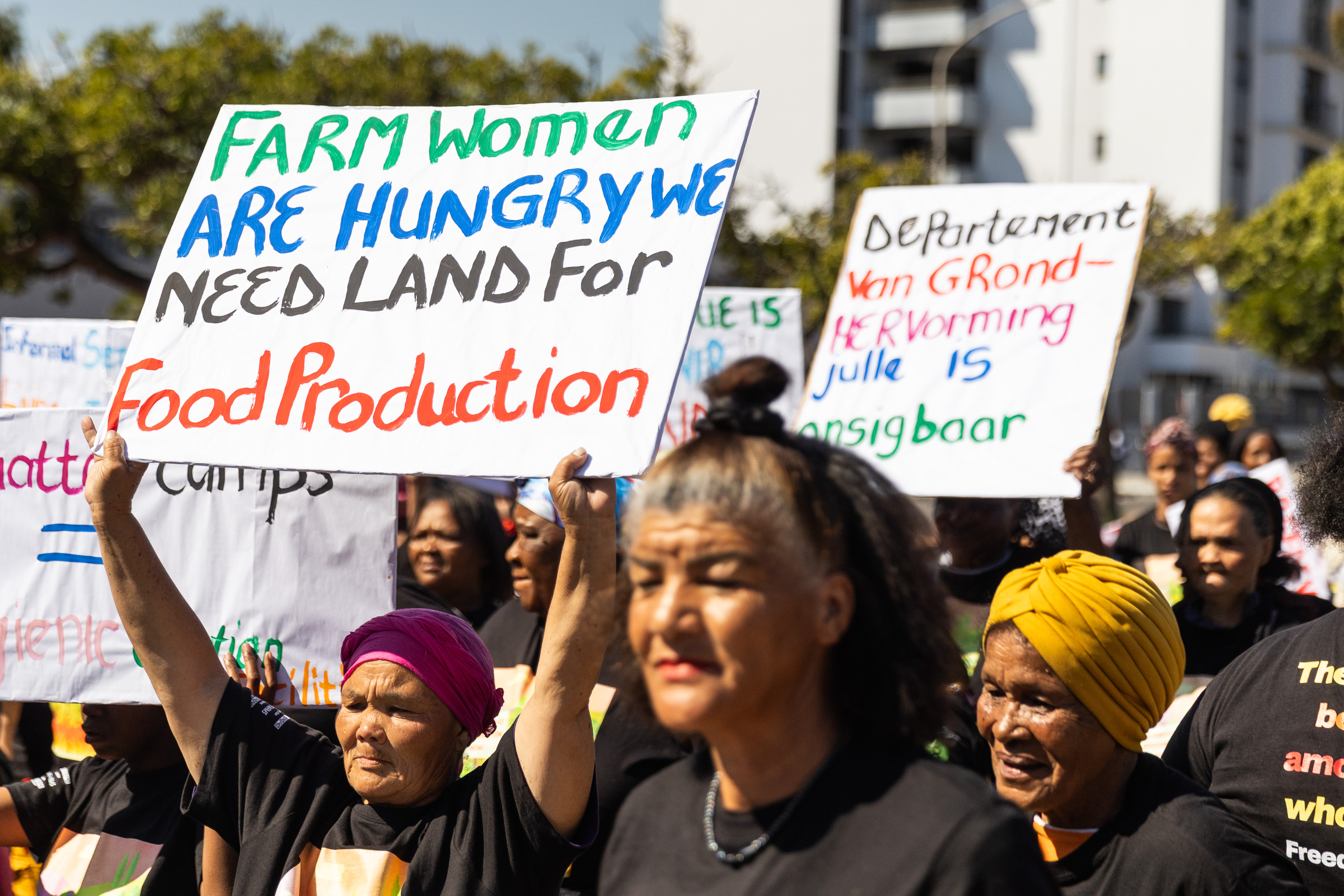
The Department of Land Reform and Rural Development has asked the Special Investigating Unit (SIU) to investigate failed farm worker equity schemes (FWES). Archive photo: Ashraf Hendricks
- Civil society organisations have for years been campaigning for an investigation into the millions of rands disbursed to farm worker equity schemes, many of which have failed or are untraceable.
- The schemes were set up by the government in the 1990s to economically improve the lives of historically disadvantaged farm workers by providing them with shares in the farms they were working on.
- Now the Department of Land Reform and Rural Development has written to the Special Investigating Unit (SIU) to probe the schemes.
The Department of Land Reform and Rural Development has approached the Special Investigating Unit (SIU) to investigate the failure of farm worker equity schemes (FWES).
This follows significant pressure by civil society organisations and Parliament on the department to investigate the disbursement of millions of rands to farm worker equity schemes, many of which have failed or are untraceable.
The equity schemes were established in the 1990s to economically benefit farm workers. The Department of Land Affairs initiated the redistribution project. Farm workers signed agreements with farm owners, receiving shares and dividends for their social benefit.
The department disbursed nearly R700-million to 89 equity schemes, Parliament heard in August. Most of the equity schemes were in the Western Cape (54 schemes were paid R366-million) and Eastern Cape (21 schemes were paid R103 million).

During the briefing to the Portfolio Committee on Land Reform and Rural Development, the department explained that officials had visited 65 equity schemes, of which only 18 were fully functional.
16 had limited functionality with “limited or no meaningful worker participation”, and 19 had workers who sold their shares and no longer had ownership interests. Six had collapsed, four had serious financial trouble, and two were in business rescue.
Regarding the remaining 24 equity schemes they did not visit, the department said officials could not find documentation on these schemes.
SIU spokesperson Selby Makgotho confirmed to GroundUp that the SIU is in talks with the department’s acting deputy director-general Dumisani Lupungela. They are “awaiting information from the department to assess whether it is sufficient to motivate for a proclamation”.
Makgotho said once they get the information from the department, “the case will be evaluated and referred to the SIU’s [Case Assessment Committee] for consideration”.
Civil society groups like Corruption Watch and the Surplus People Project have been pushing the government to look into the maladministration and lack of oversight of the equity schemes.
In research and interviews with farm workers, Corruption Watch found serious issues with the transparency of the schemes, farm worker participation, and dividend payments.
They found that the details of each equity scheme varied between farms. Their 2023 report noted that they interviewed 35 members on eight farms.
“Although the exact terms of each scheme differ, beneficiaries under the FWES are expected to receive dividends, corresponding to their share. However, several participants reported seeing few, or no benefits from the scheme,” the report read.
The department also faced mounting pressure from the portfolio committee to investigate the schemes.
The department’s assessments of the 65 schemes found several where worker governance and benefits were limited or unclear. There were several schemes where workers sold their shares or exited ownership while remaining in employment on the farm. Others had poor cash flow and mounting debt.
There were some schemes that were fully functional and where workers had been receiving dividends for years.
The department recommended immediate interventions, including resuscitating oversight and approaching the SIU.
Concerns around the lack of oversight were also raised in an internal report commissioned by the department from Zalo Capital back in 2013.
The report advised the department to rehabilitate the failed schemes, to establish a support unit to monitor and support FWES, and to measure the performance of DLRRD staff supporting equity schemes, among others.
But Terries Ndove, deputy director-general of land reform, told Parliament that recommendations in the Zalo report were never implemented. He admitted that monitoring of the schemes by the department was “poor”.
The department did not respond to GroundUp’s questions.
Support independent journalism
Donate using Payfast

Don't miss out on the latest news
We respect your privacy, and promise we won't spam you.
Next: Meet the man who fills in potholes in Khayelitsha every afternoon
Previous: SA may reach its emissions targets, but are they too easy?
© 2026 GroundUp. This article is published under the GroundUp Republication Licence Version 1.0. Email [email protected] to request permission to republish.