
Racism charge: judge may apply for complaint to be dismissed
Clerk Thozamile Semekazi says Judge Belinda Hartle used the “k-word”
 Add GroundUp on Google
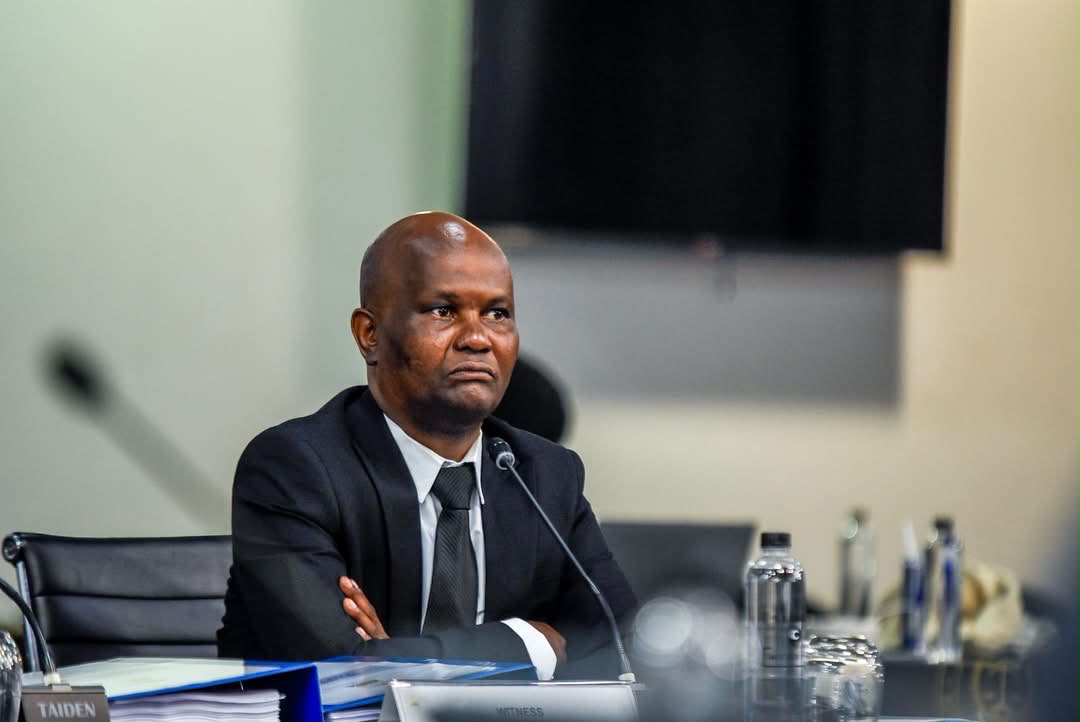
Thozamile Semekazi testifies before the Judicial Conduct Tribunal. Photo: The South African Judiciary/Facebook
- Lawyers acting for the Eastern Cape High Court judge who is accused of racism say they may apply for the complaint to be dismissed without further evidence being led.
- The Judicial Conduct Tribunal is hearing a complaint by registry clerk Thozamile Semekazi that Judge Belinda Hartle used swear words and the “k-word” to him in May last year.
- Hartle admits to swearing but not to using the “k-word”.
- If the complaint were dismissed, Hartle would not have to give evidence or call witnesses.
Lawyers acting for Eastern Cape High Court Judge Belinda Hartle, who is accused of “racially abusing” registry clerk Thozamile Semekazi, indicated on Wednesday that they were considering applying for the complaint to be “dismissed” without further evidence being led.
Advocate Jan Heunis made this submission to the Judicial Conduct Tribunal, which is probing Semekazi’s allegation, as the tribunal wrapped up its initial eight-day session in Sandton.
He emphasised that no firm decision had been taken on this yet.
“Firstly, we will have to decide whether we will do that and then present argument as to why it’s in your capacity to take such a decision,” he told the tribunal, which is chaired by Justice Boissie Mbha.
He confirmed that this would be similar to a section 174 application under the Criminal Procedure Act, which provides for an accused to be discharged at the end of the state’s case, on the basis that no evidence has been led on which he or she could be convicted.
If the application were successful, it would mean that Hartle would not have to give evidence, or call any witnesses.
So far, Semekazi has testified and been cross-examined, some of it “in camera” because it involved disclosure of his medical records.
He claims that on 15 May 2025, Hartle shouted at him, swore at him and used a racial slur in her secretary’s office after he delivered case flow management files late.
Hartle admits being frustrated and using the “f-word”, but says this was not directed at Semekazi. She specifically denies using the “k-word”.
This week, Semekazi’s boss, Thabisa Mafalala, testified that Hartle had complained several times to her about the late arrival of the files.
This had only started when she put Semekazi in charge of compiling the roll and putting together the files, a task which had previously been done by a legal intern.
The files were supposed to be delivered to the judges on a Wednesday at noon. On that week in May, realising that Semekazi was struggling, Mafalala had asked another registry clerk from Bhisho, Nadia Ntsunguzi, to assist him.
The files were then only delivered on Thursday at 4pm.
Hartle’s secretary, Shakira Frost, had come to the general office three times to inquire about the files. The third time, she indicated that the judge would probably refuse to take them, since they were so late.
Ntsunguzi said they had asked for “more time”. They had begun working on the roll and collecting the files at about 10am and had continued until about “twelve or one”, when Semekazi went off for lunch, returning at about 3pm.
She said that, after Semekazi took the files to Frost’s office, she noticed him talking to two colleagues in the general office. She asked him: “And then?” Semekazi replied that he had been shouted at by the judge. He was tearful, “pacing with his hand in his pocket”. He said he had never been shouted at by a judge in his 23 years of service.
Mafalala testified that she and Semekazi frequently communicated. On 16 May, he sent her a WhatsApp message to say he had been booked off sick, making no mention of the alleged racist incident.
Ntsunguzi said in September that year, Semekazi called her into a private corner in the court building. This was after she had been asked to make an affidavit in a criminal charge he had laid against Hartle with the police. (The National Prosecuting Authority declined to prosecute.)
Semekazi told Ntsunguzi he had seen her statement. She asked him “what he wanted out of this”. He looked down and kept quiet.
She said she was puzzled that his complaint, that he had been shouted at, had become something else.
Both Mafalala and Ntsunguzi testified that they had previously worked closely with Hartle and had good relationships with her.
Asked how she would respond if someone said Hartle was racist, Ntsunguzi said: “She hasn’t shown that to me. She hasn’t treated me like that.”
The tribunal has heard that Semekazi first made the “k-word” allegation when he returned to work in June, after being admitted to a mental health institution for severe depression.
Evidence leader, advocate Benny Kalakgosi, said he still intended to call Semekazi’s medical specialists and that Frost would be a “tribunal witness”.
The tribunal will sit again in March next year.
Support independent journalism
Donate using Payfast

Don't miss out on the latest news
We respect your privacy, and promise we won't spam you.
Next: Cape Town residents fight to save Gilray scout campsite
Previous: 700 families on Joburg mine dump face uncertain future
© 2026 GroundUp. This article is published under the GroundUp Republication Licence Version 1.0. Email [email protected] to request permission to republish.