
Fruit farmers take Premier to court
Five Western Cape fruit producers, the Competition Commission and union AFADWU are taking action over the planned closure of the Tulbagh cannery
 Add GroundUp on Google
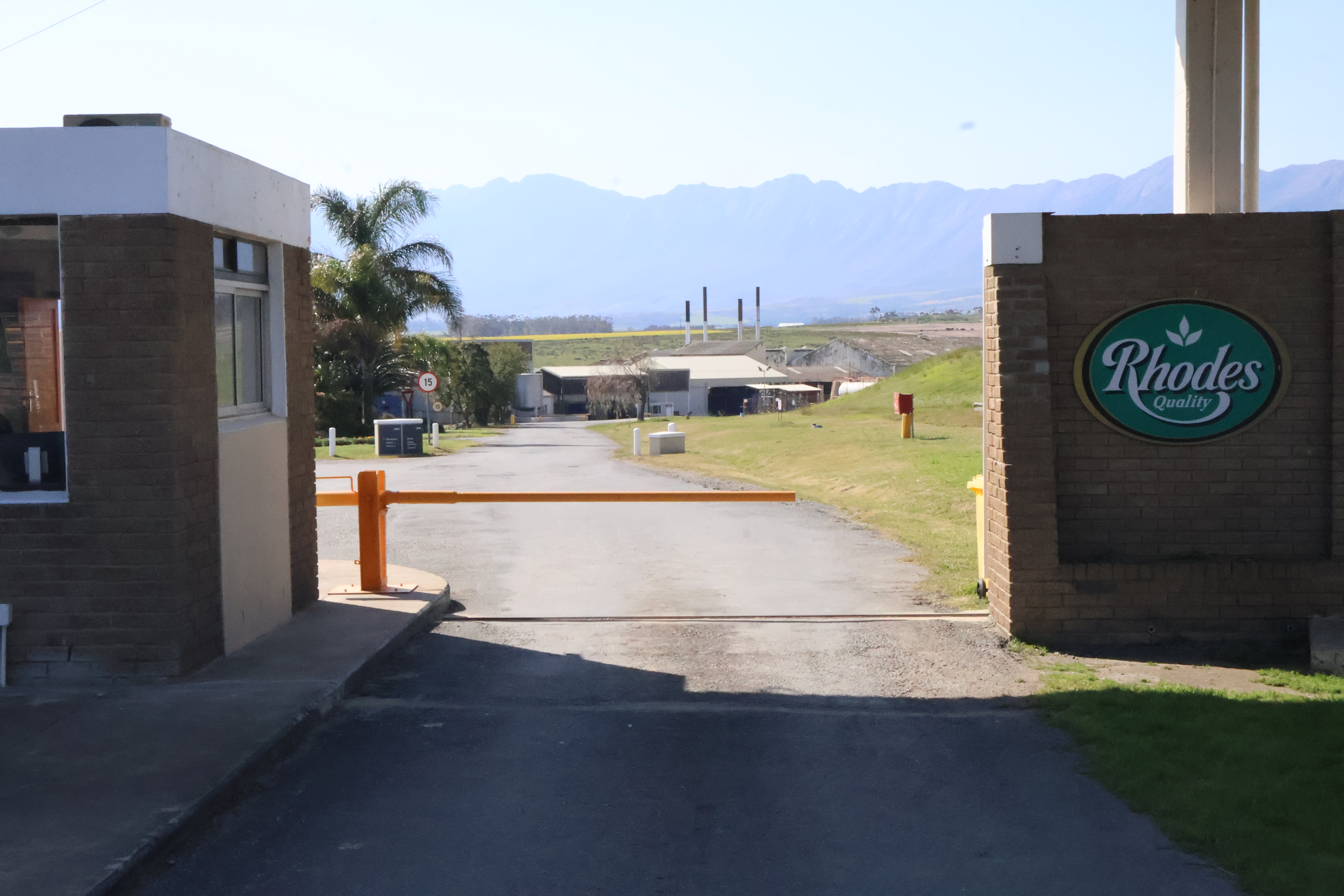
Five Western Cape fruit producers are asking the high court to force Premier to take their fruit for the coming harvest. Archive photo: Greg Dor
- Fruit producers, a union and the Competition Commission are up in arms over Premier’s planned closure of its cannery in Tulbagh.
- Five Western Cape fruit producers are asking the high court for an interim order to enforce their supply contracts with Premier for the harvest which begins next month.
- The Competition Commission wants the approval of Premier’s R6.5-billion merger with the Rhodes Food Group revoked because the commission says Premier failed to disclose its plans to close the cannery.
- The Agricultural, Food and Allied Democratic Workers’ Union is challenging the retrenchment consultation process and says thousands of seasonal workers will not receive severance payments.
- Premier denies withholding information or misleading the commission, saying the closure decision was made after the acquisition.
Five Western Cape fruit producers have launched an urgent application in the Wester Cape High Court to compel Premier to honour supply contracts for the 2026/27 harvest, after the company said it would no longer buy fruit for canning.
The producers say they may be ruined if Premier refuses to take their fruit as contracted. They seek an interim order requiring Premier to receive, grade and pay for the fruit while their contracts are referred to arbitration.
Meanwhile, Premier’s planned closure of its Fruit Products Western Cape cannery in Tulbagh is facing opposition from workers and the Competition Commission.
The Competition Commission asked the Competition Tribunal on 6 October to revoke its approval of Premier’s acquisition of Rhodes Food Group (RFG), alleging that the companies had failed to disclose plans for the closure before the merger was approved.
Premier’s R6.5-billion acquisition of RFG was completed at the end of March. It announced its plans to close the cannery four months later.
Premier denied withholding material information and said the decision to close the factory was made after the merger, because of worsening commercial conditions.
Meanwhile, the Agricultural, Food and Allied Democratic Workers’ Union (AFADWU) is disputing the way the consultation process was conducted and the voluntary severance agreements offered to employees.
Producers
The five applicants in the high court grow peaches and apricots for canning in the Robertson and Montagu districts. In a founding affidavit on 14 October, Hendrik Bruwer Kloppers, director of Agter Die Bos Plaas, said the producers have long depended on the Tulbagh cannery. His farm has supplied the factory uninterrupted for 35 years. Other applicants have also supplied it for decades.
The producers each have supply agreements originally concluded with RFG Foods. They said Premier assumed these rights and obligations when it acquired RFG.
According to the affidavit, Premier’s attorneys wrote to the producers on 5 October, stating that Premier and RFG Foods no longer intended to continue purchasing deciduous fruit for canning and would no longer receive deliveries.
The producers argue that the supply agreements require written notice of termination, over at least two further harvest seasons. They said Premier has refused to give that notice and is in breach of the agreements.
The producers said they have referred the dispute to arbitration and have elected to hold Premier to the contracts.
Pending the outcome of the arbitration proceedings, the applicants ask the court to direct Premier to receive, grade and pay for each applicant’s contracted fruit for the 2026/27 season.
The producers said timing is critical because harvesting is due to begin in November. They said that without confirmation of delivery arrangements, bins and intake facilities, fruit could be left unharvested or without a viable market.
Kloppers said the consequences would extend beyond the applicants’ farms to their permanent and seasonal workers and the rural communities where they operate.
The producers warned that they could face losses of tens of millions of rand, with some farming operations at risk of insolvency or closure.
The producers also argued that alternative markets cannot absorb their volumes.
They said Premier’s proposal for an after-the-season reconciliation would not provide the certainty they need about a buyer, delivery point, price or payment date.
The application is set down for 9 November.
Commission seeks to revoke merger approval
The Competition Tribunal approved the acquisition on 6 March 2026, subject to conditions that included protections against retrenchments resulting from the merger.
The commission alleges that Premier and RFG had discussed the possible closure of the Tulbagh factory before approval but did not disclose this during the merger review. The commission said it had specifically asked the companies about plans to close, integrate or consolidate facilities.
Siyabulela Makunga, the commission’s spokesperson, told GroundUp that the investigation found the companies had “failed to disclose information about the contemplated closure”, and this omission prevented the commission and the tribunal from properly assessing the effects of the merger on competition and the public interest.
Makunga said the Tulbagh cannery is one of only two fruit-canning facilities in South Africa; closing it “would remove the only competitor to Langeberg Foods in the domestic market, effectively creating a monopoly”.
As a consequence, there would be job losses, reduced export opportunities and the loss of a longstanding market for fruit producers, said Makunga.
The commission estimates that about 200 producers use the factory as a route to market. More than 400 permanent and fixed-term employees and thousands of seasonal workers would be affected.
The commission has asked the tribunal to preserve the factory’s productive capacity while the dispute is considered. This involves maintaining the site, machinery and equipment, preventing the implementation of voluntary severance agreements and reinstating affected employees who wish to return.
The commission has requested an expedited hearing.
Premier denies withholding information
In a statement, the company said: “Premier rejects any suggestion that it acted unlawfully, withheld material information or sought to mislead the Commission or the tribunal during the merger review process.”
Premier said it had engaged with the commission since July about the potential closure and provided a chronology and supporting documents.
The company said the closure was not planned when the merger was approved. The decision was taken only after the transaction had been implemented and was unrelated to the acquisition.
It cited changing global demand, pressure in export markets, rising input costs, lower factory utilisation and the need for greater scale to compete in international markets.
The commercial pressures affecting the cannery would have existed regardless of the acquisition, the company said.
The tribunal will have to consider the competing accounts and decide whether the merger approval should be revoked or its conditions amended.
Union challenges closure process
In an urgent Labour Court application dated 18 September, AFADWU asked the court to stop Premier and its head of group employee relations from implementing a section 189 retrenchment process. The application was initially set down for 28 September. A hearing took place online on 5 October, but judgment has not yet been handed down.
In its affidavit, the union argued that consultation had not been exhausted and that alternatives to closure had not been properly considered.
It sought an order halting the voluntary severance process until all possible alternatives had been explored, including allowing employees who had signed agreements unintentionally or under duress to return if another solution was found.
It said consultations began on 6 August, when Premier said the factory was not profitable and was under pressure from US tariffs and competition with Chinese products.
AFADWU said answers to questions raised during consultation were due by 20 August but that it received only a partial response on 23 August.
At a later meeting, Premier presented financial information covering 2022 to 2026, which the company treated as confidential, according to the union’s affidavit.
The union said it requested an extension of the 60-day consultation period to investigate alternatives, but Premier refused.
The affidavit also said Premier offered permanent and fixed-term employees voluntary severance packages of R50,000, with five days to sign, from 14 to 18 September. The union argued that the agreements included a waiver of rights under section 189 of the Labour Relations Act and that seasonal workers were offered no financial incentive.
AFADWU provincial secretary Nyaniso Gqalaqha told GroundUp that the union had expected the Commission for Conciliation, Mediation and Arbitration (CCMA) commissioner facilitating the consultation process to stop proceedings while the union pursued its court application. Instead, he said, the commissioner had declared the final consultation complete on 30 September, effectively putting an end to the process.
Premier confirmed that the section 189A consultation process concluded on that date. It said 407 of 409 affected employees accepted voluntary severance agreements, while the remaining two would remain employed within the group.
“As a result, no retrenchments will be implemented,” the company said.
Gqalaqha said around 2,800 seasonal workers would not receive severance payments and that about 114 employees would remain on contract until the end of February. (These figures were supplied by the union and have not been confirmed by Premier.)
Future of the site and fruit producers
AFADWU raised the possibility of a buyer taking over the Tulbagh site.
Gqalaqha said the union gave Premier the details of a potential buyer during consultations. He said the union subsequently heard from the prospective buyer that any sale might be conditional on the factory no longer processing fruit for canning.
Premier confirmed that it is engaging with parties interested in “utilising the Tulbagh site and repurposing it for more economically viable uses”.
It has not confirmed that a buyer has agreed to take over the cannery as a going concern.
The company also indicated that it intends to acquire some fruit planned for the 2026/27 harvest and has offered to compensate producers for shortfalls.
The Premier Group is offering Western Cape peach producers R3,250 per tonne to settle their supply agreements. Producers who accept the offer will receive payment by the end of October but will give up contractual rights.
Support independent journalism
Donate using Payfast

Don't miss out on the latest news
We respect your privacy, and promise we won't spam you.
Next: Cleaners for luxury property rentals go on strike in Camps Bay
Previous: Rhodes University launches probe into water after gastro outbreak
© 2026 GroundUp. This article is published under the GroundUp Republication Licence Version 1.0. Email [email protected] to request permission to republish.