
Permit chaos leaves Joburg traders in limbo
City blames delays on its legal battles with SERI
 Add GroundUp on Google

Rose Mhlanga has been selling fruit and vegetables along Rissik Street in Joburg’s city centre for 30 years. She also has a smart card permit. After being chased away by metro police in October, she has returned to her stall. “I look after three grandchildren. I have to do my business for them to survive,” said Mhlanga. Photos: Kimberly Mutandiro
- From October 2025, the City of Joburg removed hundreds of informal traders working in the city cnetre, citing a lack of compliance with trading bylaws.
- The Socio-Economic Rights Institute, acting for the traders, went to court, where the City of Joburg was ordered to do verification, registration and allocation of trading spaces by 18 November 2025.
- While the process has started, most traders are yet to complete the process or be allocated spaces.
- The City says it cannot accommodate all traders as some streets are not zoned for trading.
Hundreds of informal traders say they are battling to survive because the City of Johannesburg has failed to issue permits and allocate trading spaces.
According to a November press statement from the Socio-Economic Rights Institute (SERI), the City started to forcibly remove and confiscate stock from informal traders at several sites in the city centre during October.
The once popular De Villiers Street trading site has since been declared a non-trading area.
SERI told GroundUp that the removals were executed without a court order or prior notice, and were in violation of the Businesses Act.
The process was described as “chaotic” by Brian Phaalo, general secretary of the South African Informal Traders Forum.
“Some traders who were removed had smart card permits previously issued by the City. They were removed from spaces allocated to them many years ago, which made no sense.”
After SERI launched a court application on behalf of the traders on 3 November, the Gauteng High Court ordered the municipality to carry out verification, registration, and allocation of trading spaces, a process meant to be concluded within two weeks.
Months later, Phaalo says the municipality is yet to properly register and allocate spaces for all the traders, leaving many of them in limbo.
 Months later, Phaalo says the municipality is yet to properly register and allocate spaces for all the traders, leaving many of them in limbo.
Edward Molopi of SERI said mediation between the parties is ongoing. “There are at least 661 traders affected by the evictions and who are still unable to trade. This means for the past six months they have not been able to trade and make a living to support their families.”
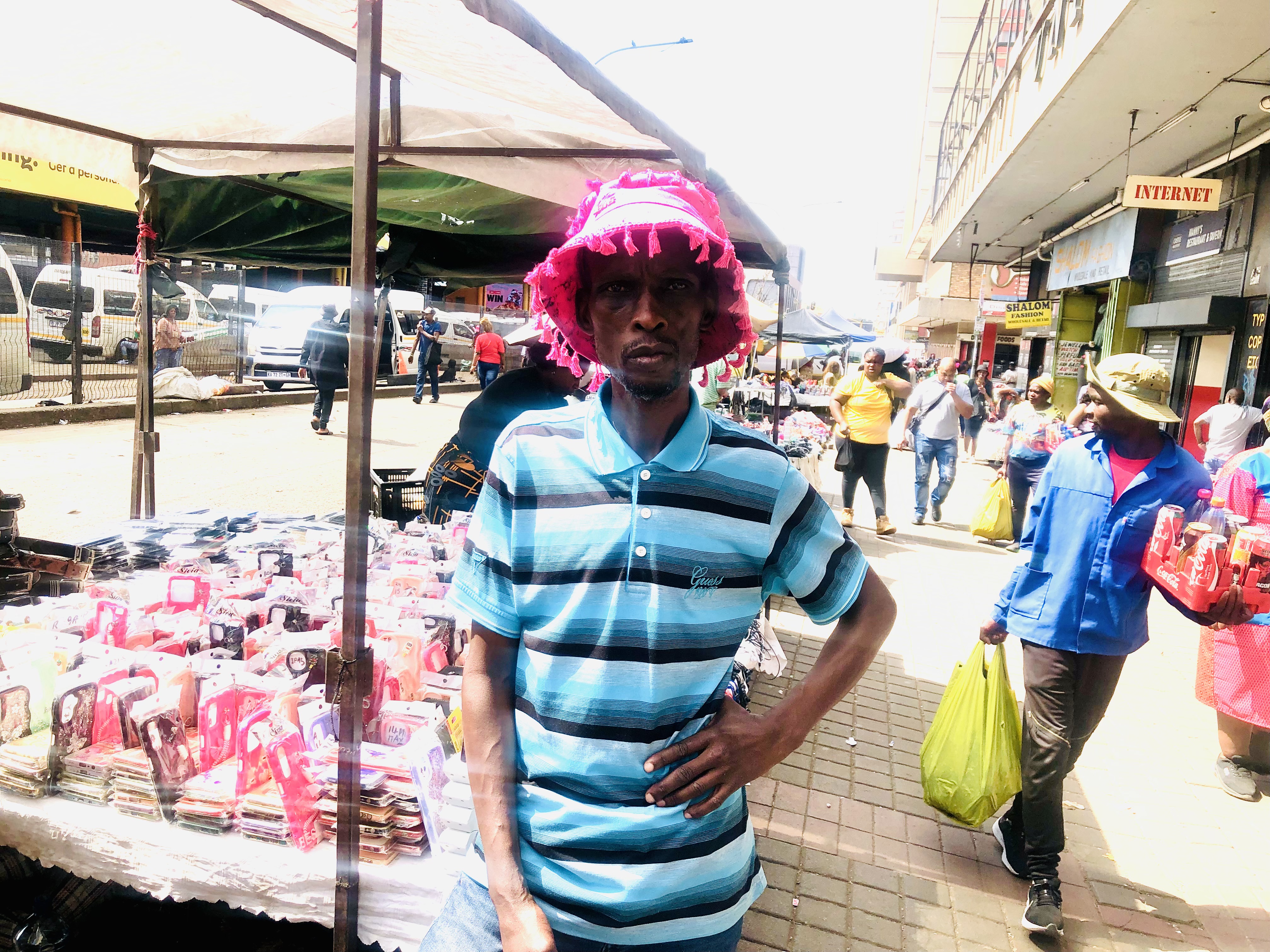
Agripa Bongumusa Buthelezi has traded in the city centre for over ten years and sells cellphone accessories along Klein Street.
Surviving hand to mouth
Despite the strict orders, many traders returned to their sites, desperate to make a living. They have been chased by Johannesburg Metro Police Department (JMPD) officers police and have had their goods confiscated.
“Many of us will rather play cat-and-mouse with the JMPD. If I stay at home, how will I look after my children back home in KZN?” asked Agripa Bongumusa Buthelezi.
Buthelezi sells cellphone accessories along Klein Street. He has traded in the city centre for over ten years.
He said he was issued with a smart card permit years ago, and has paid the municipality for the use of his stall, yet he was chased away in October.
Two months ago, Buthelezi completed the verification process and was issued a new permit. ButJMPD officers still chase him and other traders from the site, he says, saying they are in an undesignated area.
“I’m now surviving from hand to mouth,” said Buthelezi.
Rose Mhlanga has sold fruit and vegetables along Rissik Street for 30 years. She also has a smart card permit. After being chased away by JMPD in October, she has returned to her stall. She says she sustained a chest injury a week ago, when she fell while running away from JMPD officers who confiscated her goods.
“I look after three grandchildren. I have to do my business for them to survive,” said Mhlanga.
City responds
Patson Khosa, from the City’s Department of Economic Development: Sustainable Employment Facilitation Unit, said the process of issuing permits was piloted at Kwa Mai Mai and Jeppe Market in July 2024, followed by an intensive rollout which started in November 2025. She blamed delays on legal battles between the City and SERI.
Khosa said traders who were issued permits were allocated trading spots, but many traders are unlikely to be allocated sites where they previously traded.
“The City can only accommodate [all] the traders based on the proclaimed trading area.”
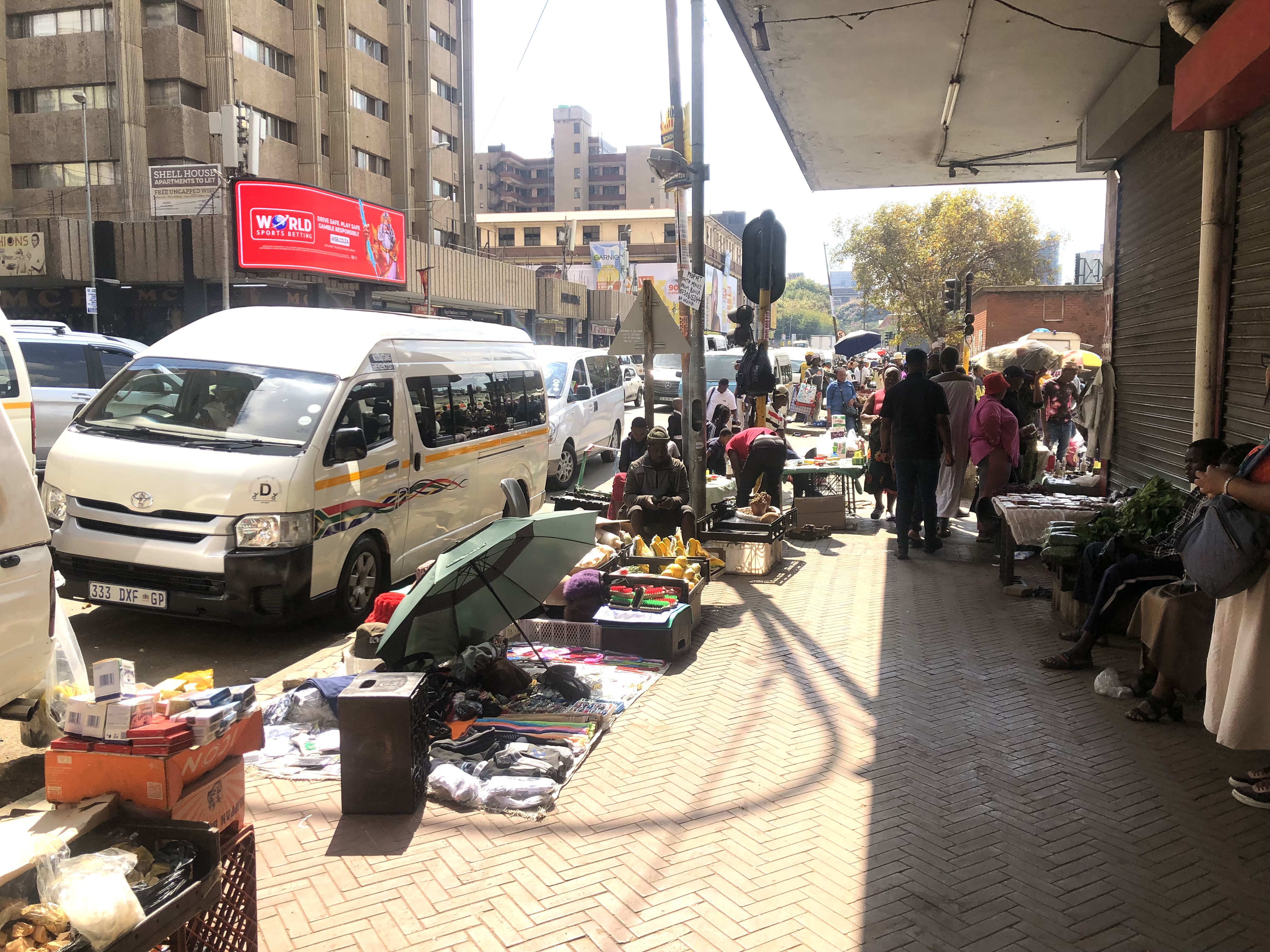
Many traders have returned to the sites they were removed from last year.
Support independent journalism
Donate using Payfast

Don't miss out on the latest news
We respect your privacy, and promise we won't spam you.
© 2026 GroundUp. This article is published under the GroundUp Republication Licence Version 1.0. Email [email protected] to request permission to republish.