
Police fail to stop vigilantes from targeting immigrants in Alexandra
“I think these people want to kill us,” says Malawian street vendor.
 Add GroundUp on Google

A young boy cries as his father, accused by March and March supporters of being an undocumented immigrant, is escorted to a police van. Photos: Ihsaan Haffajee
- Weekly protests on Thursdays by March and March in Alexandra are forcing immigrant-owned shops to close.
- This week, police and protest leaders struggled to control the crowd as they went door-to-door, demanding to see identity documents.
- As the crowd became increasingly hostile, police withdrew from the area completely.
- Several people presumed to be undocumented were taken away in police vehicles. No protesters were arrested.
Since 30 June, March and March has held weekly protests on Thursdays in Alexandra, entering homes and businesses and demanding to see identity documents – despite the police warning them that they have no legal authority to do so.
GroundUp attended this week’s protest. At a briefing before the protest, organisers told participants that the intention was to “remove” immigrants from the area, but urged protesters to act peacefully.
Immigrant-owned businesses were closed in anticipation of the march, while a few shops owned by South Africans remained open.
A convoy of SAPS vehicles followed the procession through Alexandra. Participants started calling for door-to-door searches to identify immigrants and hand them over to the police.

Hundreds of people joined the march in Alexandra.
SAPS officers repeatedly reminded the protest leaders and the crowd that they are not allowed to inspect ID or immigration documents. Only Home Affairs and authorised SAPS officers may do so. But this failed to stop the vigilantes.

Pensioner Maria Chauke was confronted outside her home because she rents part of her property to an immigrant spaza shopkeeper. Protesters told her to end the rental arrangement. The shop itself was closed. Some protesters demanded that Chauke open the shop, but police officers persuaded the crowd to move on.
Chauke told GroundUp she received R2,500 rent from the shopkeeper. “I’ve never had a problem with him,” she said. “That money helps me with my daily needs, and I’ll struggle if I don’t get it.”

Police officers stood in front of a shop on the property of resident Maria Chauke, who was intimidated by the mob, angry that she is renting it to an immigrant.
Police officers were outnumbered as protesters began to enter homes and businesses, demanding identity documents. They tried but failed to stop people from entering buildings. The protest leaders were also unable to control the crowd.
At a car workshop, protesters targeted two men whom they assumed were undocumented immigrants. They were escorted to a police van. A small child cried, clinging to one of the men, his father.
At one house, two women, one with a baby on her back, were placed in a police vehicle after protesters claimed they were undocumented.
Police officers said the women were being taken away for their own safety.

Protesters carried sticks, bats, and metal rods. At least one person had a hacksaw.
Kedibone Lamola, an Alexandra resident who did not join the protest, said the protesters had crossed a line.
“They must march in the street,” she said. “They can’t be coming into our homes, breaking things and traumatising our children. This is not right.”
Karel Shirinda said the front door of his home had been broken during the march. He said many of those participating in the protest stayed in the apartheid-era hostels and that South Africans from minority ethnic groups, including Venda and Tsonga communities, were targeted.
“Most people here have no problem with migrants who have lived in this community for many years,” he said. “I can say that there is no problem. We are one big family. We have to share what we have. But to break somebody’s house, it’s illegal.”
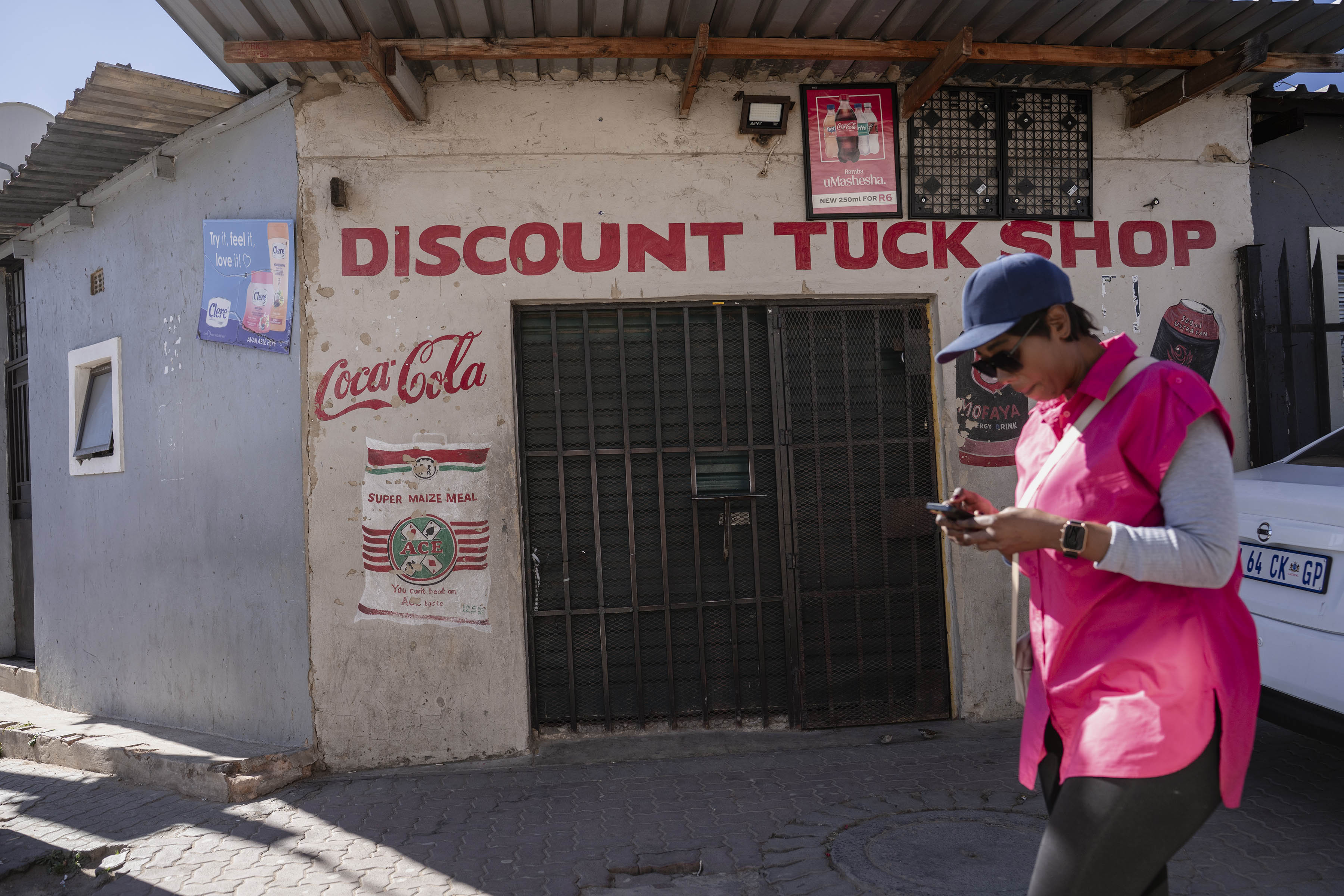
Spaza shops owned by immigrants were closed on Thursday as the march moved through Alexandra.
The crowd became increasingly hostile towards the police officers. As tensions escalated, the police withdrew completely and the protesters continued to move through the neighbourhood unsupervised.
At the Pan African Shopping Centre, street traders hurriedly packed away their goods and closed their stalls as the mob approached.
Lucy Kambusi, a Malawian trader who sells vegetables, shut her stall and hid in a crowd of onlookers before the mob arrived. She watched as protesters struck the closed shutters of nearby businesses with sticks and hammers.
“Every Thursday it is like this now,” she said. “We are just trying to make a small living and not hurting anyone, but I think these people want to kill us.”
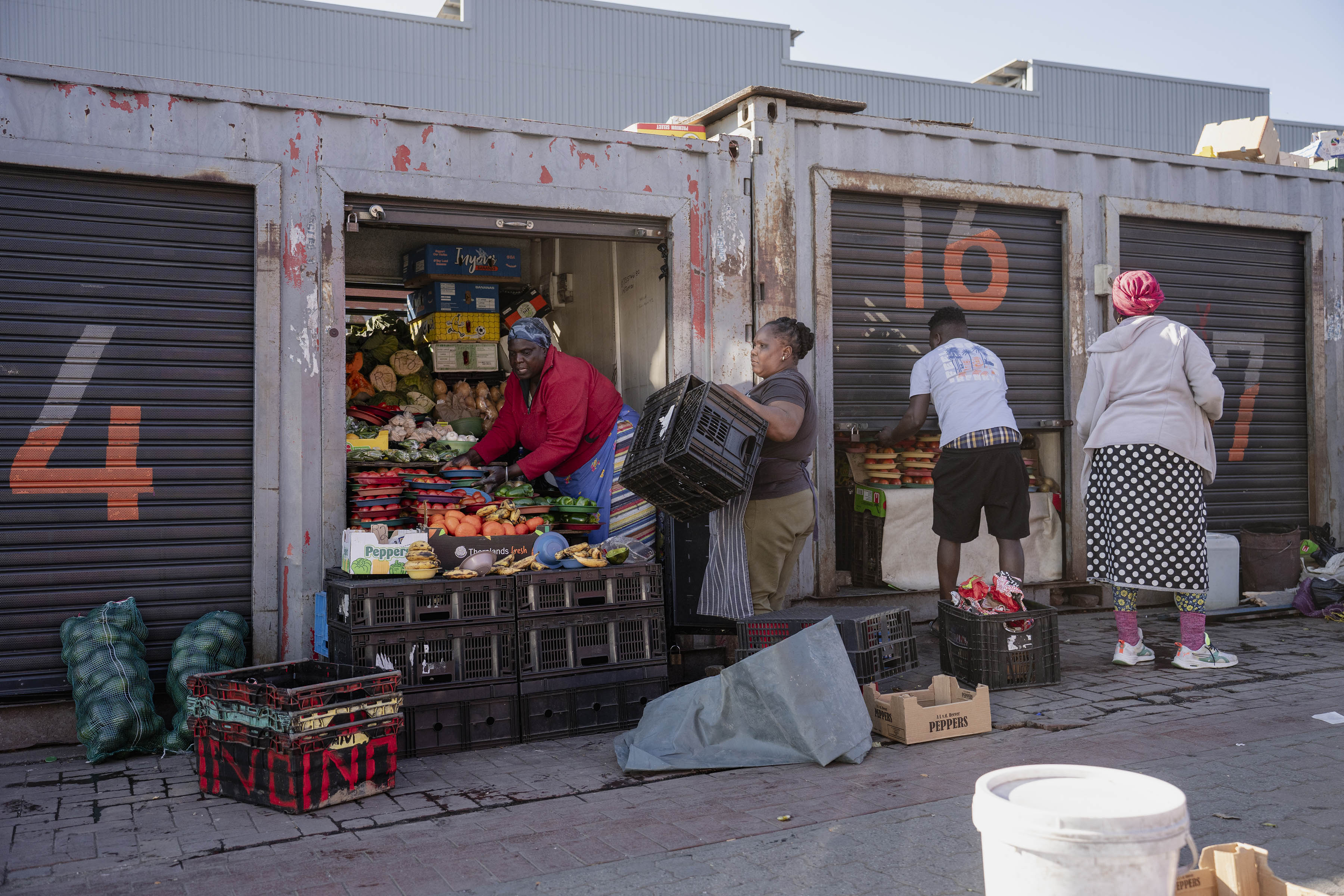
Street traders hurriedly packed away their goods and closed their stalls outside the Pan African Shopping Centre as a mob approached.
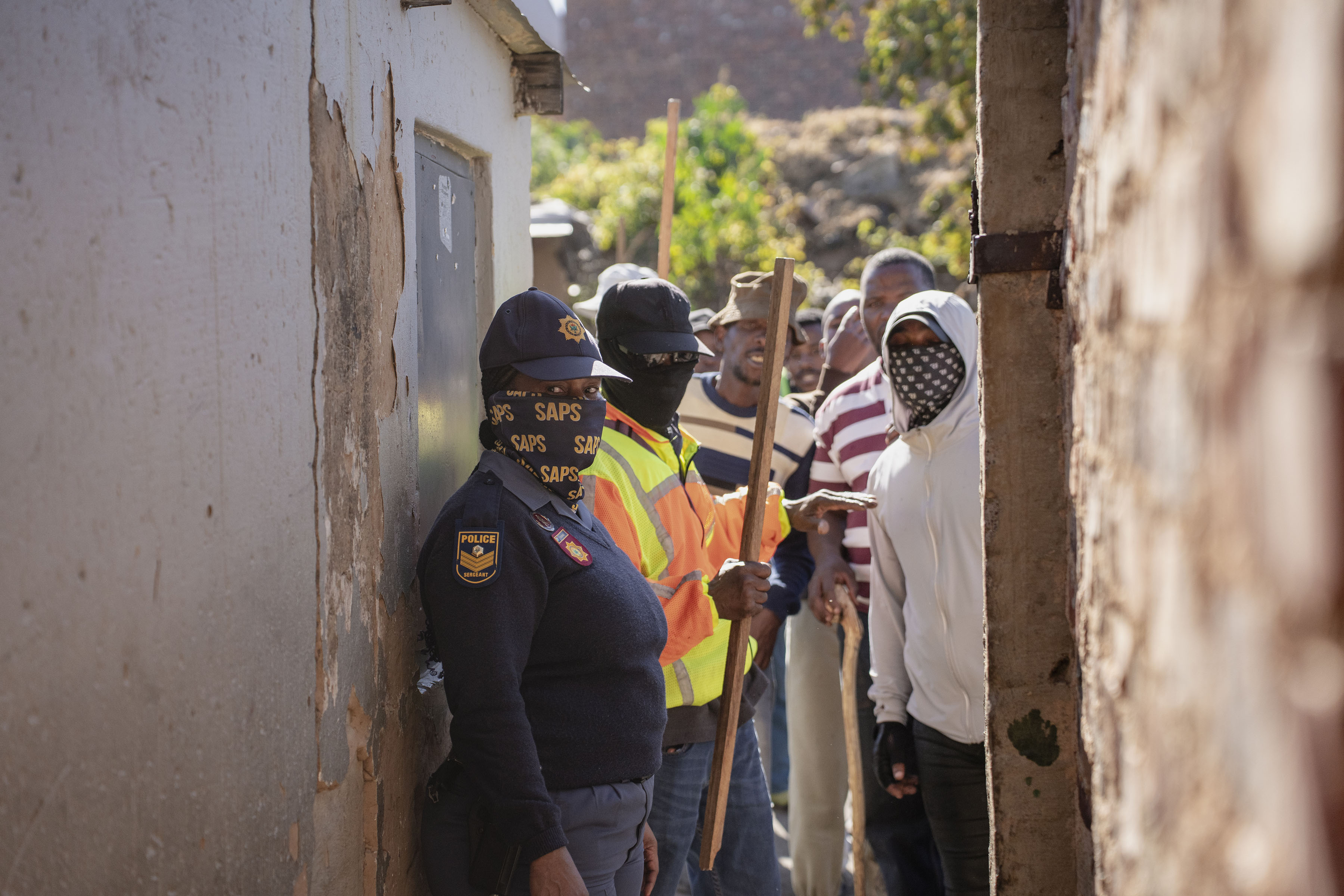
A police officer blocks a group of masked vigilantes armed with sticks from entering a home to check for what they claim are undocumented immigrants.
Support independent journalism
Donate using Payfast

Don't miss out on the latest news
We respect your privacy, and promise we won't spam you.
Next: EThekwini municipality owes Durban plumbers hundreds of thousands of rands
Previous: Time to pay up: a look at municipal debt
© 2026 GroundUp. This article is published under the GroundUp Republication Licence Version 1.0. Email [email protected] to request permission to republish.