
More than 50,000 immigrants have fled SA
38,000 people have quit the country via Musina since the wave of xenophobia started
 Add GroundUp on Google
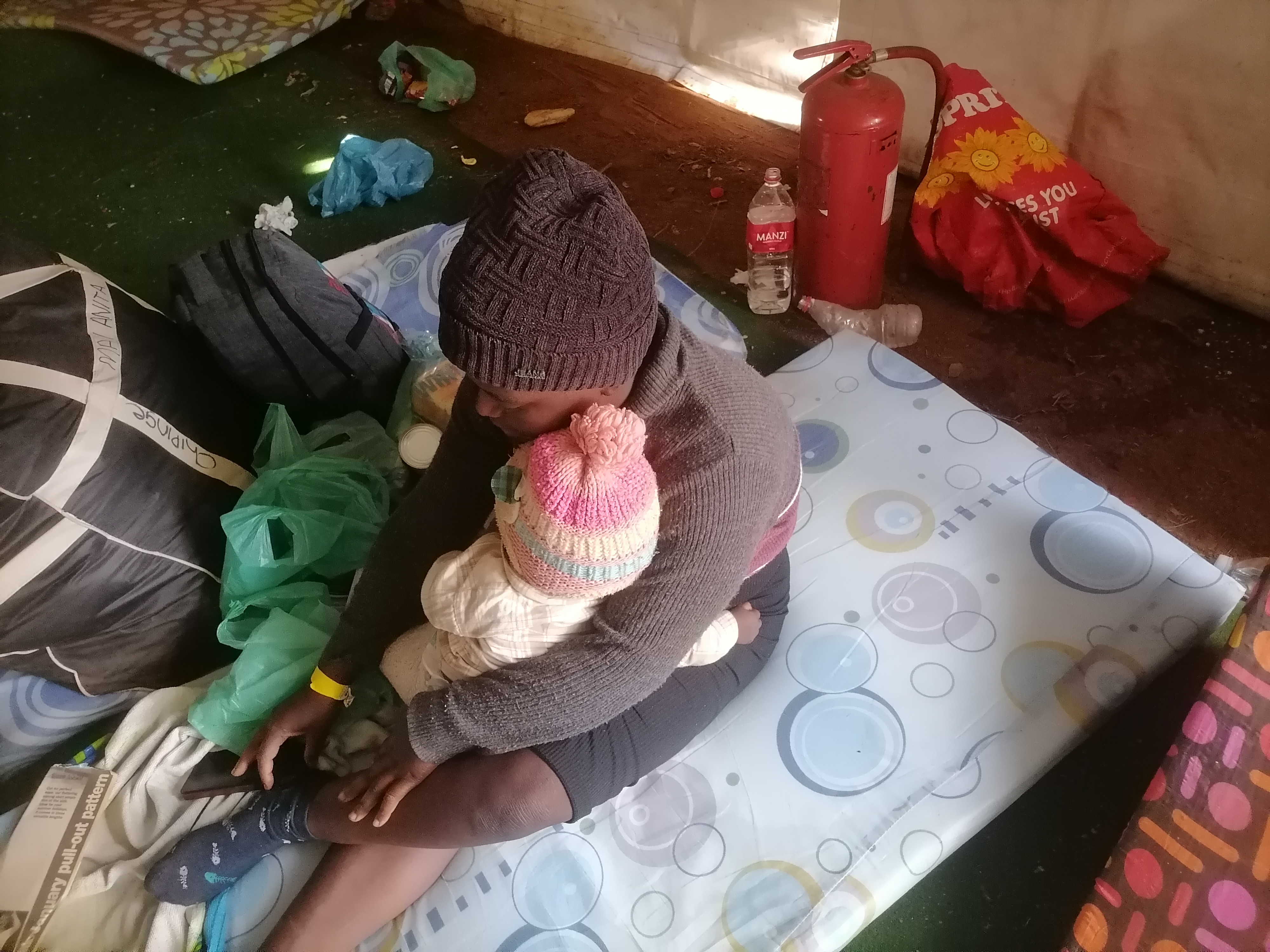
Nyaradzai, from Bulawayo, cradles her child as she waits at the temporary repatriation centre in Musina for a bus home. Photos: Bernard Chiguvare.
- More than 50,000 immigrants have fled South Africa since the wave of xenophobia started last month, according to the Border Management Authority.
- Most have gone through the temporary repatriation centre set up near Musina.
- Most of those who have fled have had to abandon their possessions, often accumulated over years.
“I have a sore throat and my baby is also not well,” said Nyaradzai, a Zimbabwean from Chipinge, sitting outside a tent at the new temporary repatriation centre outside Musina in Limpopo.
“There is dust everywhere and we are sleeping on foam mattresses inside tents. I am sure my child is sick because of these conditions,” she said.
Her husband was standing in a queue to have the family’s documents processed, while she comforted her child in the sun outside the tent.
The family had been living in Lephalale, Limpopo, living from piece work before they decided to flee South Africa in the face of threats of violence.
According to Mmemme Mogotsi, deputy assistant commissioner in charge of communications for the Border Management Authority, 38,000 people have been through the temporary repatriation centre, set up on 26 June on Department of Public Works land about 15km outside the town of Musina. Most are from Zimbabwe and Malawi.

In total, more than 50,000 immigrants have fled the country through all border posts since the wave of xenophobia started, Mogotsi told GroundUp.
Many have left behind furniture and other possessions they had accumulated over many years.
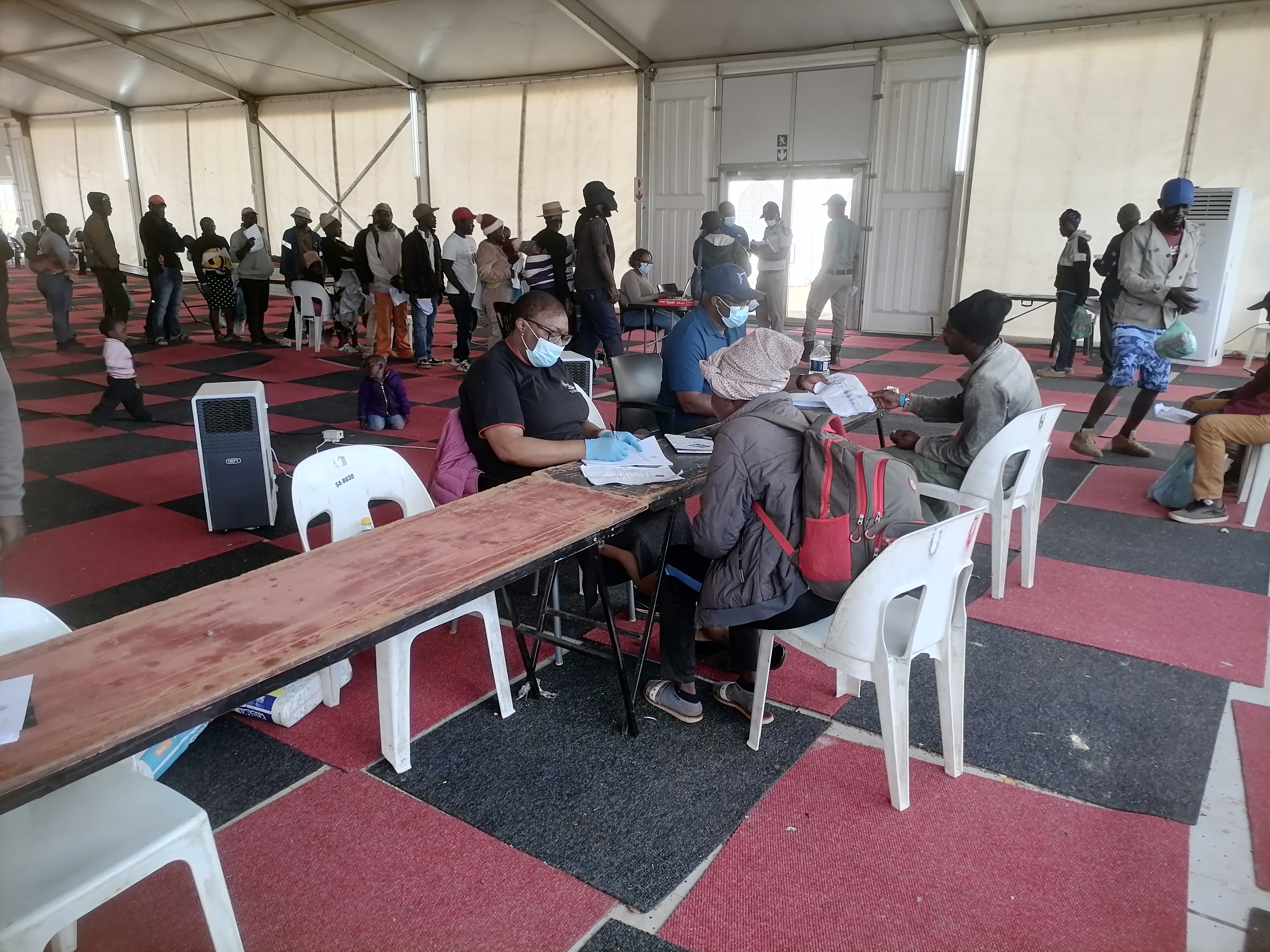
People queue to have their documents processed.
Ntombinkosi Nkomo, from Bulawayo, abandoned nearly everything she had worked for when she fled Robertson in the Western Cape, where she had been working on farms.
“I left my refrigerator, my beds and many other belongings,” she said. “I am just happy to be going home alive. Property can be replaced. Maybe one day I will come back when things are calm. For now, I will look for work in Zimbabwe.”
At the Musina centre, large tents have been erected to house immigrants while they wait to be processed before returning to their countries. Boreholes have been drilled to provide water and mobile toilets have been installed. Men, women and children sleep in the same tents.
There are no bathrooms and several people complained that they have not been able to wash. One, who did not want to give her full name, Nyaradzai told us on Monday that she had not been able to bathe her baby since Friday.
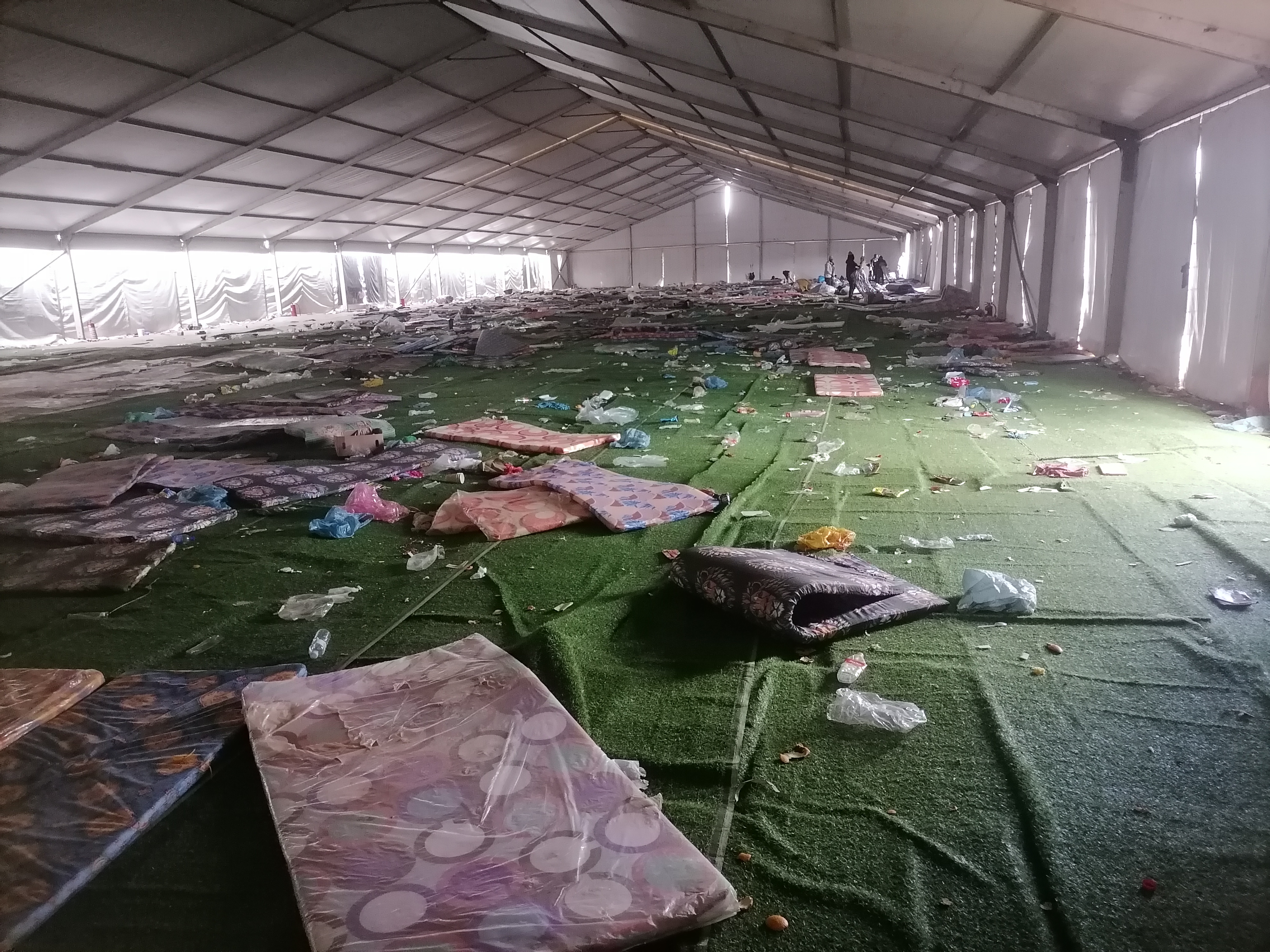
Families have been sleeping on mattresses in the tents.
Rashid Ochi, a Malawian who had lived in Gqeberha for seven years, told GroundUp that he had abandoned almost everything he owned.
“I had no time to pack, so I left most of my belongings behind.” He had one small bag packed with a few clothes and a blanket.
Others in the centre said bus operators would not allow them to load bulky household goods.
“Some of us left our belongings with friends,” one immigrant from Malawi said. “When the situation calms down, we will ask them to send our possessions.”
A 22-year-old man from Zimbabwe, who had been living in Strand, Western Cape, for more than five years, told GroundUp that his landlord had not wanted him to stay.
“When I tried to pay my July rent, my landlord refused to accept it. He was afraid to defend me,” he said. “I selected only a few belongings and left the rest. It is better to go home before the situation gets worse.”
He is heading to Masvingo and has no intention of returning to South Africa.
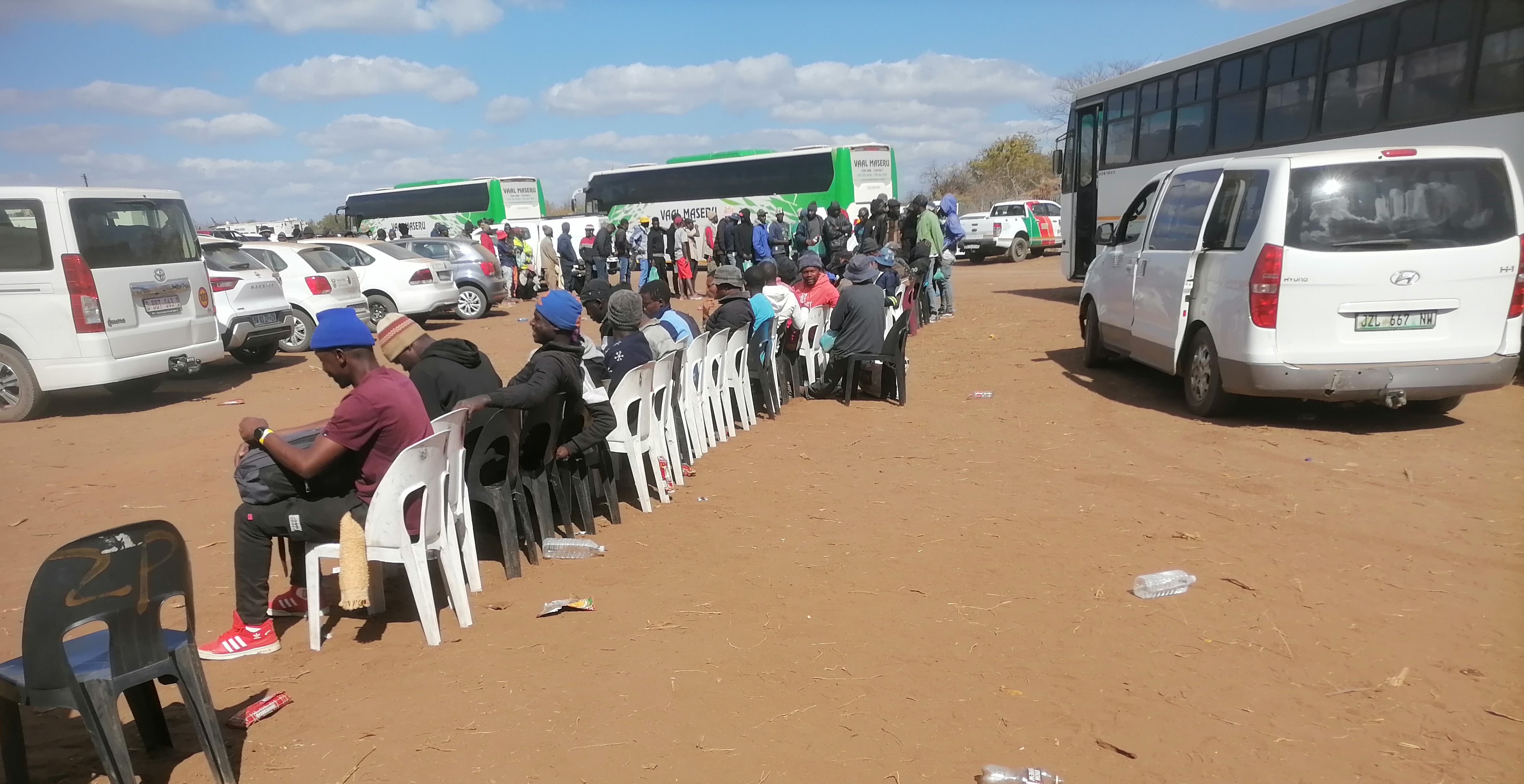
People queue for buses to take them out of South Africa.
“We are giving people hot meals, fruits, drinks, toiletries, diapers, blankets and water while they wait to be processed,” said Clifford Mabe, Gift of the Givers liaison officer. “Over the past seven days we have already served about 20,000 people with meals, and we will continue feeding people until everyone has been processed.”
During a visit by Parliament’s Home Affairs Portfolio Committee on Monday, chairperson Mosa Chabane said the repatriation process was “progressing well”. “The people you are seeing here today are mostly those who arrived yesterday,” he said.
Chabane said he could not say when the process would be complete.
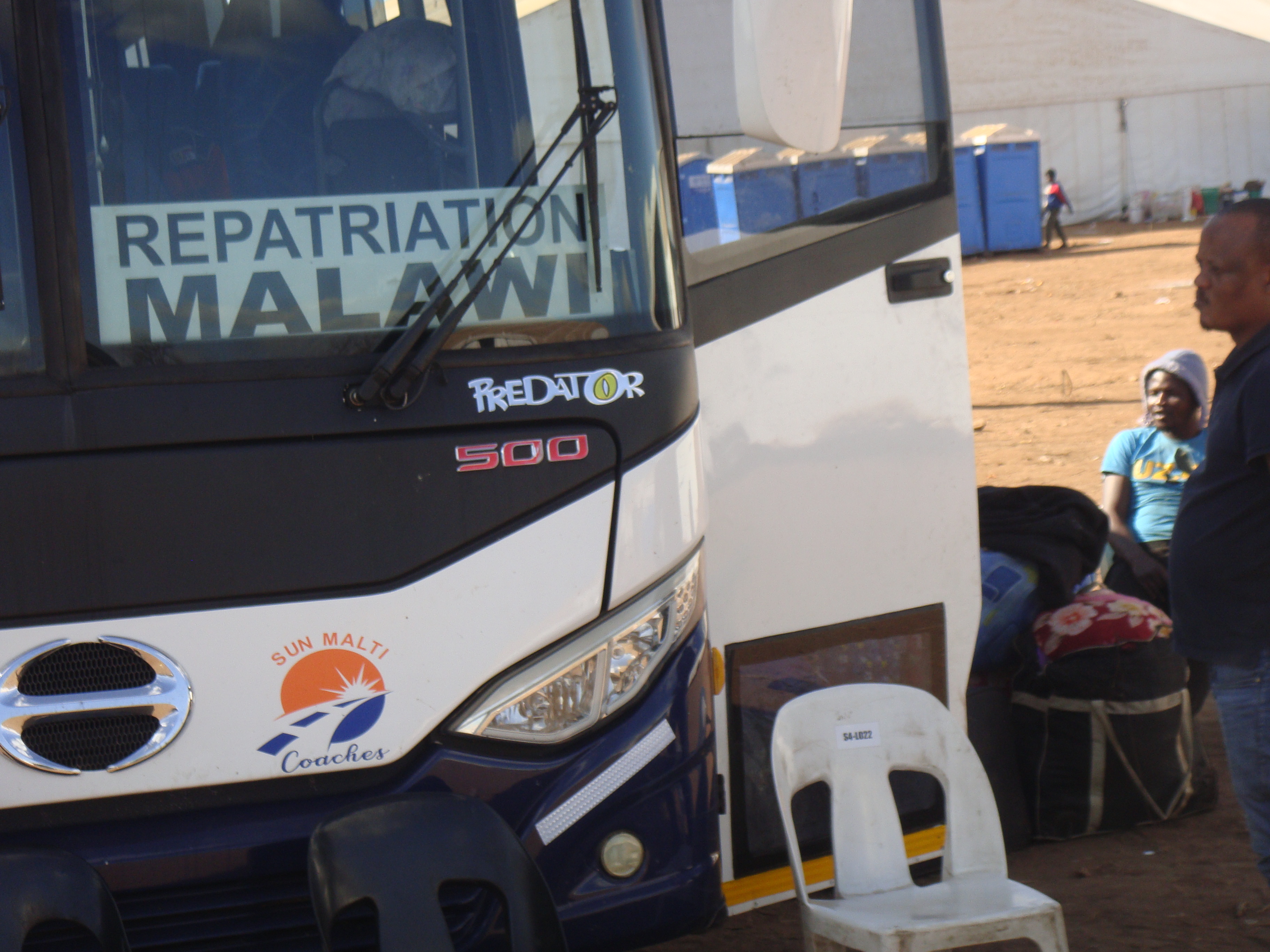
More than 50,000 immigrants have fled South Africa.
Support independent journalism
Donate using Payfast

Don't miss out on the latest news
We respect your privacy, and promise we won't spam you.
Next: OR Tambo municipality dodges questions on failed toilet project
Previous: Court rules “ill-tempered” advocate can’t be a judge
© 2026 GroundUp. This article is published under the GroundUp Republication Licence Version 1.0. Email [email protected] to request permission to republish.