
More than 2.5-million succulents seized from poachers
But this is probably less than a quarter of the illegal trade, CapeNature says
 Add GroundUp on Google
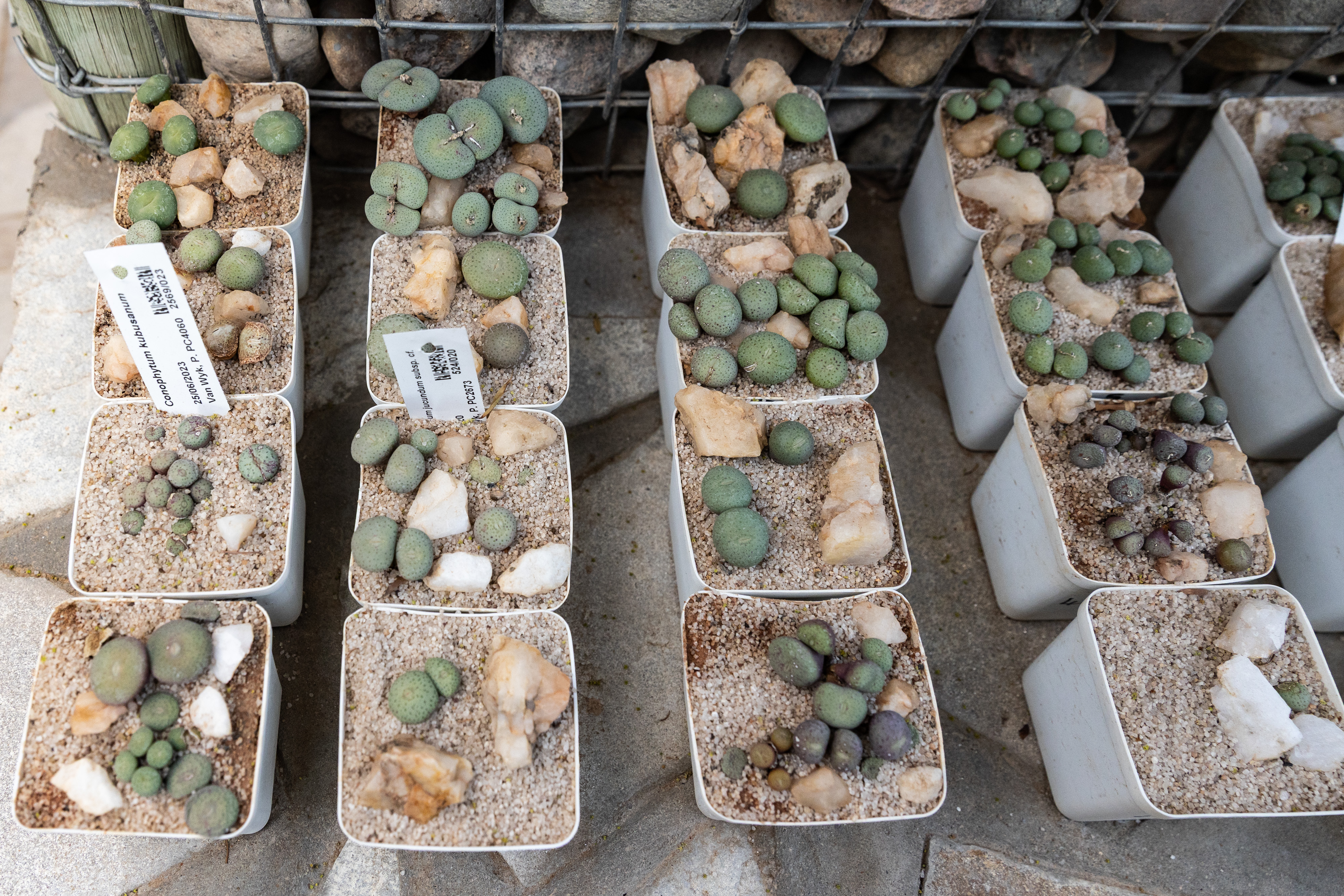
Many species of succulents at the Richtersveld Desert Botanical Garden are endangered due to poaching. Photo: Ashraf Hendricks
Since 2018, about 2.5-million illegally harvested succulent plants have been seized by authorities in the Western Cape. But this probably accounts for less than one quarter of the numbers poached, CapeNature told the Western Cape provincial Parliament on Tuesday.
CapeNature, the South African National Biodiversity Institute (SANBI), the Department of Forestry, Fisheries and the Environment (DFFE), and TRAFFIC, which monitors wildlife trade, made presentations to the provincial standing committee for environmental affairs, as part of a plan to coordinate a response to poaching.
Numbers from TRAFFIC show succulent poaching surging since 2019. Millions of succulents have been illegally harvested in the Northern and Western Cape’s Succulent Karoo region, a biodiversity hotspot with over 2,000 endemic plant species (meaning they grow nowhere else). The plants are sold on markets in China, South Korea, Japan and Germany.
Most are poached in the Northern Cape and moved to the Western Cape, according to DFFE chief director for enforcement Frances Craigie. In her presentation, Craigie noted that from January to June this year, nearly 376,000 plants were seized in 26 incidents, mostly in the Western Cape.
She said policing in the Western Cape is more active and informer networks are better than in the Northern Cape, which has serious capacity constraints.

David Newton, TRAFFIC programme office director for Southern and East Africa, told the committee that poaching is not only an environmental crisis but a “socio-ecological” one, “tying together biodiversity, rural poverty, and organised crime”.
Fieldwork by TRAFFIC showed that local harvesters are often poor and residents from rural communities cite unemployment as a driver of poaching. Local poachers get between R10 and R150 per plant, with some saying they make more than R10,000 over a five-day collecting trip.
“If we want to cut this illegal trade, we have to offer people a transformative or sustainable alternative,” said Newton.
CapeNature’s Deon Hignett said flora crime now makes up more than half of CapeNature’s crime investigations. “The scale of the problem is much larger than many people realise,” he said.
The committee was told that several Conophytum species and subspecies are extinct in the wild, and many more are at risk of extinction. Early poaching focused on Conophytum species, but syndicates have diversified into other endemic plants, such as Euphorbia or Gibbaeum.
In the short term, Hignett recommended strengthening enforcement, better storage for seized plants in order to ensure their survival, and biodiversity crime training for SAPS, prosecutors and magistrates.
He also proposed the return of the now-defunct “green court”, a specialised environmental court which prosecuted several abalone cases in the early 2000s.
“If we lose these species, we lose them forever,” said Hignett.
After the presentations, the standing committee went into a confidential meeting “due to the sensitive nature of issues that may be raised”, according to standing chairperson Dave Bryant.
Support independent journalism
Donate using Payfast

Don't miss out on the latest news
We respect your privacy, and promise we won't spam you.
Next: Thousands of students told to leave Cape Town residences
Previous: Four months of raw sewage on Durban road
© 2026 GroundUp. This article is published under the GroundUp Republication Licence Version 1.0. Email [email protected] to request permission to republish.