
Elections 2026: Blunders in Mangaung are poisoning Free State water
While the municipality loses billions, sewage flows into rivers and residents struggle for water
 Add GroundUp on Google
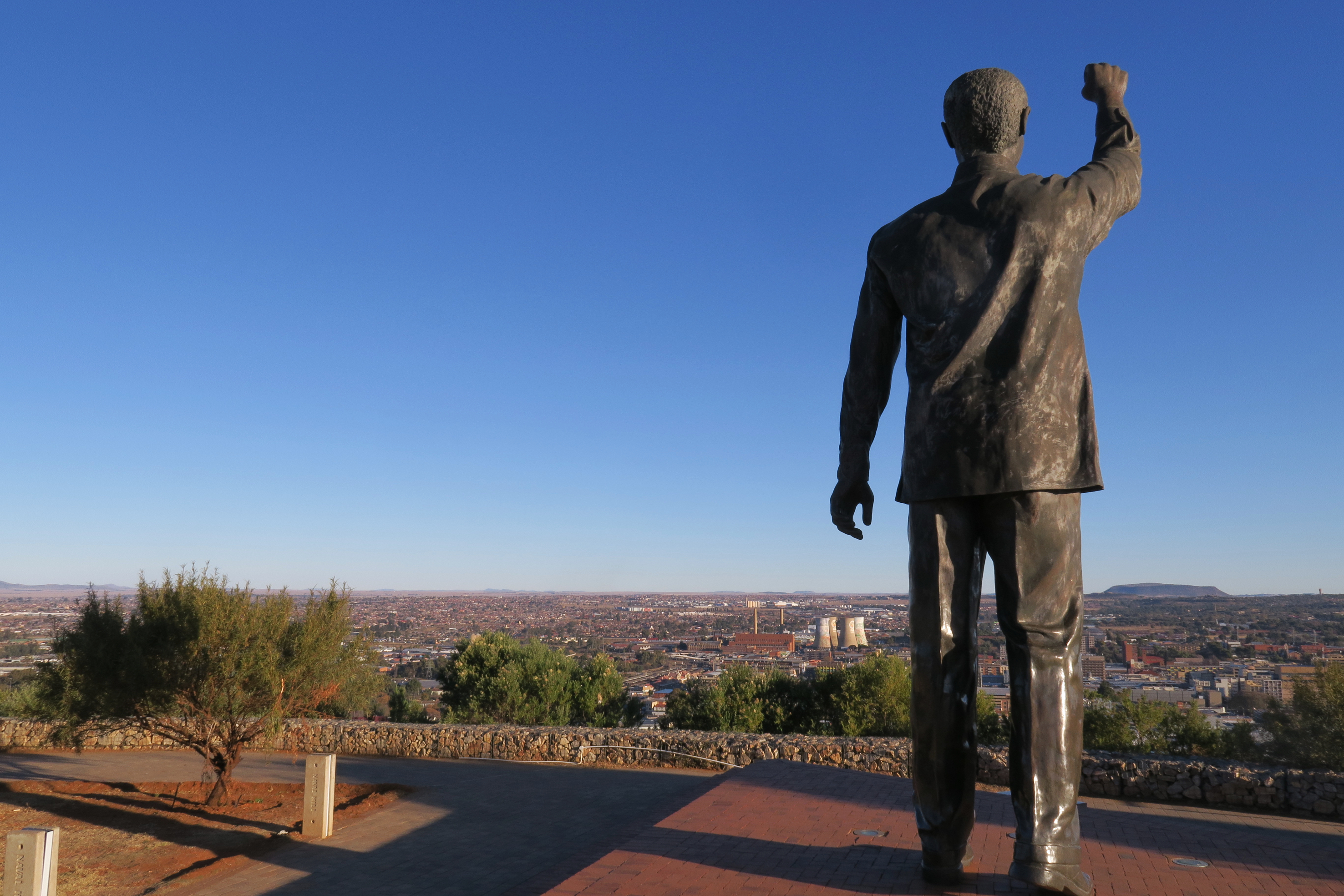
A statue of former president Nelson Mandela on Naval Hill overlooks Bloemfontein. Photos: Steve Kretzmann
- Mangaung Metropolitan Municipality has a water shortage, but loses almost half its water to leaks and billing failures.
- None of the 13 sewage treatment plants managed by the municipality are working properly and sewage is polluting a drinking water supply dam.
- Mangaung has been under administration since 2019.
- The municipality returned R141-million in unspent conditional grants to the National Treasury, including R49-million earmarked for informal settlements.
- Mangaung has accumulated R5-billion in unauthorised expenditure over four years, and the SIU has been ordered to investigate serious maladministration and unlawful spending.
Alongside the deeply potholed Denne Avenue on the south-eastern edge of Bloemfontein, leaking municipal water pipes have created a 1,500 square metre vlei on land belonging, ironically, to the Rivers of Living Waters Ministry.
About 2.5km further along, flanked by sewage-saturated fields, is the Sterkwater wastewater treatment works, one of Mangaung Metropolitan Municipality’s main sewage plants.

The sewage from townships such as Rocklands, Turflaagte and Sonskyn does not even flow into the plant because the plant’s three Archimedes screw pumps are missing.
“Nothing is working here,” a municipal employee, not authorised to speak to the press, told GroundUp at the gate.
Every day, a flood of approximately 25-million litres of raw sewage spews into the roadside ditch in front of the entrance and flows roughly 400 metres along the road to where it spills into a field. From there, it seeps into a canal and flows a further 600 metres into the Renosterspruit.
This highly polluted river, a source of irrigation for crops on the north-east of the city, flows into the Modder River and ultimately the Vaal.
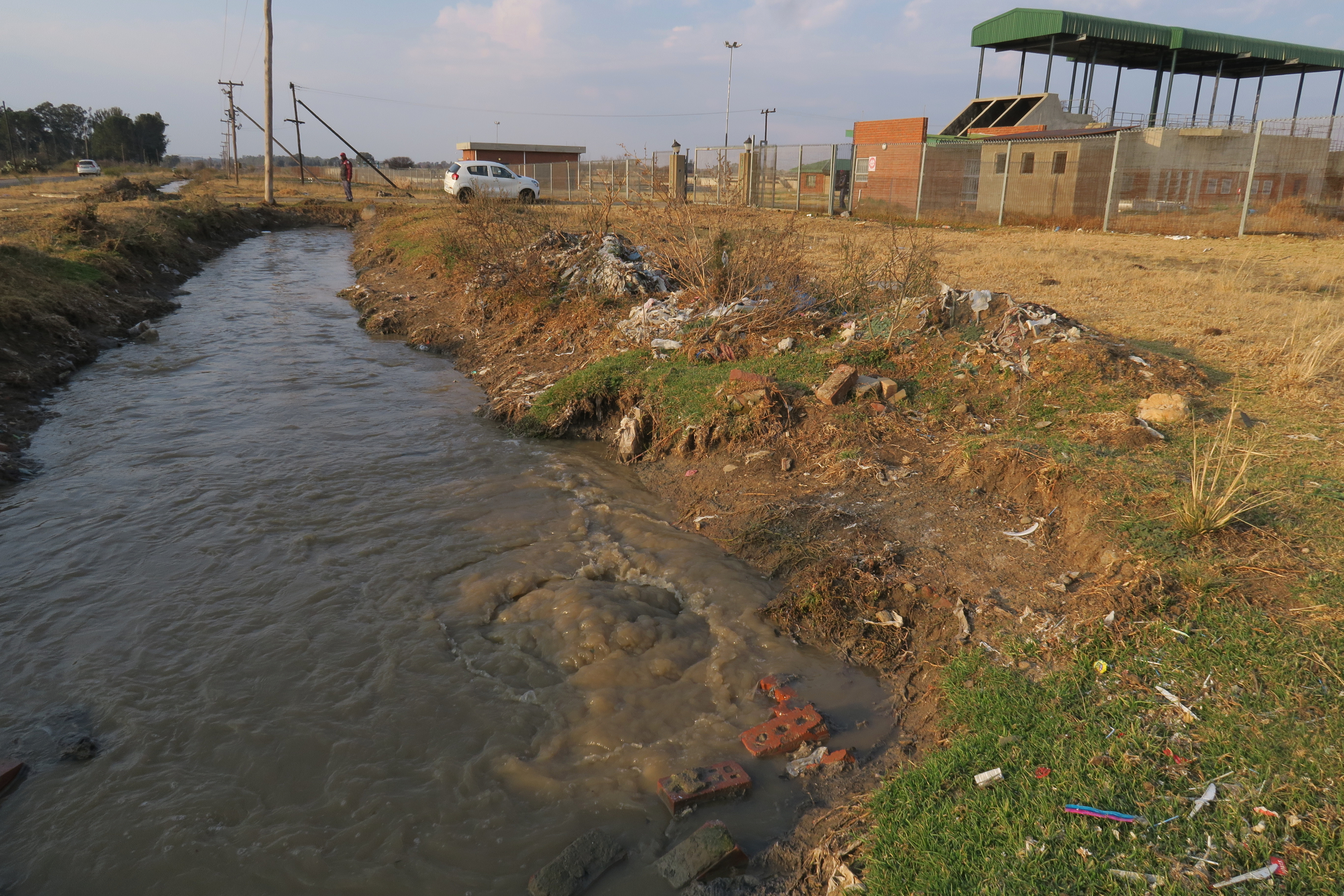
The Sterkwater wastewater treatment works, where no sewage is currently treated. The empty housing for its three Archimedes screw pumps can be seen to the top right of the photograph.
According to effluent quality results posted on the Department of Water and Sanitation (DWS) Integrated Regulatory Information System, none of the 13 sewage treatment works managed by the municipality are working properly.
Only Bloemdustria – one of the smallest works, treating 2,000 kilolitres (kL) a day – meets minimum microbiological compliance (the amount of allowable faecal bacteria in the effluent released from the plant). However, it has 0% compliance for the other three effluent quality indicators, including chemical composition.
Seven of the municipality’s sewage treatment works have 0% compliance across all four effluent quality indicators.
Sterkwater is given a 20% score for microbiological compliance, yet no sewage appears to be entering the plant and its equipment isn’t working.
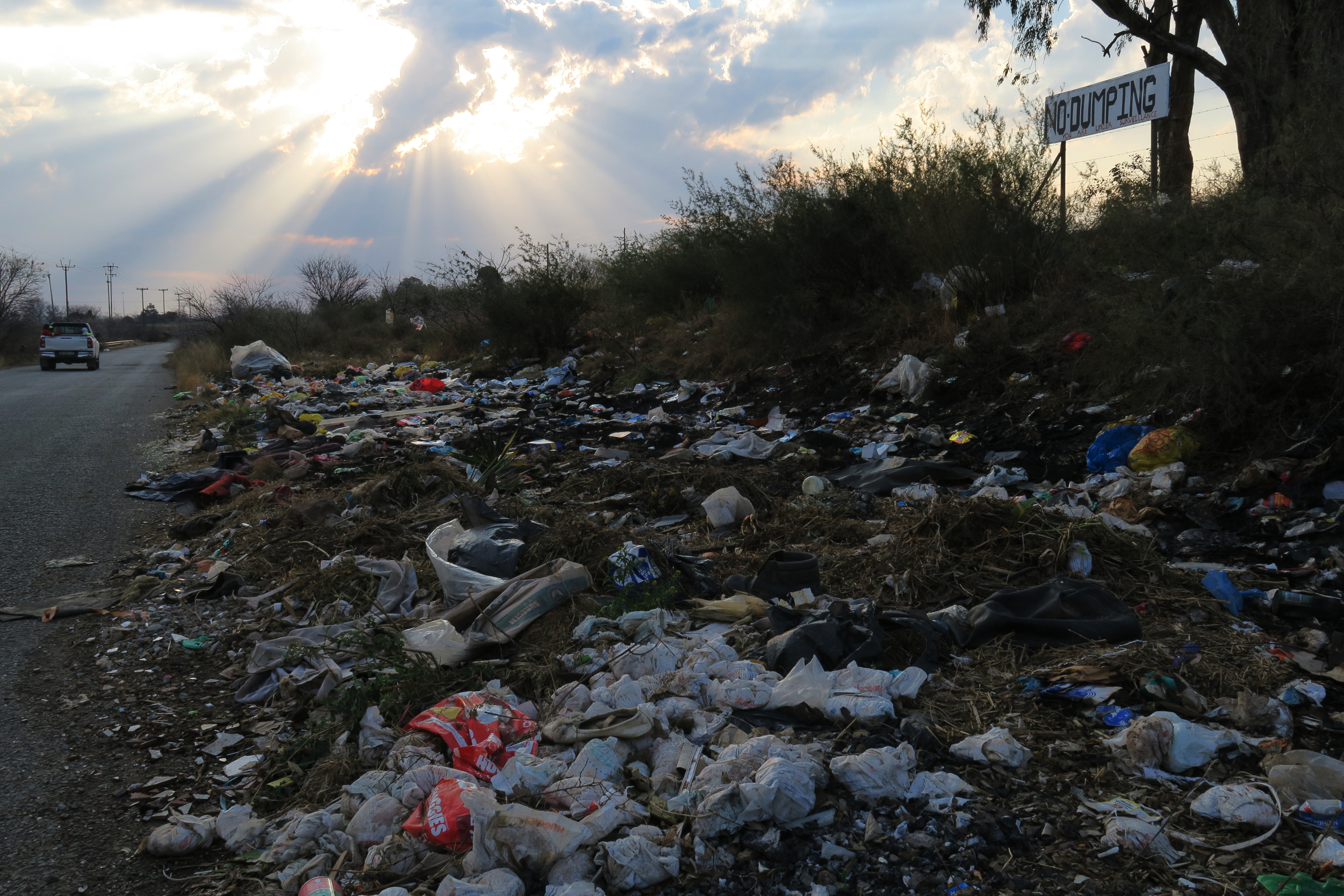
Besides sewage, plastic and other refuse litter fields in and around Bloemfontein. Many residents complained of irregular refuse collection.
Sewage pollution and water losses
Untreated sewage from two of the municipality’s failing treatment works – Botshabelo and Thaba Nchu – flows into the Maselspoort Dam which supplies drinking water to Bloemfontein.
The dam’s deteriorating water quality was noted in a request for proposals (RFP) – issued by the Industrial Development Corporation in March this year – for a study and business case for the Maselspoort water re-use project.
Implemented by Infrastructure South Africa (ISA) and the municipality, the project aims to redirect the approximately 40-million litres of effluent per day from Mangaung’s Bloemspruit and North-Eastern sewage treatment works to Maselspoort Dam.
The latest DWS Green Drop report (2025) shows that these two sewage treatment works are failing, and quality indicators show that the daily effluent they release is not much better than raw sewage. This effluent, along with that from Sterkwater, flows into the Renosterspruit, which joins the Modder River below Maselspoort Dam.
The Botshabelo and Thaba Nchu sewage works currently contribute to these upstream effluent discharges, along with informal settlements which receive no sanitation services.
Unless the Bloemspruit and North-Eastern sewage plants are fixed and start to release effluent that meets national minimum standards, pumping this effluent over the watershed to Maselspoort, which is the current plan, would contribute to what the RFP describes as “declining raw water quality, and increased eutrophication [causing oxygen depletion] linked to upstream effluent discharges”.
ISA and the metro want to divert the Bloemspruit and North-Eastern effluent into Maselspoort, because the municipality is “experiencing a significant and persistent decline in potable water security”, according to the RFP.
Contributing factors are ageing infrastructure, along with “deteriorating source water quality” and “underinvestment in new supply schemes”.
The RFP says the municipality’s daily supply is about 68-million litres (ML) short of the average demand of 255 ML per day.
“Without urgent intervention, the potable water shortfall could reach 154 ML/day by 2040, significantly compromising service delivery and economic activity in the Metro,” states the RFP.
It says the water re-use scheme is “the most critical short- to medium-term intervention”, yet it was conceptualised 12 years ago.
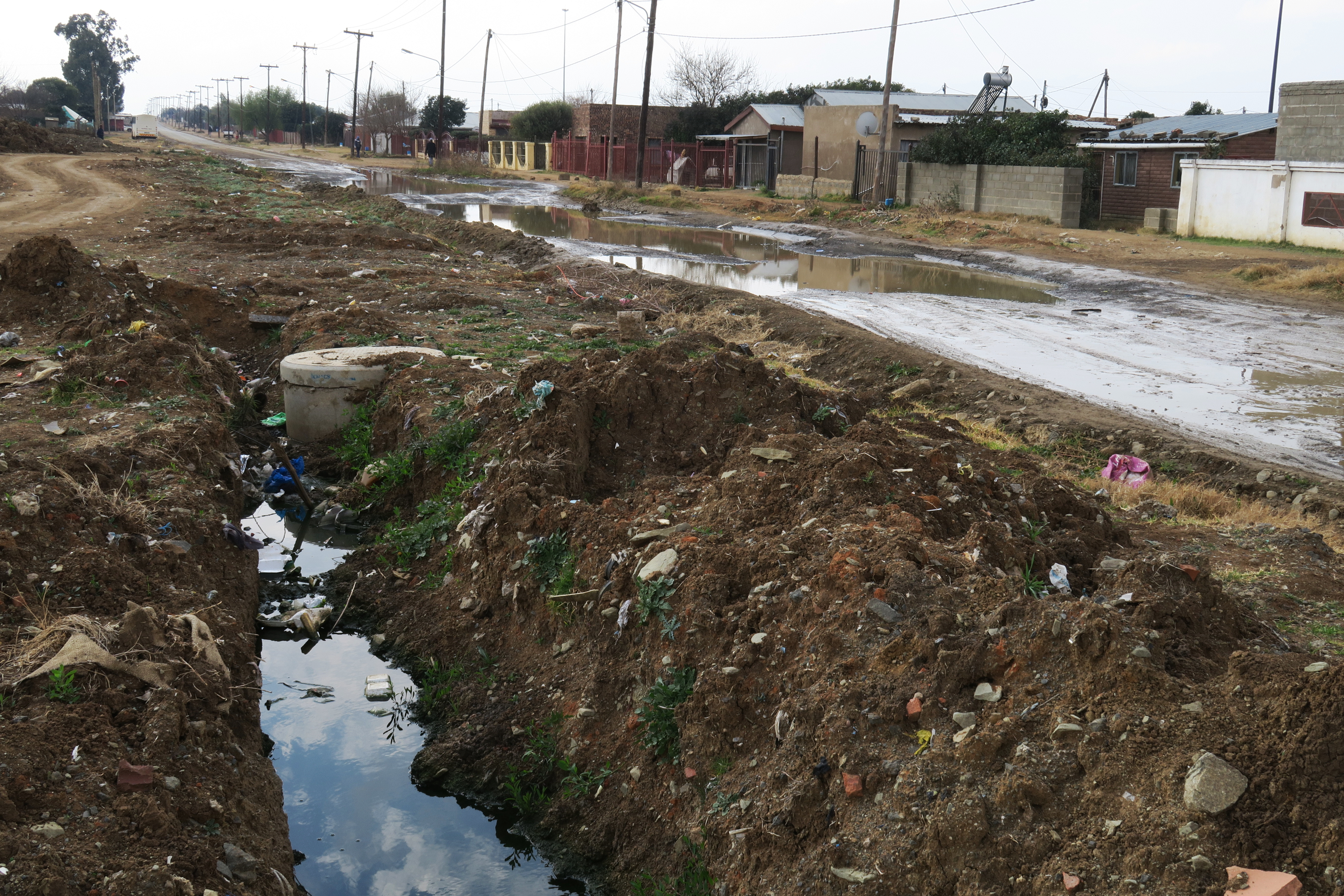
In the midst of the dry season, and despite weeks without rain, clean water floods streets across Bloemfontein, such as this one in Freedom Square in the midst of the city’s south-eastern townships.
While the municipality has a demand shortfall of 68-million litres per day, it is losing 112-million litres per day.
Almost half the drinking water it purchases from Vaal Central Water is lost through billing failures and leaks, such as those that have created the vlei along Denne Avenue.
The municipality’s audited 2024/25 financial statements show 85-million kL of water was purchased but only 44-million kL sold.
Leaks, unmetered water use and a lack of billing resulted in 41-million kL of water being lost, amounting to a loss of R495-million.
Municipal spokesperson Nicolette Maysiels said there has been an improvement in water losses during the 2025/2026 financial
year.
“The exact extent of the improvement will be confirmed and disclosed once the relevant figures have been audited and finalised,” said Maysiels.
However, she said the rate of improvement had been slower than anticipated, because there was ‘insufficient funding to implement water loss reduction strategies at the required scale”.
She said the municipality has 18 water conservation and demand management strategies, but only has 5.5% of the funding needed to implement them.
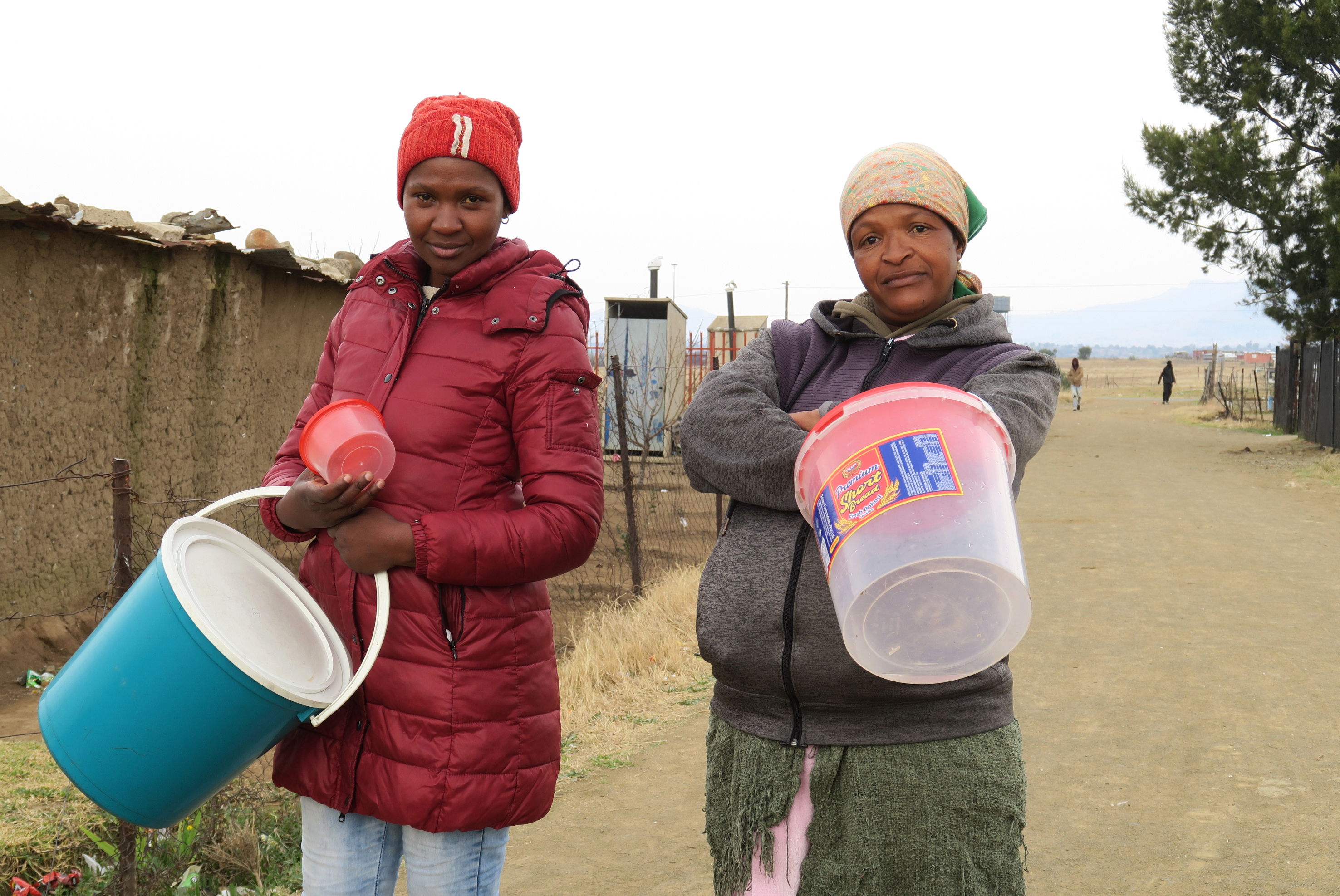
Evelyn Ramodike and Boitumelo Molefe from Extension 26 informal settlement in Thaba Nchu on a search for water.
The search for water
The shortfall in water demand means there are communities within the municipality which do not receive water or only have an intermittent supply.
In Thaba Nchu, about 65km from Bloemfontein, Evelyn Ramodike spoke to GroundUp. She was trying to access water for herself and her two children from a formal housing area across the road from the Extension 26 informal settlement where she lives. There is no water provision to the informal settlement, which has existed for about three years and consists of about 300 households.
Ramodike’s easiest option is to carry a bucket to the old RDP housing area and ask residents if she can use their yard standpipe. But on the day she spoke to us, there was no water in the taps. She said taps were often dry during the day, with water generally flowing from around 7 or 8pm. When water did flow, it was not drinkable and had to be boiled first.
Her other option, which involves a longer walk, is to collect water from a standpipe at an old military barracks, which is supplied by borehole. There is normally a queue of people there, she said, as the water is drinkable.
With her on the search for water was Boitumelo Molefe. She said the informal settlement residents had formed a committee and were asking every household to provide R70 so they could connect their own water pipe, either to the borehole or to the municipal line.
Molefe, who is pregnant with her third child, said the lack of water was particularly hard for people with children.
“Trying to get children to school when you have no water is very difficult. Sometimes you have to head out to fetch water before sunrise.”
Without formal sanitation, she said, people had dug pit toilets, but the ground was very rocky so on some stands it was not possible to do so. Those without a pit toilet relieved themselves “behind the hill”.
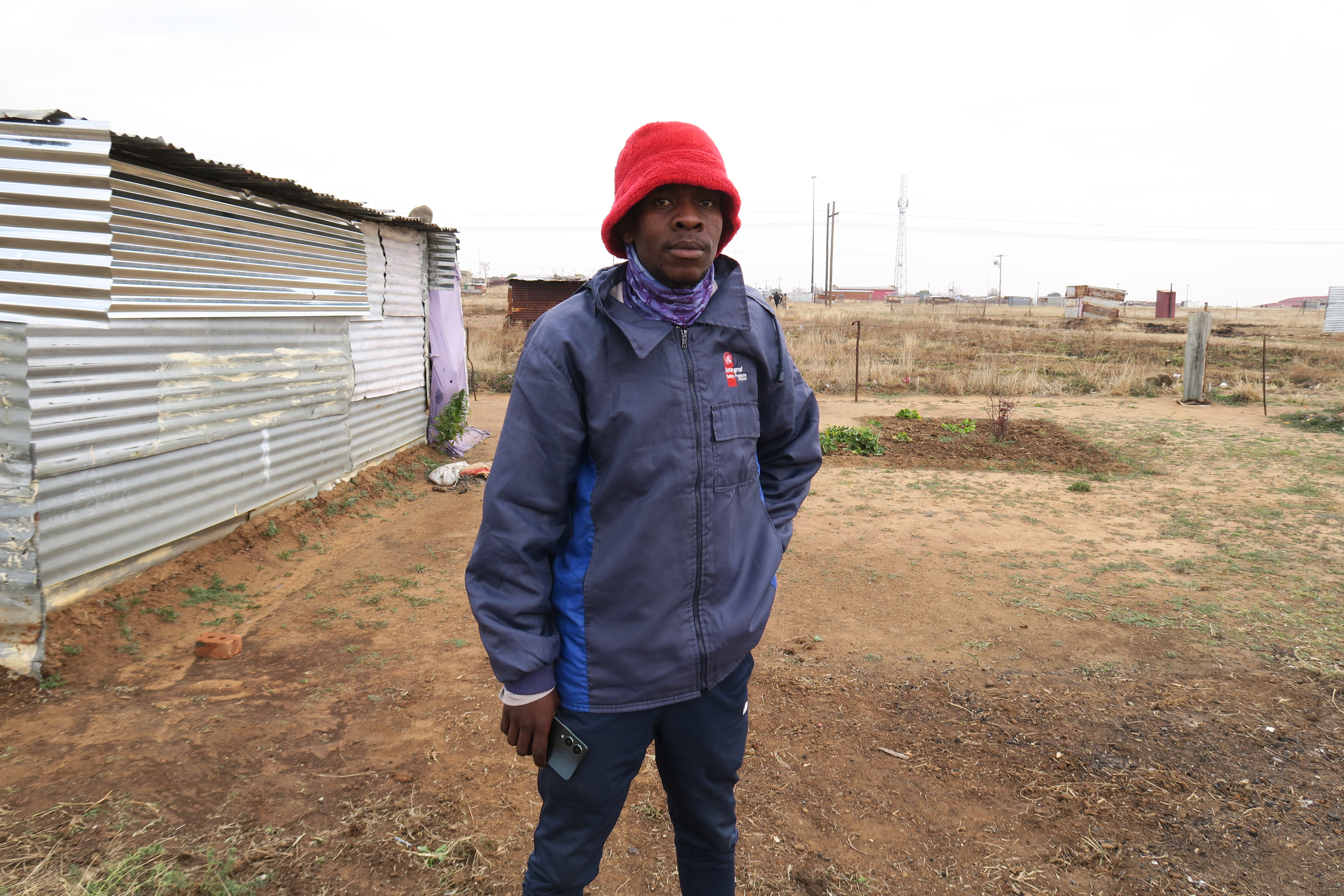
Tshepo Mahloane lives in a shack with his wife and six-year-old daughter in an informal settlement in Botshabelo. He says they are sometimes able to get water from a nearby church but often there is no water in the church’s taps, or there is an event at the church and they cannot get water there. There are no toilets, and barely any roads, in the approximately 60-hectare informal settlement in the middle of Botshabelo.
Billions gone to unauthorised expenditure
The Auditor-General’s latest available full report for the 2023/24 financial year notes that the appointment of a contractor to connect water to households in Extension 26 has achieved none of its targets.
Targets for providing water to the settlements of Ratau Hlambaza in Thaba Nchu and Matlharantlheng in Bloemfontein were not met either. The municipality failed to either appoint a contractor or approve designs for providing water and sanitation to a further ten residential areas across Bloemfontein, Thaba Nchu, and Botshabelo.
The municipality’s audited 2024/25 financial statements show that R192-million worth of conditional grants was unspent, with R141-million having to be given back to the National Treasury. Of this, R49-million was specifically for upgrading informal settlements.
In the previous 2023/24 financial year, unspent conditional grants amounted to R194-million, with R368-million unspent in the previous year. This is despite the municipality having been put under provincial administration in line with Section 139 of the Constitution in December 2019, and then being put under national administration in April 2022.
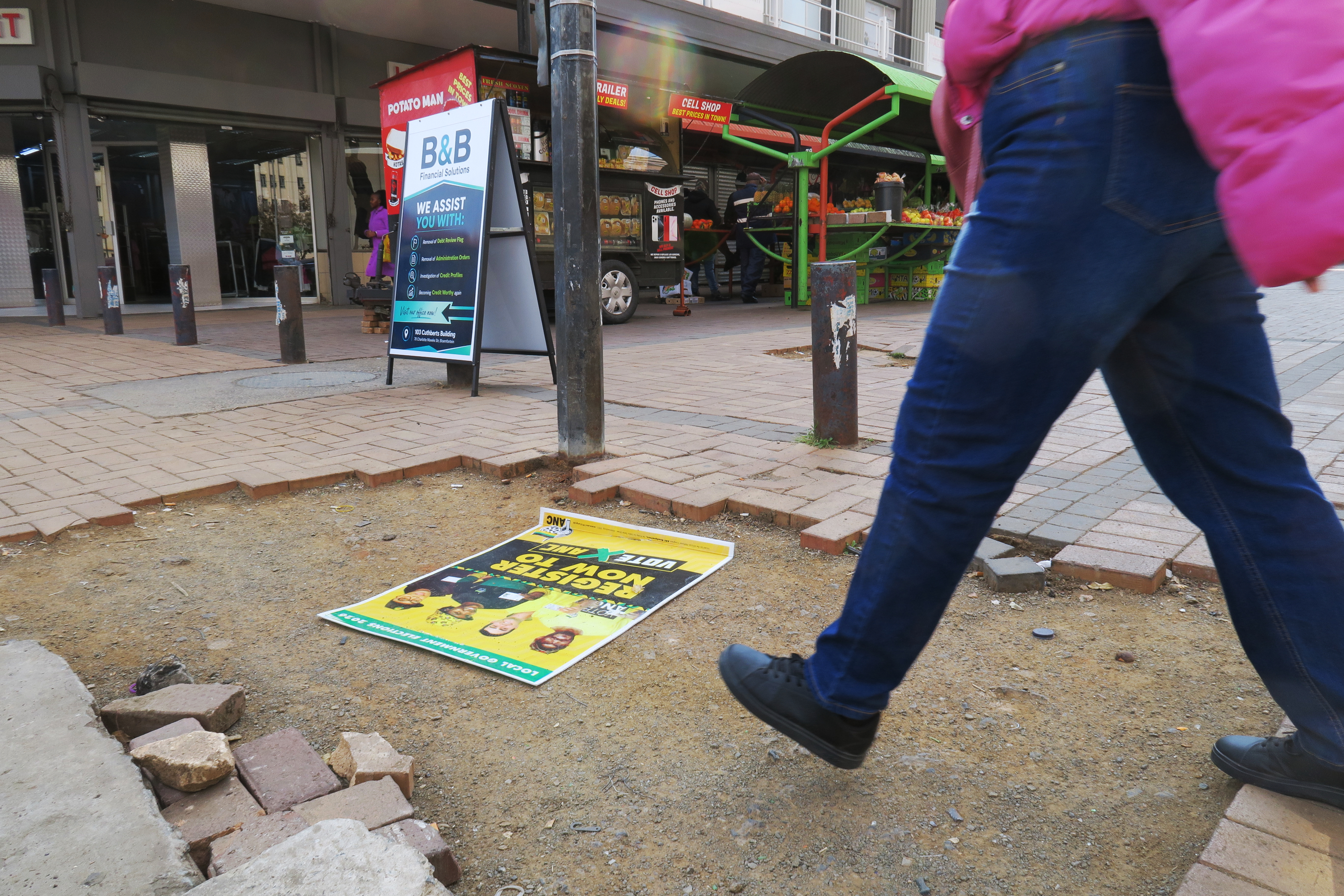
Potholes, broken paving, and decaying infrastructure mar Bloemfontein’s inner city.
A financial recovery plan implemented in December 2023 has done little to stem unauthorised, irregular, and fruitless and wasteful expenditure. The Auditor-General’s consolidated provincial 2024/25 report notes unauthorised expenditure of R5-billion over the last four years. The financial statements show just under R1.4-billion in unauthorised expenditure in 2024/25 and R1.5-billion the previous year.
While most of the unauthorised expenditure was for buying water and electricity, R84-million was for contracted services. Yet, the financial statements state: “No investigations were performed or disciplinary steps taken during the year.”
Asked about the lack of investigation of irregular, unauthorised, and fruitless and wasteful expenditure, Maysiels said the investigations “are underway”.
The municipality also entered the 2024/25 year with an irregular expenditure balance of R3.4-billion, and had added another R216-million by the end of the financial year.
The Auditor-General has flagged problems at the municipality since 2021/22.
Maysiels said a Financial Recovery Plan was being implemented to address structural financial problems, improve financial management and restore financial sustainability.
She said the municipality was improving revenue collection and tightening expenditure and cost controls.
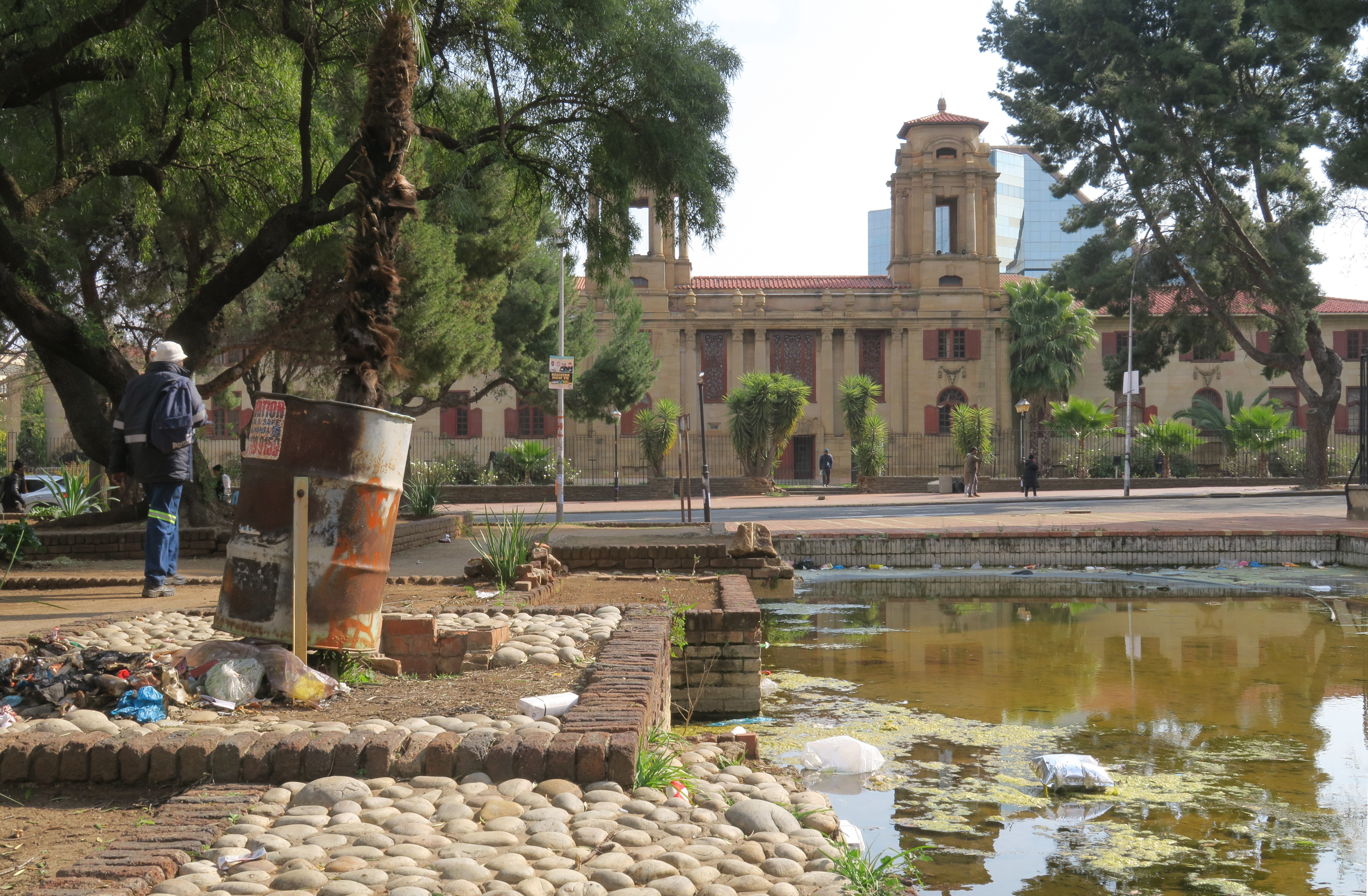
Rubbish-filled ponds and urban decay mar the city centre’s city hall precinct.
Ghost workers haunt city corridors
Political and administrative leadership in Mangaung is “currently stable”, the Auditor-General states in the 2024/25 consolidated report, after “a period of instability from 2020-21 to 2023-24”.
Although the ANC obtained a one-seat majority of 51 out of 101 in the local government elections of November 2021, events show the council was wracked by ANC infighting, with the provincial and metro party branches playing a role.
According to news reports, the ANC packed the administration with more than 100 political appointments straight after the elections, most of them turning out to be ghost workers. As early as January 2022, 105 new political appointments had been brought in on a three-month contract, pushing the monthly salary bill up by R2.5-million.
By May 2022, it was reported that an independent investigation had revealed then Minister of Transport Fikile Mbalula’s elder brother Jabu Mbalula (currently an MEC) was allegedly one of the ghost workers included in the cadre deployment, along with ANC regional secretary Sabelo Pitso. Jabu has denied this.
These appointments set off a cascade of events that destabilised the municipality for almost two years.
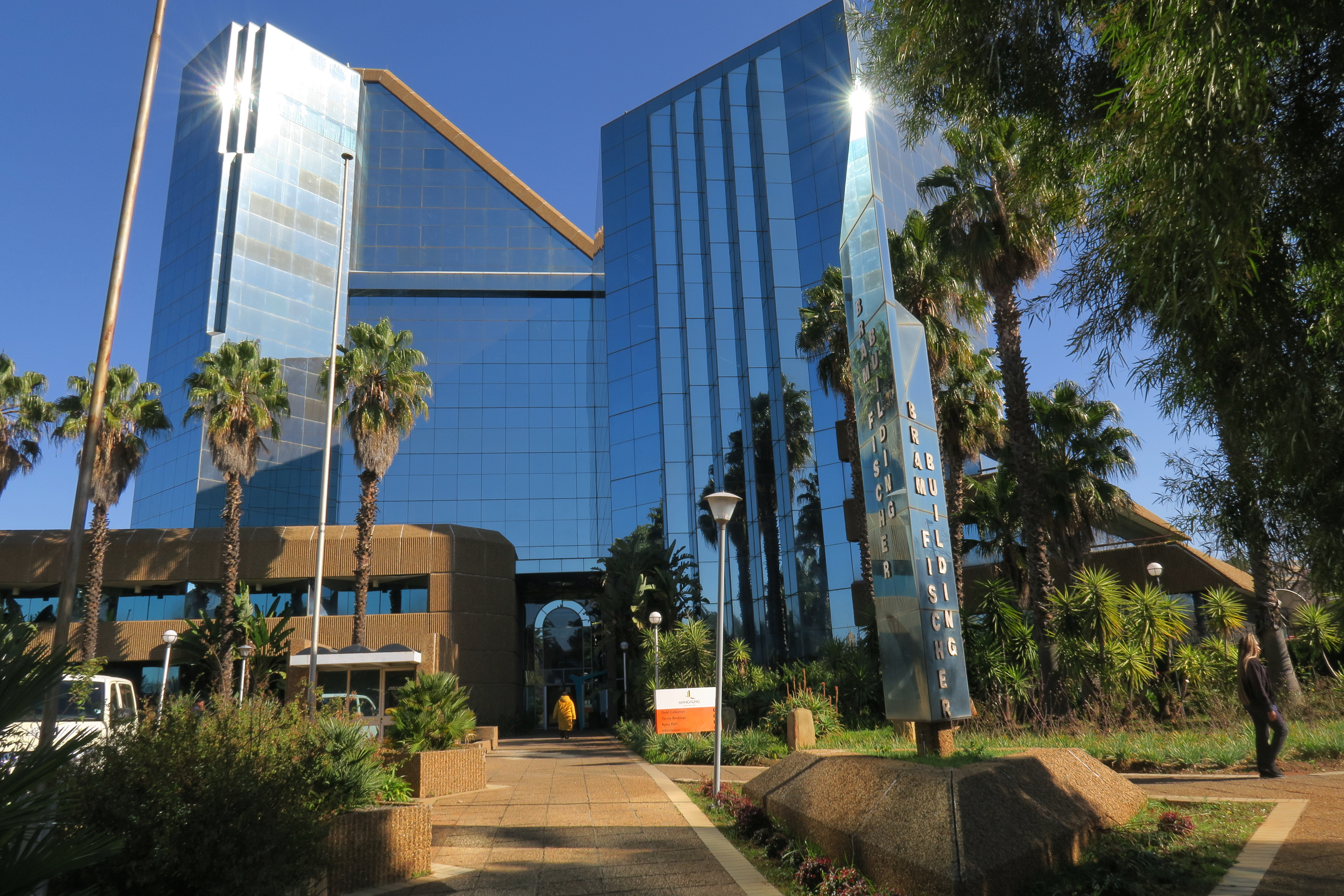
The glittering Bram Fischer building housing the Mangaung municipal offices.
Cadre appointment ructions
The independent investigation by Matlho Attorneys was authorised by the council to probe allegations of misconduct against the corporate services head David Nkaiseng. He had been suspended in March 2022 in connection with the illegal staffing after the alarm was raised by then acting city manager Mzingisi Nkungwana.
Several ANC councillors went against the ANC caucus decision and voted in favour of Nkaiseng’s suspension. Among them was council Speaker Stefani Lockman-Naidoo. Soon thereafter, the ANC’s Interim Regional Committee took disciplinary action against Lockman-Naidoo for defying the caucus and announced her suspension from the party. The move fell apart by July that year when the regional committee was disbanded by the provincial ANC.
Then in September 2022, ANC chief whip Vumile Nikelo was booted out through a secret ballot after having mixed party politics with governance by suspending a council sitting pending the finalisation of ANC regional disciplinary cases.
Lockman-Naidoo resigned in March 2023, on the heels of mayor Mxolisi Siyonzana having been recalled by the ANC Interim Provincial Committee two months prior.
To the surprise of many, the DA’s Maryke Davies was voted in as Speaker later that month, bolstered by a number of ANC councillors voting with the opposition party.
This sparked a fresh round of charges by the party against ANC councillors, which resulted in four by-elections when the ward councillors were axed. The ANC managed to hold onto the four affected wards. Three proportional representative ANC councillors were replaced by the party.
On 14 April 2023, two weeks after Davies’ appointment, Afrikan Alliance of Social Democrats’ Papi Mokoena was voted in as acting mayor in a council meeting boycotted by all but two councillors from the ANC benches, who had been expelled by their party. The DA’s David Mosoeu was voted in as chief whip at the same meeting.
On 26 April 2023, Mokoena was out after the ANC got an urgent interdict to set aside his election.
At first acting, then elected in his place was ANC veteran Gregory Nthatisi, who has remained as mayor, along with Nikelo to replace Mosoeu as chief whip.
Later in 2023, the ANC was back in charge of the top three council positions when they managed to get Davies out on a motion of no confidence, replacing her with Lawrence Mathae.
The council has remained stable since then.
At the end of July 2026, a proclamation was issued to the Special Investigating Unit (SIU) to investigate serious maladministration and unlawful spending of public money in Mangaung.
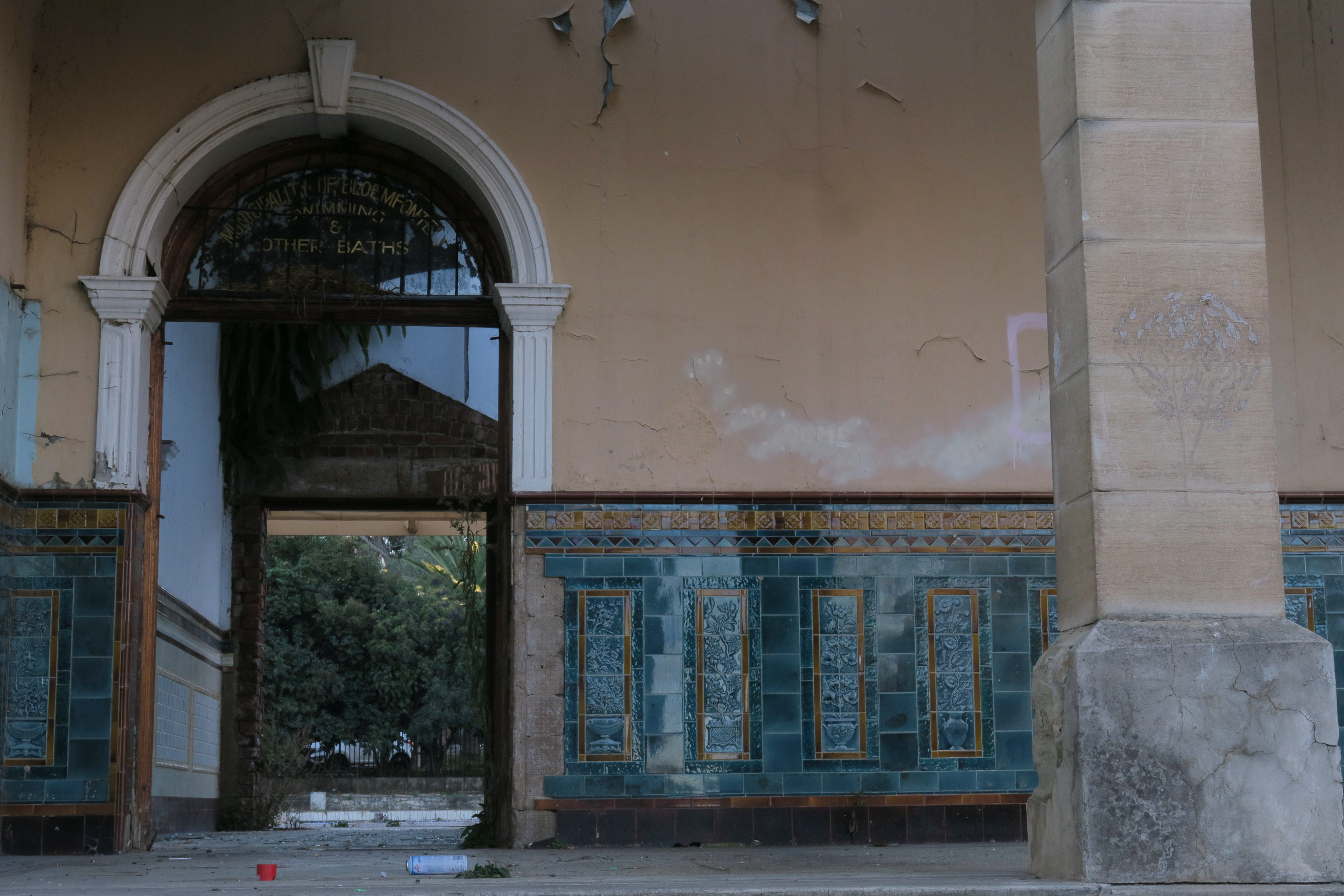
Like many of Bloemfontein’s historic buildings and monuments, the Arthur Nathan swimming baths are in ruin.
Support independent journalism
Donate using Payfast

Don't miss out on the latest news
We respect your privacy, and promise we won't spam you.
© 2026 GroundUp. This article is published under the GroundUp Republication Licence Version 1.0. Email [email protected] to request permission to republish.