
Khayelitsha brothers turn invasive hyacinth into biochar business
Siyanda and Akhona Sopangisa hope to sell biochar to farmers
 Add GroundUp on Google
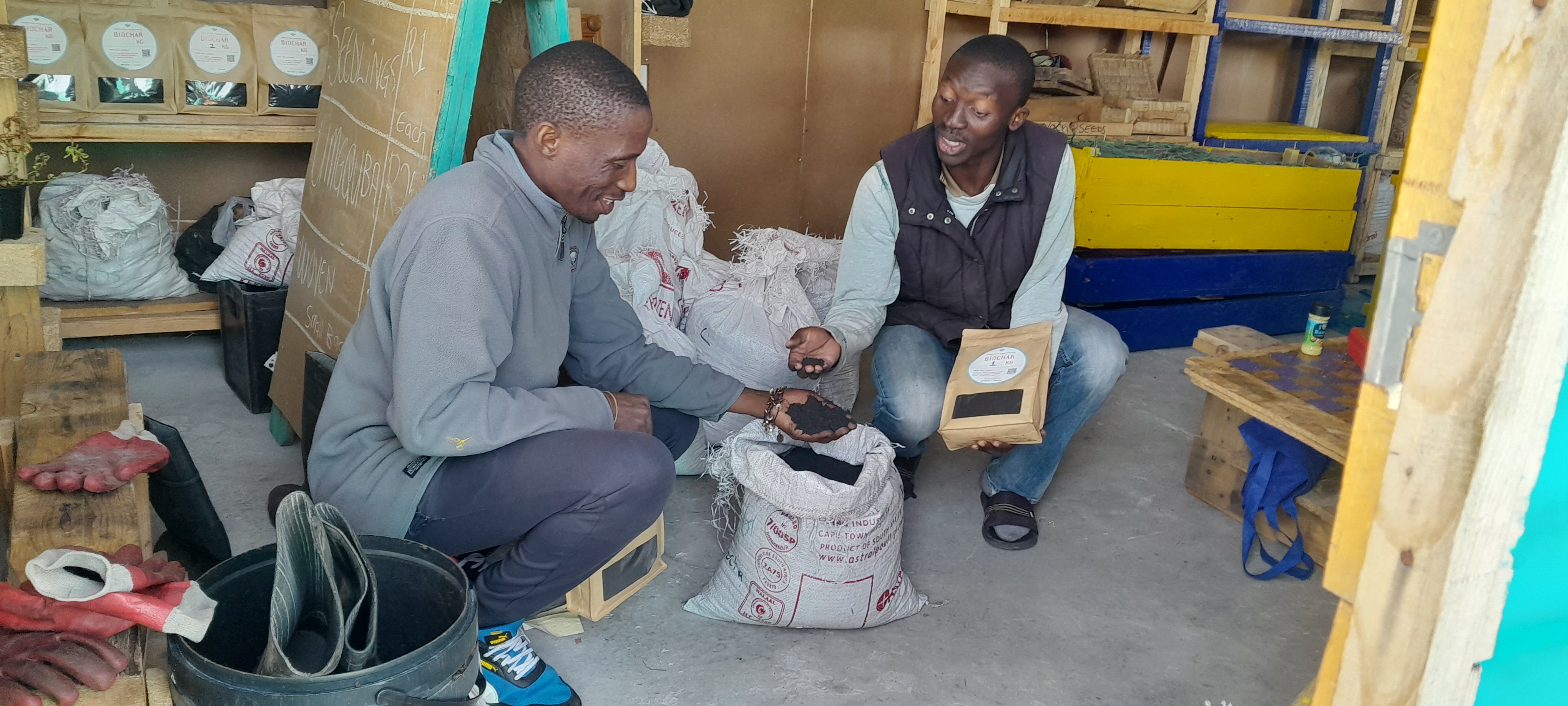
Siyanda Sopangisa and volunteer Monde Kuse pack biochar made from water hyacinth. Photos: Vincent Lali
- Brothers Siyanda and Akhona Sopangisa harvest invasive water hyacinth from the Blowy wetland in Khayelitsha, Cape Town, to make into biochar for gardens.
- They sell the biochar at a market and from their small shop.
- Now they are hoping to sell in bulk to farmers.
When invasive hyacinth blocked their canoe trips in the Khayelitsha wetland, Siyanda and Akhona Sopangisa started harvesting the hyacinth to make biochar. Now they want to take their business further by selling in bulk to farmers.
Every morning Akhona Sopangisa and a volunteer head to the Blowy wetland in Makhaza, Khayelitsha, to harvest hyacinth. The wetland used to be the home ground of the Khayelitsha Canoe Club, which was founded by the brothers in 2023. When rubbish, sewage and the invasive hyacinth made canoeing difficult and then impossible, the Sopangisa brothers turned to harvesting the hyacinth and turning it into biochar.
They dry the hyacinth in the sun before taking it to the shop and burning it in a kiln to make biochar, then wet it and wait for it to dry for a day. They mix the biochar with cow dung and let it rest for two weeks before packing it. The finished biochar helps soil hold nutrients and retain water, says Siyanda Sopangisa.
“To produce 1kg of biochar, you need 5kg of hyacinth,” he says.
Char2Cool, a German non-profit organisation which turns water hyacinth into biochar, taught the brothers how to do it.
“While we were still learning, we sent them videos of the biochar we made via WhatsApp,” says Sopangisa. “They assessed it and gave us feedback until we were able to produce biochar unsupervised.’’
“They guided us through the process of turning hyacinth into biochar until we became proficient.”
He and a volunteer sell the packets of 1kg biochar and vegetable seedlings from a blue zinc shack in Makhaza. Outside the shop brightly painted tyres and a makeshift price board attract customers.
The land on which the shop stands was an illegal tip before they removed the dirt and built the shop in August.
“All the money we make from biochar and seedlings goes into things like petrol and airtime, water pipes and fixing the yard.”
At present the brothers sell biochar from their shop and at the weekly Mowbray market. But their hope is to find farmers who want to buy in bulk.
“Once we get a big farmer who wants to buy biochar in large quantities, we will hire unemployed residents to produce the biochar,’’ Sopangisa says.
He also has plans for the shop: he wants to host market days there with live music and invite local residents to sell vegetables, crafts and braaied meat.
One kilo of biochar sells for R80 in Mowbray but for only R20 in Khayelitsha, says Sopangisa. “We sell it for R80 to our customers in the suburbs because they are already familiar with biochar and its uses.”
The seedlings sell better than biochar in Khayelitsha. “We are out of seedlings now because they sell well.”
After testing the biochar mixture on five home gardens, Sopangisa says, volunteers launched the Masilime Sonke Gardening Project. The project has since established 46 home gardens and secured a ten-year lease on a one-hectare plot at Sinako High School.
Thobeka Ntozini, who grows vegetables on the Sinako High School plot, and sells them, says: “Since we don’t work, the gardening project helps make money to buy electricity, meat and food.” She says the gardeners have set aside a space so learners from poor households can learn to grow their own vegetables.
Left to itself, water hyacinth grows very fast, covering the surface of the water. This depletes it of oxygen, threatening the life of aquatic species.
Asked about the condition of the wetland, the City of Cape Town mayco member for water and sanitation Zahid Badroodien said alien plants had been removed in January and February. “These activities take place roughly every two years depending on resources.
“These efforts are unfortunately in vain if illegal dumping and illegal sewage discharge continue into the wetland. Alien plant species thrive in wastewater, so they will continue to grow quickly as long as residents dump there.
“Healthy waterways and wetlands are a shared responsibility between the City and the public. We urge residents to help prevent pollution and illegal dumping at its source, protect our waterways and encourage a stronger sense of environmental ownership,” he said.
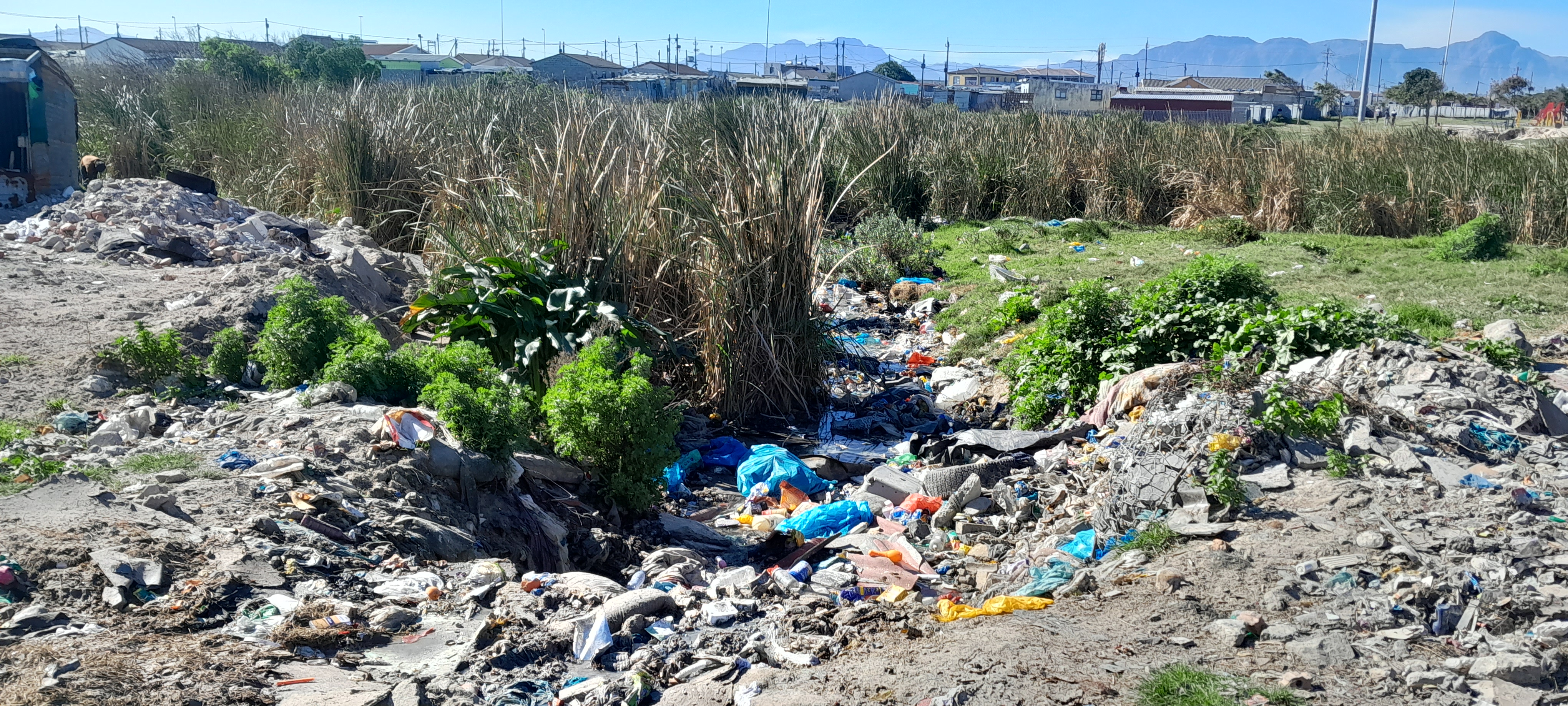
Rubbish litters the Blowy wetland area in Khayelitsha.
Support independent journalism
Donate using Payfast

Don't miss out on the latest news
We respect your privacy, and promise we won't spam you.
© 2026 GroundUp. This article is published under the GroundUp Republication Licence Version 1.0. Email [email protected] to request permission to republish.