
Poultry worker strike expands to Krugersdorp
Festive Chicken workers strike for R13,500 a month
 Add GroundUp on Google
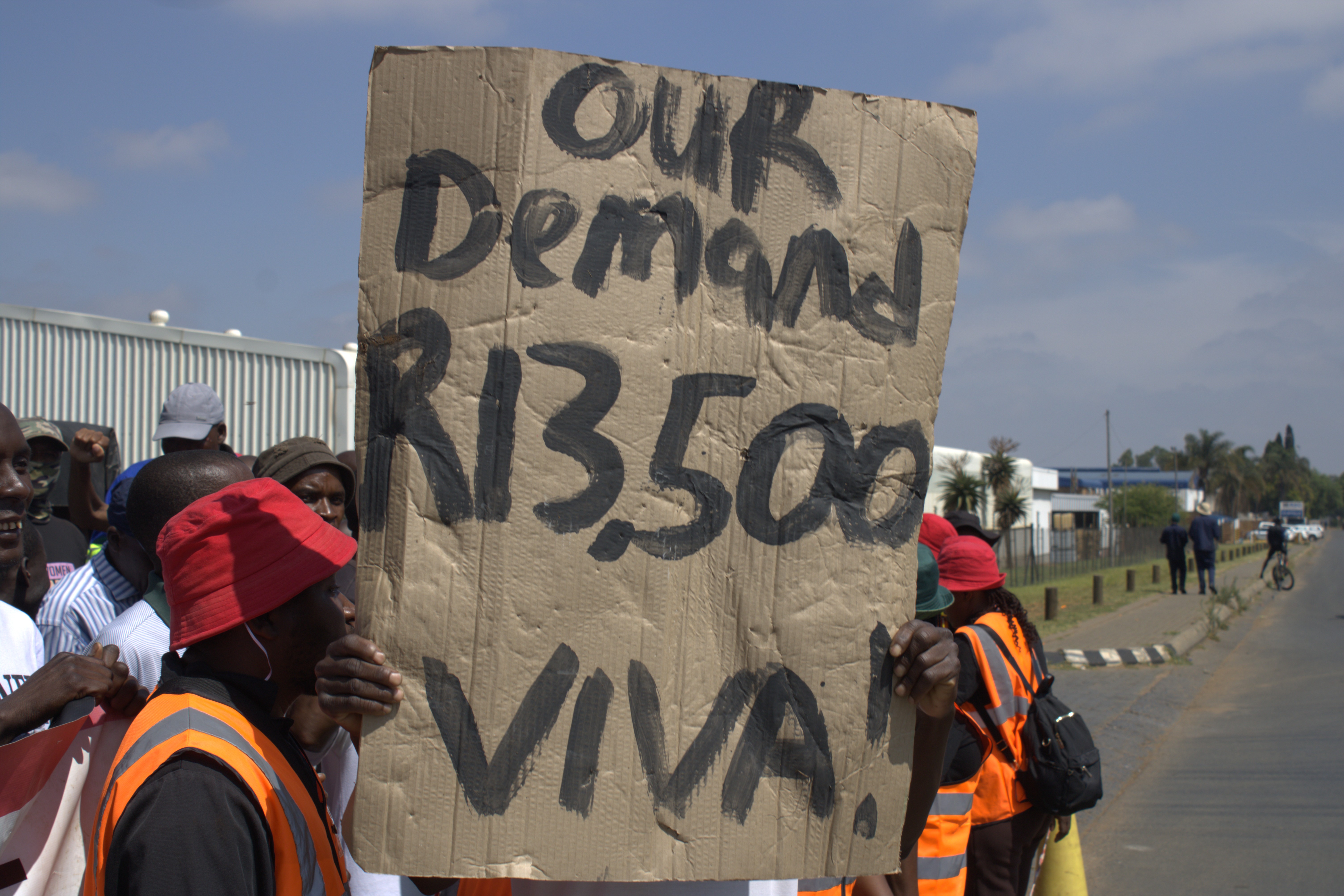
Workers at Astral Foods’ Festive Chicken facilities are demanding salaries of R13,500. Archive photo: Seth Thorne
- Workers at two Festive Chicken breeder farms near Krugersdorp have joined a strike at Astral Foods.
- Workers want a monthly wage of R13,500, permanent contracts, medical aid and better protective gear.
- Astral says the demand is unaffordable and that only about 400 workers at the Olifantsfontein plant are on strike.
The strike at South Africa’s largest poultry producer, Astral Foods, has entered its 19th day, with dozens more workers joining the action.
On Monday, employees at the company’s Festive Chicken broiler breeder farms at Tweefontein and Glenhill in Krugersdorp, Gauteng, joined the protected strike.
Simunye Workers Forum (SWF) and the Casual Workers Advice Office (CWAO) claim that over 1,000 employees have been on strike since 29 October. But Astral Foods says only about 400 of its 2,500 Festive Chicken workers at the Olifantsfontein plantare participating in the strike.
Astral Foods supplies chicken to KFC, Nando’s, Spur and Hungry Lion.
The strike followed a wage deadlock at the Commission for Conciliation, Mediation and Arbitration (CCMA). Striking employees include factory workers and chicken catchers and hatchers at facilities in Gauteng and Mpumalanga. 
Employees are demanding a monthly living wage of R13,500 (up from current take-home wages of reportedly R5,400 to R7,300), permanent contracts for labour-broker staff, medical aid and improved protective gear.
On 10 November, the Congress of South African Trade Unions (COSATU) in Gauteng expressed support for the striking workers, saying the negotiation deadlock “demonstrates a worrying disregard for the economic realities facing ordinary working-class families” amidst rising cost-of-living pressures.
It added that “employers must stop using casual employment as a permanent business model”.
Ugly start
On the first day of the strike on 29 October, police used tear gas and fired rubber bullets at workers outside the Olifantsfontein processing plant.
According to a statement by the CWAO, police opened fire “at close range”, shooting several people in the head and one in the throat, and injuring others in the legs and back, “even though the workers were protesting peacefully along the side of the road”.
But police spokesperson Captain Tintswalo Sibeko said “no injuries were reported”. The Independent Police Investigative Directorate was “notified of the incident”, said Sibeko.
Astral Foods Group CEO Gary Arnold said striking workers physically obstructed the processing plant’s main entrance and intimidated workers. He said there were “attacks on vehicles”.
“I don’t think SAPS would do this if there wasn’t violence or there wasn’t a threat to property and lives,” said Arnold.
Sibeko said one suspect was arrested on a charge of public violence. But SWF organiser Joshua Hlungwani said three people were arrested, not one.

Supplied images of wounds that workers say were caused by rubber bullets.
On 30 October, Astral Foods obtained a court interdict stopping striking employees from gathering within ten metres of the entrance.
On the same day, Lawyers for Human Rights (LHR) wrote to the police, saying that law enforcement bodies told workers that they were engaging in an “unlawful strike” and ordered them to leave, despite the strike being protected and authorities having been informed prior to the strike.
Rubber bullets and tear gas were fired into a “peaceful gathering”, and 11 people sustained injuries and were taken to hospital, the letter said.
LHR demanded that no further force be used by law enforcement at the protest.
Also on 30 October, the Labour Court barred the company from disciplining or dismissing workers for participating in the strike.
Astral filed a counter-application that was argued on 6 November. LHR is awaiting a judgment on jurisdiction, the Sowetan reported.
Response to demands
Arnold rejected claims of poor labour practices, defending the company’s safety record and collective bargaining procedures.
He said the demand for a R13,500 monthly minimum wage is a 75% average pay increase.
“I think it’s unreasonable to expect that any company in South Africa would be able to afford such an increase,” said Arnold.
Arnold said SWF is not a recognised trade union, adding that Astral negotiates wages and employment conditions exclusively through established collective bargaining with Festive’s two officially recognised unions: the South African Equity Workers Association (SAEWA) and the Agricultural, Food and Allied Democratic Workers Union (AFADWU).
Neither SAEWA nor AFADWU is involved in any dispute or participating in the strike, he said.
Hlungwani previously told GroundUp that the forum was not acting as a trade union but was supporting forgotten workers.
Arnold also condemned alleged workplace intimidation against non-striking staff, which he said necessitated a heavy private security presence.
An ammonia leak on 11 November at the company’s Olifantsfontein factory led to 24 employees being hospitalised due to respiratory issues from inhaling fumes. Most were discharged from the hospital by the following morning, said Arnold. Emergency responders cleared the plant to safely resume operations within three hours. Arnold said the technical failure was entirely coincidental and unrelated to the ongoing strike.
Arnold dismissed allegations of unhygienic factory conditions, such as forcing workers to share unwashed uniforms. He said there is continuous monitoring by third-party auditors and permanent inspectors. “We subscribe to very strict levels of food safety protocols,” he said.
Support independent journalism
Donate using Payfast

Don't miss out on the latest news
We respect your privacy, and promise we won't spam you.
© 2026 GroundUp. This article is published under the GroundUp Republication Licence Version 1.0. Email [email protected] to request permission to republish.