
Judge Mbenenge challenges sexual harassment finding in court
Selby Mbenenge says the JSC unlawfully overturned a tribunal finding and gave his accuser an unfair advantage
 Add GroundUp on Google
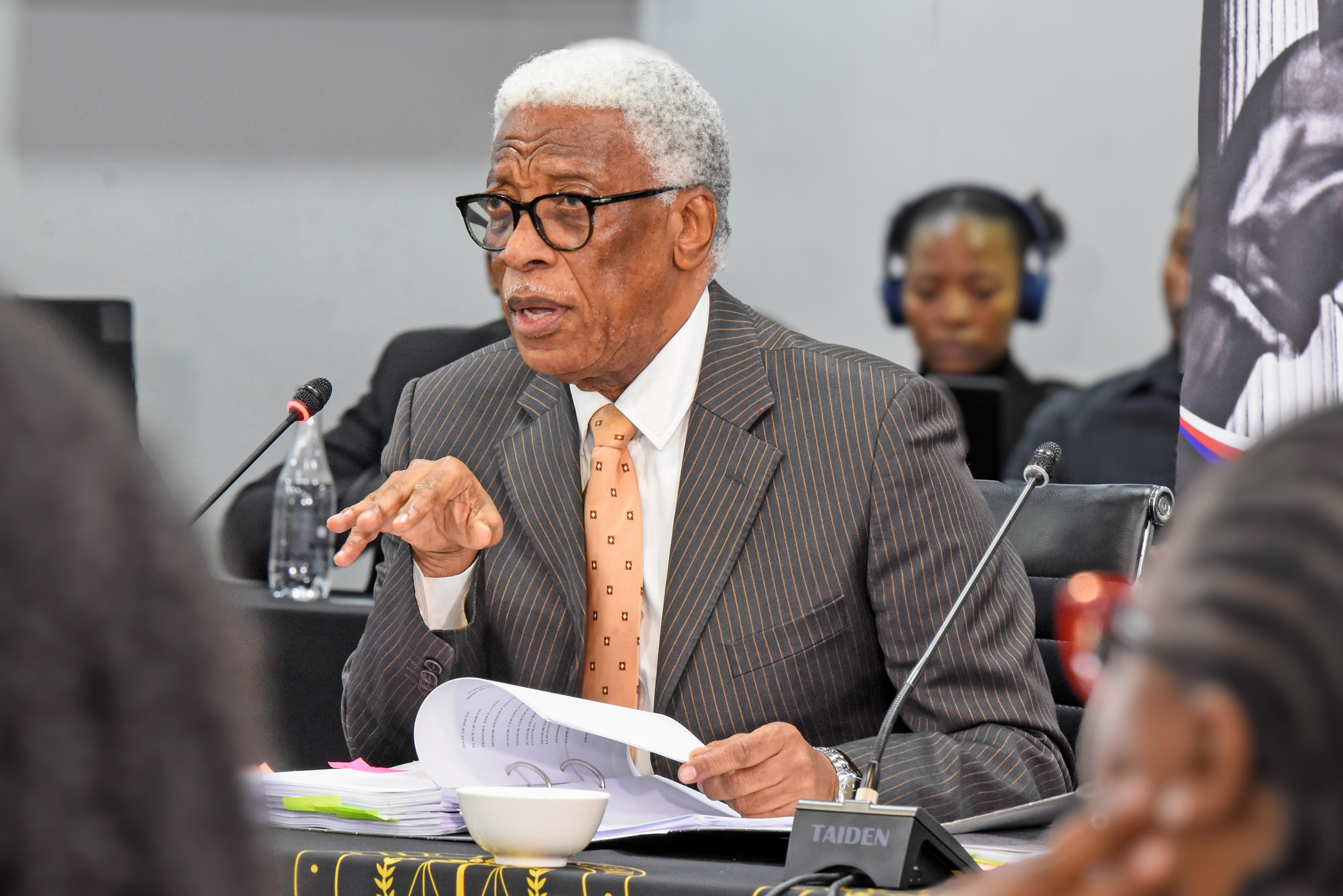
Eastern Cape Judge President Selby Mbenenge. Archive photo: Office of the Chief Justice.
- Eastern Cape Judge President Selby Mbenenge has approached the Pretoria High Court to stop Parliament from impeaching him until the Judicial Service Commission’s finding against him of sexual harassment and gross misconduct is reviewed.
- He also wants the ruling by the Judicial Conduct Tribunal, which found him guilty of a lesser offence of misconduct, to be set aside.
- He insists his relationship with junior court secretary Andiswa Mengo was consensual.
Disgraced Eastern Cape Judge President Selby Mbenenge, who faces possible impeachment for sexually harassing a junior secretary at court, is not going down without a fight.
This week, he filed papers in the Pretoria High Court seeking “semi urgent” relief, interdicting the Judicial Service Commission (JSC) from taking any further impeachment steps against him until a review application to set aside the JSC’s decision in its entirety is finalised.
He seeks a similar interdict against the National Assembly, which has the final say on impeachment, to prevent it from acting on the JSC’s finding that he was guilty of gross misconduct and sexual harassment.

He also takes aim at the ruling by the Judicial Conduct Tribunal, which found him guilty of a lesser offence of misconduct, which was later overturned by the JSC.
Mbenenge wants to overturn the tribunal’s finding that he was guilty of a degree of misconduct in that “he, at a place of work and during working hours, initiated and subsequently conducted a flirtatious relationship with Ms [Andiswa] Mengo through a series of WhatsApp messages exchanged between them”.
He says he was not asked to answer this particular charge during the tribunal hearings.
The tribunal handed down its ruling in January, finding Mbenenge guilty of a “degree of misconduct” after a public hearing characterised by salacious WhatsApp messages and sexually-loaded emojis exchanged between the Judge President and Mengo.
He said it was a consensual relationship, but she claimed his advances were unwanted and she only responded because he was the most senior judge in the division.
In April, the JSC refused to rubber-stamp the tribunal finding, stating that the tribunal had understated the power balance and had approached the matter as “two consenting adults on equal footing”, which they were not.
The JSC said the tribunal had focused on Mengo’s conduct, not Mbenenge’s, who should have known better than to embark on a relationship with a junior employee.
The JSC said sexual harassment was a serious offence and an “affront to the propriety of judicial office and the values underpinning the Constitution”.
In his affidavit in the interdict/review application, Mbenenge says the decision by the JSC to “upend the finding of the tribunal” was unprecedented.
He believed the tribunal’s finding that he was not guilty of gross misconduct was correct, based on the evidence.
“It must also not be overlooked that the tribunal made damning credibility findings against Ms Mengo,” he said. This included her concealing WhatsApp messages she had sent him.
“The JSC, on the other hand, seems to have regarded [this] as immaterial,” he said, while the tribunal had not made a single credibility finding against him.
He insists that the evidence indicates Mengo was a willing participant.
He said that during the hearing, he had been consistent and candid “about what may be very embarrassing conversations with her and told the truth”.
“I maintained that the mere existence of hierarchical power, in the absence of concrete facts demonstrating its misuse, is insufficient to establish coercion or undue influence,” he said, arguing that there were no “power dynamics” at play.
The Judicial Code of Conduct did not impose a blanket ban on workplace relationships, but he had been mindful of his position and professional responsibility and had “made a conscious and deliberate effort to gauge her comfort at every step”, he said.
He said the impeachment process should not be allowed to continue while he sought to review the decisions and that the Speaker of Parliament, in correspondence, had signified that, absent a court interdict, it would proceed.
In his grounds of review, he said the JSC had asked him and Mengo to make representations, but he had been given no indication that it was considering upending the tribunal’s ruling and this had given Mengo an unfair advantage. This amounted to unfair administration, he argued.
The JSC had also overturned factual findings made by the tribunal, he said, and in doing so had “misconstrued its powers”.
“It took the tribunal two and half months to synthesise and analyse the myriads of facts before it. By contrast, it took the JSC no more than three weeks before coming to its decision. It is clear it did not consider all of the evidence and documents.”
Mbenenge said the JSC’s decision was unreasonable, unconstitutional and unlawful and should be set aside.
He has asked the Gauteng Judge President to appoint a judge to manage the application and determine dates for filing of papers and hearings.
Mbenenge remains on special leave.
Support independent journalism
Donate using Payfast

Don't miss out on the latest news
We respect your privacy, and promise we won't spam you.
Next: The Cape Town shelter where you won’t be turned away if you’re drunk
Previous: More than 1,000 Malawians flee Durban informal settlement
© 2026 GroundUp. This article is published under the GroundUp Republication Licence Version 1.0. Email [email protected] to request permission to republish.