
Human Rights Commission blasts “uncaring” Gauteng municipalities for water crisis
The commission said mismanagement, infrastructure neglect and systemic corruption to blame
 Add GroundUp on Google
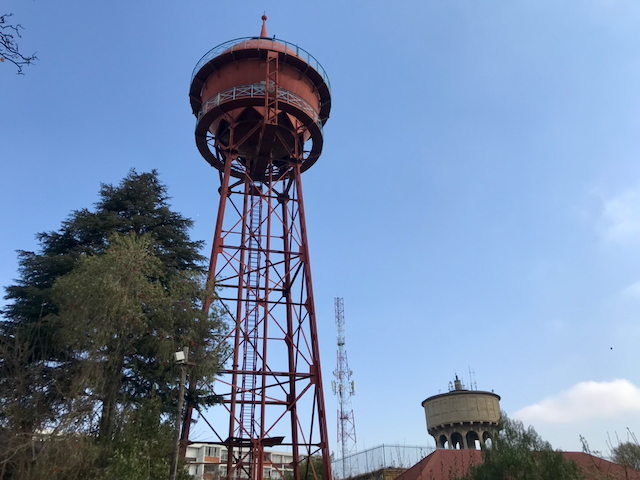
The Yeoville water tower in Johannesburg. Archive photo: Masego Mafata.
In the final two days of the South African Human Rights Commission (SAHRC) public inquiry held in Parktown, Gauteng municipalities and other state organs were grilled on their failures to provide water and sanitation.
Following public submissions on 19 May, Commissioner Henk Boshoff said, “What residents experience is not just poor service delivery, but a daily violation of basic human rights.”
Evidence leader advocate Afika Nqeto described “a profound and systemic breakdown in governance”.

The panel, made up of Boshoff and SAHRC acting Gauteng manager Khululiwe Sithole and senior legal officer Mateenah Hunter‑Parsonage, will now draft findings and potential referrals.
Department of Water and Sanitation
Department of Water and Sanitation (DWS) director‑general Sean Phillips said the crisis is “almost entirely at municipal level” with weak governance and management.
Phillips said municipalities have “for decades” budgeted too little for maintenance or failed to spend what was allocated. DWS routinely sees underspending on projects. Municipalities “don’t have the right people for the job”, he said.
Phillips proposed structural reforms that include ring-fencing water revenue for reinvestment into infrastructure, professionalising the sector through a licensing system for water service providers, and legally separating the water services authority from the service provider function.
Johannesburg
The City of Johannesburg Metropolitan Municipality municipal manager, Floyd Brink, arrived at the inquiry under subpoena, after “rude and unprofessional” prior engagements, according to Boshoff.
Residents of the city have experienced prolonged water outages and chronic sewage spillages. The SAHRC described interventions as reactive and ad hoc, with sanitation services failing the Green Drop sanitation system audit, and nearly half of the city’s water supply generating no income.
“We are of the view that little or no consequence management is implemented,” Boshoff said.
The City apologised and tabled a report, largely blaming population growth, vandalism and ageing infrastructure for breakdowns.
“I won’t sit and lie to you and say that everything is [okay]… Our aspiration remains that we move towards being a world-class African city,” said Brink.
Spending on water tankers was questioned, with more than R650-million spent over five years, even as Johannesburg Water faces an estimated R27-billion backlog.
Boshoff called the tanker dependency “a brazen form of financial mismanagement [and] a brazen form of corruption”, and the Commission queried whether money is flowing to the right places.
Boshoff characterised the City’s need for armoured vehicles to protect its water treatment plants as a sign of “terrorism activity”, noting that syndicates are likely sabotaging infrastructure to profit from tanker contracts.
The current budget only permits the replacement of 85km of pipes per year, which is significantly lower than the target of 186km required annually.
Johannesburg Water managing director Ntshavheni Mukwevho and CFO Kgaugelo Mahlaba said there was a ten‑year turnaround plan, costed at R64-billion for pipelines, reservoirs, wastewater upgrades and storage. It includes technical posts being filled and faster leak responses.
Tshwane
The City of Tshwane Metropolitan Municipality faced questions about prolonged outages in Bronkhorstspruit and the unresolved Hammanskraal crisis.
“I cannot overemphasise the concern that we have… the quality [of water in certain parts of the municipality] is not fit for consumption,” said Sithole.
Tshwane’s Green Drop sanitation scores for wastewater treatment are below 34%. The City’s infrastructure backlog is about R26-billion. Maintenance spend rose from 2% to 4% but remains below the 8% Treasury norm. The municipality loses 39% of its water. Vacancies stand at around 40%.
Tankers were flagged as a major cost: R441 million in 2024/25, with some reports alleging as much as R777-million. Officials said an expanded in‑house fleet has since saved R12-million a month.
City manager Johann Mettler described a “pathology of corruption” driven by “power, greed, and ambition”, with tender outcomes predetermined outside the municipality.
“We are certainly dealing with a crisis,” said Mettler.
Ekurhuleni
City of Ekurhuleni Metropolitan Municipality acting manager Tsholofelo Koopedi said 99% of households have access to water and 91% to sanitation. Yet, water losses amount to between R1.2-billion and R1.4-billion annually. This led to water cuts.
The commission slammed inadequate communication when there are cuts, and the rise in reliance on water tankers.
Capital expenditure sits at 4% and vacancies at 28%. To tackle ageing pipes, the City estimates roughly R3-billion is needed.
In a significant admission, officials confirmed discharging non‑compliant effluent into a Rietvlei tributary.
“The quality of the effluent that is discharged is not meeting the standard. It is polluting the stream and we take that very seriously,” said water and sanitation department head Thokozani Maseko.
The City pledged to insource tanker services and give the Commission a detailed cost breakdown, ringfence water revenues under trading reforms, establish a “Green Scorpion” unit to enforce bylaws against industrial polluters, and develop a master plan for wastewater upgrades.
Emfuleni
Emfuleni Local Municipality manager April Ntuli appeared under subpoena after repeated non‑responses.
The Commission described “extreme sewer spillages” inundating homes and streets and severe, prolonged water losses.
Water losses are about 68 to 70%. The water department has a 68% vacancy rate. The municipality spent R79-million on tankers over five years while allocating only 5.8% to maintenance, below the 8% norm.
Ntuli said the intervention of the national department has improved the situation. He pointed to the new Vaal Water Utility as a long‑term solution.
“Your municipality is an uncaring municipality… the poorest of the poor don’t have regular access to water,” said Boshoff.
Rand West
The Rand West City Local Municipality manager failed to appear despite being given notice.
The Commission said it would consider opening criminal cases for non‑appearance, underscoring an accountability gap in a municipality already hit by losses and outages.
Auditor‑General findings presented earlier in the inquiry showed water losses at 60% in the municipality.
Mogale City
Mogale City’s evidence centred on failing sanitation and environmental damage, including at the Cradle of Humankind, which has seen DWS issue a notice of prosecution for pollution.
The municipality cited grant‑funded refurbishments: Percy Stewart Wastewater Treatment Works due in 2026, Flip Human expansion in 2026/27, and Magaliesburg WWTW commissioning in June 2026.
However, the panel remained doubtful of sustained improvement.
Capacity remains thin: relevant departments carry about a 50% vacancy rate; maintenance is budgeted at 5%, and capital below 9%. It said it had a cash crunch and blamed its salary bill for a staff complement exceeding 2,200.
Municipal manager Makhosana Msezana said, “progress is being made”. He alleged “sabotage” linked to outsourced contracts.
Boshoff urged officials to return to basics. “Go back and provide services to your people,” he said.
Merafong
Merafong City Local Municipality conceded the city is “not doing very well”.
Water losses are 43%; maintenance spend is 1.7%; vacancies in water and sanitation are 70%.
Historic debt of over R1-billion to Rand Water has triggered a 40% restriction. Sinkholes on dolomitic land have forced the decommissioning of reservoirs.
The municipality cited R30-million in national funding to refurbish wastewater plants
Evidence leader Nqeto said “decisive corrective action remains absent” at Merafong.
Lesedi
Lesedi Local Municipality’s downstream position leaves it exposed to failures outside its control.
A non‑functional wastewater plant is alleged to be discharging untreated waste.
In Ratanda, residents with title deeds remain unconnected due to high connection fees.
Municipal manager S’busiso Dlamini said the municipality largely manages its own services and operates three municipal tankers to reach outer areas.
Maintenance is budgeted at 4% and capital under 8%, both below Treasury norms.
The commissioners pressed for a concrete solution in Ratanda while acknowledging Lesedi’s responsiveness under pressure.
Midvaal
Midvaal Local Municipality was an outlier.
“Your municipality in this province should be used as a benchmark municipality … job well done,” said Boshoff.
Capital expenditure, repairs and maintenance were above the norm. Revenue collection stands at 91%.
Still, officials noted a maintenance backlog of about R1-billion.
Rand Water and Provincial CoGTA
Rand Water testified that while it provides sufficient bulk water, nearly 300 litres per person per day, approximately 33% of that water is lost through leaks and illegal connections at the municipal level.
CEO Sipho Mosai said municipalities currently owe it R9-billion.
Gauteng Cooperative Governance and Traditional Affairs (CoGTA) HOD Dr Darion Barclay said repeated council failures to approve budgets reflect political and administrative problems.
He noted high water losses, backlogs in delivering services, weak revenue collection, and high staff turnover. He said provincial help cannot substitute for functioning local systems.
Support independent journalism
Donate using Payfast

Don't miss out on the latest news
We respect your privacy, and promise we won't spam you.
Next: Legally in SA but scared to go home: 150 immigrants camping at Durban Home Affairs
Previous: More than 57,000 people deported from South Africa last year
© 2026 GroundUp. This article is published under the GroundUp Republication Licence Version 1.0. Email [email protected] to request permission to republish.