
Observatory land occupiers wait to hear their fate
The City of Cape Town has offered to move families living on Main Road to a site in Gugulethu
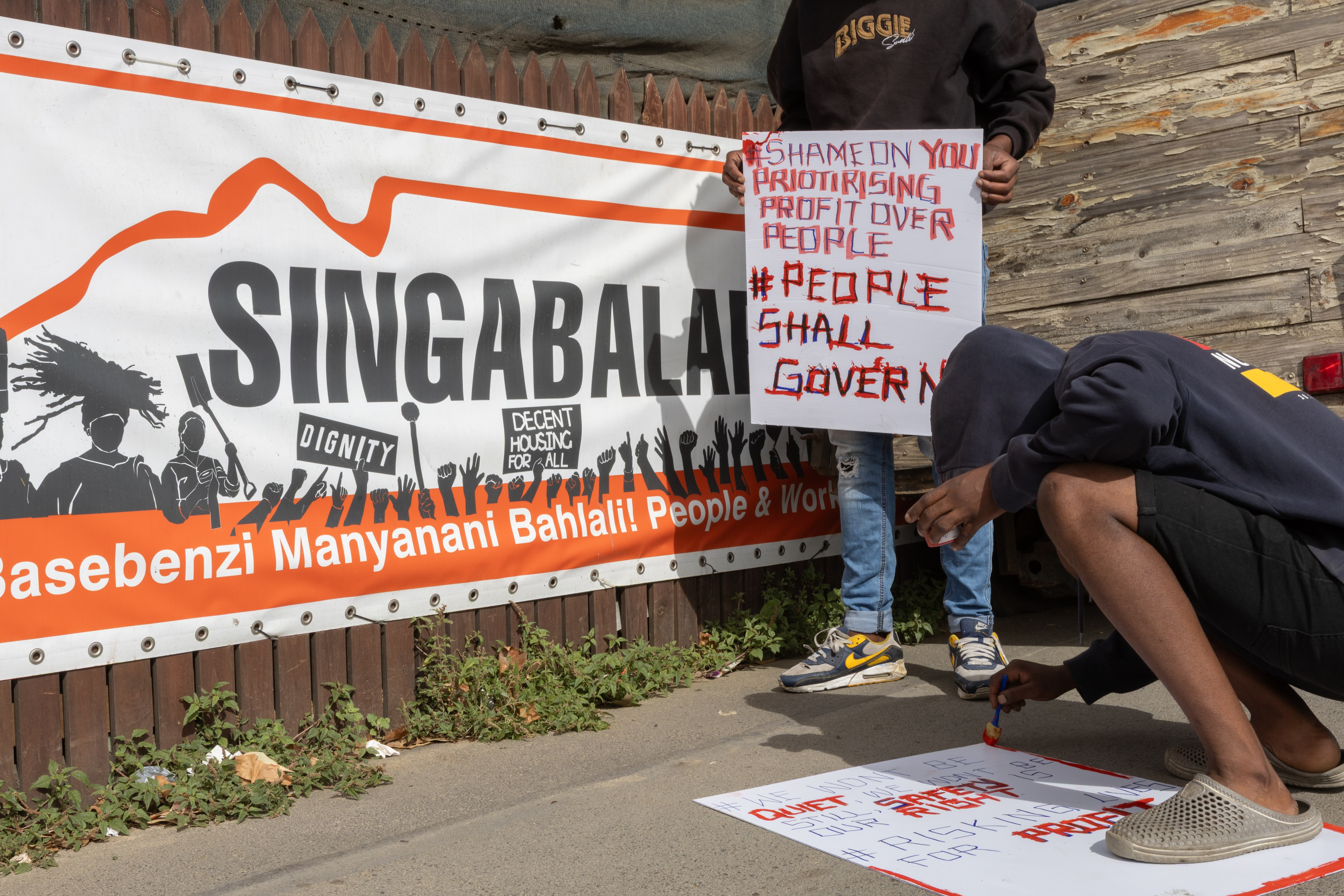
Singabalapha informal settlement on Main Road, Observatory, Cape Town, was founded seven years ago by backyarders. The settlement has no electricity, no running water and no toilets. Photos: Dave Fisher
- Over 100 people living at Singabalapha informal settlement on Main Road, Observatory, want the municipality to finalise its plans to relocate them.
- The group initially occupied the Arcadia House old age home. When it was demolished, they settled on the lawn outside.
- The City of Cape Town has applied to evict them.
- Municipal officials are in talks with the residents to move them to the Cape Flats, but most want to remain in the inner city.
Families who occupied land along Main Road in Observatory, Cape Town, are waiting to hear whether they will be moved.
Singabalapha (“We belong here”) informal settlement was started seven years ago by a group that were mostly backyarders. They have no electricity, no running water and no toilets. Most of the shacks, some built with wood and some with zinc, leak when it rains.
In 2018, they occupied the Arcadia House old age home, owned by the Cape Peninsula Organisation for the Aged. They were evicted and the building was demolished. The group then settled on the lawn and obtained an interdict, preventing the City of Cape Town from evicting them in October 2020.
The City approached the High Court in 2022 and successfully appealed against the interdict.
The municipality then applied for an eviction order in November 2023.
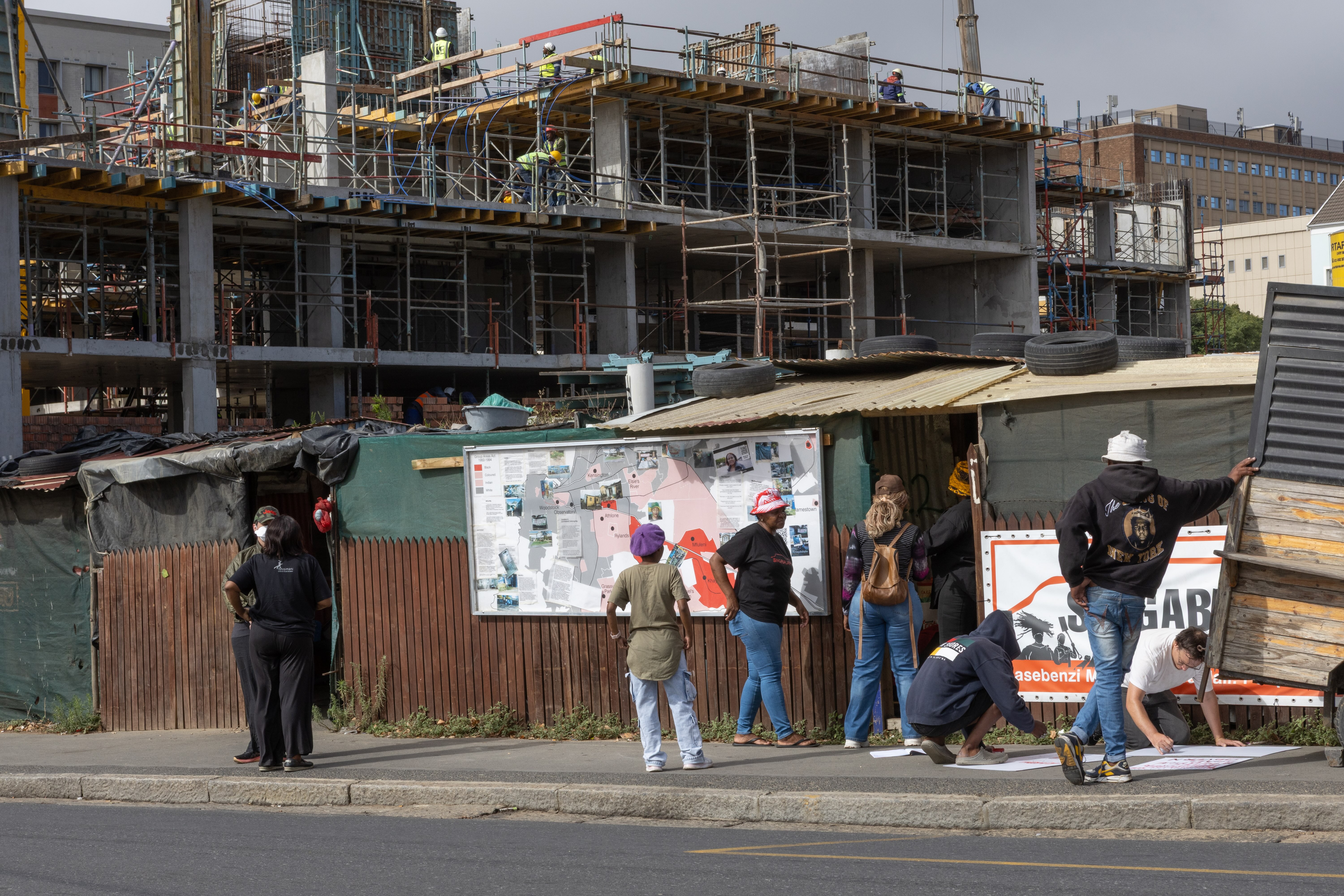
Singabalapha residents occupied Arcadia House old age home before it was demolished. They then settled on the lawn outside. Now there is construction underway at the site.
Housing advocacy group Ndifuna Ukwazi (NU), on behalf of Singabalapha residents, filed an application in the Western Cape High Court for a review of the City’s decision to rely on the Emergency Housing Programme in its eviction application.
The matter was to be heard in court last month, according to Zamuxolo Gulwa, attorney at NU Law Centre. But Judge President Nolwazi Mabindla-Boqwana postponed proceedings “to allow engagement between the City and the residents of Singabalapha”.
Gulwa said they hope the issue of the group’s possible relocation will be resolved by the time the case returns to court in July.
“There are ongoing negotiations between the parties apart from the ongoing court process with the aim of resolving the matter amicably,” he said.
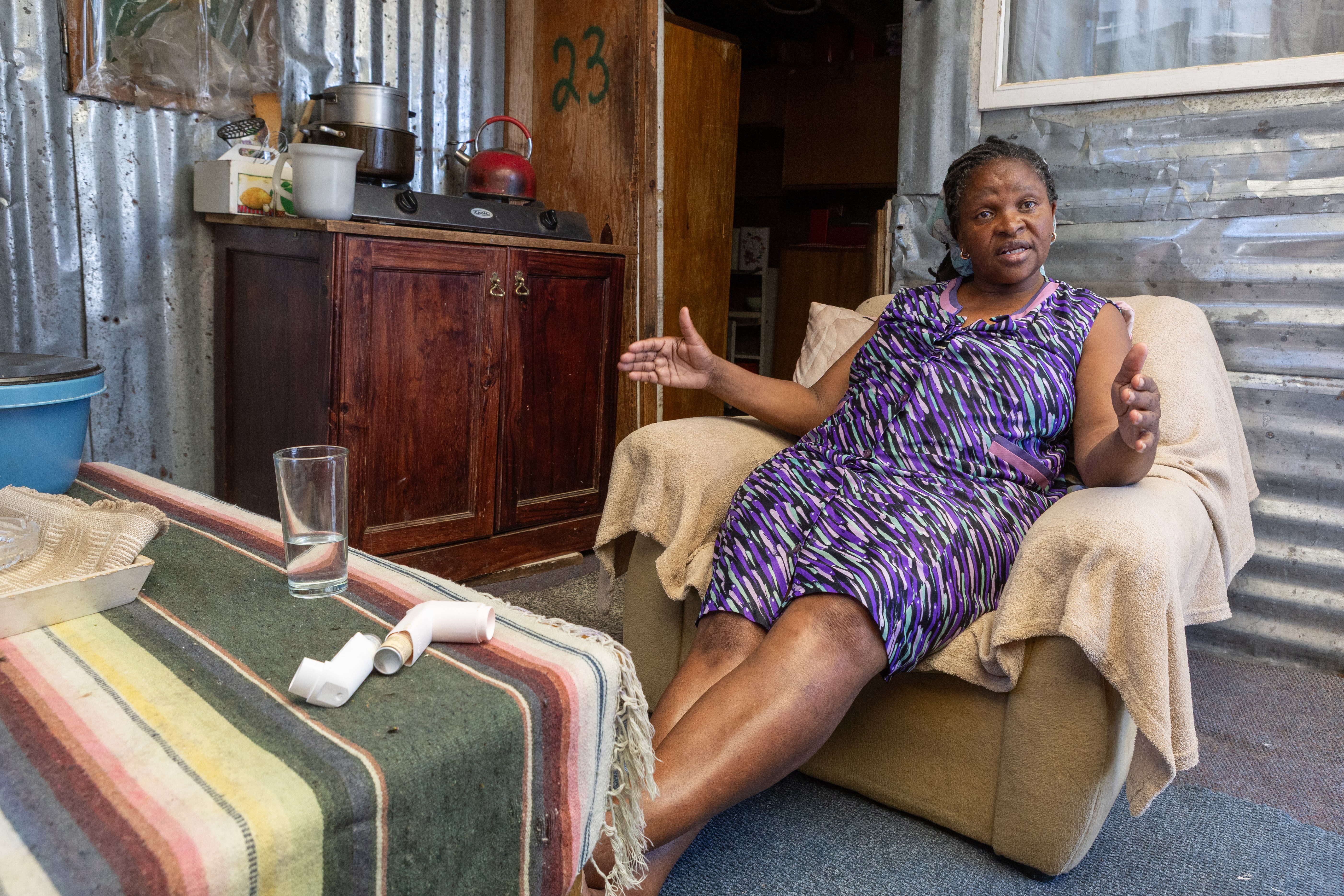
Resident Lindelwa Traore has been living at Singabalapha for years.
Resident Sinazo Jordan, one of the first people to move to the settlement, told GroundUp that life is tough without basic services.
“We use rechargeable lights and gas stoves to cook. For water, we walk with our 25-litre bottles in trolleys to fill them at Willow Arts [a property formerly leased to the South African National Circus School]. For toilets, we pay R2 to use the ones at Saint Peter’s Square.”
Jordan said they asked people in nearby houses and flats to charge their phones.
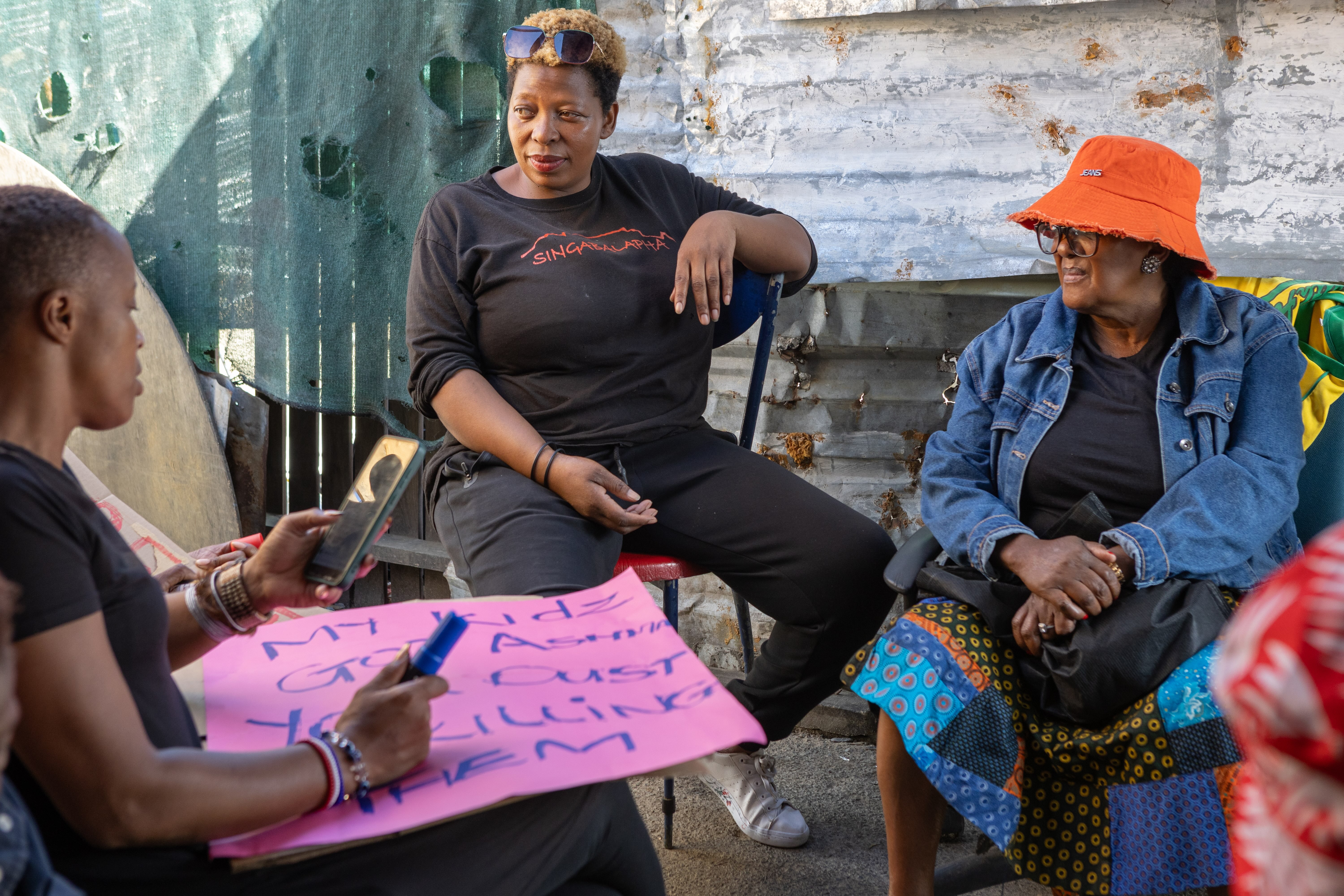
Sinazo Jordan (centre), was one of the first people to move to the settlement. She says life is tough without basic services.
Pamela Martins, whose children are in high school, shares her shack with 11 other people. There are four beds, one couch, a fridge and a kitchenette. The shack has no windows.
Martins said drug use was a problem in the community and she was worried about safety.
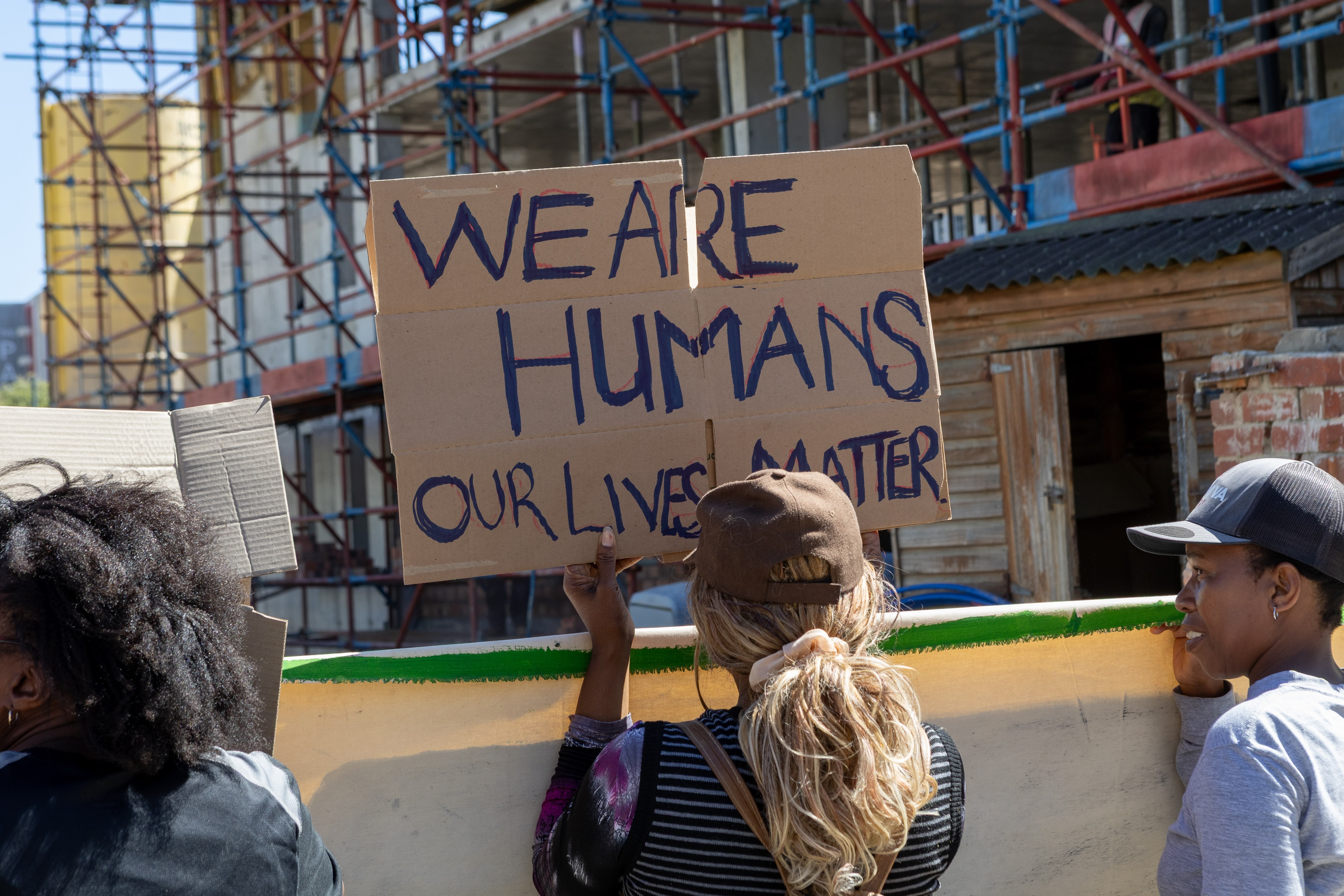
Life at Singabalapha informal settlement is very difficult. Most of the shacks leak when it rains and families have no basic services.
Jordan said municipal officials had taken residents to view two possible areas for relocation in Hanover Park and Gugulethu. But they were met with hostility from people living there.
“We don’t mind being relocated. But why are we being taken far away? Why can’t we be relocated in the inner city? Some of us have jobs here. Our children go to schools here,” said Jordan.
According to mayco member for human settlements Carl Pophaim, at the time the City filed for eviction, there were 103 adults occupying about 33 structures in Singabalapha.
Pophaim said the City is in talks with the communities where the Singabalapha families might be moved.
Pophaim acknowledged that there were no basic services. He said efforts to prevent further occupation were needed “as it is not safe or healthy for residents to settle in areas not earmarked for habitation”.
Support independent journalism
Donate using Payfast

Don't miss out on the latest news
We respect your privacy, and promise we won't spam you.
Next: Our pool is a dumping site, say Joburg residents
Previous: Lottery fraudsters must personally pay back R14-million
© 2026 GroundUp. This article is licensed under a Creative Commons Attribution-NoDerivatives 4.0 International License.
You may republish this article, so long as you credit the authors and GroundUp, and do not change the text. Please include a link back to the original article.
We put an invisible pixel in the article so that we can count traffic to republishers. All analytics tools are solely on our servers. We do not give our logs to any third party. Logs are deleted after two weeks. We do not use any IP address identifying information except to count regional traffic. We are solely interested in counting hits, not tracking users. If you republish, please do not delete the invisible pixel.