
Billions in flood damage to Western Cape roads
Province to apply for disaster relief funding to rebuild roads and infrastructure
 Add GroundUp on Google
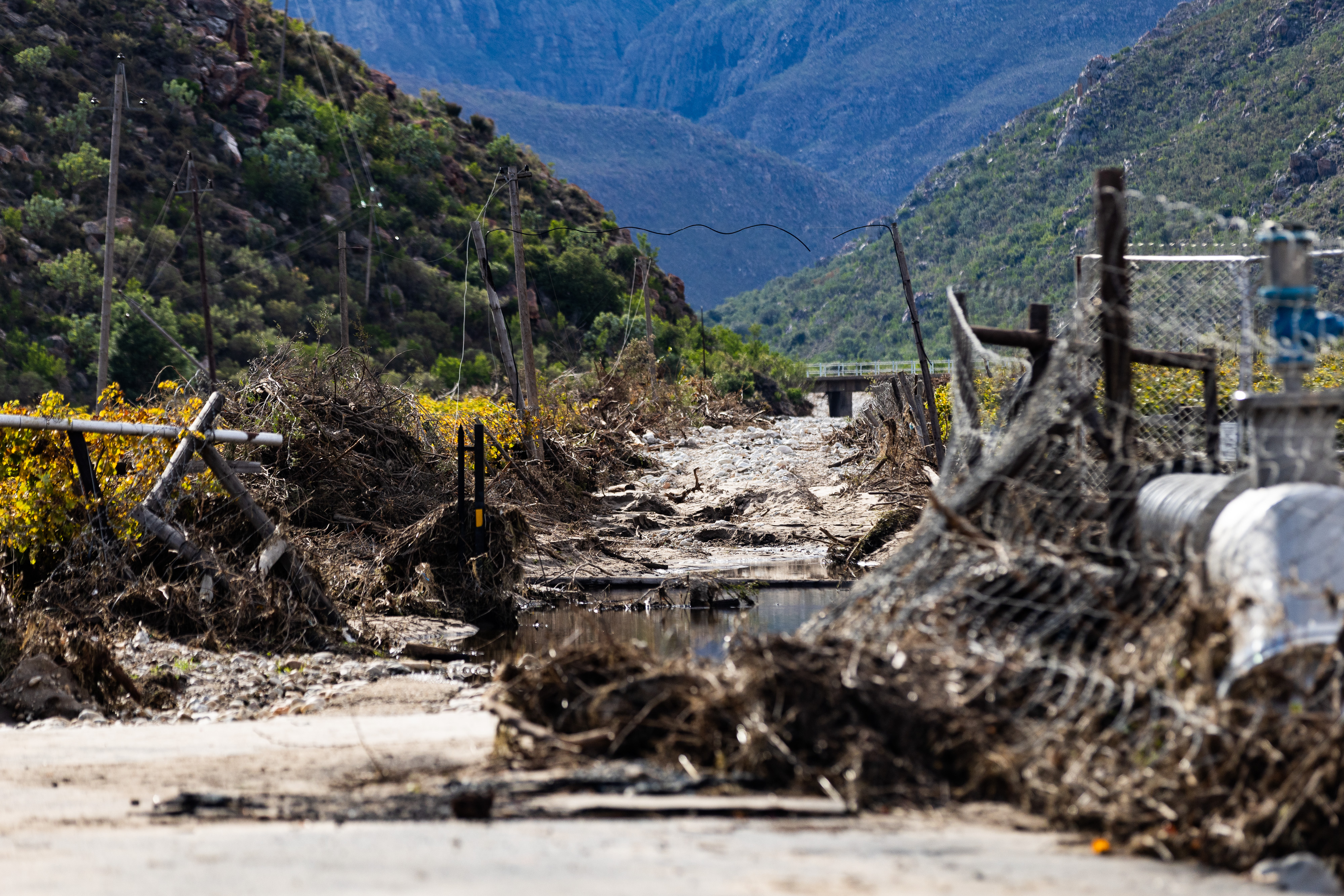
A road in Wolseley blocked by debris after heavy rainfall and flooding. Archive photo: Ashraf Hendricks
The cost of the damage to roads in the Western Cape from the storms in May is likely to exceed that of previous major floods in 2023 and 2024, according to the Western Cape Department of Infrastructure.
During the first week of May, several cold fronts left many roads in the province badly damaged, with some major routes still closed. Several passes experienced mud slides; roads and bridges were washed away or flooded. A total of 400 roads across the province were affected.
“Flood damage is widespread and severe with hundreds of roads affected and several major routes currently closed,” the department told GroundUp.
According to the department, major roads requiring significant repair include the Franschhoek Pass, Bainskloof Pass, Meiringpoort, Mitchells Pass, the R27 near Vredendal, and the R328 (Cango Caves Road).

“At this stage, cost estimates are not yet available particularly as some parts of the network remain inaccessible,” the department said.
“What is already clear, however, is that the scale of damage is likely to exceed that experienced during the 2023 and 2024 floods, with preliminary indications pointing to damages amounting to billions of rands.”
Frequent road closure updates show that many roads in the Cape Winelands and West Coast are still affected. Other roads in the region that remain closed are Old N1 Road in Rawsonville, the R43 from Worcester to Villiersdorp, McGregor Road, and several roads in the Cederberg, such as Uitkyk Pass, Nieuwoudts Pass and Matjies River road.
In the Cape Winelands, many trucks were stranded during the storm.
Gavin Kelly, CEO of the Road Freight Association, said some operators were stuck for days “whilst waters had to subside or damaged roads were cleared”. Some vehicles had to “back-track” and find alternative routes; others were “stuck in gravel roads that became mudpools”.
There are still some secondary roads that remain impassable.
“Some regional secondary roads were destroyed, and these will be off routes for a few months, at least,” said Kelly.
The provincial department said it will apply for disaster funding, although such funding “is not immediately available”.
In the meantime, provincial infrastructure minister Tertuis Simmers has asked the public to be patient as the department’s “main priority” is restoring “access where communities are completely cut off and where emergency and service delivery access is required”.
Support independent journalism
Donate using Payfast

Don't miss out on the latest news
We respect your privacy, and promise we won't spam you.
Next: Khayelitsha households in the dark for a month as Eskom fails to fix transformers
Previous: Meet the neighbourhood watch patrolling a river to stop pollution
© 2026 GroundUp. This article is published under the GroundUp Republication Licence Version 1.0. Email [email protected] to request permission to republish.