
Buses full of Malawians leave Durban
Thousands of immigrants are living at a makeshift repatriation camp at Sherwood
 Add GroundUp on Google
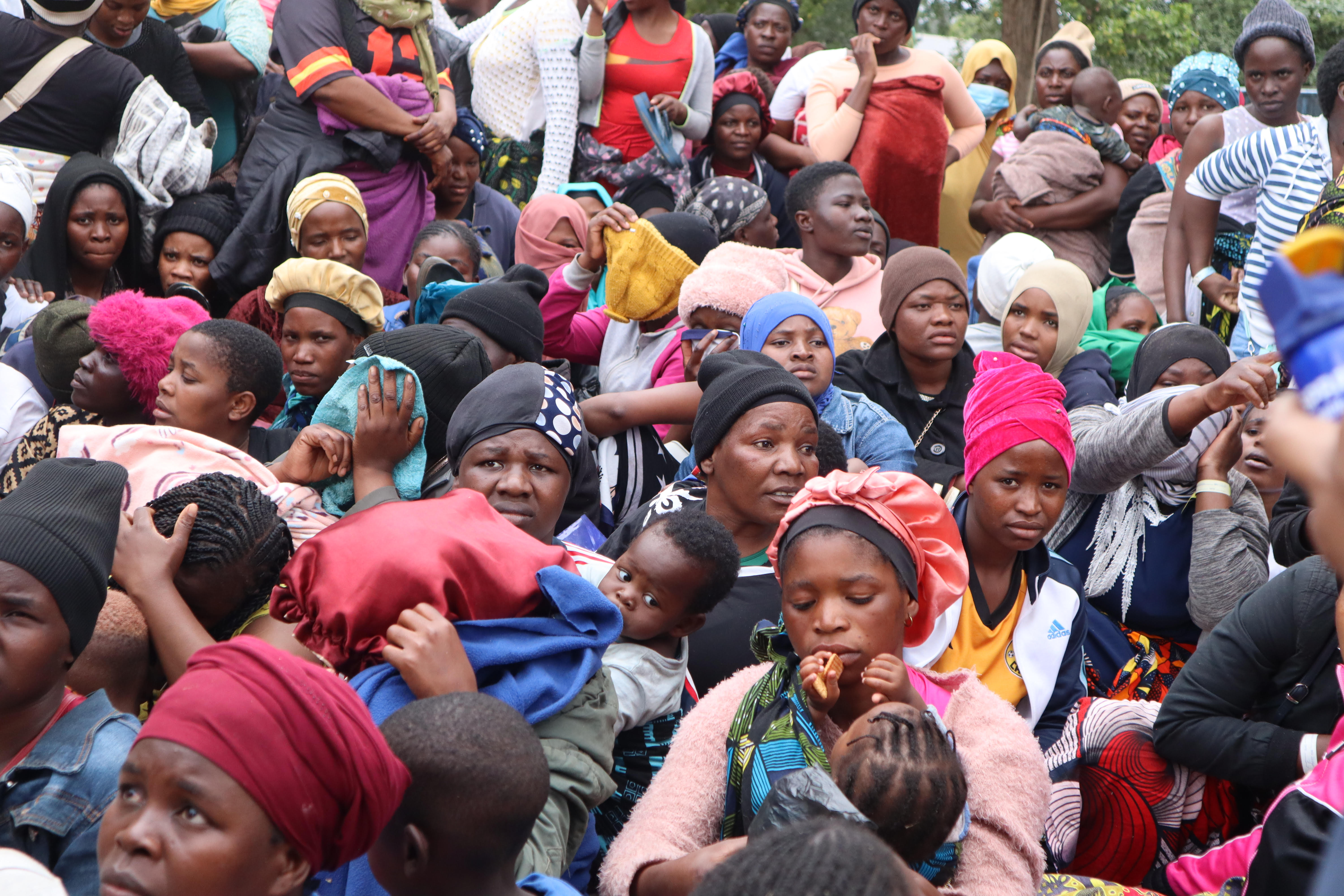
Women and children wait for buses in Sherwood, Durban, to take them to Malawi. Photos: Joseph Bracken
About 30 large buses were expected to depart for Malawi from a makeshift repatriation camp in Sherwood, Durban, on Friday, Malawi High Commissioner Stella Ndau told the media on Friday afternoon.
By 2pm, 23 buses had left. Five buses had left already on Thursday.
The Malawian government is repatriating thousands of immigrants, who have been living in the camp.
“Since the government made an appeal for assistance in terms of repatriation of our citizens, we have seen a response from our private sector, who are sponsoring some buses in order to take the citizens back home,” said Ndau.
To date, 1,549 Malawians have been voluntarily repatriated from Sherwood. Another 1,260 are en route to Malawi, said Ndau.
700 Malawians have recently been deported by the South African government.

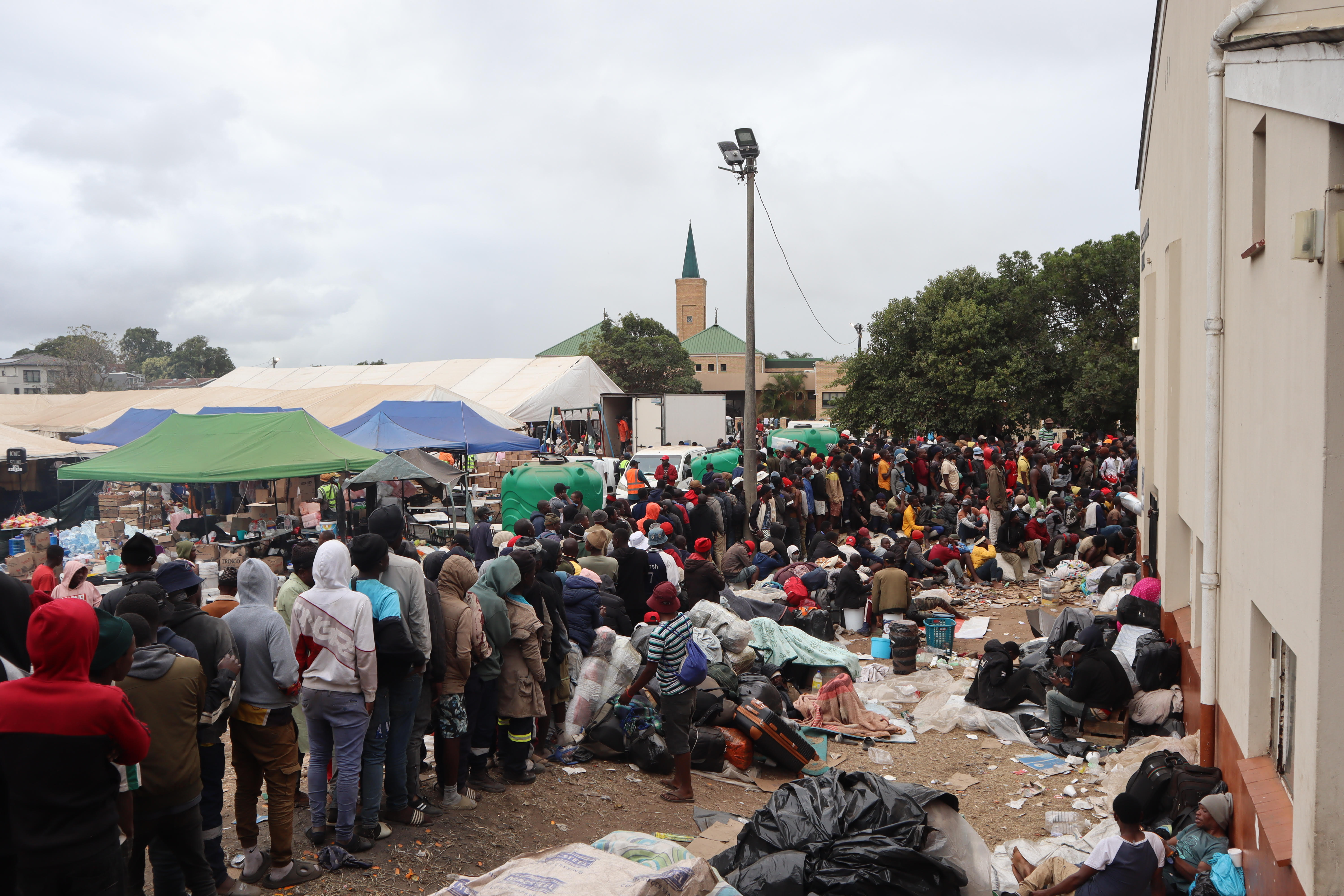
Hundreds of men line up to be processed for repatriation.
An intake centre for the arriving Malawians has been set up at the Kamuzu Stadium in Blantyre, Malawi, said Ndau.
Upon reentry, the repatriated citizens will receive social support from the government and transport to get back to their home districts.
The Malawian government also intends to support the repatriated to set up their small-scale businesses.
Sarra Judas, who is awaiting repatriation, said she was evicted by her landlord in the wake of recent anti-immigration campaigns.
“We are leaving because we no longer feel safe. Even our landlords are afraid,” said Judas.
She and her two children arrived in South Africa about two years ago. She found work selling SIM cards.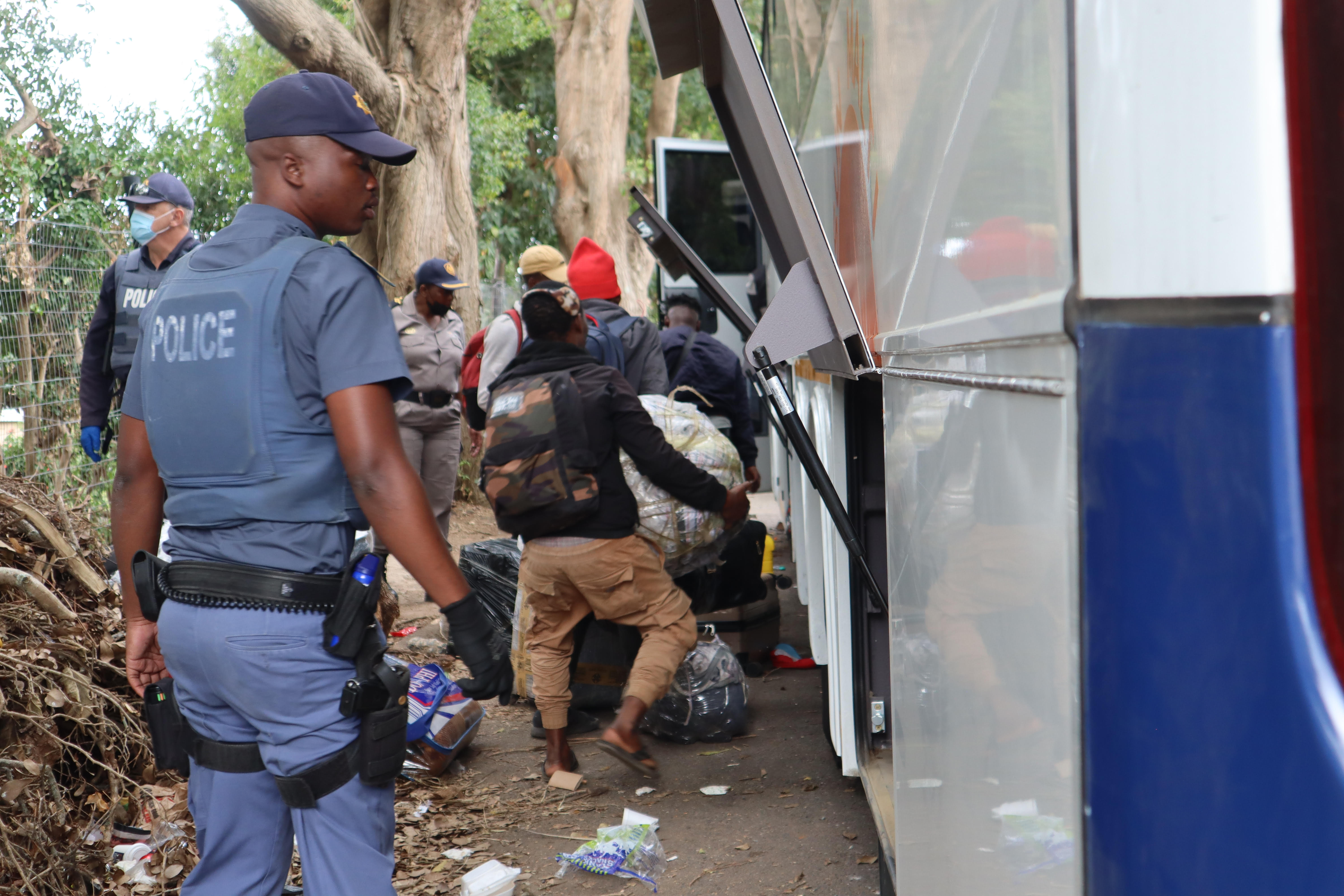
Police officers escort people to the buses.
Jackson Nkoma, who arrived in South Africa five months ago, was also evicted by his landlord. “I am leaving because I fear I might be attacked,” he said.
Nkomo described the dire situation at Sherwood. He said toilets were overflowing and there was nowhere to dispose of waste.
We saw about 20 men taking turns bathing under a water truck spout.
“It is better to go back home than to risk dying in South Africa,” said Yakubu Jombo. His wife had left on a bus on Thursday, and he was awaiting his turn.
None of the people GroundUp spoke to had clear plans for how they would earn a living when they got back to Malawi. Many said it was nearly impossible to find a steady income back home.
Nkoma said he would return to subsistence farming and try to sell the surplus.
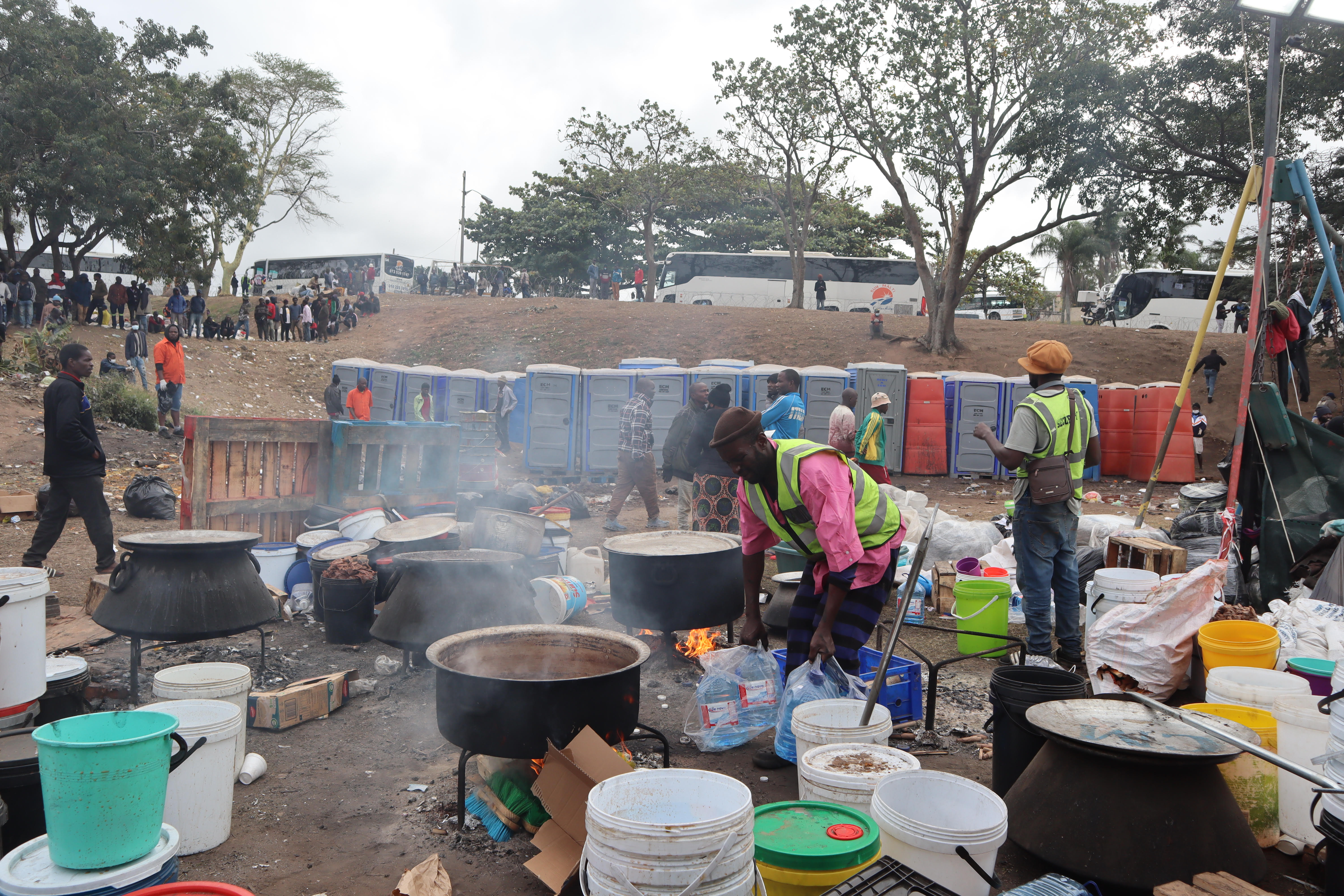
Makeshift kitchens have been set up by NGOs, local volunteers and immigrants to feed the thousands of people gathered at Sherwood.
Support independent journalism
Donate using Payfast

Don't miss out on the latest news
We respect your privacy, and promise we won't spam you.
Next: In photos: Registration for elections 2026 gets off to a slow start
Previous: COSATU march to SA Reserve Bank in Pretoria over ‘high cost of living’
© 2026 GroundUp. This article is published under the GroundUp Republication Licence Version 1.0. Email [email protected] to request permission to republish.