
Thousands of families live on railway reserves without water, electricity or rubbish collection
People have occupied the railway line between Langa and Bonteheuwel train stations since 2019 and at old Philippi depot since 2020
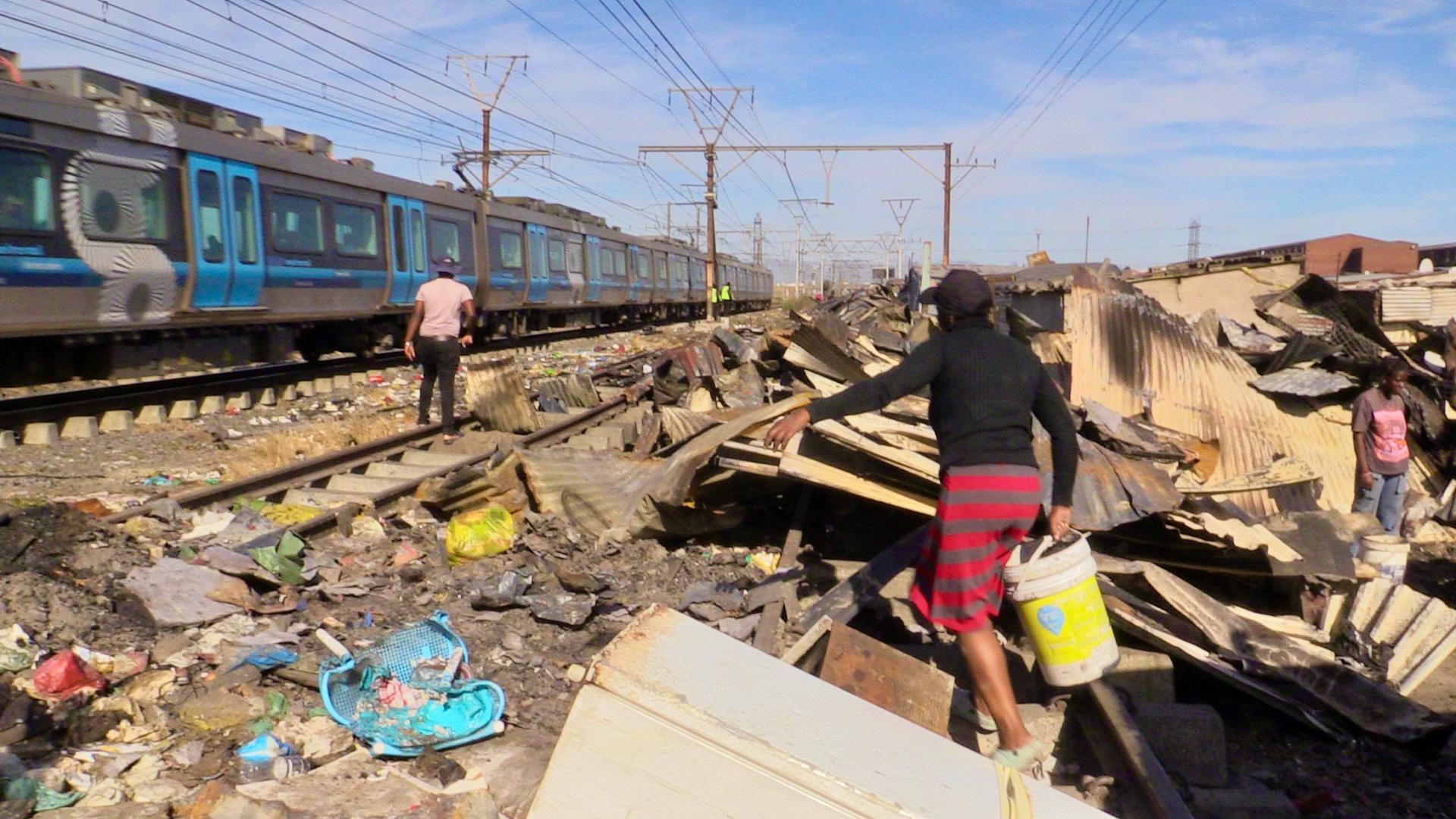
PRASA says occupation of the railway reserves poses a serious safety risk and significantly impacts the restoration of rail services in Cape Town. Photos: Sandiso Phaliso
- Thousands of families living on railway reserves between Langa and Bonteheuwel train stations lack tap water, formal electricity and rubbish collection.
- PRASA says the City is responsible for providing services to the estimated 2,000 families in the Langa rail reserve, but the City says PRASA has not authorised service provision on its land.
- At the old Philippi depot, where there are about 6,000 households, the City has provided some services but says PRASA has not given written authority for it to provide waste management services.
Thousands of families living between Langa and Bonteheuwel train stations on the Central Line lack access to tap water and have no formal electricity supply.
The Passenger Rail Agency of South Africa (PRASA) says the City of Cape Town is responsible for providing services to Siyahlala, as the settlement is known. (This is not the same Sihahlala in Dunoon that we reported on earlier this week.) But the City says PRASA has not authorised the provision of services on its land.
According to PRASA, 1,200 families live here. Community leaders say there are over 2,000 families. They are mostly former backyarders who occupied the railway reserve around 2020.
To access water, people queue for hours at Langa train station, a kilometre away, to fill their water containers.
Khungeka Lawu has to use her older person’s grant to pay youngsters to fetch water for her.
There are no taps for hand washing and no toilets.
“At night we use buckets to relieve ourselves and throw them on the railway lines in the morning. It is not just filthy here, the stench is unbearable,” says Lawu.
There is rubbish collection weekly, but the rubbish becomes overwhelming at times and residents resort to burning it.
Those who can afford it use illegal electricity connections from houses nearby, paying R300 a month. Those who cannot, use candles and paraffin stoves. The settlement is dark at night and unsafe.
When a fire broke out last week, residents did their best to douse the flames with sand. Four people died – a mother and her three children – and 15 shacks burnt down.
“No one deserves to live in such conditions,” says community leader Andisa Velaphi.
Two portions of land have been identified in Philippi Wedge to relocate the Siyahlala households. A rezoning application lodged in August 2023 is still to be finalised by the City. But there has been strong opposition from Mitchells Plain residents, with more than 900 comments registered during October and November 2023.
Mayco member for spatial planning Eddie Andrews told GroundUp it was impossible to give an exact date, but the land zoning application reports were “being prepared and will be submitted to the Municipal Planning Tribunal once finalised”.
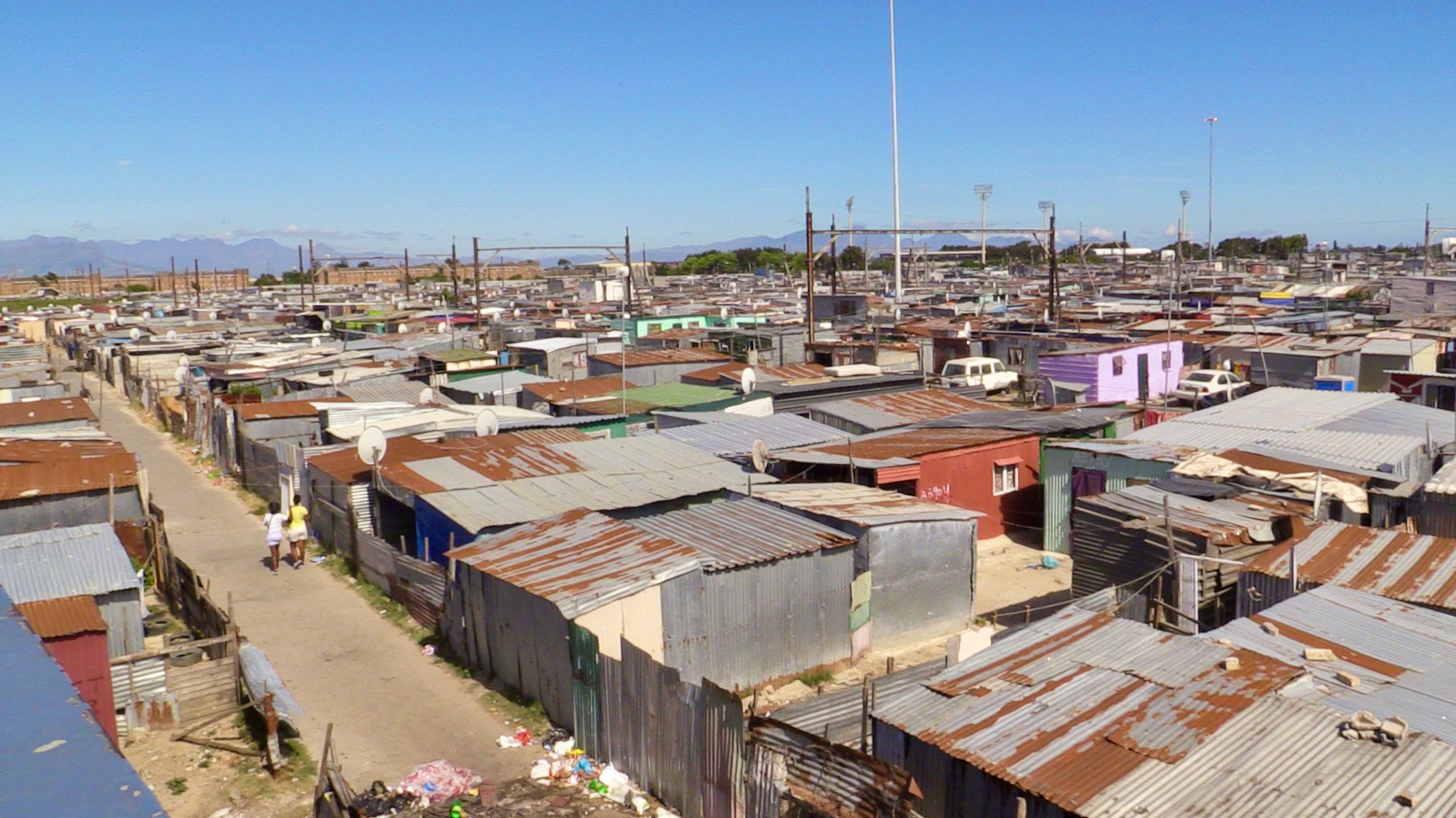
Shacks at the old Philippi depot area.
Not far from Siyahlala, thousands of families are living on a rail reserve at the old Philippi depot. They have been there since 2019. The City of Cape Town has provided them with some services, but community leaders say the communal toilets and standpipes are insufficient and there is no rubbish collection.
Mncedisi Twala, a community leader in Eyadini, said, “We have resorted to illegal electricity connections in the absence of electrification. We don’t have the simplest basic services. We are living in filth as there is no cleaning company to service the area. We feel our voice is not listened to as we have on numerous occasions asked about the plans to service us, but we are not getting the desired answers.”
According to community leaders there are over 6,000 households in the area, made up of informal settlements Malema, Eyadini, Lungisile and Downtown, but GroundUp has not confirmed this.
City spokesperson Luthando Tyhalibongo said the City has provided 336 chemical and 654 portable flush toilets, and 436 taps.
Tyhalibongo said the City had “requested written authority from PRASA to allow the City to provide waste management services … To date, this authority has not been received.”
We asked PRASA spokesperson Andiswa Makanda and regional manager Raymond Maseko why this had not been forthcoming. They did not respond. Maseko also did not respond to a community leader’s accusation that he had broken promises to meet with the community.
Metrorail Western Cape spokesperson Zinobulali Mihi responded but not to our question about the authorisation. She only said PRASA cannot install services, as municipal services fall under the jurisdiction of the City.
Mihi said PRASA was working with national, provincial and local government to address the humanitarian, safety and infrastructure challenges.
She said the occupation “continues to pose serious safety risks” to the households on the tracks and affects PRASA’s ability to restore rail services.
According to Mihi, the long-term plan is the permanent relocation of the households. The Housing Development Agency (HDA) will be the implementing agency.
“The Old Philippi depot remains earmarked for modernisation and integration into the Central Line recovery programme. These upgrades are essential to restoring reliable rail operations in the region,” said Mihi.
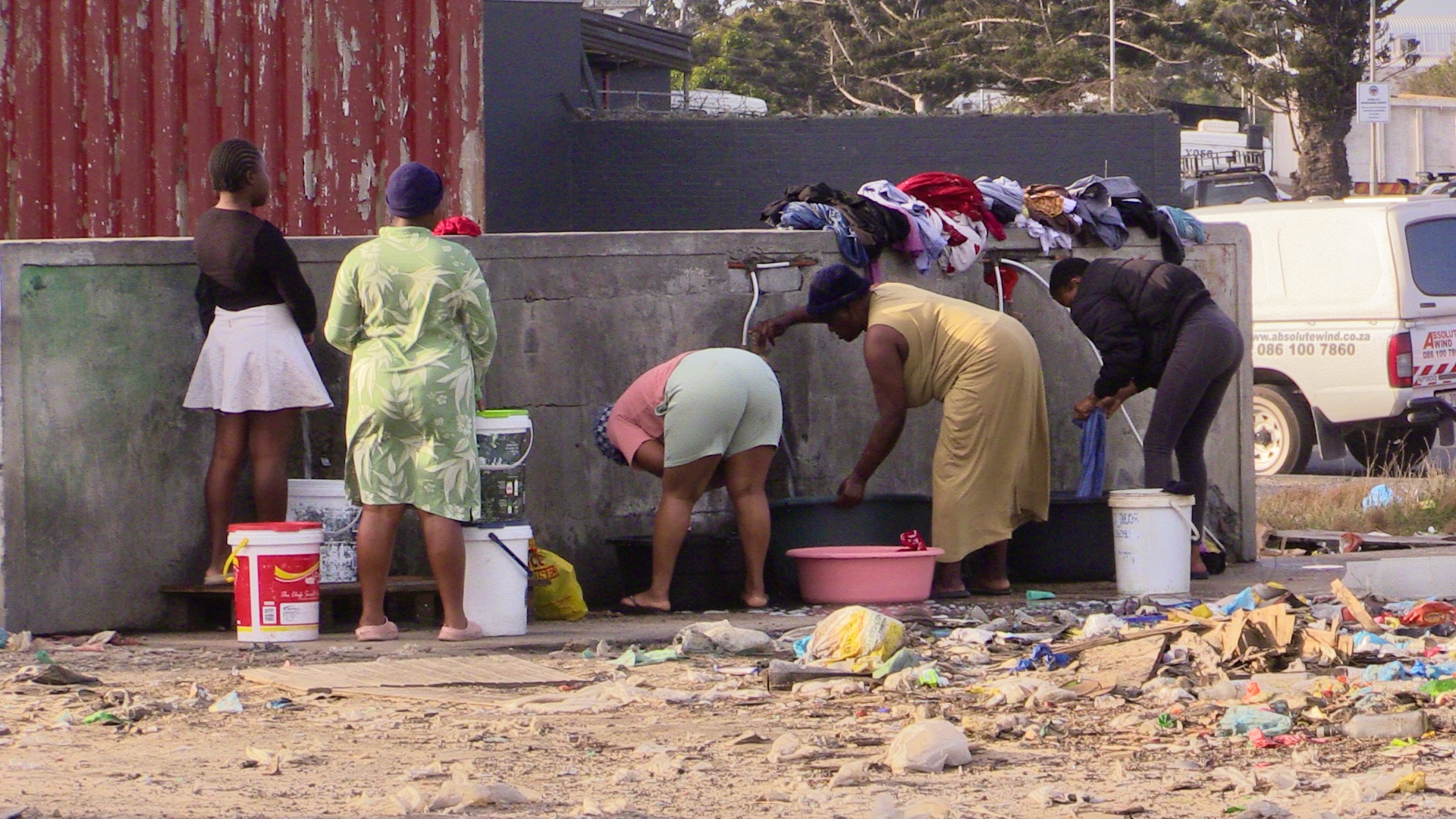
People from Siyahlala informal settlement fill water containers.
Support independent journalism
Donate using Payfast

Don't miss out on the latest news
We respect your privacy, and promise we won't spam you.
Next: Foot-and-mouth disease hits Limpopo
Previous: Municipality silent on why it can’t provide electricity
© 2025 GroundUp. This article is licensed under a Creative Commons Attribution-NoDerivatives 4.0 International License.
You may republish this article, so long as you credit the authors and GroundUp, and do not change the text. Please include a link back to the original article.
We put an invisible pixel in the article so that we can count traffic to republishers. All analytics tools are solely on our servers. We do not give our logs to any third party. Logs are deleted after two weeks. We do not use any IP address identifying information except to count regional traffic. We are solely interested in counting hits, not tracking users. If you republish, please do not delete the invisible pixel.