
Stop sardine fishing, warn conservationists
Mass die-offs of sardines have prompted the government to limit sardine catch until 2 October, but conservationists say this is not enough
 Add GroundUp on Google
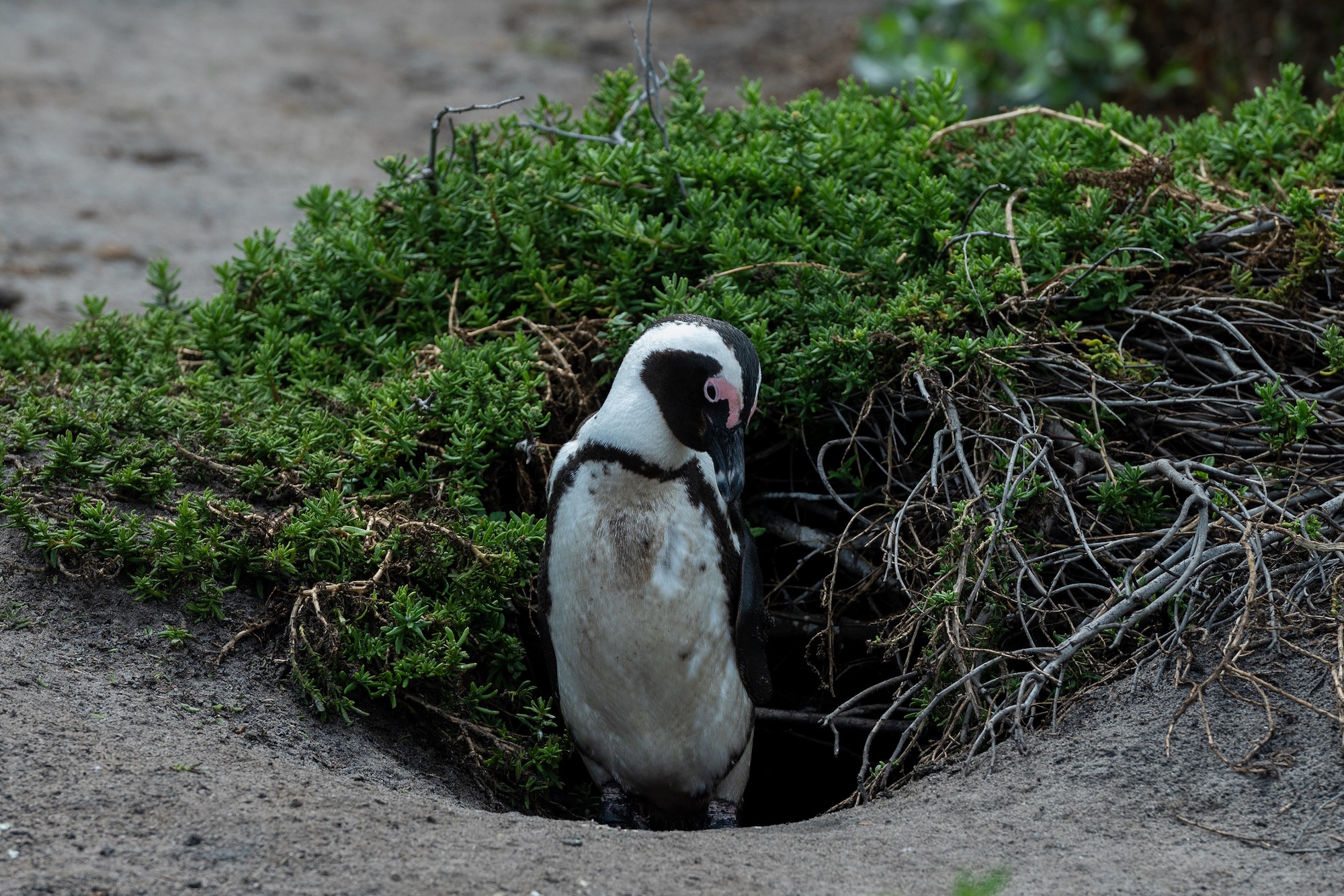
An African Penguin (Spheniscus demersus) emerging from its burrow at the Stony Point Penguin Colony in Betty’s Bay, Western Cape. Photos: David Harrison
- Government has limited sardine catches until 2 October because of the ongoing mass sardine die-off.
- But conservationists say fishing should stop until scientists know how much of the stock remains.
- Scientists warn that dwindling sardine stocks could put further pressure on the critically endangered African Penguin, particularly ahead of their annual moult.
- The South African Pelagic Fishing Industry Association says that if small pelagic fishing were to be entirely halted at this point, there would be a revenue loss of over R400-million.
The Department of Forestry, Fisheries and the Environment (DFFE) has temporarily limited sardine catches as a precautionary response to reports of mass die-offs across the South African coastline.
But scientists say this is not enough to reduce disruptions to the ecosystem, including to the critically endangered African Penguins.
DFFE spokesperson Zolile Nqayi said the restriction will limit each rights holder to landing no more than 25% of their outstanding 2026 total allowable catch. The limit, announced on Sunday, will be in place until 2 October.

The measure is in line with recommendations put forward by the department’s Small Pelagic Scientific Working Group (SWG-PEL) during a meeting on 4 September.
“Observations will be intensified and the SWG-PEL will re-assess the situation before the restrictions end,” Nqayi said.
Die-offs linked to pilchard herpesvirus
Sardines were first found dead and dying on 28 July. Subsequently, die-offs were reported from a number of locations along the South African and Namibian coasts.
DFFE laboratory testing confirmed the presence of pilchard herpesvirus (PHV) genetic material in sampled sardines. The virus had never before been reported in South Africa, but a previous outbreak in Australia in the 1990s saw that region lose close to 70% of its adult sardine biomass.
The department said that although PHV remains the leading explanation for the mortalities, other environmental factors are still being investigated.
However, Craig Smith, a senior technical marine specialist at WWF South Africa, said that if a separate environmental stressor were at play, the entire ecosystem would be affected, but there is currently no indication of this.
“What we see fits the picture and pattern of a very virulent strain of a virus outbreak,” Smith said.
Impacts on African Penguins
Sardines are one of the main food sources for African Penguins, already critically endangered and under pressure, in part because they compete with the small pelagic fishing industry for sardines and anchovies.
Ronelle Friend, director of the Algoa Bay Conservation group, said the timing of the sardine die-offs is concerning, just as the penguins’ moult season arrives, which typically takes place from late September to December. When the penguins moult, they shed their feathers and fast while they wait for a new layer to grow. Ahead of moulting, they must fatten up so that they have sufficient energy to make it through the season.
“If they don’t have the fat reserves, then they will starve to death, or they will be very thin afterwards,” said Friend.
Dr Alistair McInnes, seabird conservation programme manager for BirdLife South Africa, said penguin colonies on the south coast are already seeing changes that may relate to the sardine die-offs. Declining mass has been noted in birds at Dyer Island and Stony Point (Betty’s Bay), although there has been some variation. BirdLife has also noted fewer penguins crossing the weighbridges at the Stony Point colony, he said.
But penguins from West Coast colonies, such as Robben Island, are not seeing the same trends, said McInnes.
“It’s too early at this stage to make any firm conclusions,” he said. “But it does seem a bit premature that the numbers are tailing off quite quickly, because usually we get birds at Betty’s Bay breeding through to October.”
Mitigating the adverse effects
A PHV outbreak would not only affect the African Penguins, said Smith. A decimated sardine population would also hurt South Africa’s economy, particularly ecotourism industries such as shark cage diving and whale watching. Fisheries that target the predatory species that feed on sardines would also likely struggle, as those populations would now be under pressure with a reduced food source.
Given these risks, Smith said the DFFE needs to act swiftly if it is to limit the devastation that mass sardine die-offs may cause. He said it should begin with fully halting the further extraction of sardines via the small pelagic fishing industry. This would allow the remaining sardines to develop immunity to the virus, which Smith said is critical for rebuilding the stock once an outbreak has run its course.
According to Smith, it is the position of WWF South Africa that a ban on small pelagic fishing be put in place until the stock of surviving sardines is known.
BirdLife would also like to see this intervention. The organisation previously submitted recommendations to the DFFE, McInnes said, urging the department to stop small pelagic fishing until it conducts its October and November hydroacoustic survey, which is expected to offer the first reliable estimate of sardine biomass and distribution following the die-offs.
McInnes said BirdLife stands by this recommendation despite the department’s new restrictions, which he said would likely not make a significant impact given that it will only be in place for about two weeks.
Without the survey data, it’s difficult to gauge how many sardines have died beyond those that have washed ashore, Smith said. Many more, he said, could be sitting dead at the bottom of the ocean.
“The department needs to undertake a biomass survey for sardine to understand exactly how much is left of the stock,” Smith said. “And until such time it’s irresponsible to continue fishing when you just don’t know how much is remaining.”
Smith said the DFFE could impose such a restriction through the Marine Living Resources Act. But Nqayi wrote in a statement that evidence does not support a blanket closure of the small pelagic fishery at this time.
Impact on the fishing industry
Michael Copeland, chairperson of the South African Pelagic Fishing Industry Association, said a moratorium on all small pelagic fishing would put pressure on the already struggling industry.
He said there currently remain around 16,000 tonnes of sardine that can still be caught by the industry through the rest of the year. If small pelagic fishing were to be entirely halted at this point in the year, there would be a direct revenue loss of over R400-million.
Copeland added that the industry has already faced a difficult year — the worst in over 40 years. He said the industry’s catch totals are less than half their usual levels at this point.
The department’s current restrictions, he said, are more suitable for the industry.
Smith said he understood the financial hardship, but countered that there should be a disaster relief fund for the fisheries in the event of emergencies such as the current die-offs. The agriculture industry has a similar fund, he said, but fisheries do not.
Smith said that other than halting small pelagic fishing, there’s not much that can be done to fight the virus.
“You can’t go and vaccinate sardines,” Smith said. “This is something that needs to run its course. The important thing is controlling what you can control, and that is the further extraction of sardines.”
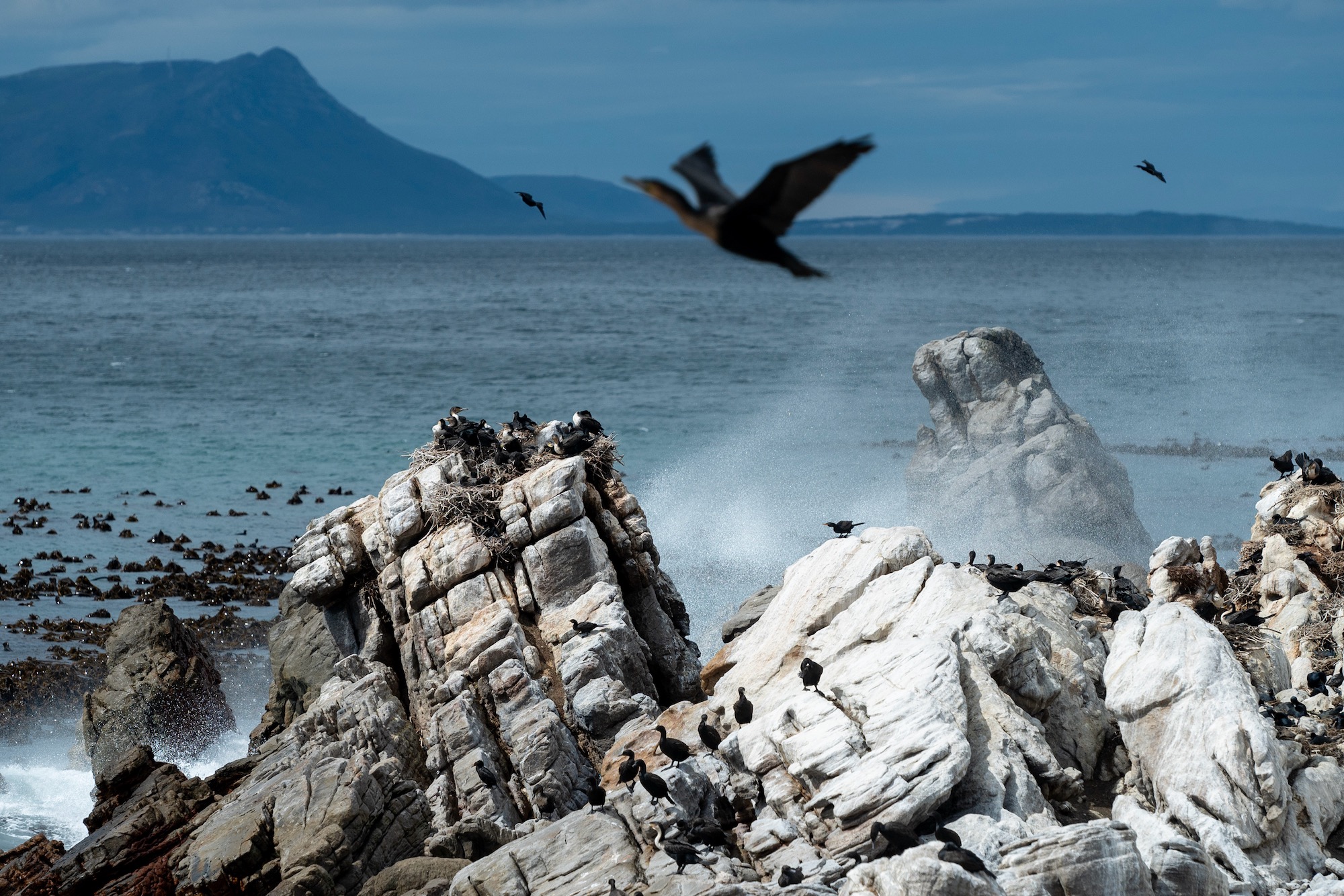
Bank Cormorants nest at the Stony Point Penguin Colony in Betty’s Bay, Western Cape. The species occurs only on the rocky shoreline of south-western Africa and is highly endangered.
Support independent journalism
Donate using Payfast

Don't miss out on the latest news
We respect your privacy, and promise we won't spam you.
Next: Picketers outside City Hall demand safety for women and children
Previous: Makhanda’s decade-long struggle for reliable water
© 2026 GroundUp. This article is published under the GroundUp Republication Licence Version 1.0. Email [email protected] to request permission to republish.