
Social housing set to be built at Salt River Market this year
Funding is secured, but about 50 families living in an informal settlement still need to be relocated
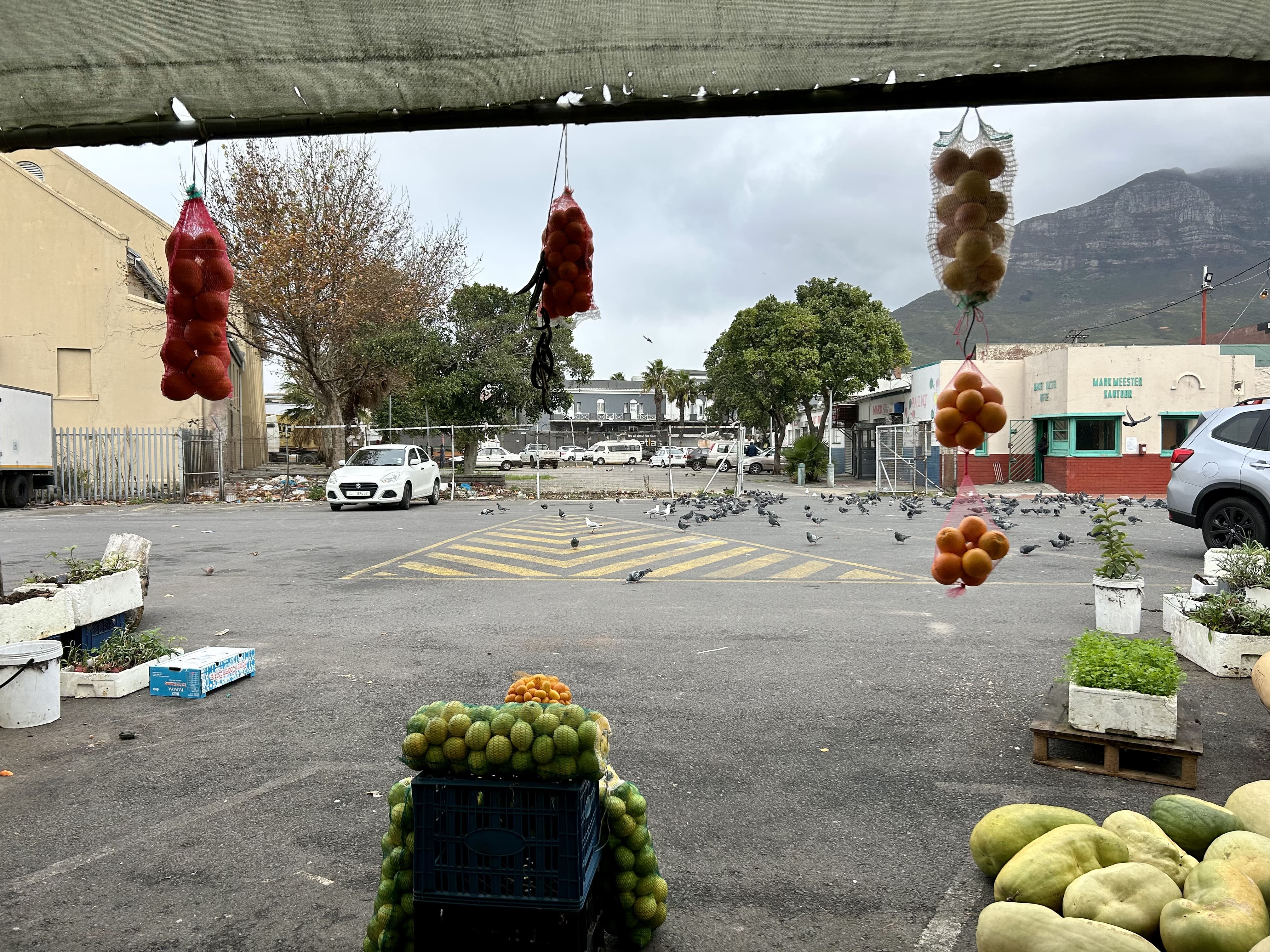
The Salt River Market site, where social housing is planned. Archive photo: Matthew Hirsch
- The long-awaited social housing development at Salt River Market is scheduled to commence construction in August/September 2026.
- Communicare has secured grant funding from the Social Housing Regulatory Authority to subsidise part of the development costs.
- But about 50 families still need to be relocated from an informal settlement on the property.
Funding has been secured to build social housing at the Salt River Market site, but about 50 families living in an informal settlement on the property still need to be relocated.
Social housing institution Communicare plans to start construction by August or September. Construction will take about 36 months, said Thabo Mashologu, Communicare’s general manager of property development and investment.
The plan is to build 300 social housing units on the 1.7-hectare City-owned property, as well as 670 housing units that will be made available for rental on the open market. There will also be retail space.
Communicare has secured funding from the Social Housing Regulatory Authority (SHRA) to subsidise the development. This is a once-off subsidy for the development costs. By law, social housing units can only be allocated to households earning between R3,500 and R22,000 a month. Monthly rentals are determined by household income, capped at R7,326 a month.
The remaining development costs will be covered by a R40-million contribution from Communicare and a loan.
The City concluded a sale agreement with Communicare in 2022, and heritage approval was granted in June last year. There were still about 70 families living in an informal settlement on the property. 20 families have since been relocated to Ghost Town, an informal settlement in Maitland, which is being upgraded by the City with “alternative building technologies” on serviced plots.
When GroundUp visited the Ghost Town informal settlement in December, construction vehicles were on the site, and homes were being erected. There were also a dozen newly installed toilets with taps and basins. Residents said these developments had happened quickly.
Another nine families have committed to relocating to Ghost Town once the upgrades are complete, said Mayco member for human settlements, Carl Pophaim. Four families will be relocated “in the near future,” said Pophaim.
Pophaim said consultations are continuing to relocate the remaining residents.
The Kensington and Factreton Residents and Ratepayers Association had opposed the upgrades at Ghost Town, which is located near the Maitland Cemetery’s Gate 1.
In a letter to the City district manager in October, the association said the development should be rejected.
“The land in question is a graveyard. Any attempt to develop it into housing is a violation of dignity, heritage, and community values. It is morally and culturally unacceptable to desecrate a burial site for short-term gain,” read the letter.
One Ghost Town resident, who spoke to GroundUp on condition of anonymity, said they didn’t mind the Salt River families moving to the area.
“Everybody deserves a chance in life for better living conditions, water and sanitation. The Salt River families … you couldn’t ask for better people. They are not troublesome,” she said.
We also spoke to one resident who moved from Salt River in September. She said she had lived in Salt River Market for 18 years. “We wanted to move. I am quite happy.”
She said some of the remaining residents at Salt River Market are reluctant to move.

The City of Cape Town is busy upgrading the Ghost Town informal settlement with new homes and toilets for people to live in. Photo: Matthew Hirsch

A photo taken in 2024 of the informal settlement on the Salt River Market site. Archive photo: Ashraf Hendricks
Support independent journalism
Donate using Payfast

Don't miss out on the latest news
We respect your privacy, and promise we won't spam you.
Next: Why people from Lesotho cross the border illegally
Previous: Raising revenue from alien invasives
© 2025 GroundUp. This article is licensed under a Creative Commons Attribution-NoDerivatives 4.0 International License.
You may republish this article, so long as you credit the authors and GroundUp, and do not change the text. Please include a link back to the original article.
We put an invisible pixel in the article so that we can count traffic to republishers. All analytics tools are solely on our servers. We do not give our logs to any third party. Logs are deleted after two weeks. We do not use any IP address identifying information except to count regional traffic. We are solely interested in counting hits, not tracking users. If you republish, please do not delete the invisible pixel.