
Rent control not only fails, it entrenches inequality
The solution to housing affordability is to increase supply by building more housing
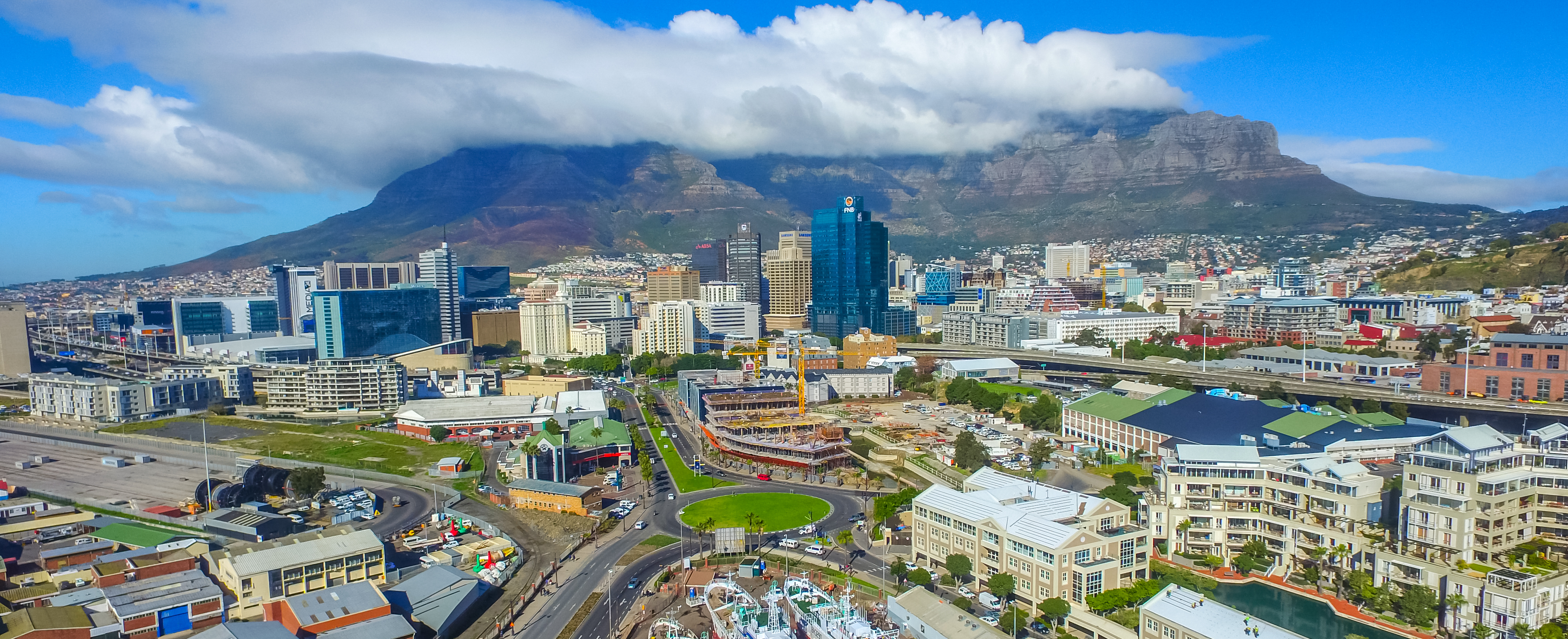
When governments freeze or cap rents, supply collapses, argues Cape Town Mayor Geordin Hill-Lewis. Photo: Wikimedia user
.jpg)
This is a response by the mayor of Cape Town to a call for rent control.
When it comes to housing costs, there is often a temptation in public debate to reach for quick fixes that sound like they promise relief, but without exception deliver only disappointment.
Every thriving global city confronts rising demand, limited land, and escalating prices - and Cape Town, a city whose growing appeal is undeniable, is no exception. So as frustration mounts, so do calls for rent caps, foreign-buyer restrictions, and heavy-handed interventions that have failed everywhere else they have been tried. At moments like this, the city deserves a discussion rooted in evidence and economic reality rather than political theatre.
The proposal to cap rental prices is an emotionally satisfying argument. But it is also wrong. And not just theoretically wrong, but demonstrably, repeatedly, historically wrong. This has been proven in every city that has tried to price-control its way out of housing scarcity.
Cape Town is an increasingly successful city, economically and culturally, and like every successful city in modern history, its biggest housing problem is simple: too much demand is chasing too little supply. The only solution to housing affordability is either to reduce demand - which would mean becoming poorer, less attractive, less safe, and less economically dynamic - or you increase supply by building more housing. That’s it. There is no magical third option.
And the fact that Cape Town’s desirability is rising is not a crisis. It is a sign that the city is doing many things right. Do you know where rent is cheap? Hillbrow. No one cites it as a model of success.
Rent control failure
The reality is that rent control doesn’t fix scarcity, it actually worsens it. When governments freeze or cap rents, supply collapses. Berlin demonstrated this dramatically between 2020 and 2021, when its ambitious rent cap led to a 50% drop in available rental housing within months. Construction slowed, landlords pulled units from the market, and rents in the uncontrolled segment soared, so much so that the German Constitutional Court struck the policy down as unconstitutional.
San Francisco’s long-running experience produced the same result. A landmark Stanford study found that rent control shrank the rental market by 15%, as owners converted units into condos, sold them, or withdrew them entirely. And in New York, decades of frozen rents produced entire corridors of buildings that are now poorly-maintained because landlords cannot cover rising costs with artificially fixed rents.
Few policy proposals anywhere have such a well-documented and comprehensive track record of abject failure as this one. And yet, it keeps popping up in successful major cities around the world.
But the strongest argument against rent control is not only that it fails. It is that it actively entrenches inequality. Rent control protects whoever already has a lease, not the people who most need housing. It creates an insider class of protected tenants and an outsider class of shut-out newcomers. In every controlled city, the wealthy cling to artificially cheap units for decades, while the young, the poor, and the newly arrived face skyrocketing rents in the uncontrolled segment.
It is no accident that these outcomes repeat themselves across places, decades, and political ideologies. When you prevent owners from charging market rents, two things happen - always, everywhere.
First, supply drops. People stop building new units or withdraw existing ones. After Argentina scrapped rent control in Buenos Aires, the rental housing stock reportedly increased by nearly 195%, largely because previously withheld units re-entered the market. And those Argentinians who can finally access decent rental housing do not care that some of it belongs to foreigners; they care that it exists.
Second, maintenance collapses. If you can’t recover the costs of upkeep, you stop maintaining the building. Deferred maintenance compounds until it becomes too expensive to reverse. This is the unfortunate reality. This is how vibrant neighbourhoods become slums.
The moral narrative of rent control collapses once you look at who actually benefits. It achieves the opposite of social justice.
The real trends
And this brings us to another important truth that the rent-control conversation often distorts: foreign buyers are not the villains in Cape Town’s story. Foreign ownership has increased since covid, rising from 2.5% to 4.3% of purchases between 2020 and 2024, and growing from 1.4% to 2.1% of total ownership over the past two decades. But foreign buyers overwhelmingly cluster along the Atlantic Seaboard and pockets of the Helderberg region. These are luxury neighbourhoods on mountainsides and coastlines. The kinds of areas in every leading global city where prices rise regardless, simply because they are highly desirable places to live.
While foreign buyers do push prices up at the very top end, they also inject capital into the city, support tourism-linked spending, and broaden the City’s rates base. Blaming foreigners is comforting, but it is not serious analysis.
The more complex truth is this: most of the pressure in Cape Town’s housing market comes from South Africans moving to Cape Town, not foreigners. Projections based on consumer retail data show a net inward migration of around 100,000 people from the rest of South Africa to Cape Town in the last 36 months alone.
The real problem
The uncomfortable truth is that Cape Town’s housing stress is not foreign-made, investor-made, or Airbnb-made. It is supply-made. When a city grows, its housing stock must grow with it, in volume, in typology, in density, and in spatial spread.
And while even more can be done, Cape Town is a national leader in enabling affordable housing delivery, with more land released in the last two years than in the decade prior, and a pipeline of 12,000 well-located affordable housing units close to the CBD and other economic nodes of the metro.
Cape Town is also leading nationally with a suite of innovative affordable-housing reforms.
The City has introduced Land Discount Guidelines that allow City-owned land to be deeply discounted to maximise social-housing yield, a first in South Africa. The City is offering substantial utility and rates discounts for accredited social-housing projects, also a national first. Amendments to our Municipal Planning By-Law now make it easier for micro-developers to build affordable units more rapidly in townships, informal settlements, and lower-income suburbs. And to support this emerging sector, we are rolling out pre-approved building typologies and discounted development charges to encourage safe, compliant small-scale rental construction.
The seductive political temptation is that, if prices are high, force them down. Cap rents. Restrict increases. Regulate the market until it bends. But economics is not impressed by wishful thinking, and the world’s experiments with rent control are an archive of failure.
Conclusion
If we are serious about improving affordability, we must also be honest about where the blockages reside. Social housing is funded by national government through SHRA subsidies and Human Settlements grants, not municipal budgets. The City’s role is to create the conditions for delivery by releasing land on a discounted basis, streamlining approvals, providing bulk services, and offering incentives to social-housing institutions and micro-developers. Cape Town is doing this at a scale unmatched by any other metro.
What will not deliver affordability are the familiar political distractions such as rent caps, foreign-buyer restrictions, or attempts to regulate prices downwards. None of these measures build new homes. They have failed everywhere they’ve been tried and would fail here too.
We will solve our challenges by freeing up more building, more urgently and ambitiously. In housing, as in economics, you cannot regulate away scarcity. You can only outbuild it.
Support independent journalism
Donate using Payfast

Don't miss out on the latest news
We respect your privacy, and promise we won't spam you.
Next: Kimberley: A provincial capital sunk in sewage
Previous: Activists create human chain for Palestine along Sea Point promenade
Letters
Dear Editor
SA has so much land but people are struggling for houses. Old age homes are overpriced. Pensioners' homes are far too expensive.
It should be encouraged to build more housing, as looting money is so rife here. I'm a pensioner and can't find a pensioner place to live. How many more like me?
The population here has grown but the housing development has not grown. This is really unfortunate in SA, our beautiful country.
Please supply housing for all groups of age.
Dear Editor
We don't want rent control. We want the City to curtail the ability of those who already have homes to hoard housing by taking out loans to buy existing properties to be repaid by others' labour, and pricing first-time home buyers out of the market.
The COCT rates payer database makes it very clear to what extent individuals (and the CCs they hide behind) own 3, 4, 5, 10, 20 properties. They need the living daylights taxed out of them at 3 times, 4 times ... 10 times, 20 times the rates until they are weaned off buy to let. Landlords are acceptable if they ADD to the housing stock by developing and renting out new builds.
Use the COCT data also to crack down on ghost properties by tracking negligible water and electricity consumption. Use it or lose it!
Dear Editor
I don’t have a strong opinion on rent control. Whether rent control can be implemented intelligently, is open for debate, and I respect Hill-Lewis’s opposition to it. But what alarms me is his denial of the extent of the housing crisis.
The article only contains the word “crisis” to say that the current situation “is not a crisis”. Instead, the mayor uses words like “successful”, “thriving”, “appeal”, “desirable” – and once, the words “frustration” and “housing stress”. It looks as though Hill-Lewis sees the spiraling rentals as a negligible collateral damage resulting from successes. And since he wants to make Cape Town even more successful, we must brace ourselves for further pressures on the cost of housing.
Quantity over quality?
In Hill-Lewis’s view, the challenge is merely about balancing out a quantitative equation of supply and demand. Increasing supply is “the only solution”, he claims. Rather than the comprehensive strategy proposed by le Roux, Narain and Cogger, with multiple interventions to correct market imbalances, he prefers a mono-dimensional approach. As if his “build-more” strategy would magically address the qualitative side of the equation and deliver housing units in the required typology, density and location. There is ample evidence that it doesn’t.
Time to celebrate?
Yes, given the colossal supply gap in the under-serviced segments of the market, we need a radical change in gears in the housing system. So if Hill-Lewis’s focus on quantity could result in a genuine acceleration in the delivery of well-located housing in the type that most Capetonians need, including truly affordable as well as social housing, there would be plenty to celebrate.
But Hill-Lewis’s boasting about the accelerated release of land seems misplaced if it doesn’t result in housing being built and units being delivered. As the mayor of the country’s most expensive city, Hill-Lewis must mobilise his party to action all levers of the national unity government so that delivery is fast-tracked. Capetonians deserve nothing less.
Dear Editor
The story Geordin Hill-Lewis tells of a city thriving, building, regenerating; of a city that is doing everything it can, a ‘successful city’, is not the one that I recognise.
His response raises deeper questions: for whom does this city truly function? For whom is the city a success?
Here is the reality: housing solutions in Cape Town are ineffective, and if the City continues to prioritise profit, consumerism, and individualism over black and brown lives, it will further entrench spatial apartheid.
Hill-Lewis has called spatial apartheid ‘propaganda language that is no longer rooted in reality.’ This rhetoric is dangerous and continues to obscure a violence of exclusion that is ever-present. During apartheid, the Group Areas Act forcibly removed hundreds of thousands of people from neighbourhoods now celebrated as charming, walkable, and desirable. Hill-Lewis speaks of inclusivity, but the reality is that apartheid spatial planning is very much alive, it is entrenched, and it is deepening.
A city whose past rests on economic disenfranchisement must build its future on economic redress. Instead, Cape Town prioritises tourism and investor interest over accessibility and inclusion. As black and brown communities are pushed to the peripheries of a city that has become increasingly unaffordable, the centre of the city has been transformed into a playground for digital nomads, tourists, and foreign investors. Neighbourhoods like Woodstock, Salt River, and Bo-Kaap are now sites of rapid gentrification.
South Africa is known to be one of the most unequal countries in the world, with stark divides between rich and poor – the Unequal Scenes project by Johnny Miller illustrates this clearly. (See: https://unequalscenes.com/cape-town)
Displacement in South Africa has always been engineered by design: if not by bulldozers, then by the quieter violence of economic policy. It is engineered down to everyday life, drawing invisible borders around who gets to experience the city’s pleasures, and who is consigned to its margins. Go to any of Clifton’s beaches, and you will not see predominantly black and coloured working-class people.
The sand and seas themselves are a landscape of exclusion. There are no guards or signs, just invisible gatekeepers of beauty – an enduring spectre of apartheid that maps out who belongs. It is no wonder that they call parts of Cape Town ‘little Tel-Aviv’. It is a settler-colony.
In colonial South Africa, taxation was used as a tool to uproot black families and funnel cheap labour into cities and mines. The hut tax was introduced in 1849 by the white colonial government. This meant that black people were required to pay the government, in cash, not cattle or crop, a certain amount for every person in their family who lived in a home.
Failure to pay this tax would result in serious consequences: cattle or crops were seized, and huts were burned down, leading to displacement and homelessness. A primary goal of this tax was to create a cheap labour supply for Europeans. To meet these obligations, many black people were compelled to become migrant labourers in the mines, accelerating the displacement of black people from the land.
Cape Town’s geography compounds the exclusion. Commuters from the Cape Flats spend hours on the road each day, while inner-city life becomes increasingly inaccessible. Workers of the city perform an invisible labour, arriving at daybreak and leaving in the afternoon.
The open letter by Ndifuna Ukwazi and Equal Education, addressed to Hill-Lewis on his comment about spatial apartheid, draws attention to the fact that 40% of income is used on transport for those on the outskirts. Unhoused people occupying pavements are routinely harassed and removed by law enforcement and private security companies like the Red Ants. Often, the city invokes the language of legality - “public order” and “public safety” - while relying on the same logic that justified apartheid removals: certain people do not belong in certain spaces.
Within the city’s urban fabric, consumerism and tourism have become major aspects of the urban political economy, shaping the texture of a landscape and how we relate to one another. Artisanal marketplaces proliferate; a ‘pacification by cappucino’, as urban sociologist Shaaron Zukin puts it.
Cape Town does not need another matcha store.
Golden Acre - one of the most iconic public spaces in the CBD – was sold to a private company, Puritex in February 2025, to build affordable housing. The developer promises “414 affordable units,” yet the income threshold to qualify is R32 000 per month. This is higher than the original proposed R22 000, at the insistence of the City.
Cissie Gool House, an old Woodstock hospital occupied from 2017 by around 800 people facing evictions, has recently been approved for sale on the open market. It will be turned into affordable housing units operating on an income threshold of R32 000.
The national minimum wage in South Africa translates to around R4 744 per month for a full-time worker. The median salary in the Western Cape in 2025 is around R15 500, higher than the national average due to factors like cost of living. This is still less than half of the R32 000 threshold in this case.
Regarding free housing delivery, none of this has been included in this plan. The RDP project, later rebranded as the Breaking New Ground Project (BNG), faced an 82% decline in delivery in 2024 since its peak in 1998/1999. The social housing backlog is decades-long, and housing developments are slow. According to the city’s housing needs register, as of September 2024, 412 073 applicants had registered their need for housing, though this likely does not capture the full need.
InsideAirbnb records that Cape Town has more 26 484 listings - more than double popular tourist destinations like Barcelona or Amsterdam. The Rent Collective made suggestions on stronger regulations of short-term rentals, but Hill-Lewis – while denying their impact on the housing crisis - did not engage them in any detail. The revolving door between politics and private business can also blur lines between public interest and private profit. For example, Gwen Ngwenya, formerly Head of Policy for the DA, moved directly into a senior policy role at Airbnb Middle East & Africa. Airbnb remains largely unregulated despite its massive impact on local housing supply.
A property tax, which is a compulsory levy on land and buildings imposed by the government, could redistribute resources as it requires wealthy landowners to contribute towards public services and goods for lower-income communities.
This could be a viable solution in addressing spatial inequality, funding affordable housing, and enhancing social infrastructure. By linking property wealth to public investment, the city could begin to transform historically exclusive spaces into shared, accessible urban environments, ensuring that economic privilege no longer determines who can fully participate in the life of the city.
Cape Town today bears a striking, albeit unsurprising, resemblance to Fanon’s words. A city of mountainside villas and sea-facing penthouses, and a city of endless commutes via taxis, backyard dwellings, and overcrowded townships. It is a city that will remain divided by history and maintained by neoliberal policies.
Dignity should not have to come at the cost of violence. But it will, as long as the city chooses investors over residents, tourists over communities, and profit over poor lives. If Cape Town truly wants to be a world-class city, it must first be a city for the people who built it, for the workers who run it, who were displaced from it, and who deserve to return - not as outsiders, or temporary visitors who work there, but as rightful inhabitants.
© 2025 GroundUp. This article is licensed under a Creative Commons Attribution-NoDerivatives 4.0 International License.
You may republish this article, so long as you credit the authors and GroundUp, and do not change the text. Please include a link back to the original article.
We put an invisible pixel in the article so that we can count traffic to republishers. All analytics tools are solely on our servers. We do not give our logs to any third party. Logs are deleted after two weeks. We do not use any IP address identifying information except to count regional traffic. We are solely interested in counting hits, not tracking users. If you republish, please do not delete the invisible pixel.