
New law will reveal South Africa’s huge pay gaps
Amendments to the Companies Act will oblige companies to disclose the gap between the lowest paid worker and the top executive
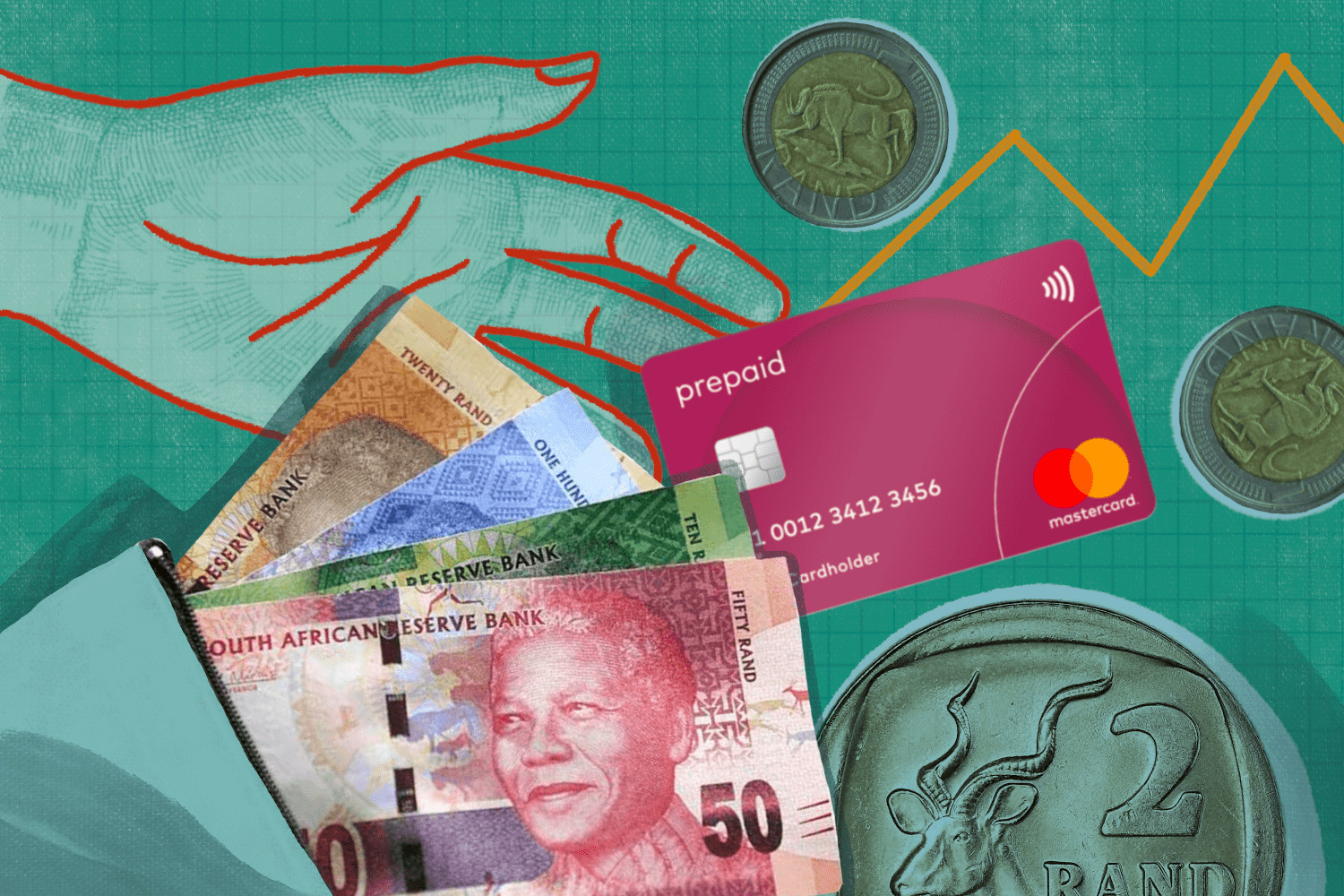
When amendments to the Companies Act are signed into law, companies will have to disclose the gap between the highest-paid and the lowest-paid employee. Graphic: Lisa Nelson
Amendments to the Companies Act will compel companies to reveal the gap between the lowest paid worker and the chief executive, essential information in a country often described as the most unequal in the world.
The amendment to Section 30 of the Companies Act has been passed by Parliament and is to be signed into law by the President.
It will compel JSE-listed companies and public companies like Eskom to disclose pay ratios, and give shareholders binding voting power on remuneration policies.
Companies will have to disclose total remuneration of the highest-paid employee, total remuneration of the lowest-paid employee, average total remuneration of all employees, and median total remuneration of all employees (median is the salary in the middle; half of the employees earn more and half earn less).
The new rules will help the public understand the “reasonableness” of these pay structures. Is it reasonable to pay a chief executive R50-million a year? Under what conditions?
Shoprite reported paying its chief executive Pieter Engelbrecht R68-million in its 2024 financial year. Shoprite provides over 150,000 jobs (in a country with such high unemployment, this adds real value). These workers, in turn, spend money at other local businesses, and keep money circulating within the country.
Some banks and investment firms, however, pay extremely high remuneration packages while employing very few people. Banks also have very few low-paid workers compared to retailers.
The amendments will make visible what was often hard to see. Executives are often paid in shares and bonuses as well as salaries and it is hard for anyone other than an accountant to understand executive remuneration — which includes vested and unvested shares, realised and deferred earnings etc — in some company annual reports.
The Labour Research Service (LRS) monitors about 70 JSE-listed companies, and for the 2024 financial year, for the first time, we have looked at pay ratios for the JSE top 40. In that year the amendments to the Companies Act had not yet come into effect, so we calculated the ratios based on the national minimum wage of R27.58 per hour or R1,103.20 a week.
Our top 20 list (from the JSE Top 40 companies) has Naspers at its head, with a pay ratio of over 6,000. The average ratio on the list is 1,270:1; and the median is 939:1.
|
Ranking |
Company |
CEO |
Ratio to |
|
1 |
Naspers |
344,698,113 |
6,009 |
|
2 |
BHP Group |
157,648,149 |
2,748 |
|
3 |
Richemont |
143,796,923 |
2,507 |
|
4 |
Bid Corporation |
134,797,000 |
2,350 |
|
5 |
Investec |
124,690,476 |
2,174 |
|
6 |
South32 |
97,112,498 |
1,693 |
|
7 |
Nedbank Group |
96,856,000 |
1,688 |
|
8 |
Glencore |
95,727,272 |
1,669 |
|
9 |
Standard Bank Group |
89,216,000 |
1,555 |
|
10 |
British American Tobacco |
87,188,993 |
1,520 |
|
11 |
AngloGold Ashanti |
83,857,727 |
1,462 |
|
12 |
Anglo American |
80,076,735 |
1,396 |
|
13 |
Mondi |
69,607,134 |
1,213 |
|
14 |
Shoprite Holdings |
68,523,000 |
1,194 |
|
15 |
The Bidvest Group |
66,946,000 |
1,167 |
|
16 |
Capitec Bank Holdings |
65,740,000 |
1,146 |
|
17 |
NEPI Rockcastle |
64,995,100 |
1,133 |
|
18 |
Vodacom Group |
61,741,761 |
1,076 |
|
19 |
FirstRand |
60,710,000 |
1,058 |
|
20 |
Impala Platinum Holdings |
53,864,000 |
939 |
These numbers are big. Naspers’ chief executive Bob van Dijk earned over R340-million in a single year (with the new chief executive Fabricio Bloisi to earn close to R1-billion for this financial year).
It is true that Naspers does not only operate in South Africa, but it has a significant presence here and benefits from hard-working people in South Africa and across the African continent.
Naspers is a bit of an outlier. Let’s look at Standard Bank, eighth on our list. It would take a minimum wage earner over 1,500 years of working full time to earn the R89-million that Sim Tshabalala earned in 2024. Or, at R27.58 per hour, or 3.2-million hours of work.
These figures are significantly higher than recommended by the United Nations Research Institute for Social Development for developing countries, where a more equitable and socially responsible range for executive remuneration to minimum wage is roughly 10–50:1 as a normative range, with about 30:1 as a midpoint (Executive to Average/Typical Worker Pay).
Companies claim that remuneration packages are performance-based. However, a recent study by the Labour Research Service and Active Shareholder (reported on by Ann Crotty) in Currency News showed that the link between profits and remuneration packages is random.
Active shareholders often vote against huge remuneration packages, but the company is not obliged to take this into account. However, this is set to change. Binding votes will make it much harder for remuneration committees to hand out huge packages and golden handshakes.
Huge executive packages are a key driver of income inequality, and increasing inequality severely impedes social mobility. According to some estimates, in South Africa 10% of the population earns 55%–60% of all income. In advanced economies, this number is closer to 20-35%. The next 40% of the South African population (considered the ‘middle class’) earn about 30-35% of all income but only own 5-10% of all wealth. The poorest 50% of the population earn only about 10% of the income and own no wealth.
Views expressed are not necessarily those of GroundUp.
Support independent journalism
Donate using Payfast

Don't miss out on the latest news
We respect your privacy, and promise we won't spam you.
Next: Botched permits spoil start to crayfish season
Previous: Police fail to confiscate firearms from domestic violence perpetrators, report finds
Letters
© 2025 GroundUp. This article is licensed under a Creative Commons Attribution-NoDerivatives 4.0 International License.
You may republish this article, so long as you credit the authors and GroundUp, and do not change the text. Please include a link back to the original article.
We put an invisible pixel in the article so that we can count traffic to republishers. All analytics tools are solely on our servers. We do not give our logs to any third party. Logs are deleted after two weeks. We do not use any IP address identifying information except to count regional traffic. We are solely interested in counting hits, not tracking users. If you republish, please do not delete the invisible pixel.