
In this town, old women have to relieve themselves in a field
Some families have been living in Aloe-T informal settlement in Komani, Eastern Cape, since 1997
 Add GroundUp on Google

These pit toilets are broken and can no longer be used, say residents of Aloe-T. Photos: Nombulelo Damba-Hendrik
- Residents, including children and old people, have to use an open field as a toilet in Aloe-T informal settlement in Komani in the Eastern Cape.
- The settlement has six communal toilets.
- The municipality says it services them regularly, but residents say the toilets are unusable.
- Families in neighbouring informal settlements also battle with sanitation and water problems.
In Aloe-T informal settlement in Komani, Eastern Cape, elderly women have to relieve themselves in an open field in broad daylight.
Aloe-T is one of the oldest settlements in Komani, dating back to 1997.
Residents say they were moved there to make way for an RDP housing project. When the houses were eventually built, they say, they were excluded from the beneficiary list.

Several pit toilets were installed years ago, but residents say they were not maintained or emptied and are now unusable. Some families have built pit toilets in the yards; others use buckets and open fields.
GroundUp saw three elderly women relieving themselves in an open field, while a group of men worked on a shack a few metres away. As we walked around the settlement, we saw other people, including children, also relieving themselves in fields.
Community leader Bulelani Qowa said this was part of residents’ daily lives because the municipality had failed to fix the broken toilets.
Nontembiso Mnyaka, 67, has lived in Aloe-T since 1997. She said her late husband was among those who qualified for an RDP house. She said when the houses were allocated, her husband was out of town, and officials refused to accept her ID, despite her explaining that they were married.
“By the time he came back, we were told that the house had been given to someone else,” said Mnyaka.
She lives in a two-room shack with four of her grandchildren, while her children are away looking for work.
“During the day, I walk to a family friend who lives a block away from my shack to use her toilet. At night, I only have one option: to use a bucket and throw it into the open field or into the ditches behind our shacks in the morning,” she said.
Aloe-T has more than 300 shacks and only one standpipe, which residents say they connected illegally.
Another resident, Mantombise Faku, who has lived in Aloe-T since 1997, said residents felt forgotten by the government. “We reported these toilets a long time ago and promises were made that they would be fixed. We are still waiting,” she said.
A few metres behind Faku’s shack is a ditch filled with dirty, foul-smelling water. “Those who use buckets at night to relieve themselves, including myself, throw it there in the morning. The smell used to be unbearable, but we are now used to it,” she said.

In Kwanca informal settlement, sewage overflows from blocked toilets.
In Kwanca informal settlement, a few kilometres away, there are flushing toilets. But residents like Boniswa Mpumela say many are blocked and sewage flows into their homes.
“If you enter my shack, the floor is wet because of the sewage coming from those blocked toilets,” said Mpumela, 80, who has lived there since 1999. “As a result, most of us here no longer use them.”
Mpumela said residents regularly complained to the municipality.
“When they do come, they fix a few and leave,” she said.
Nomzamo Tyhokela, 69, said she stopped using the toilet near her house about a year ago because it was blocked.
“The problem with these toilets is that once you flush one, all the dirty water comes out of the other one.” She said many residents now use bushes or buckets.
In nearby Amabhangalo informal settlement, where there are pour-flush toilets, families also report problems. Residents were moved there in 2023 after their shacks were destroyed by floods.
A few metres from 70-year-old Mncedisi Mohlwayo’s shack is a blocked toilet. “We live in a very dirty place, and we don’t know what to do,” said Mohlwayo.
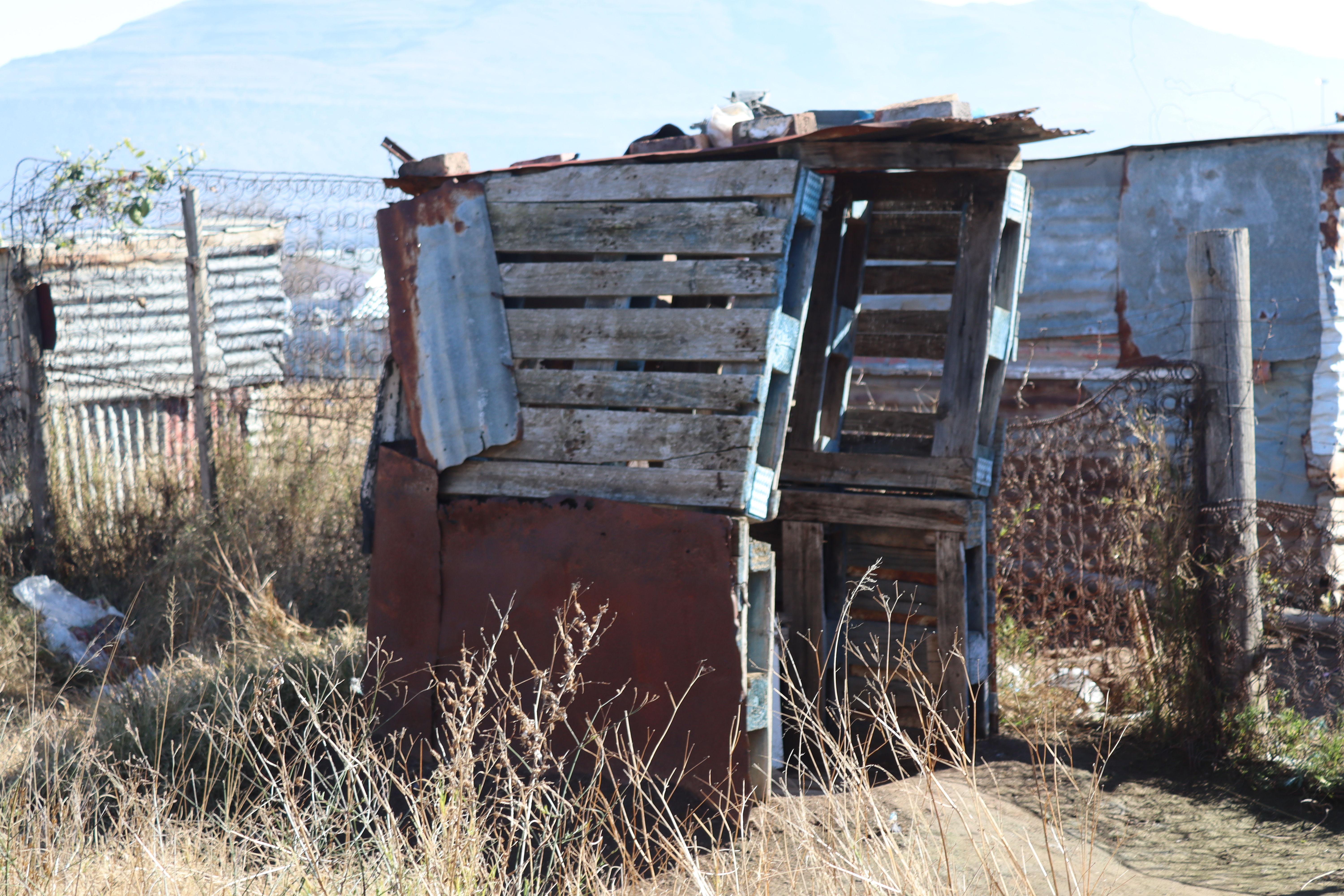
Some families in Aloe-T have built their own makeshift pit toilets.
Chris Hani District Municipality is responsible for water and sanitation in the area.
Spokesperson Nangamso Ngceke said the municipality could not install permanent infrastructure in a transitional or informal settlement.
She said that according to municipal service records, the structures are unblocked, emptied and cleared once every three months.
“At Aloe-T, the district municipality is currently servicing approximately six sanitation structures. However, most of these structures have been vandalised, affecting the availability of the service,” said Ngceke.
On water, she said the area has access to communal taps and additional water tanks under a water-rationing schedule. She said unplanned water interruptions are experienced as a result of unforeseen cases such as infrastructure damage.
She said the municipality had assessed informal settlements across the district and found that growing household numbers were putting additional pressure on temporary water and sanitation infrastructure.
But residents said municipal water tanks have been dry for months.
“The municipality cannot boldly come here and tell us that we have water because we do not,” said Faku.
Support independent journalism
Donate using Payfast

Don't miss out on the latest news
We respect your privacy, and promise we won't spam you.
Next: Joburg’s dirtiest river may lose its only champion
Previous: Judges grill Treasury on SRD grant
© 2026 GroundUp. This article is published under the GroundUp Republication Licence Version 1.0. Email [email protected] to request permission to republish.