
Hundreds of children fall ill after Tshwane fails to chlorinate water
Public was not warned that water was unsafe for drinking
 Add GroundUp on Google
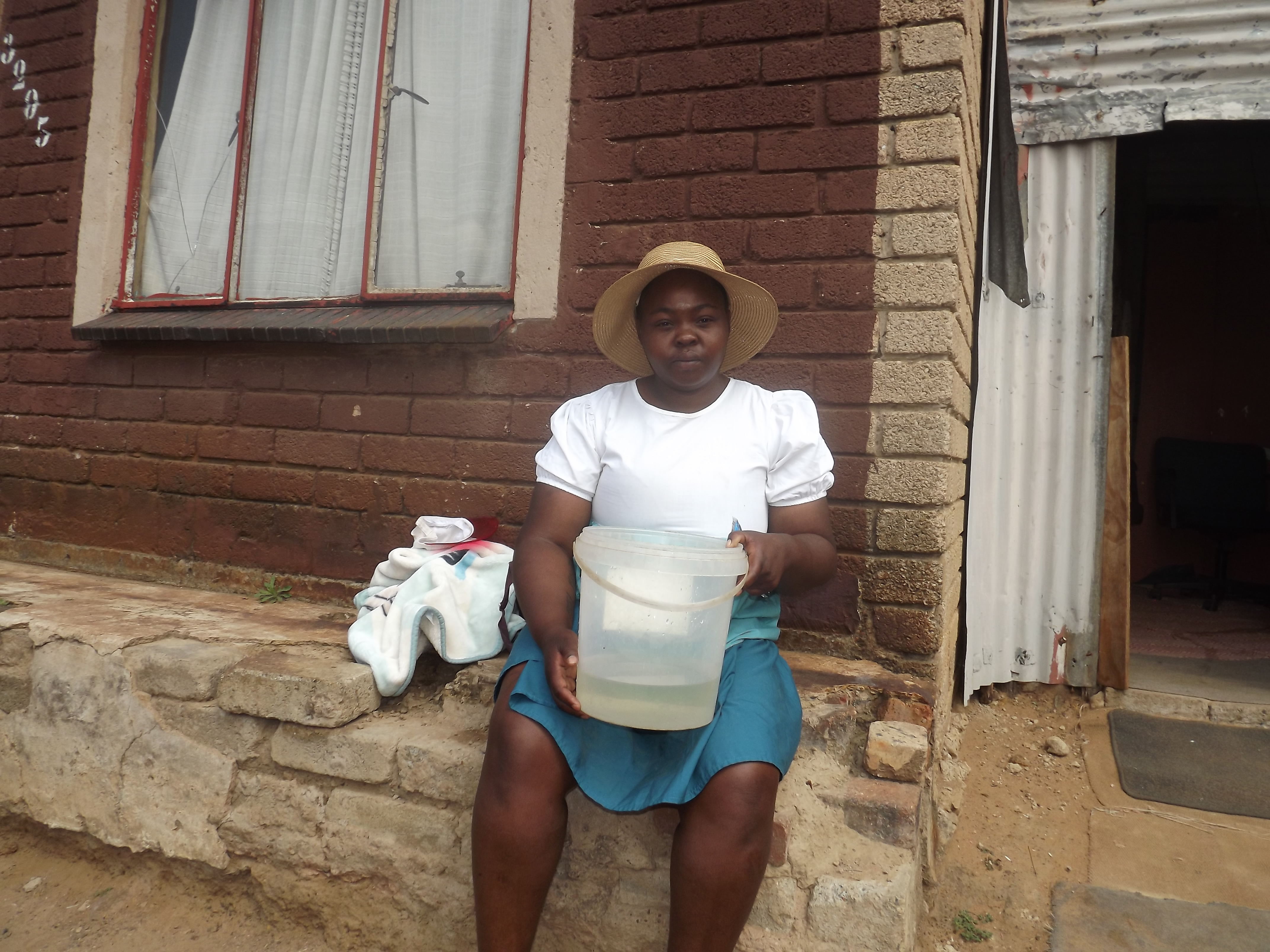
Bronkhorstspruit resident Nicky Sibanda told GroundUp her one-year-old son had to be treated for diarrhoea after drinking the discoloured tap water. Archive photo: Warren Mabona
- More than 400 people, mostly children under four, fell ill in Bronkhorstspruit and nearby areas this month.
- For three weeks, Tshwane didn’t chlorinate water drawn from a river polluted with sewage, and didn’t warn residents.
- Residents may use tap water only to flush toilets until it is safe again.
Contaminated drinking water in Tshwane has led to hundreds of cases of acute gastrointestinal illnesses. Government investigations have found that the City of Tshwane failed to chlorinate water for three weeks, resulting in high levels of E. coli and other cloriforms.
Between 7 and 18 October 2026, 408 cases, predominantly in children under the age of four, were recorded in Tshwane’s Region 7, which includes Bronkhorstspruit, Zithobeni, Dark City, Rethabiseng, and Sokhulumi. No deaths have been reported.
The crisis peaked on 13 October, when 72 new cases were reported in a single day, overwhelming local clinics and Bronkhorstspruit Hospital in north-eastern Gauteng.
Investigations conducted by the National Institute for Communicable Diseases (NICD) and the Department of Water and Sanitation (DWS) linked the cases to contaminated municipal tap water from the Bronkhorstpruit Water Treatment Works. Further specimens are being collected to decide whether to declare an outbreak.
Laboratory analyses of stool specimens found pathogens including Norovirus, Campylobacter, and Shigella, according to an official joint statement by national, provincial, and local health authorities issued on Monday. 
Water quality testing by the Department of Water and Sanitation, conducted on 14 October, confirmed severe bacterial contamination, detecting “extremely high levels of E. coli and total coliforms in the water”.
Earlier this month, GroundUp reported on residents’ continued concerns about discoloured water and potential illness.
Zithobeni resident Nicky Sibanda said she and her one-year-old had no choice but to drink the discoloured water from their tap, which led to diarrhoea and stomach pains.
“I’m worried and want to know when this problem will come to an end,” Sibanda said on Monday. “The colour of our tap water has not changed. The municipality still does not send trucks to deliver drinking water and we are suffering. We are still buying water from other people who sell it.”
Another resident of Zithobeni, Selina Maphosa, said she is worried about the safety of her two children, aged five and eight.
“I’m always worried that my children might drink tap water and fall ill when playing with other children at other homes,” said Maphosa.
“Another problem is that the municipality does not give us full information about this problem. We heard last month that they were investigating this problem but they did not tell us anything more about it. We have many questions that need answers.”
Upstream sewage pollution
The root cause of the outbreak stems from raw sewage contaminating the municipal water source.
The Bronkhorspruit treatment works abstracts raw water directly from the Bronkhorstspruit River. The river “is badly contaminated with sewage pollution from upstream dysfunctional wastewater treatment works (WWTW) under Victor Khanye Municipality as well as from dysfunctional [City of Tshwane] sewage pump stations,” the joint statement read.
Due to supplier disruptions, Tshwane failed to chlorinate water at Bronkhorstspruit WTW for nearly three weeks, between 24 September and 14 October. The metro then “failed to warn residents in the affected areas of Bronkhorstspruit that the water being supplied had not been chlorinated and therefore should not be drunk or used for cooking, washing or bathing, even after boiling”.
At a media briefing on Monday afternoon, Tshwane mayor Nasiphi Moya said the supplier had quadrupled its prices, negotiations failed, and then officials had not informed the city’s leadership of the chlorine shortage at the plant. Disciplinary action will be taken against the officials.
Authorities shut down the plant on 14 October, restored chlorine supplies the next day and reopened the plant on 16 October. 36 water tankers were deployed.
Rand Water will be appointed to oversee urgent repairs and conduct ongoing water safety tests. The Water Research Commission is doing independent testing and investigating the causes.
Until full safety compliance is re-established, tap water in the area remains restricted to toilet flushing.
A broader crisis
Water management expert Dr Anthony Turton recently told GroundUp that South Africa’s water network relies on an “indirect reuse model,” where treated sewage effluent flows back into rivers and dams before being abstracted by municipal drinking plants.
However, when upstream sewage infrastructure collapses, treatment facilities are pushed far beyond their engineering limits.
“None were designed to convert raw sewage into potable water, which is what they are now being asked to do,” he said.
“In my professional opinion, the sewage crisis is what will destroy water security in South Africa. It is an existential threat to the national economy,” said Turton.
Tshwane’s 2025 Green Drop (an audit of wastewater systems) score fell to 33.8%, with six wastewater systems critically underperforming, persistent sewage spills, dysfunctional pump stations, inadequate monitoring and engineering capacity, and ongoing infrastructure failures contributing to pollution.
On Monday, GroundUp reported on how the Rietvlei WTW, once supplying about 5% of Tshwane’s water, has not been working for the past year due to pollution.
Support independent journalism
Donate using Payfast

Don't miss out on the latest news
We respect your privacy, and promise we won't spam you.
© 2026 GroundUp. This article is published under the GroundUp Republication Licence Version 1.0. Email [email protected] to request permission to republish.