
Households hire electricity ‘fixers’ after Eskom fails them
A community policing forum member says Eskom had raised concerns about the safety of its technicians working in Khayelitsha
 Add GroundUp on Google
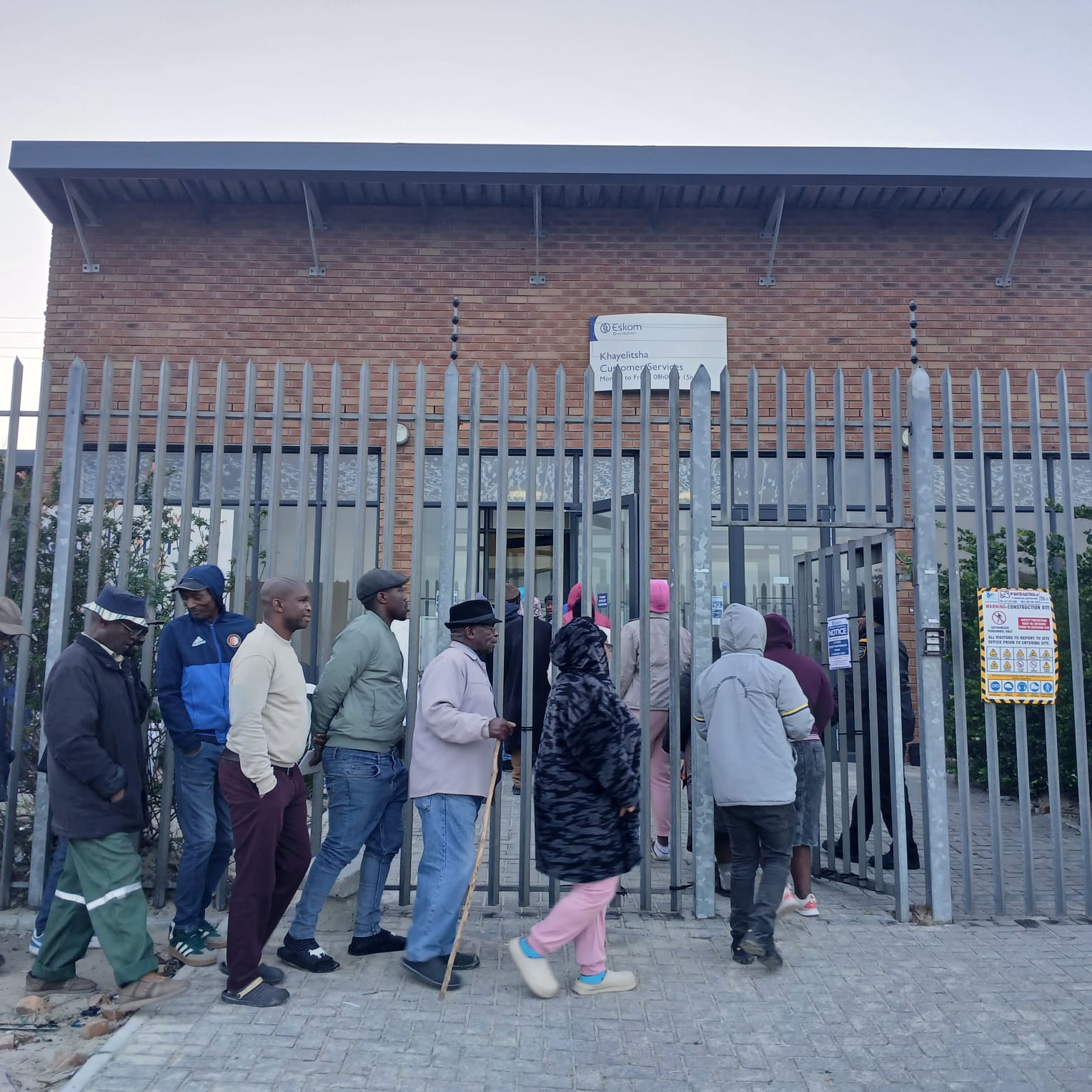
Khayelitsha residents queue outside the offices of Eskom to report ongoing outages and faults. Photos: Zezethu Mtlomelo
- Households in Khayelitsha say they have been left with no choice but to hire electricians, some of whom are employed by Eskom, to fix their outages due to long response times from the power utility.
- Residents say they often go weeks without electricity despite repeatedly reporting outages to Eskom.
- A community policing forum member says Eskom had raised concerns about the safety of its technicians attending to faults in Khayelitsha.
Prolonged electricity outages in parts of Khayelitsha and long response times from Eskom have seen residents take matters into their own hands. Households have pooled cash to hire informal electricians to restore power. Some of these fixers are Eskom employees who moonlight to assist the community for a fee.
Community members say they often spend days, weeks and sometimes over a month without electricity despite repeatedly reporting outages and receiving reference numbers from Eskom.
Resident Siphokazi Zigana said the outages have become a regular occurrence.

She said the electricity is also sometimes “weak” and phone chargers and appliances are barely usable. (This is probably due to voltage drops.)
Zigana said the outages have had a severe affect on daily life, especially for families with children. “It is cold and dark. We are forced to use candles. We cannot even iron our children’s school uniforms,” she said.
Several residents told us that affected households pool money to hire informal electricians.
“Almost 20 houses are affected in our area, and each household has to contribute R137 for someone to reconnect the electricity,” a resident said.
Another resident from Mahkaza, who asked not to be named, said her power has been off since 15 May.
She said daily attempts to contact Eskom have been futile. The toll-free number is often unavailable.
“All we receive are reference numbers. We are never told what the problem is or when it will be fixed,” she said.
She said the electricians they hire “sometimes hide their identities because they do not want to be known”.
But these reconnections may be creating more problems.
“When electricity is restored in one area, another area loses power. The cycle continues,” she said.
She said residents this week decided to contribute R1,100 to reconnect electricity in their area.
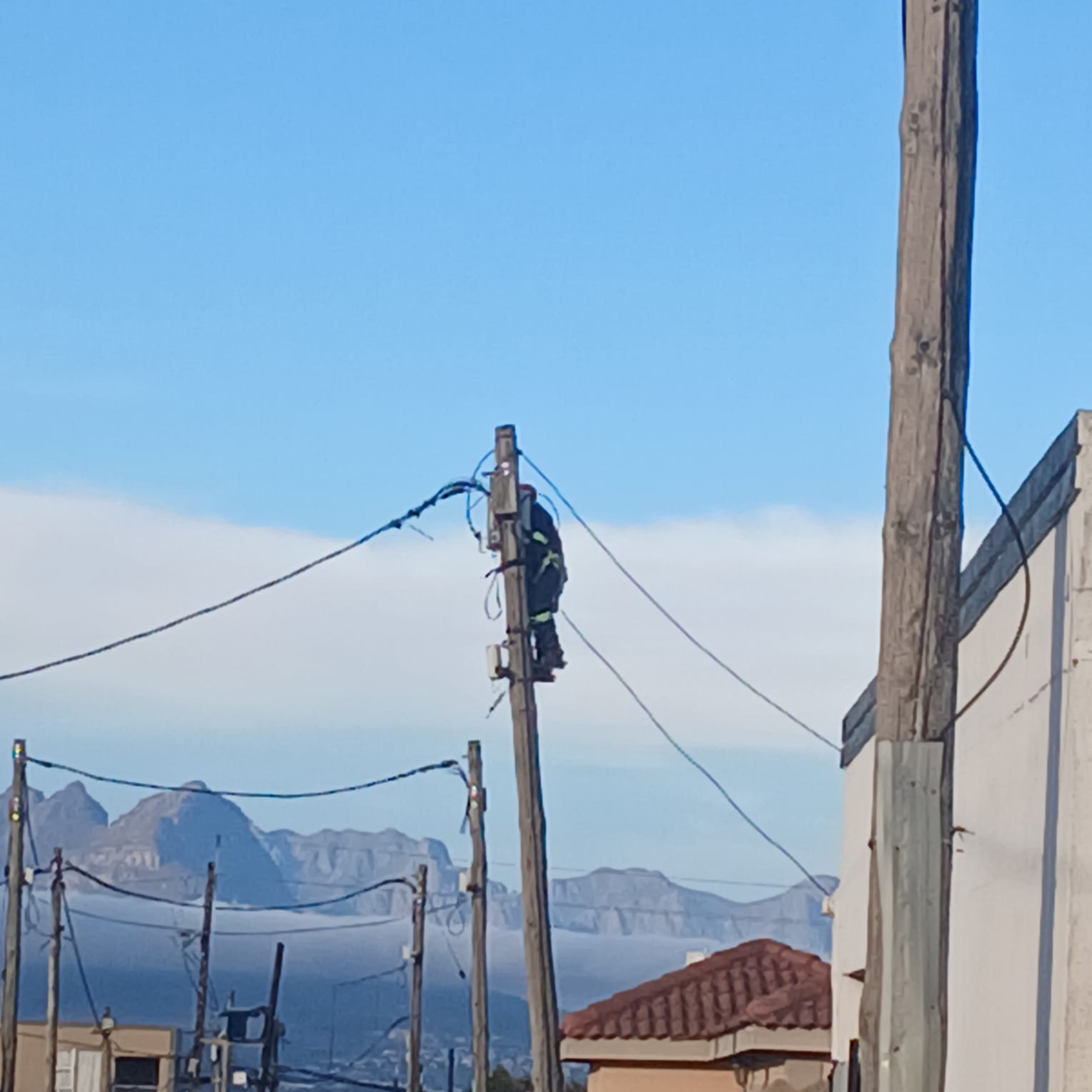
An unauthorised technician working on a broken transformer in Khayelitsha this week. Residents hired him after waiting weeks for Eskom to repair the fault.
Aging infrastructure
Vuyo Khonkwane, deputy chairperson of SANCO in Makhaza, blamed poor service and ageing infrastructure.
“One of the main causes of outages is illegal connections between formal houses and informal settlements. Overcrowding is a major issue in Khayelitsha,” he said.
“As a community leader, I always advise residents against illegal reconnections, but I understand their frustration,” he said.
Khonkwane said Eskom recently met with the community policing forums in Khayelitsha and raised concerns about the safety of its staff.
Khonkwane said Eskom informed them that contracts with armed response companies had ended due to funding constraints. They asked that communities help protect their technicians.
Khonkwane said Eskom should establish more local offices in Khayelitsha instead of relying on one central base to service the area.
An informal electrician, who asked to remain anonymous, said, “In the township, many young people are unemployed and trying to survive however they can. People in the community know me, so they started calling me when their power went out.”
He had struggled to find formal employment.
He said demand for his service increases in winter when electricity outages are frequent. “The amount I charge depends on the situation. If I only need to fix a box, I charge about R250,” he said.
“The community usually contributes together because they want electricity restored quickly. Some people call it illegal, but from our side, we are just trying to make a living.”
He acknowledged the risks involved in the work. “You can get injured, electrocuted, or even arrested.”
An Eskom employee, who spoke on the condition of anonymity, told GroundUp, “We know how to fix the electricity, and we have the resources, so we fix it. Sometimes I don’t charge because I know the people. But we don’t charge anything less than R500. If Eskom finds out, we can lose our jobs or face disciplinary action,” he said.
Eskom promised to respond to our questions but had not done so at the time of publication.
Support independent journalism
Donate using Payfast

Don't miss out on the latest news
We respect your privacy, and promise we won't spam you.
Next: Eastern Cape scholar transport operators on strike over unpaid wages
Previous: Lesotho explores R5-billion floating solar project on its highland reservoirs
© 2026 GroundUp. This article is published under the GroundUp Republication Licence Version 1.0. Email [email protected] to request permission to republish.