
Union and hostel residents quarrel over R3-million electricity bill
Food and Allied Workers’ Union claims its hostel was “hijacked”, but residents say they are descendants of bread factory workers who lived there
 Add GroundUp on Google
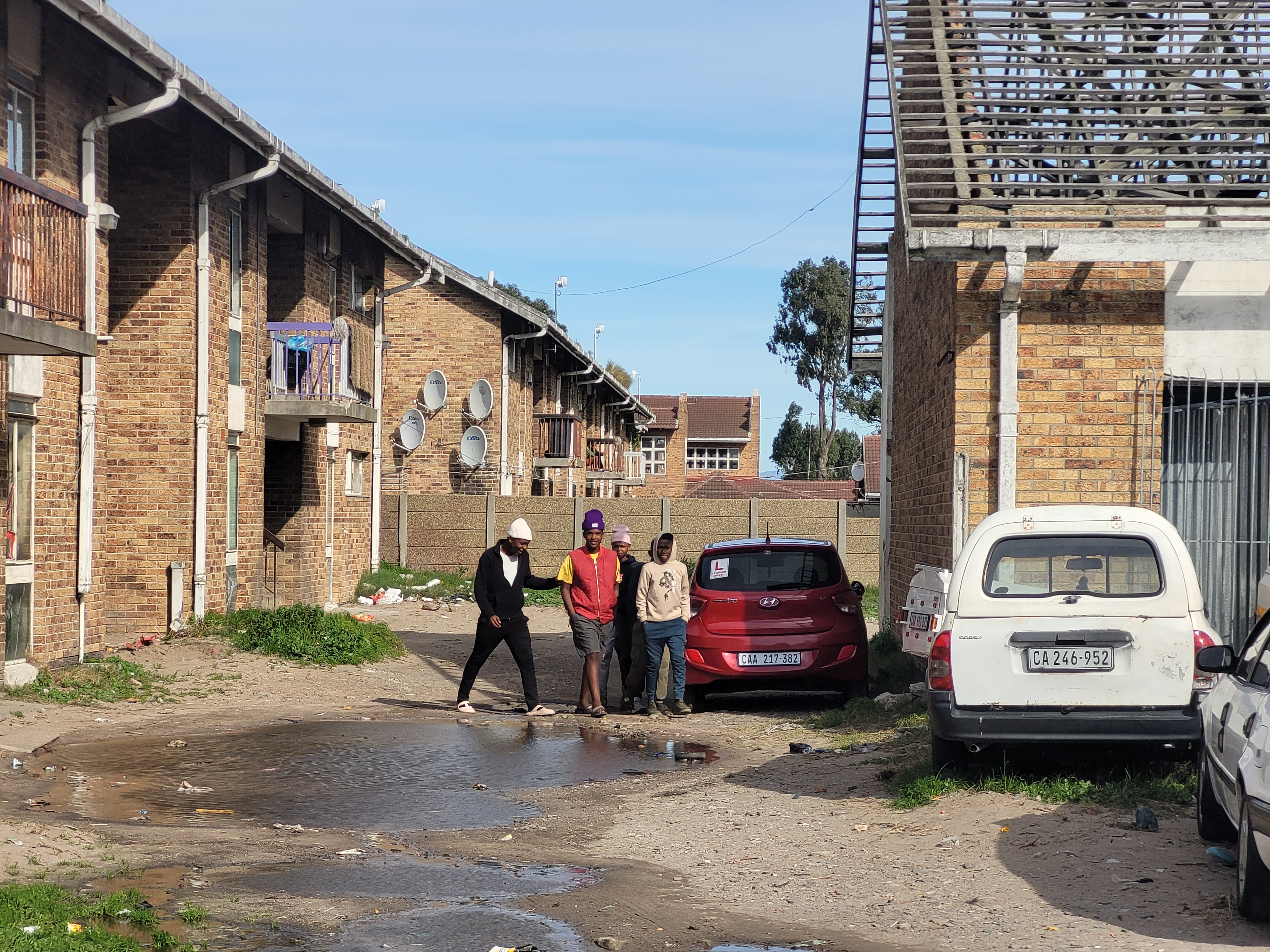
Residents of a hostel formerly used to house employees of SA Milling complain that the Food and Allied Workers’ Union has failed to maintain the building. Photos: Greg Dor
- A hostel in Gugulethu, owned by the Food and Allied Workers’ Union (FAWU), has been without electricity for three months.
- In the past, the hostel was occupied by people working at a Blue Ribbon bread factory and rent was deducted from their salaries. But for ten years, no rent has been paid.
- The residents say they are descendants of the original tenants, but FAWU disputes this.
- FAWU wants to transfer some parts of the property to the government so that “legitimate residents” have security of tenure.
Residents of a hostel in Gugulethu owned by the Food and Allied Workers’ Union (FAWU) have been without electricity for three months.
The City of Cape Town disconnected the power supply on 15 April. FAWU says that the municipality is owed R3-million and that the hostel has been “technically hijacked”. FAWU wants the “legitimate residents” to take responsibility for their own utility costs.
The union also wants the City of Cape Town or the Department of Human Settlements to take over ownership of the hostel, “for the benefit of legitimate residents.”
The hostel’s approximately 70 residents say they are descendants of people who worked at SA Milling’s Blue Ribbon bread factory.
The property used to belong to SA Milling before it was transferred to FAWU. It contains two hostel blocks and a building which used to serve as FAWU’s head office and now stands vacant. Company employees used to have their monthly rent deducted from their salaries.
But for at least ten years, no rent has been paid, said FAWU’s deputy secretary general, Edwin Mabowa. FAWU has no legal agreement with any descendants of the employees, he said.

Siyabulela Majelumane, a member of the residents’ committee, says several meetings have been held with FAWU regarding the management of the hostel, but no lasting solution has been found.
FAWU has not been forthcoming with municipal statements to show how the debt for utilities accumulated, he said.
Majelumane said he moved to Cape Town in 2006 to live with his father, who was an employee at the bread factory. He and his family have lived in the hostel ever since, sharing a two-bedroom apartment with his brother’s family.
He currently works as a security guard, though he previously worked at a poultry company and was a member of FAWU.
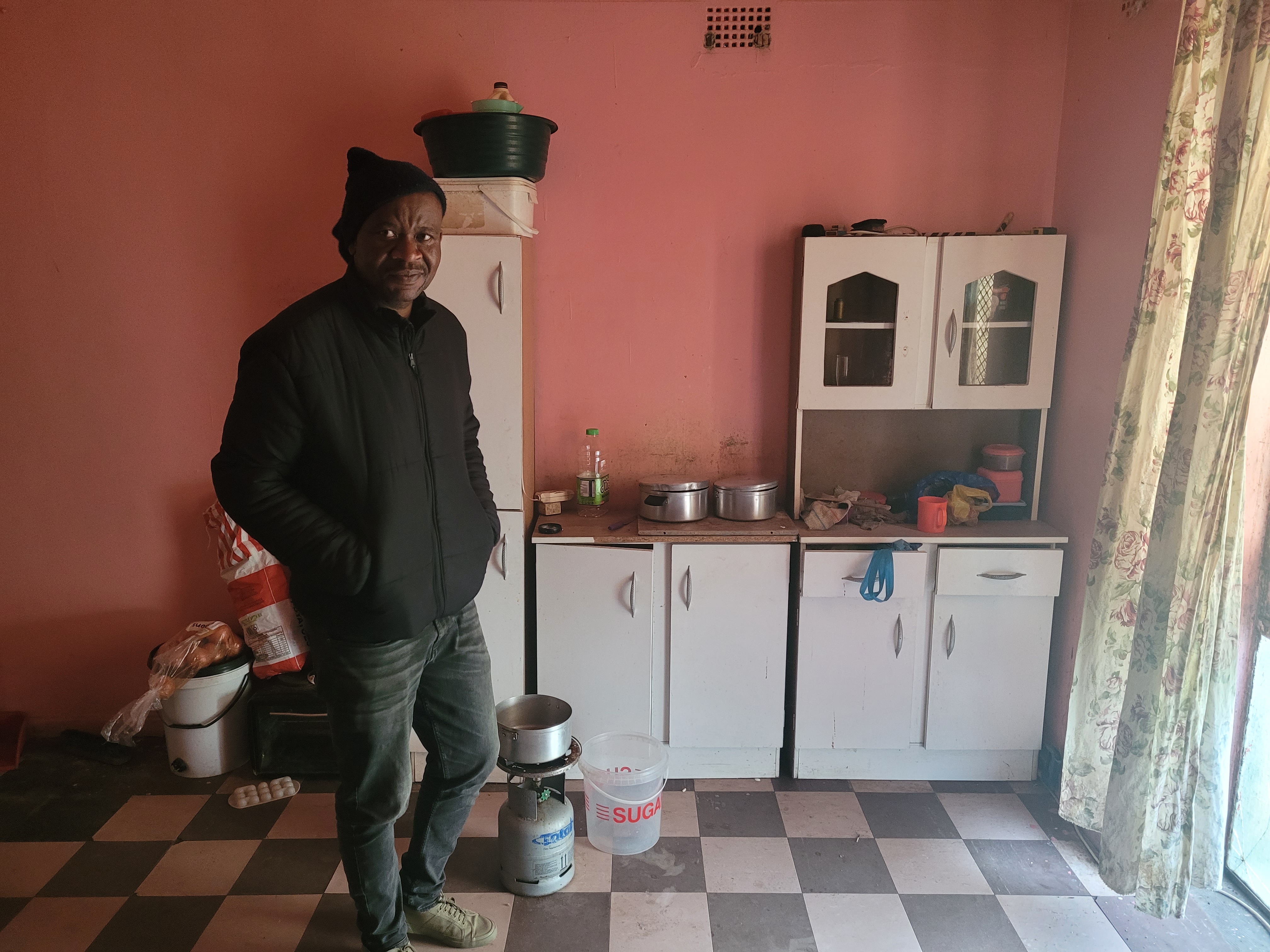
Siyabulela Majelumane is a member of the residents’ committee. He says he has lived at the hostel since 2006.
In a letter after the electricity was disconnected, FAWU said it would conduct an “audit to determine the legitimate residents of each hostel unit”. It would then transfer “the hostel portion of the property”, excluding the FAWU office building, to the City of Cape Town or the Department of Human Settlements “with the objective that legitimate residents may ultimately acquire secure tenure or ownership.”
Residents are to contribute towards municipal services through prepaid electricity meters that will be installed, the letter says. FAWU also wants only “legitimate residents” to be eligible to be elected to the residents’ committee.
But Majelumane says the commitments in the letter have not yet been implemented. He also rejects allegations made by Mabowa that the residents intimidated and chased away City and union officials who tried to access the property.
“We have never chased FAWU away, and we have never stopped them from installing prepaid meters,” said Majelumane. “It will be better if they install prepaid meters, and we can buy electricity like everyone else.”
Residents are willing to pay the R47,000 reconnection fee, said Majelumane, but the City has said it would only deal with FAWU as the account holder.
Majelumane said residents would be willing to pay rent if the property were properly maintained.
GroundUp visited the site last week. The buildings are visibly deteriorating, and there is waste scattered around the premises. Without waste management, rubbish is burned by residents. Multiple families share single toilets.
Residents say they have had to rely on alternative sources of energy for cooking and lighting. They have not been able to use fridges for more than three months.
Housing activist organisation Ndifuna Ukwazi (NU) has stepped in to provide legal support for the residents.
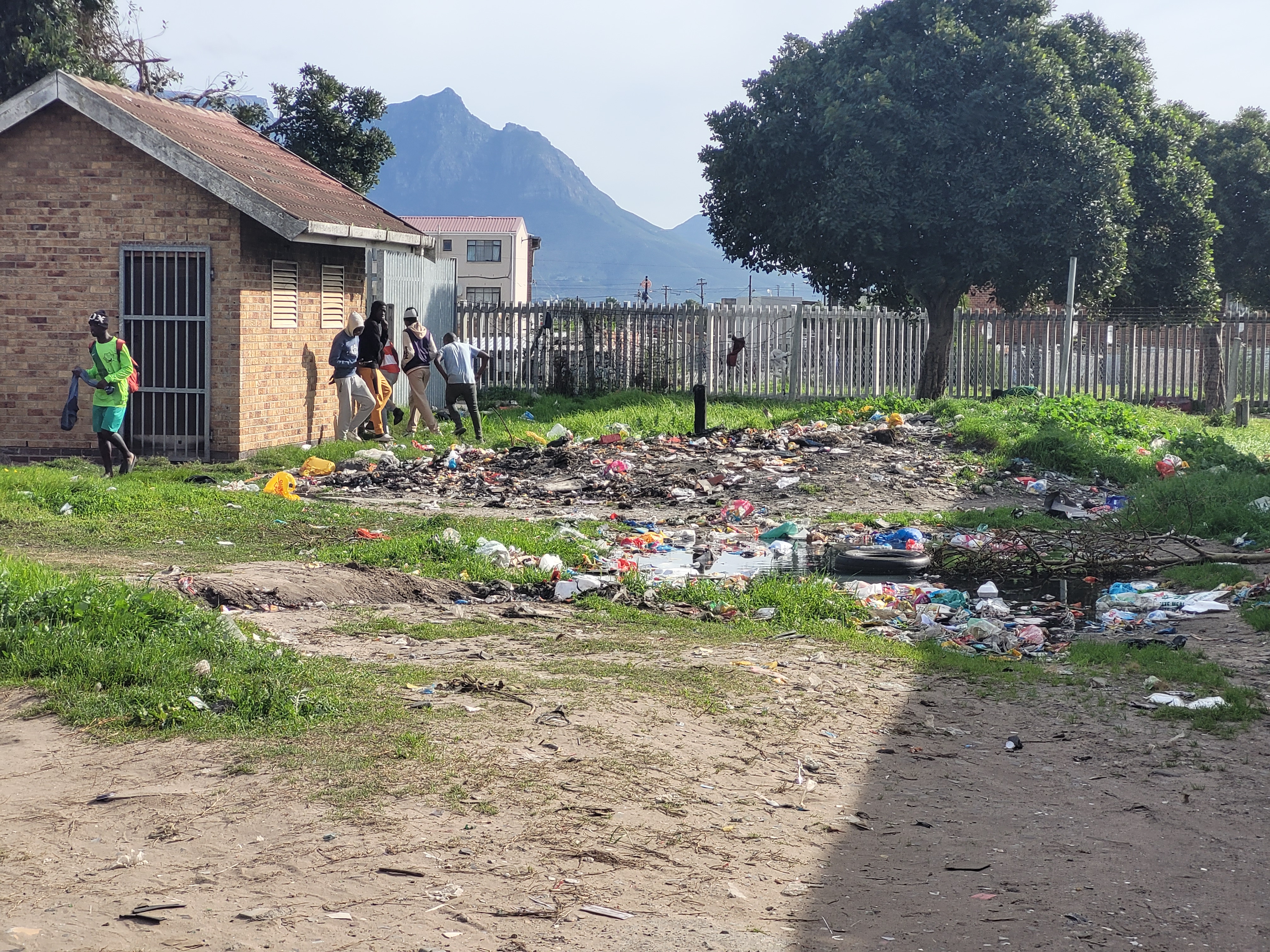
Residents say there is no waste management at the property, so they burn trash.
Mabowa said FAWU has avoided evicting the residents.
He said the City of Cape Town was informed about seven years ago that the union would no longer pay for municipal services on behalf of the people occupying the hostel.
“The City only acted years later, by disconnecting the electricity instead of resolving the underlying dispute,” said Mabowa. He said residents have also been running a car wash for several years, but have not paid for the water usage.
He said the union still had to establish how much of the municipal debt was attributable to the residents and how much the union was actually responsible for. He said FAWU would pay its share and has asked the City to write off the residents’ portion.
Approached for comment, the City declined to disclose the amount owed to it by FAWU, but confirmed that multiple notices had been issued before the electricity was disconnected.
Asked whether FAWU had approached it about debt relief, a repayment plan or the installation of prepaid meters, the City’s mayco member for finance, Siseko Mbandezi, did not answer directly.
Instead, Mbandezi said the City is “engaging with relevant stakeholders to address this matter”.
Residents say they have not been included in any discussions between the City and FAWU and still do not know when electricity will be restored.
Support independent journalism
Donate using Payfast

Don't miss out on the latest news
We respect your privacy, and promise we won't spam you.
Next: Farmworkers fear eviction from Paarl wine estate
Previous: Giant data centres get the first green light from Cape Town tribunal
© 2026 GroundUp. This article is published under the GroundUp Republication Licence Version 1.0. Email [email protected] to request permission to republish.