
Communities caught between floods and dry taps
Climate change is making municipal water failures worse
 Add GroundUp on Google
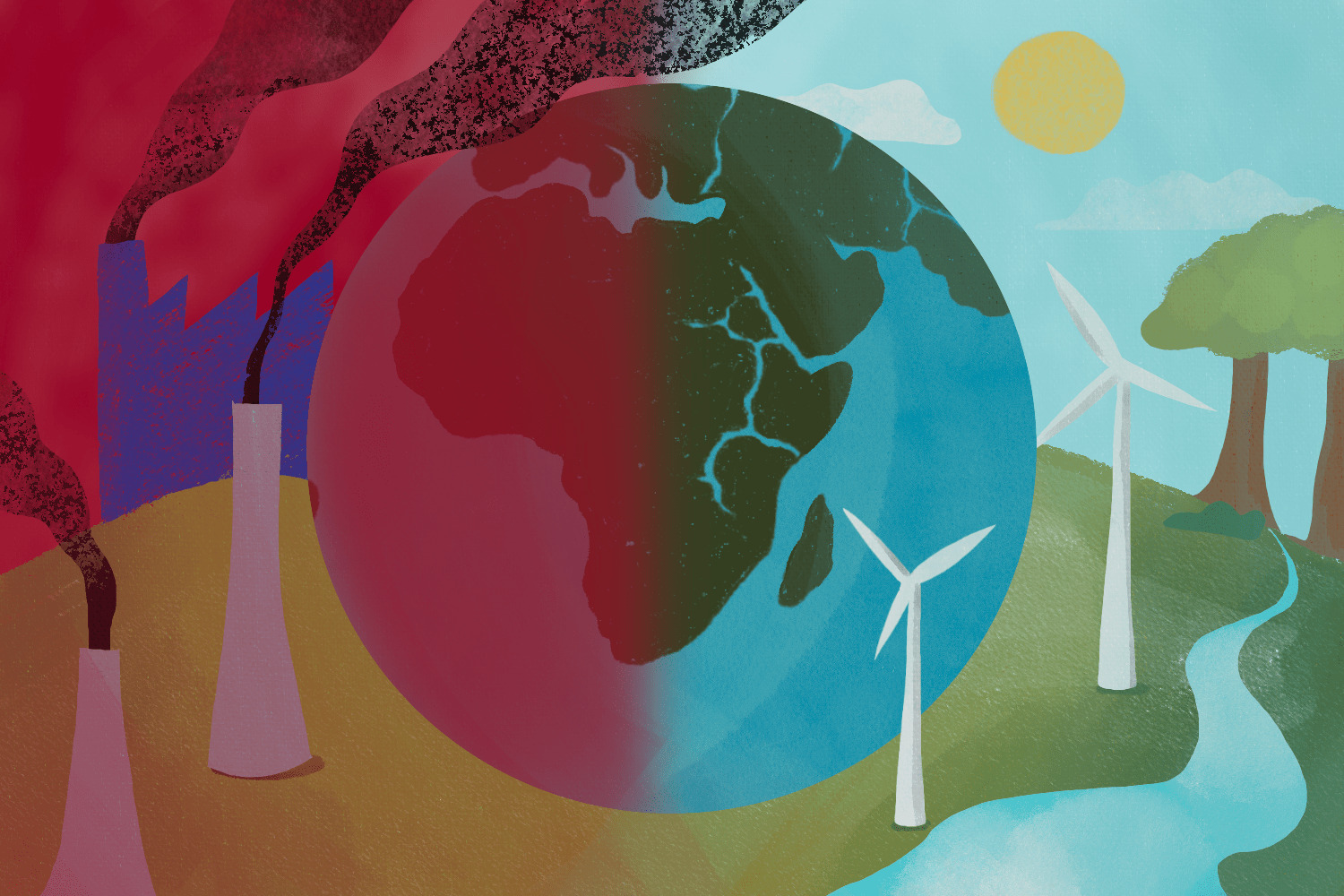
Ageing infrastructure, limited municipal capacity and years of underinvestment are exacerbating the impact climate change is having on communities across South Africa. Illustration: Lisa Nelson
When Ncamiso Mnisi turns on the tap in her home in Carolina, Mpumalanga, she never knows whether the water will quench her thirst or make her sick.
Residents have long complained about contaminated water, linking repeated outbreaks of stomach illnesses and skin rashes to contamination of the Boesmanspruit dams.
They say acid mine drainage and sewage leaks have left streams contaminated, exposing thousands of people to unsafe water.
Many no longer trust the water that flows from their taps, instead relying on boreholes, or bottled water if they can afford it.
“You turn on the tap in your own home, but instead of life, you fear sickness,” says Mnisi, an environmental activist with Carolina Eco Green Economy.
In Bekkersdal on Gauteng’s West Rand, taps often run dry. Families walk long distances to collect water or buy it from informal vendors. For households already struggling with unemployment and rising living costs, unreliable water has become yet another expense to absorb.
In Thabong, outside Welkom in the Free State, residents have learned to watch the clock. Every evening around 6pm, the municipality shuts off the water supply until the following morning to prevent water loss through leaks. Preparing for the night means filling every available container before the taps run dry.
“We constantly have to make sure we’ve stored enough water,” according to community activist Mpai Nkali. “But sometimes the water runs out overnight.”
The consequences are acutely felt during funerals, when families gather to cook through the night, host visitors and carry out cultural practices that depend on reliable access to water.
“It’s already a painful time for us,” one family member told Nkali. “Not having water makes everything harder.”
The Department of Water and Sanitation’s 2023 Blue Drop Report, Carolina scored 21%. In Bekkersdal, unreliable supply has become normalised. In Thabong, scheduled nightly water cuts have become part of everyday life.
Beyond scarcity
South Africa’s water crisis is often framed as one of scarcity, but the experiences of communities across the country tell a more complex story.
The latest No Drop progress report shows that nearly half (47%) of municipal water is lost or never paid for through leaks, broken infrastructure, illegal connections and other system failures. The global average is around 30%.
South Africa is already classified as a water-scarce country. This makes the scale of the water losses particularly serious.
South Africa’s per capita water consumption is around 218 litres per day compared with an international average of 173 litres.
Water experts say that South Africa faces a substantial infrastructure maintenance backlog, with many municipalities struggling to maintain ageing water and sanitation systems. Engineering bodies warn that such failing infrastructure leaves communities vulnerable to drought and flooding impacts.
Climate change
Rising global temperatures are increasing the intensity of extreme weather events, with longer dry spells punctuated by heavier rainfall. A 2026 study found that South Africa’s climate is projected to be characterised by more frequent and intense extreme rainfall events, alongside heightened vulnerability to droughts and floods that damage the very infrastructure needed to provide clean water.
Ageing infrastructure, limited municipal capacity and long histories of underinvestment are exacerbating the impact of climate change.
In KwaZulu-Natal (KZN) and the Eastern Cape, extreme rainfall and flooding have destroyed homes, roads and public infrastructure. The KZN floods of April 2022, for example, displaced over 40,000 people and destroyed nearly 4,000 homes with another 8,300 homes partially destroyed. The KZN government estimated the damage at about R17-billion.
Communities in places like Roseneath near Umkomaas on the south coast of KZN and in Qunu, Eastern Cape, are still living with the consequences of damaged water infrastructure long after the floodwaters receded in June 2025.
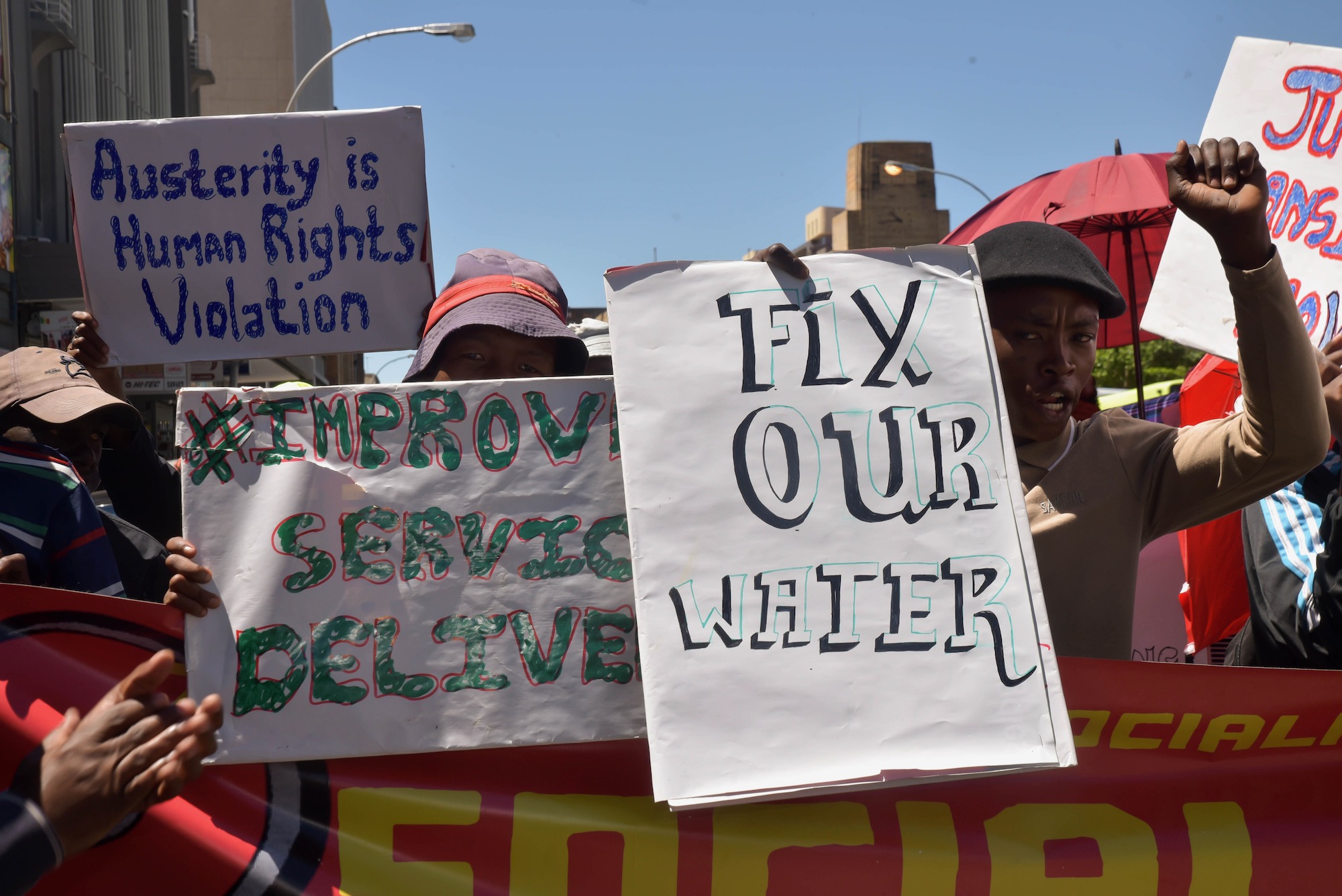
A protest for “water justice” in Bloemfontein in October 2025. Photo: Teboho Mohajane
Water justice
Without a reliable water supply, families struggle to cook, wash, flush toilets and care for children. Workers leave for work without bathing. Schoolchildren arrive in class without having washed. Healthcare becomes more difficult. Food preparation is disrupted.
Women often shoulder much of this burden, managing household water supplies while caring for children and older relatives.
Across Carolina, Bekkersdal, Thabong, Qunu and Roseneath, residents have responded by documenting water quality, organising communities, engaging municipalities and demanding accountability.
For Mnisi, the issue is straightforward. “Water isn’t charity,” she says. “Water isn’t a privilege. It is our right.”
The phrase “drowning while thirsting,” as expressed by Nomfundo Mkhaba from flood-affected Roseneath, captures the contradiction facing many South Africans today. Communities are experiencing two extremes: devastating floods and increasing water insecurity.
Views expressed are not necessarily those of GroundUp.
Support independent journalism
Donate using Payfast

Don't miss out on the latest news
We respect your privacy, and promise we won't spam you.
Next: Households on Cape Town sewage pond demand to be relocated
Previous: Rehab workers unpaid as Gauteng owes R1.17-million
© 2026 GroundUp. This article is published under the GroundUp Republication Licence Version 1.0. Email [email protected] to request permission to republish.