
Decision on basic income support delayed until court ruling on SRD grant
The Department of Social Development says it cannot finalise policy until the Supreme Court of Appeal delivers judgment
 Add GroundUp on Google
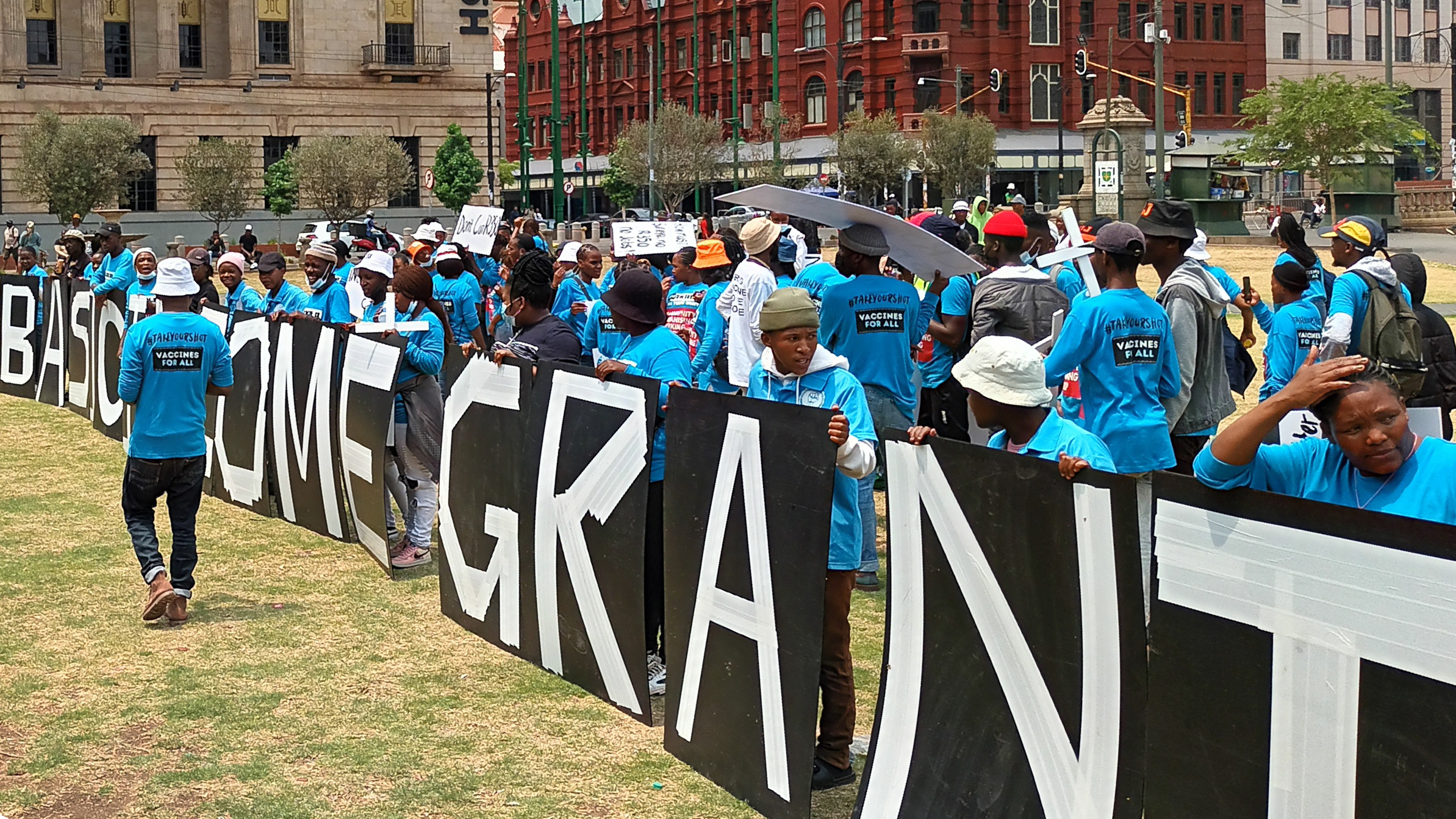
The Social Relief of Distress grant has been extended until March 2028, but the policy meant to replace it is on hold. Archive photo: Chris Gilili
- The Department of Social Development says it has completed its work on its Basic Income Support policy.
- But the department says it cannot finalise the policy until the Supreme Court of Appeal rules on the Social Relief of Distress grant regulations.
- The case before the appeal court challenges the rules governing who qualifies for the R370-a-month grant and how people apply. About 8-million people currently receive it.
- The department aims to submit the Basic Income Support policy to Cabinet for final approval by the end of March 2027, provided the court ruling does not mean further changes are necessary.
The Department of Social Development says it cannot finalise its proposed Basic Income Support (BIS) policy until the Supreme Court of Appeal rules on a case challenging the regulations governing the Social Relief of Distress (SRD) grant.
Briefing Parliament’s portfolio committee on social development on Wednesday, Social Development deputy minister Ganief Hendricks said the policy was ready for tabling to Cabinet, and then for public consultation.
But Hendricks said National Treasury had “insisted” the department hold off on taking the policy through further approval processes until the court judgment had been delivered.
“All our efforts to fast-track it have now been delayed … This has had a significant impact on the finalisation of the Basic Income Support policy,” he said.
Deputy director-general for comprehensive social security Brenda Sibeko said the policy was designed with the SRD grant’s provisions in mind. If the court ruled against the regulations, the department would have to “go back and refine and revise the BIS policy”.
The case, brought by the Institute for Economic Justice and #PayTheGrants, challenges regulations determining who qualifies for the SRD grant and how people apply for it. About 8-million people currently receive the monthly R370 grant.
In January 2025, the Gauteng High Court in Pretoria found several of the regulations unconstitutional and invalid. It ordered government to allow in-person applications, progressively increase the grant and raise the income threshold in line with the cost of living. Government appealed against the ruling. The Supreme Court of Appeal heard the appeal on 25 August and reserved judgment.
The court case is not the only hurdle. Treasury has also raised concerns about the long-term affordability of income support, Sibeko said.
The department first presented a draft policy to Cabinet in November 2024, but Cabinet sent it back for further work, asking for stronger links between income support and employment.
In June, the department told MPs it was consulting other government departments on how the proposed support could be linked to economic opportunities and employment initiatives. It was also waiting for Treasury to indicate whether it supported the revised policy.
Since then, Sibeko said, the department had completed further consultations with Treasury and taken the proposal to the Technical Committee on the Budget, a group of senior government officials who advise the Ministers’ Committee on the Budget on the country’s fiscal framework.
The committee supported extending the SRD grant for another year, she said.
The grant has been extended until March 2028. This is to ensure that people currently receiving the grant are supported while the BIS policy and the legislation needed for implementation are being finalised.
But Treasury remained concerned about the long-term affordability of BIS.
Sibeko explained that the SRD grant is currently funded through annual budget allocations. A permanent income support policy, however, would need to become a permanent allocation in the national budget.
“Remember, we are currently funding the income support for this age group using annual allocations. So it’s not a permanent part of the fiscal framework of the country. When we finalise the BIS policy, it will need to become a permanent allocation in the country’s budget,” she said.
Treasury also asked the department to refine its calculations after Statistics South Africa announced updated poverty lines in August. Sibeko said this work had been completed and the department was ready to proceed once the court matter was resolved.
The department is still aiming to submit the policy to Cabinet for final approval by the end of March 2027, she said, provided the court ruling does not require further changes.
Support independent journalism
Donate using Payfast

Don't miss out on the latest news
We respect your privacy, and promise we won't spam you.
© 2026 GroundUp. This article is published under the GroundUp Republication Licence Version 1.0. Email [email protected] to request permission to republish.