
After the shelter: Cape Town’s urgent need to house homeless people
Shelters and Safe Spaces are only stop-gap solutions. Transitional accommodation and support is needed, say experts.
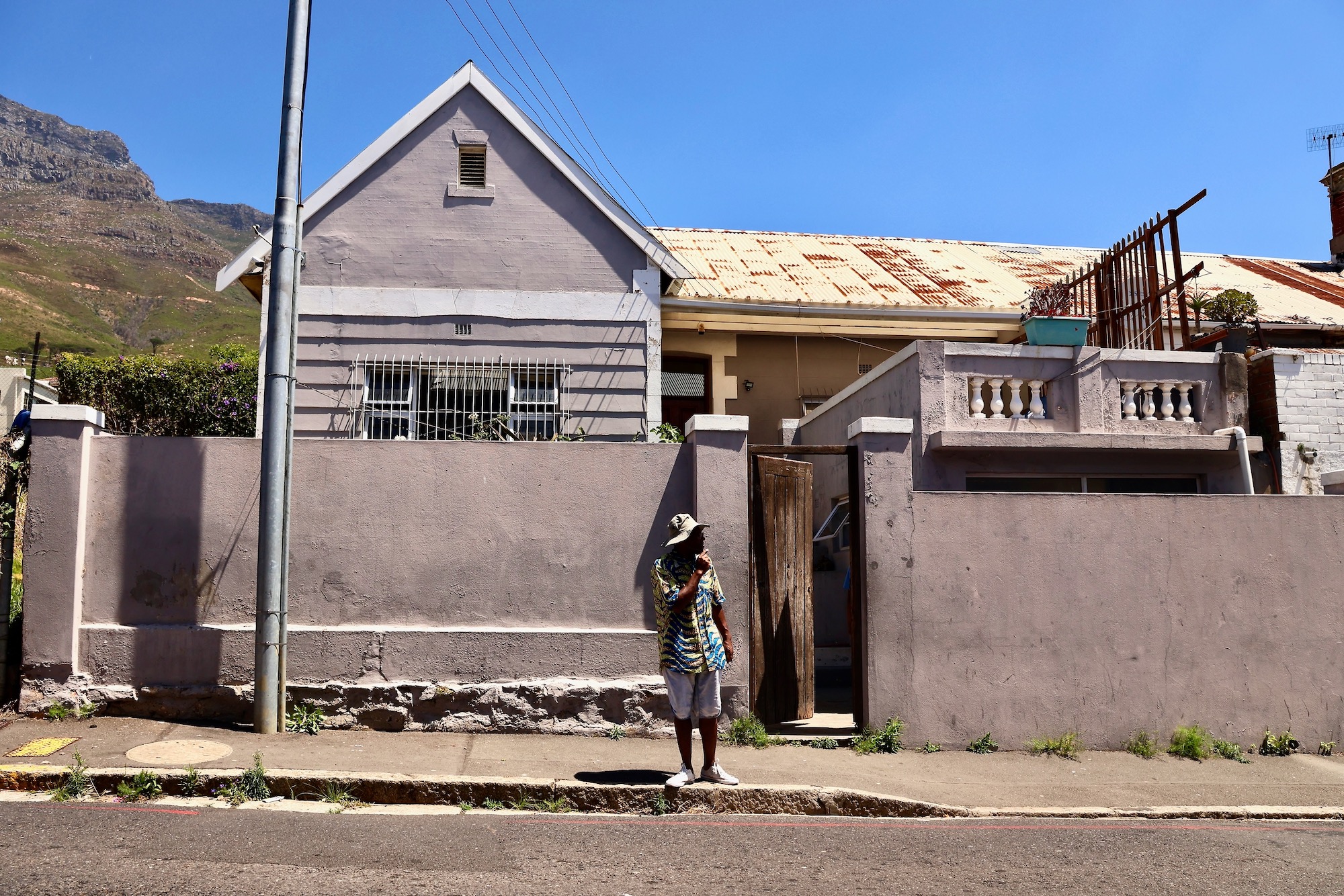
Chester House is one of three properties run by Streetscapes. Photos: Matthew Hirsch
- Cape Town has thousands of people living on its streets and the City urgently needs options that go beyond overnight shelters and Safe Spaces.
- Streetscapes currently supports about 150 formerly homeless people through a programme that provides stability through accommodation, work opportunities and psychological and social support.
- The Western Cape social development department funds two “second-phase” shelters for people who are employed and capable of operating independently but who find themselves homeless.
There are thousands of people living on the streets in Cape Town. Although there are shelters and the City is expanding its Safe Space programme, these are at best stop-gap solutions for people experiencing homelessness.
But to get people permanently off the streets requires further options. Two of these are transitional housing — time-bound accommodation integrated with support programmes — and “second-phase facilities” for people who are employed and capable of operating independently, but who find themselves homeless.
In 2020, we reported on a study that estimated there were over 14,000 people living on Cape Town’s streets.
“We shouldn’t be satisfied with overnight shelters and safe spaces as the end goal,” says Professor Stephan de Beer of the University of Pretoria’s Unit for Street Homelessness. “It is great as a starter, but if we really want to help people to live with dignity and to break the cycle of homelessness, that cannot be the ultimate. That’s almost a catch net. We need to invest in better housing.”
“The emphasis for me would be on diversifying the housing options that are available and investing in that.”
More options
At the National Homeless Conversation, held in the city hall last month, Streetscapes founder Jesse Laitinen said their organisation currently supports about 150 formerly homeless people with work and housing programmes.
In a project started in 2015, people who were previously homeless are trained to support others.
Residents move from Streetscapes’ Chester House in central Cape Town to other facilities in Observatory and Kuils River. She says people coming off the street want to move into an environment that feels like home.
“I think recovery becomes possible when you can stabilise your life,” says Laitinen.
GroundUp visited a Streetscapes facility in Observatory. Residents had their own rooms and two shared kitchens, a communal television room and a recreational room with a pool table.
Fiona Swartz, a peer leader at the block, said her life has changed for the better since joining the programme in 2019. She initially lived in Chester House.
“Being in a place like this restores your dignity, your confidence. It gives you some direction and purpose in life,” she said.
She said she struggled with substance use for many years. “It’s hard work if you want to recover. But I made it,” said Swartz.

Portia Baartman says with the Streetscapes programme she feels she can build a future.
Portia Baartman also moved from Chester House to Observatory.
“You feel at home and people are loving and caring,” she said.
“You become more independent. You can build a future. I’ve been there, I’ve been on the streets. I’m progressing bit by bit,” she said.
At Chester House, there are dormitories with bunk beds and lockers, a communal TV lounge, kitchen area, and a dining room where the residents have meals together.
Thabo Koti, originally from Kraaifontein, became homeless in 2016. Since then, he had been looking for a way to get back on his feet. He joined Streetscapes in 2021 and is now a peer in the programme.
“The benefits of being in a place like this are that you feel human again,” he said.
“We all have different backgrounds, we all have different traumas, so you can’t necessarily expect someone who has been chronically homeless to just adapt to a certain environment or reintegrate into society and be perfect.”
He said one of the main advantages of the programme was access to psychological and social worker support.
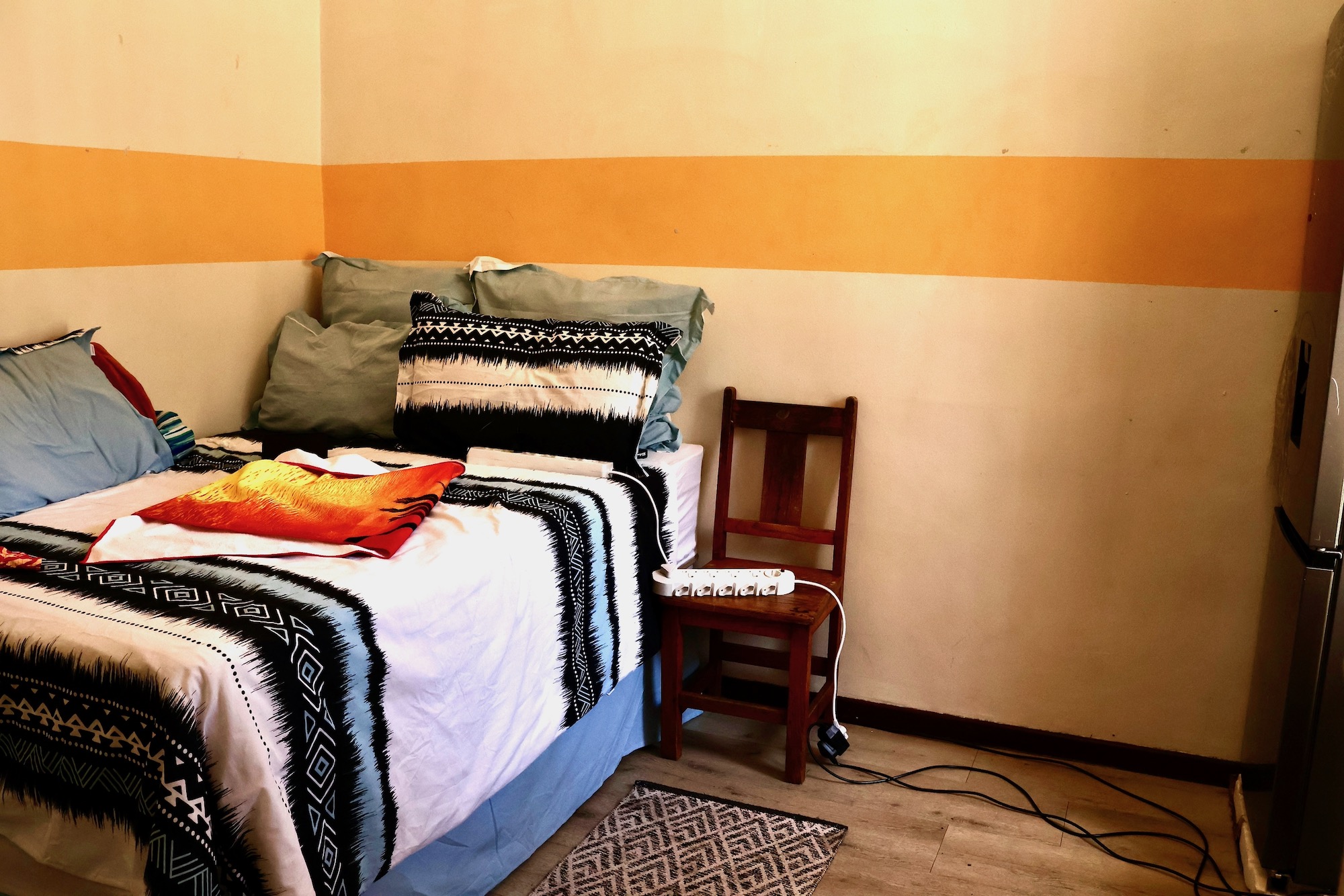
A room at the Streetscapes Observatory facility.
Government response
Francine Higham, mayco member for community services and health, said the City’s Street People Programme is primarily focused on “the provision of first-phase shelter beds to provide immediate assistance for the thousands of rough sleepers across the City”.
She said the City had committed R110,000 to expanding its Safe Space shelters which have 934 beds, “with a pipeline of further expansions already in progress”.
She said assistance is provided on an individual basis, to develop a “personal development plan” to assist people to move into transitional housing or independent living when they are ready.
“Some of this accommodation may be provided by our NGO partners, social housing organisations or even friends and family. The aim is to always ensure that those exiting homelessness are provided with the necessary structured, supportive environments before achieving full independence.”
“There is a need for national legislative guidance to support a consistent, long-term response to homelessness,” she said.
According to the provincial social development department it currently funds two second-phase shelters: Loaves and Fishes in Observatory and Moira Henderson House in Woodstock.
It also funds two assessment shelters: MES in Bellville and Hope Exchange in Roeland Street. An assessment centre has no overnight accommodation but offers food, showers, a social worker and other assistance.
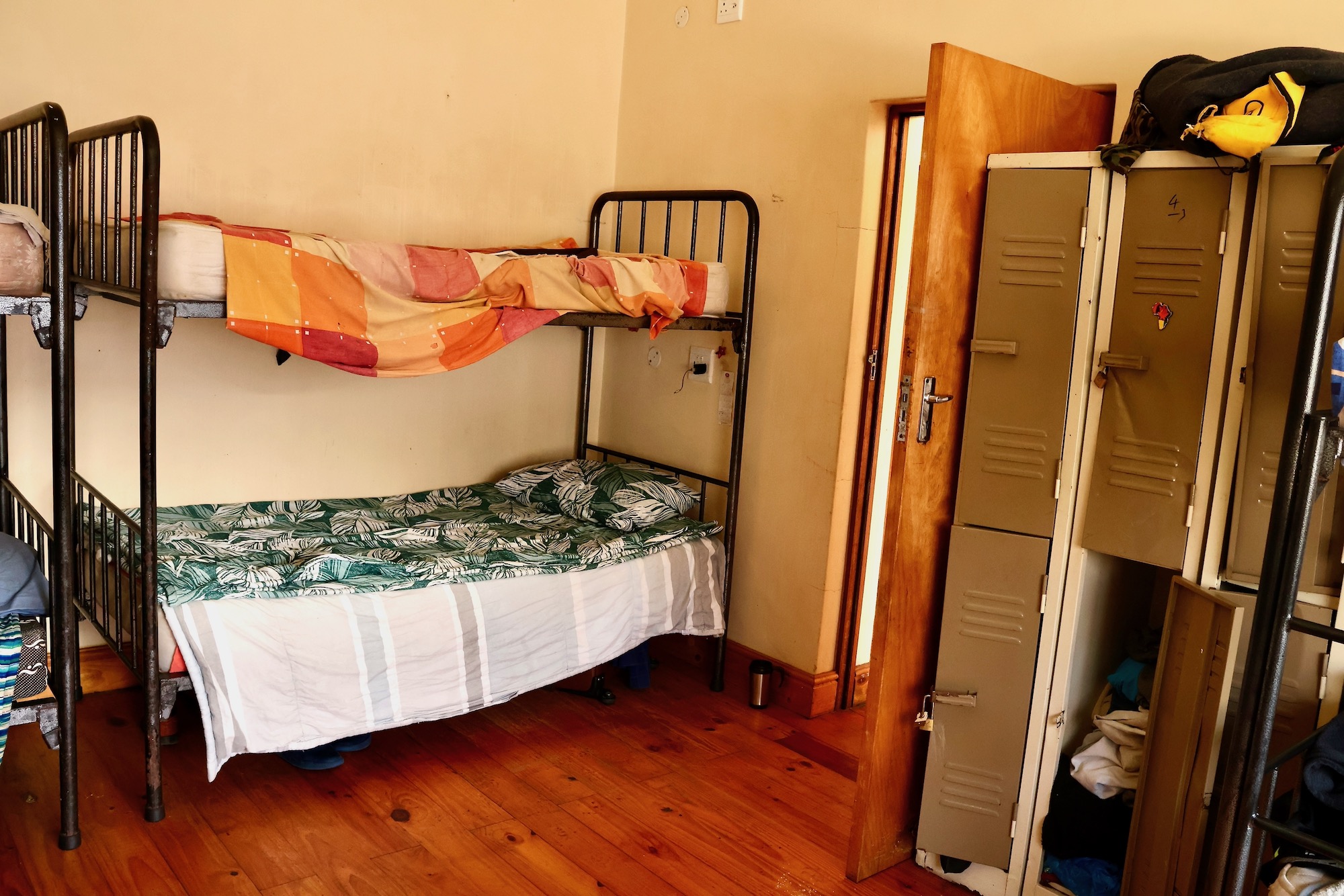
One of the dormitories in Chester House.
Support independent journalism
Donate using Payfast

Don't miss out on the latest news
We respect your privacy, and promise we won't spam you.
Next: Kimberley’s big hole of municipal failure
Previous: Protesters demand Cape Town holocaust centre recognise genocide in Gaza
© 2025 GroundUp. This article is licensed under a Creative Commons Attribution-NoDerivatives 4.0 International License.
You may republish this article, so long as you credit the authors and GroundUp, and do not change the text. Please include a link back to the original article.
We put an invisible pixel in the article so that we can count traffic to republishers. All analytics tools are solely on our servers. We do not give our logs to any third party. Logs are deleted after two weeks. We do not use any IP address identifying information except to count regional traffic. We are solely interested in counting hits, not tracking users. If you republish, please do not delete the invisible pixel.