
Women weavers: The backbone of Lesotho’s textile legacy
For many of the weavers, the work is more than a livelihood, it is a legacy
 Add GroundUp on Google
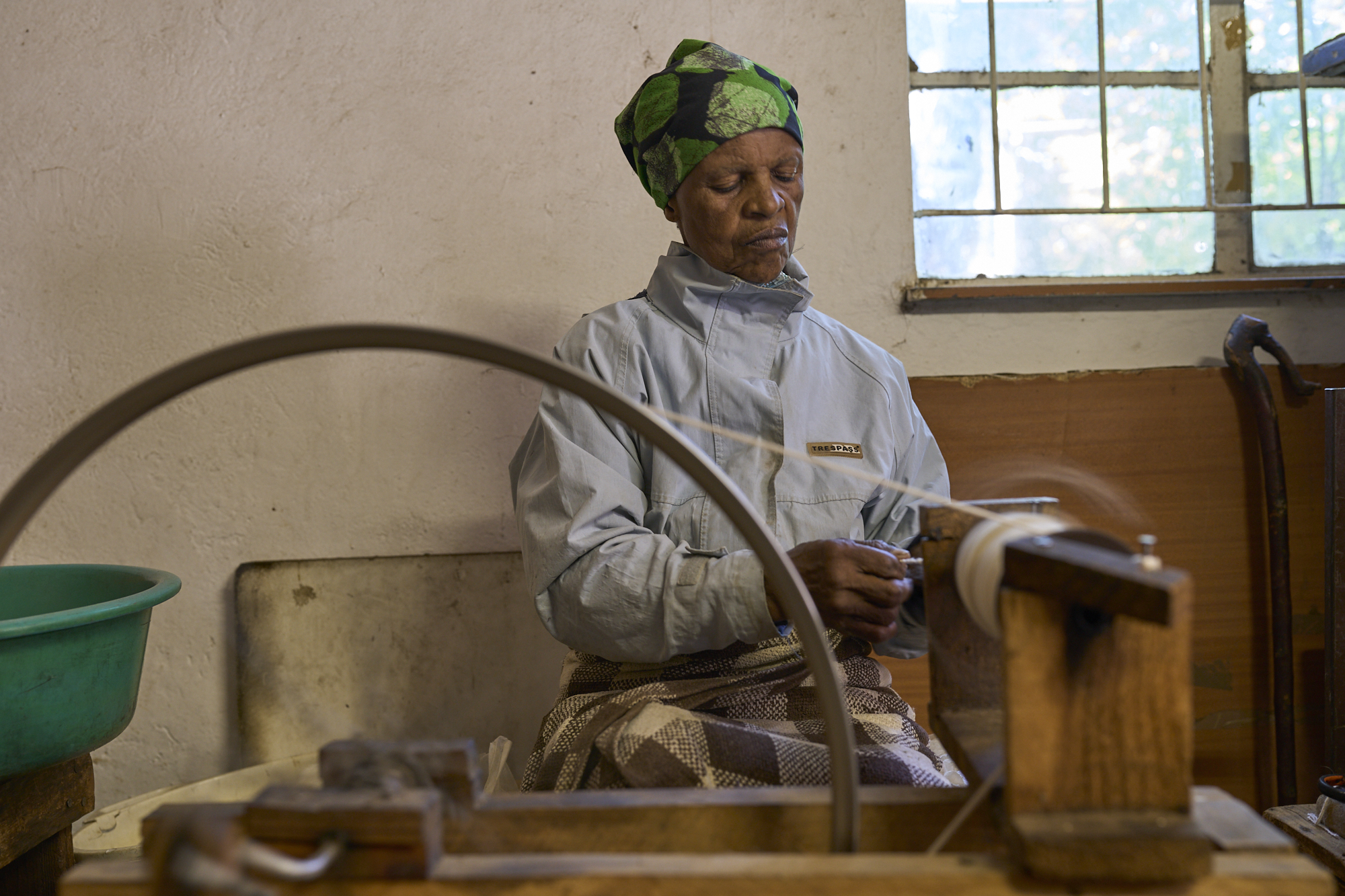
Mamonyane Monyane spinning the yarn at Maseru Tapestry. Photos: Barry Christianson
Lesotho’s rich weaving industry is held together by women who learned the craft from missionaries in the 1970s. But unreliable postal services and limited government support has left gaps in training and access to international buyers.
Maseru Tapestry
Masetumo Lebitsa started weaving in 1975 after attending workshops run by Elizabeth Everett at Machabeng International School in Maseru. Lebitsa was running a workshop owned by Everett while working as a teacher at Machabeng.
“When she left in 2000, we took over,” Lebitsa says.
Video: Ashraf Hendricks
Now the 73-year-old oversees quality, sales, and coordinates a small group of weavers at the business she’s named Maseru Tapestry. From selecting fibre to approving finished designs, Lebitsa says she ensures each piece, made from wool and mohair, meets the standard they have built over decades.

Most of the weavers and spinners are elderly women who do not have formal training. “Nobody went to school for this. They learned here,” Lebitsa says.
Some of them work from their homes in Maseru and rural areas like Morija to avoid transport costs
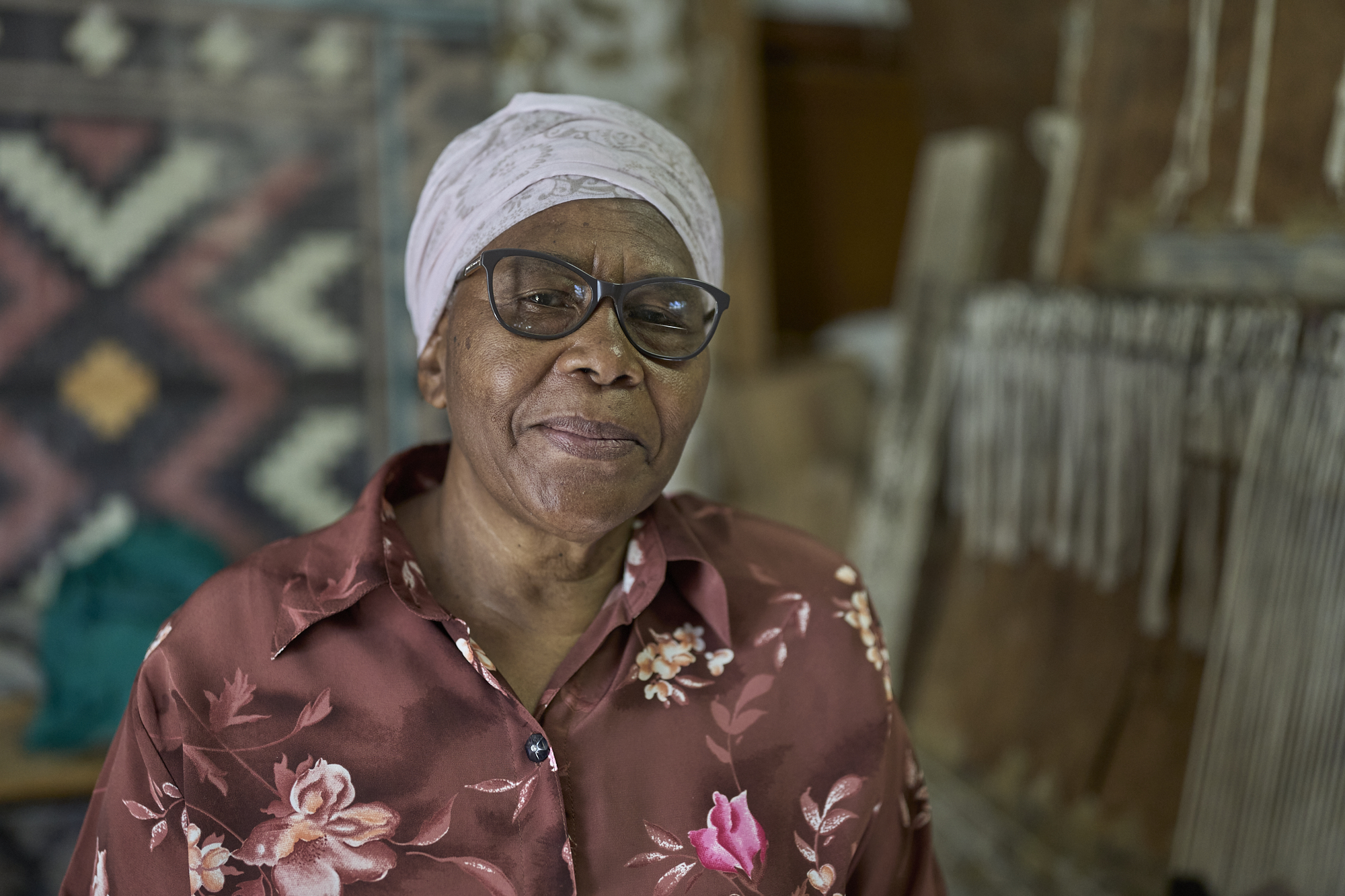
Masetumo Lebitsa, one of the owners of Maseru Tapestry, says government programmes have played an important role in growing their business, particularly in training new weavers.
No one tapestry is like another. Two people can follow the same pattern but produce different results, Lebitsa says. The work is labour-intensive and often sourcing wool and mohair directly from local farmers is costly.
Before a tapestry is woven, the fibre is cleaned, spun and dyed. She says dyes are expensive and sourced from Pinetown in Durban, South Africa at a cost of about M3,000 per kilogram.
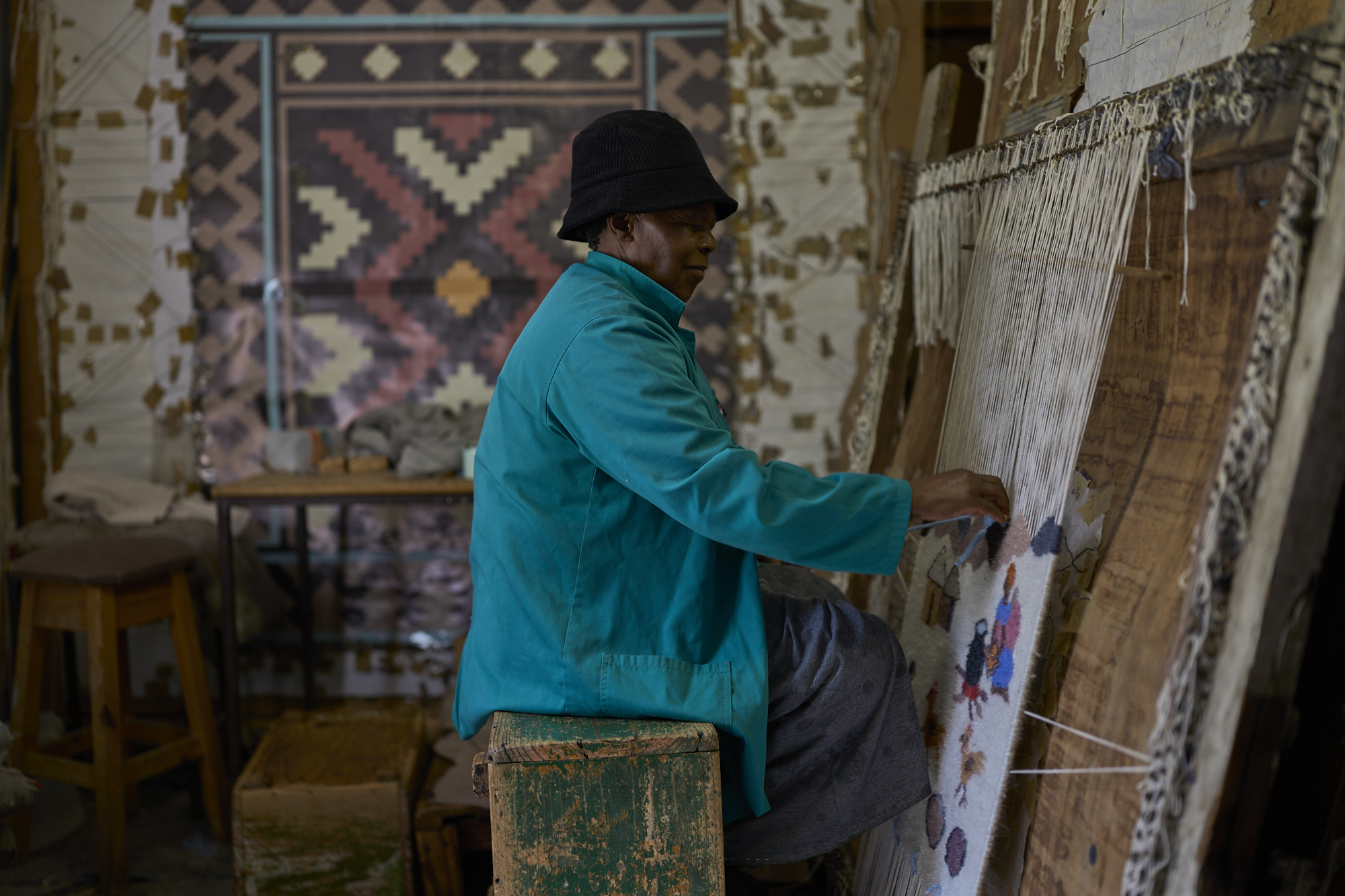
Once the material is ready, weaving begins. A single tapestry can take up to three weeks to complete. “It is a long process,” Lebitsa says.
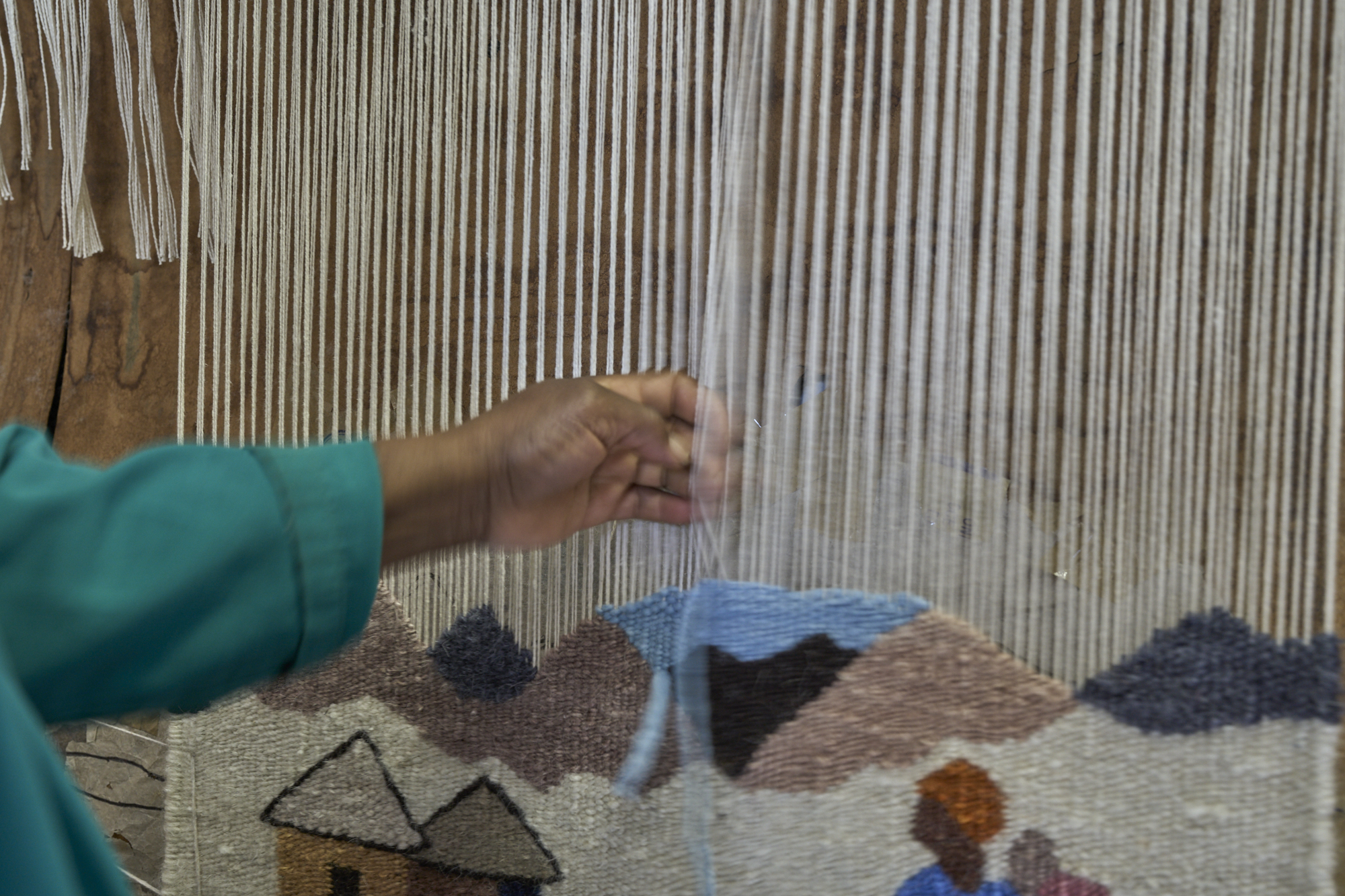
Mamonyane Monyane shows how some of their pieces are made with yarn.
Holding on by a thread
Lebitsa says government programmes have played an important role in growing their business, particularly in training new weavers.
At workshops organised by the Ministry of Trade and Basotho Enterprises Development Corporation, the weavers were taught how to run a business, price their work and deal with customers.
She also credits the Wool and Mohair Promotion Project (WAMPP) for previously helping artisans access raw mohair and wool from Gqeberha.
Makatleho Tsiu weaving mohair at Maseru Tapestry.
WAMPP was a US$39.7-million project funded by the International Fund for Agricultural Development (IFAD), OPEC Fund, and the Lesotho government. It closed in 2023, leading to the launch of the Wool and Mohair Value Chain Competitiveness Project (WaMCoP) in 2024.
Supported by the same funders, WaMCoP is a seven-year project valued at US$72-million. It targets 50,000 households across 10 districts, 50% of them are women and 35% youth smallholder farmers involved in economic and climate resilient farming.
But since the introduction of WaMCoP, Lebitsa says support has not reached her group. “On our side, nothing has started,” she says.
Monehela Tau, WaMCop’s Business Development and Cottage Industries Sub-Component officer, said: “Yes, WAMPP supported them with wool tops. WaMCoP’s intervention in cottage industries is still at the inception phase, we are currently conducting a baseline survey for the cottage industries. This means the activities have not yet started.”
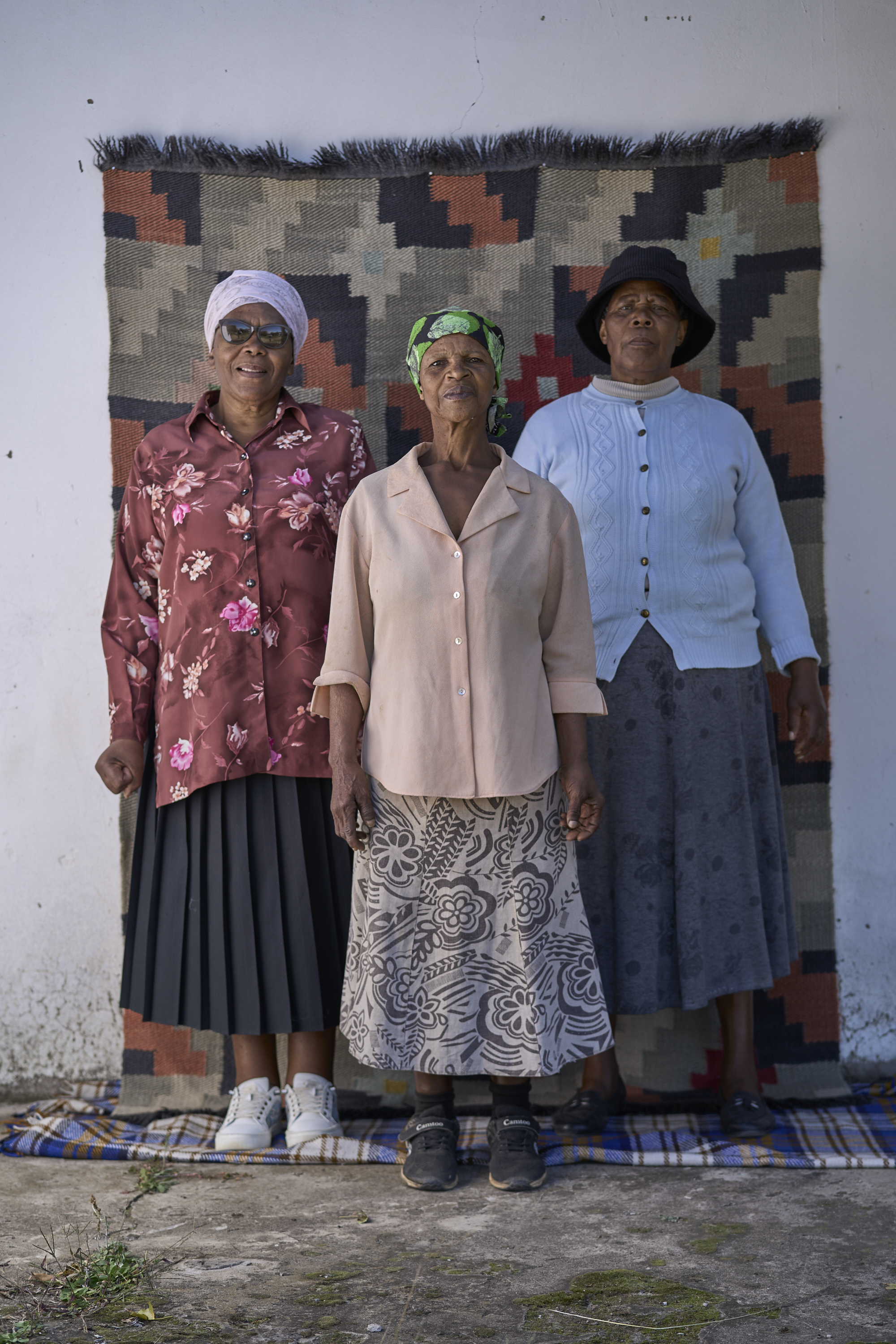
Masetumo Lebitsa, Makatleho Tsiu and Mamonyane Monyane stand in front of one of their woven mats.
Middlemen profit more
Weavers we spoke to say they often see little of the profits their work generates internationally.
Lebitsa recalls working with an international designer who commissioned a complicated tapestry. “On this pattern, he put a photo of a woman, and we changed her face to oranges. It was so perfect.”
After paying the group M5,000, they later found out that the designer had sold the piece for US$136,000. “He came back and offered M7,000 for another piece but I refused after finding out what he made,” she says.
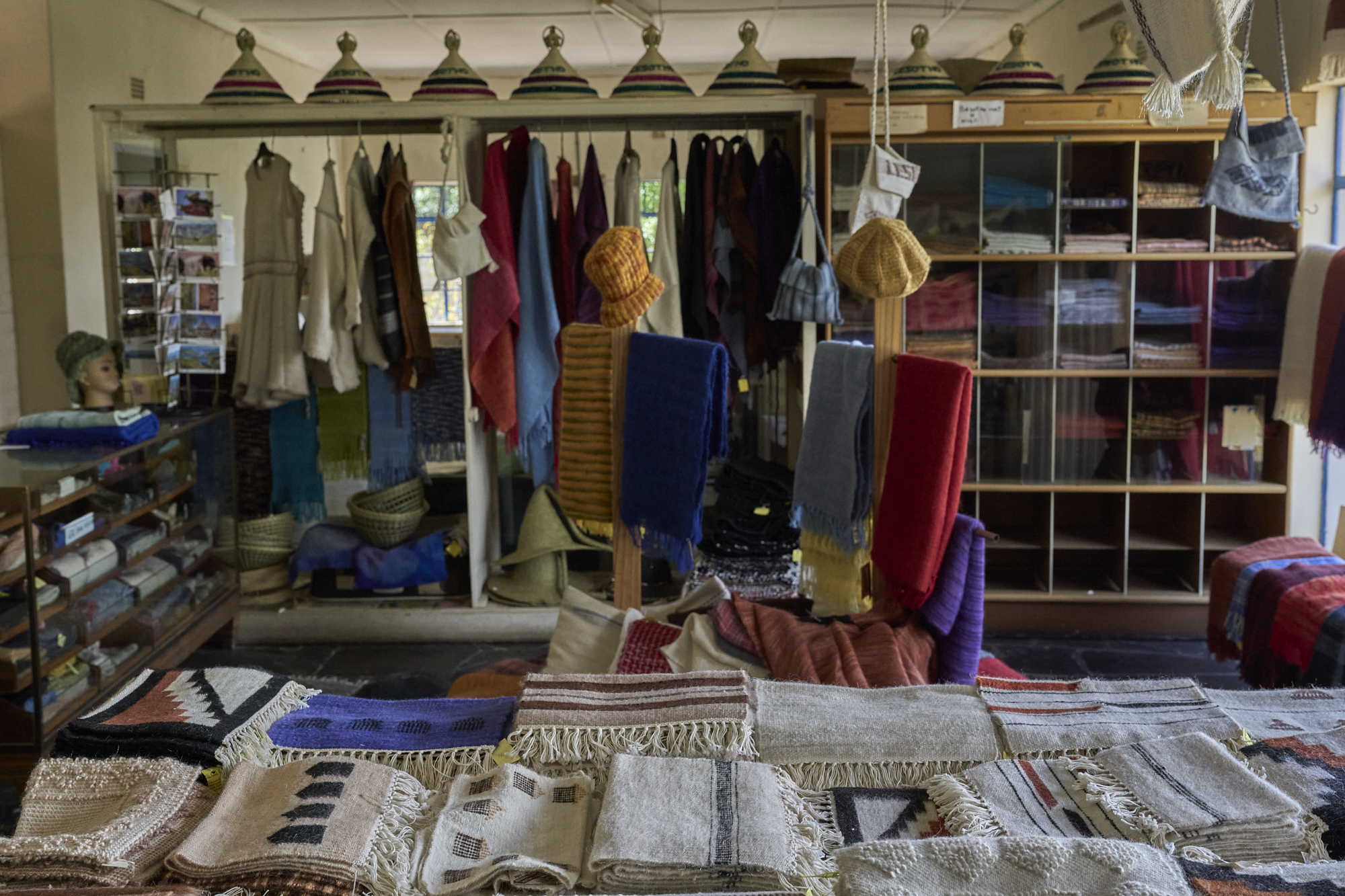
The gift shop and showroom of the Leribe Craft Centre.
Lebitsa says they also lost a regular buyer in Cape Town after a package of 20 tapestries sent through Lesotho’s postal service did not arrive on time. “Three months later and he didn’t get them. I don’t know what happened to the postal service.” When the buyer finally received the order, it was too late. “He was so angry that he ended the relationship.” Since then, she has stopped using Lesotho’s postal system.
Most of Maseru Tapestry customers are tourists. “They want something to show they came from Lesotho,” Lebitsa says.
Traditional designs showing villages, landscapes and indigenous are popular, particularly in international markets such as the United States, where one of the Cape Town-based middlemen sells their items.
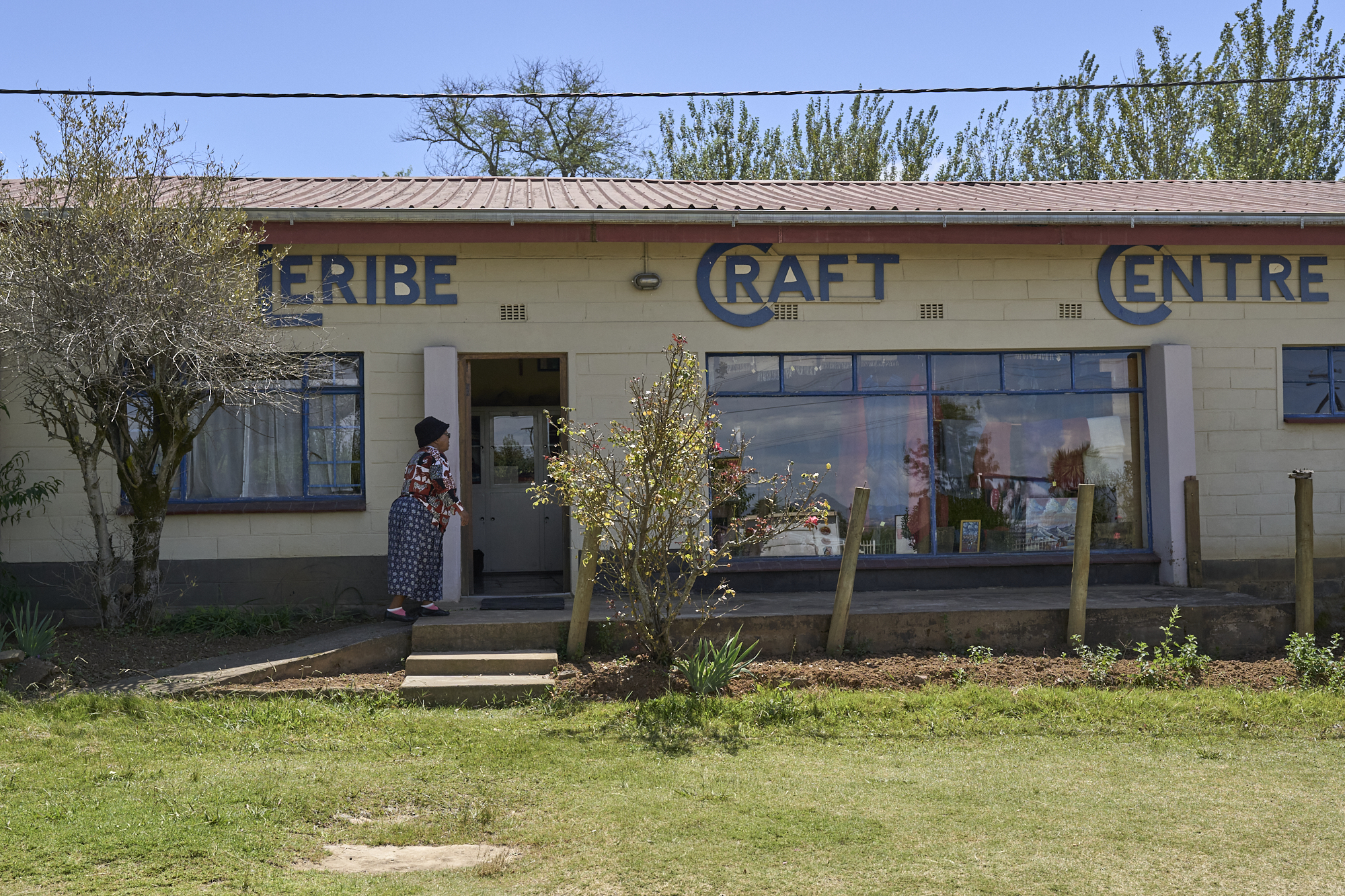
The Leribe Craft Centre trains and employs 13 women who are deaf, unable to speak, or physically impaired.
The Leribe Craft Centre
In Leribe village, the Leribe Craft Centre trains and employs 13 women who are deaf, unable to speak, or physically impaired. Inside, wool and mohair move through different stages of production. The work is both a source of income and independence for the women.
The centre, run by the Anglican Church, operates within the compound of St Mary’s Integrated College.
Manager Malisebo Mojaje has been part of the centre since 1977, when she joined after finishing high school.
She says many of the women come from remote areas, where access to education and jobs is limited. Some are referred to them by church networks and through special needs schools.
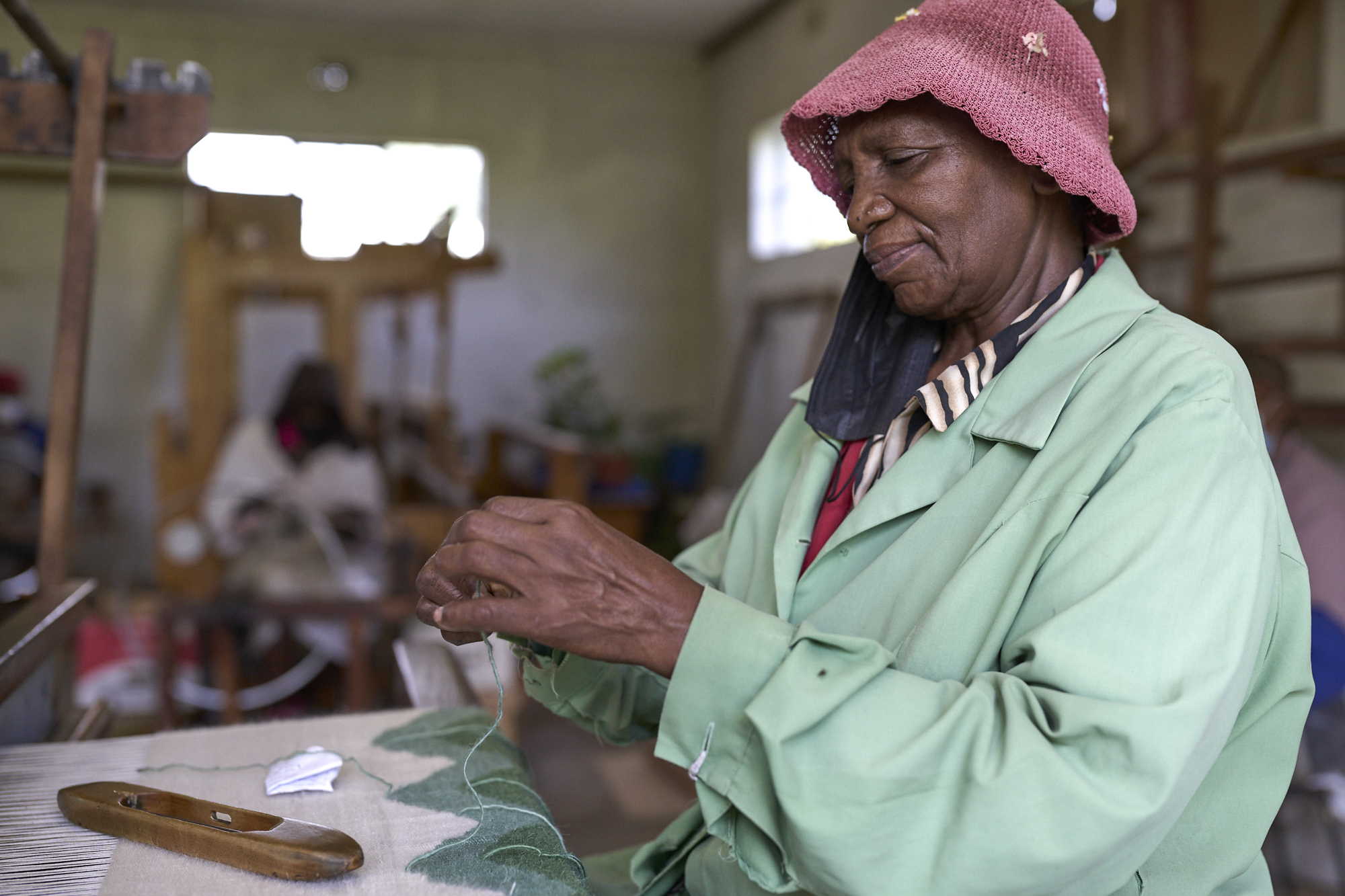
Matjotji ‘Nena weaving mountain tapestry.
Trust the process
The centre buys mohair from shearing sheds and local traders who collect fibre from farmers who sell it in bulk. Buying in bulk helps the centre maintain a steady supply. “We mainly buy from traders because they already have the right quality and quantity for us,” Mojaje says.
The centre uses what is known as BMS-grade mohair, which Mojaje says is “better quality to work with,” even if it is not the highest grade available.
Once the mohair arrives at the workshop, it goes through several stages. First the workers, by hand, remove dirt, grass and other material. From there, the mohair is combed to straighten the fibres. This prepares it for spinning, ensuring the strands align and can form continuous yarn.
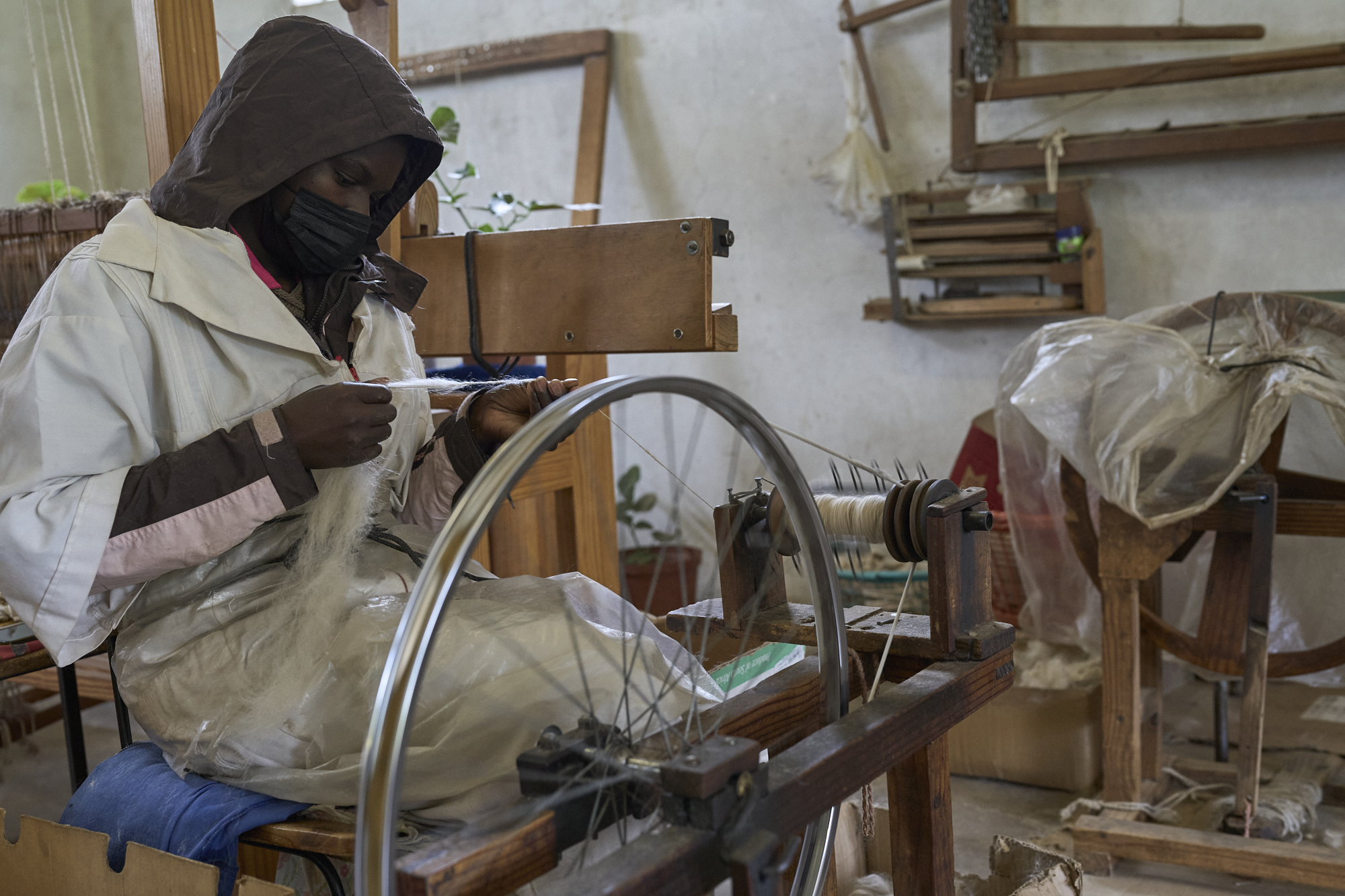
Seeng Lebelo spinning wool using a locally constructed bicycle mechanism.
Spinning is done using manually operated wheels, some of which are built locally using bicycle mechanisms. Older, imported machines are still used, though some have been replaced due to maintenance challenges.
After spinning, the yarn is either washed or dyed in large pots. The centre uses chemical dyes from South Africa. “We don’t throw away the dye water,” Mojaje says. “We keep it so we can use it again when we want the same colour.”
Once dyed and dried, the yarn is ready for weaving or knitting. The centre uses foot-powered looms. On these looms, cotton or wool is used as the warp, the vertical threads, while mohair forms the weft, which is pushed through horizontally. They create a range of products including scarves, shawls, ponchos, wall hanging mats and table mats.
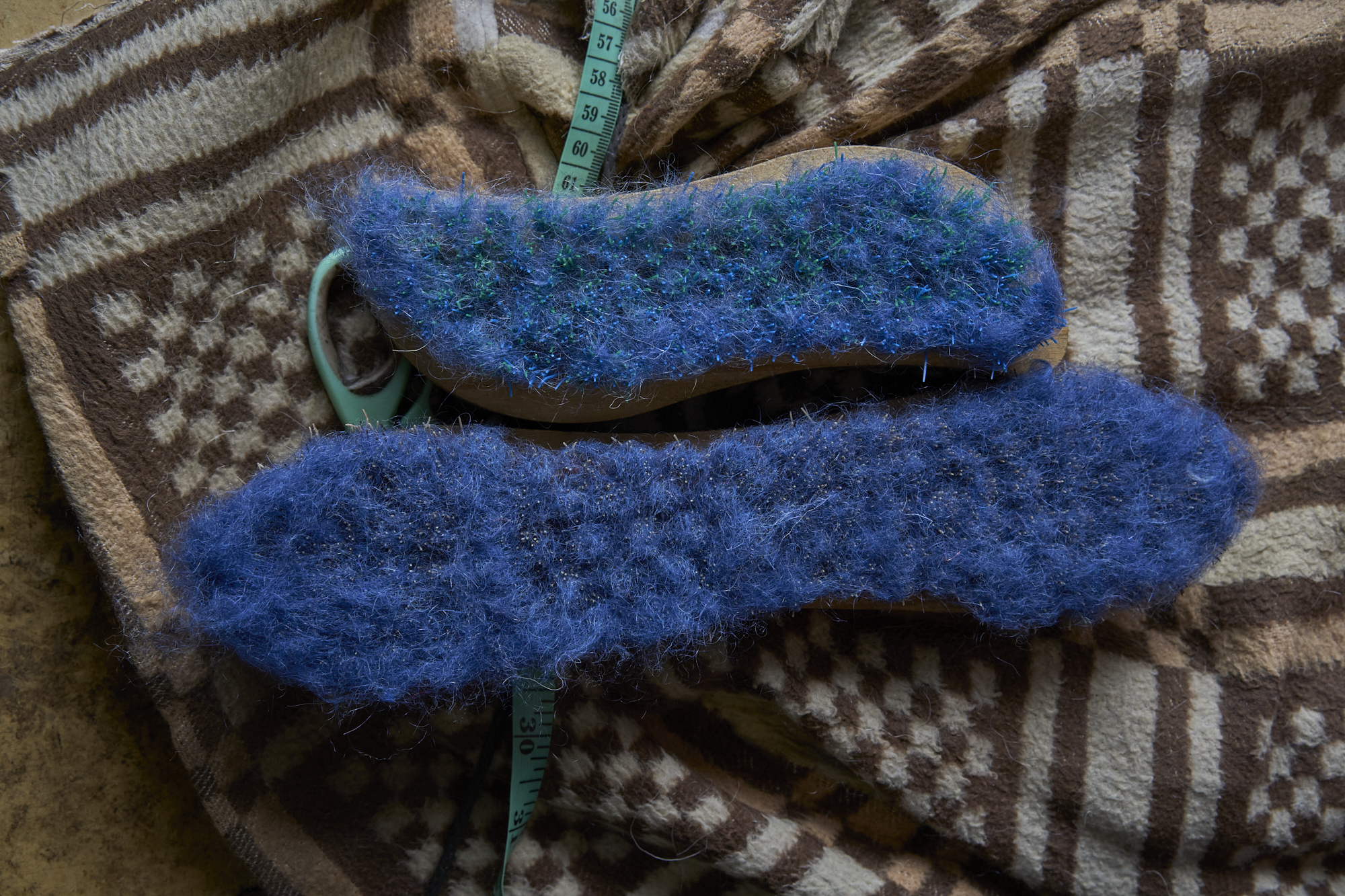
Combing brushes used to bring out the fluffy and softness of the fabrics.
Lives reshaped through craft
The centre also has crochet workshops. They make blankets by joining small squares.
Mamookho Mangope, who is deaf, is from Masite Rothe in the Maseru district and travels over 134km to the centre. “We are currently knitting blankets using crochet. We also do weaving of mohair,” Mangope says.
She was introduced to the centre by nuns doing outreach in her area.
“The centre has changed our lives,” Mangope says. “Before, we were very withdrawn, hidden and did not understand what life was like. But after coming here, it opened our eyes and allowed us to live freely.” She says opportunities for people with disabilities in her community are limited.
“My parents died… With the money I earn here, I am able to take care of myself. I do not go to bed hungry,” Mangope says.
They earn about M600 (M1=R1) per month.
Mojaje says some women who trained at the centre have moved on to other jobs in Maseru, including factory work, after gaining confidence and skills.
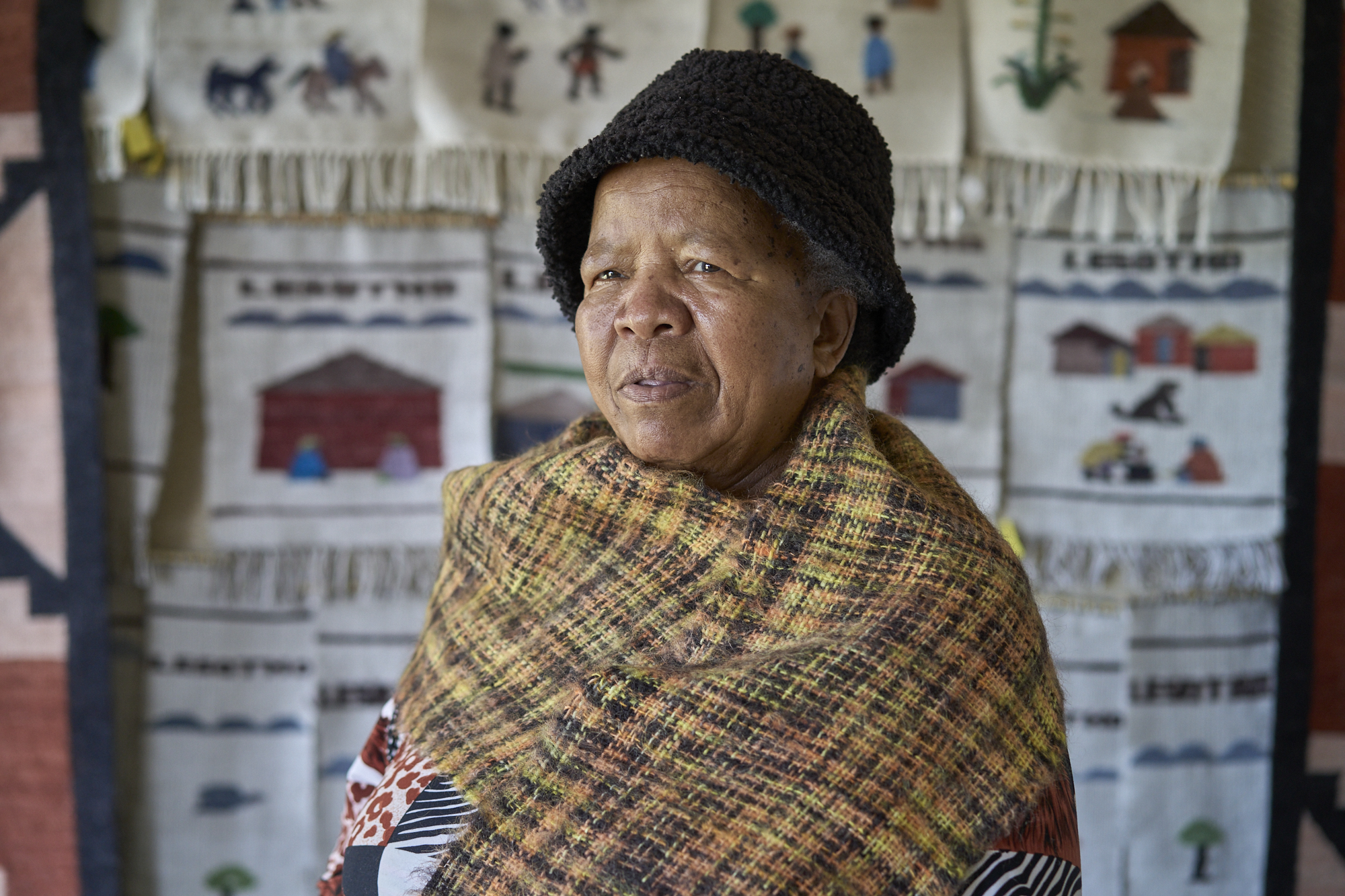
Leribe Craft Centre manager Malisebo Majaje.
But the centre faces financial and operational challenges as it is heavily dependent on the sale of its products.
She says raw materials are costly. Mohair costs about M170 per kilogram, while wool and cotton imported from South Africa cost around M250 and R240 per kilogram respectively. The centre usually buys wool in bulk once a year to manage costs.
Market access has also changed over time. In the past, the centre sold products in South Africa at flea markets and agents. “We were told we would be paid at the end of the month,” she says. “Sometimes it would take two to three months, or the payments would not come.”
Because of this, the centre reduced reliance on external markets. Today, most products are sold directly from their showroom.
It also had international buyers from countries such as the United Kingdom and Germany. Customers would place orders and pay in advance, allowing the centre to plan production. But those relationships have since ended. “The customer in England just stopped ordering,” Mojaje says.
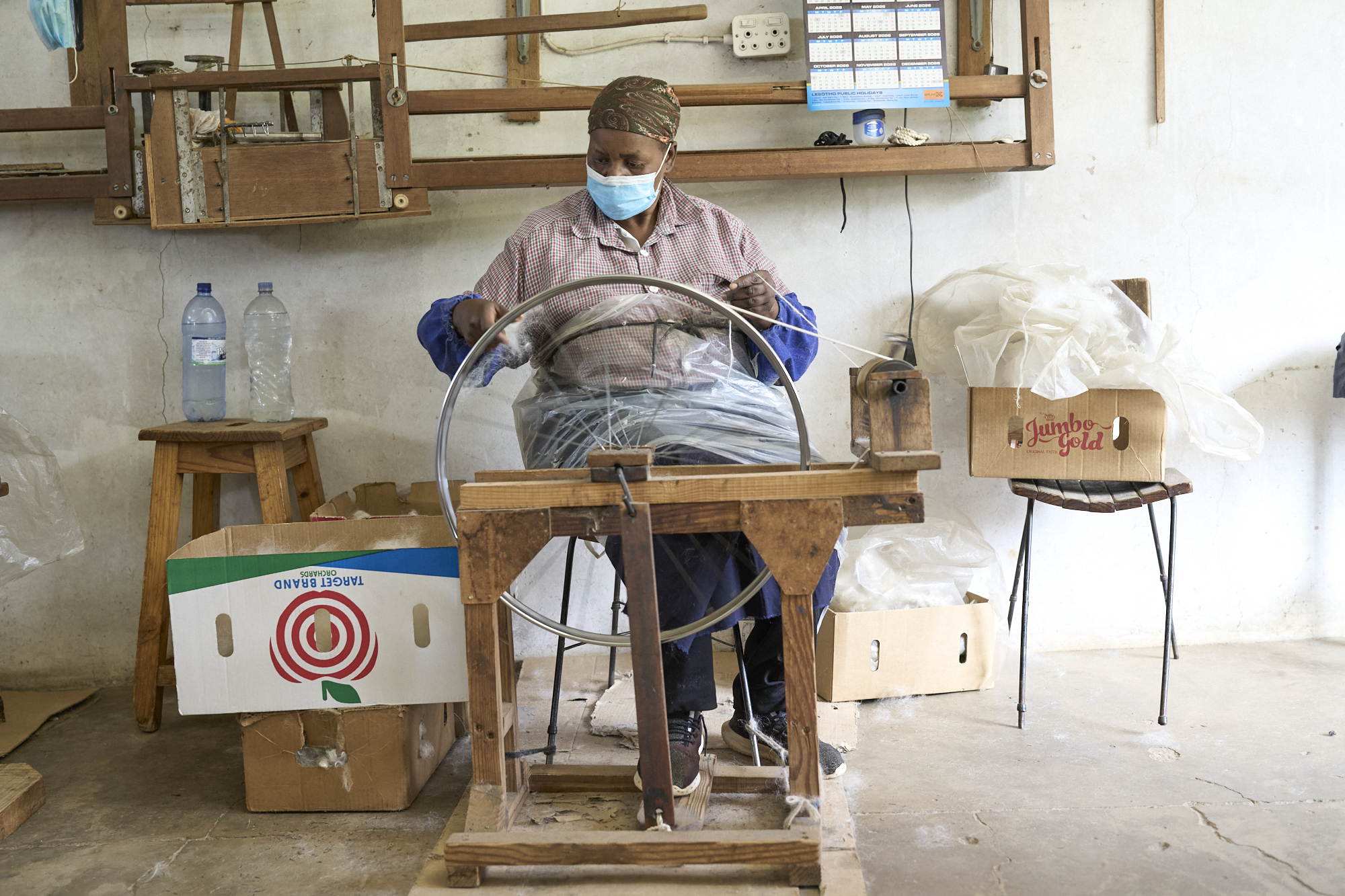
Lipolelo Moleko spinning.
An ageing craft
A concern for many of the weavers we spoke to is the future of the craft.
Most weavers in Lesotho today are women who learned the trade decades ago through foreign-run workshops.
Lebitsa hopes government plans to train new weavers will materialise soon. “We want the new generation to take over,” she says. “We have to teach them.” Without this continuous transfer of skills, the industry risks decline.
For many of the weavers, the work is more than a livelihood, it is a legacy.
Support independent journalism
Donate using Payfast

Don't miss out on the latest news
We respect your privacy, and promise we won't spam you.
Next: The mystery of the Chinese trawlers arrested at sea
Previous: Lesotho’s prisons in bad shape despite years of recommendations
© 2026 GroundUp. This article is published under the GroundUp Republication Licence Version 1.0. Email [email protected] to request permission to republish.