
Some relief for Tshwane residents after city centre water declared safe
But Rand Water warns of “exceptionally high ” water usage straining the system
 Add GroundUp on Google
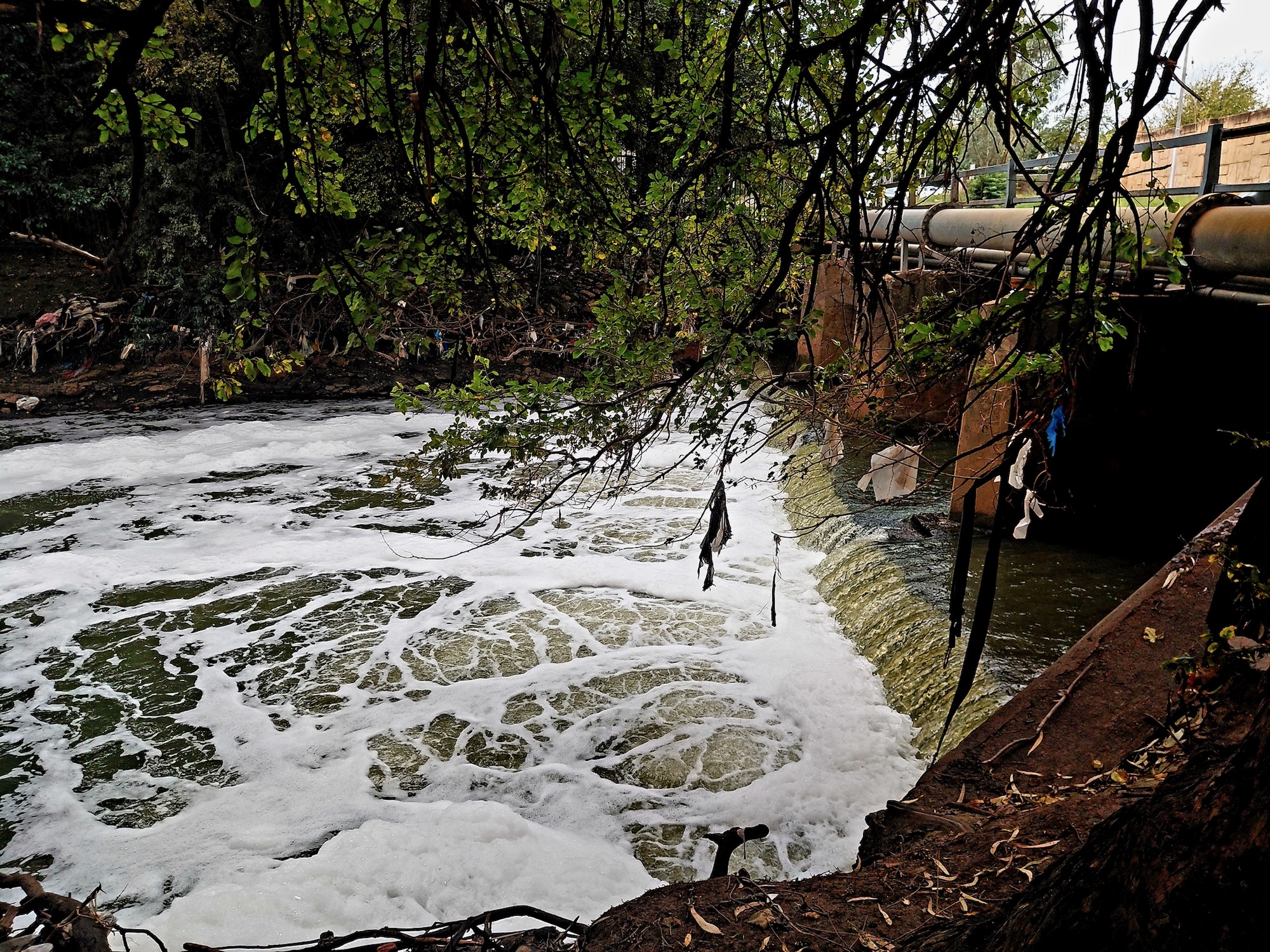
The foaming Hennops River, polluted by poorly or untreated sewage from the Sunderland Ridge treatment works. Archive photo: Seth Thorne
Residents in central Pretoria’ and surrounding areas are able to drink their tap water again after last week’s precautionary advisory to boil water supplied by the Findlay Reservoir.
The City of Tshwane said on Saturday that microbiological testing confirmed that tap water for residents in Pretoria Central, Arcadia, Sunnyside, Marabastad and surrounds was safe to drink again.
A broken municipal sewer pipe in the Groenkloof Nature Reserve had spilt raw sewage into the already polluted Apies River. This contaminated the groundwater drawn by the Upper and Lower Fountains springs, which feeds the Findlay water treatment works (WTW).
Department of Water and Sanitation (DWS) inspectors visited the Findlay WTW on 21 October after the discovery that Tshwane’s Bronkhorstpruit WTW had not been chlorinating its water for three weeks and was slow to notify the public.
The department checked whether lack of chlorination were isolated to Bronkhorstpruit. On Friday, DWS director-general Sean Phillips told Parliament’s portfolio committee on health that the department found that, like Bronkhorstpruit, “no chlorination was taking place”. DWS officials flagged this as a health risk.
According to Tshwane officials briefing Parliament, groundwater from the Fountains springs is typically of high quality and requires only minimal disinfection.
Tshwane mayor Nasiphi Moya said the delay in communication “was unacceptable” and will be part of an ongoing independent investigation into administrative negligence.
Central Pretoria and surrounding suburbs were switched to a safe alternative bulk supply from Rand Water. Findlay Reservoir was emptied and scrubbed down. Technical crews then applied a chlorine shock treatment to eradicate residual bacteria, the City said in a statement. Water pipes were continuously flushed to remove lingering contaminated water.
Rand Water under strain
On Friday, Rand Water warned that water usage across several municipal areas, including Tshwane, reached exceptionally high levels and was placing severe strain on the system.
Despite repeated calls for municipalities to take immediate steps to curb demand and stabilise the system, consumption levels remain critically high.
As of July 2026, around 35% of Tshwane’s water is lost to leaks, according to the Gauteng Water Security Dashboard. Tshwane has allocated R101-million for water network pipe replacement in the 2026/27 financial year.
Rand Water warned municipalities that if they exceeded their allocated consumption then reduced water pressure and intermittent supply outages may be experienced.
Support independent journalism
Donate using Payfast

Don't miss out on the latest news
We respect your privacy, and promise we won't spam you.
© 2026 GroundUp. This article is published under the GroundUp Republication Licence Version 1.0. Email [email protected] to request permission to republish.