
Refugee eviction case pushed to October
City of Cape Town and national government have applied to evict people living at the Wingfield and Bellville sites
 Add GroundUp on Google
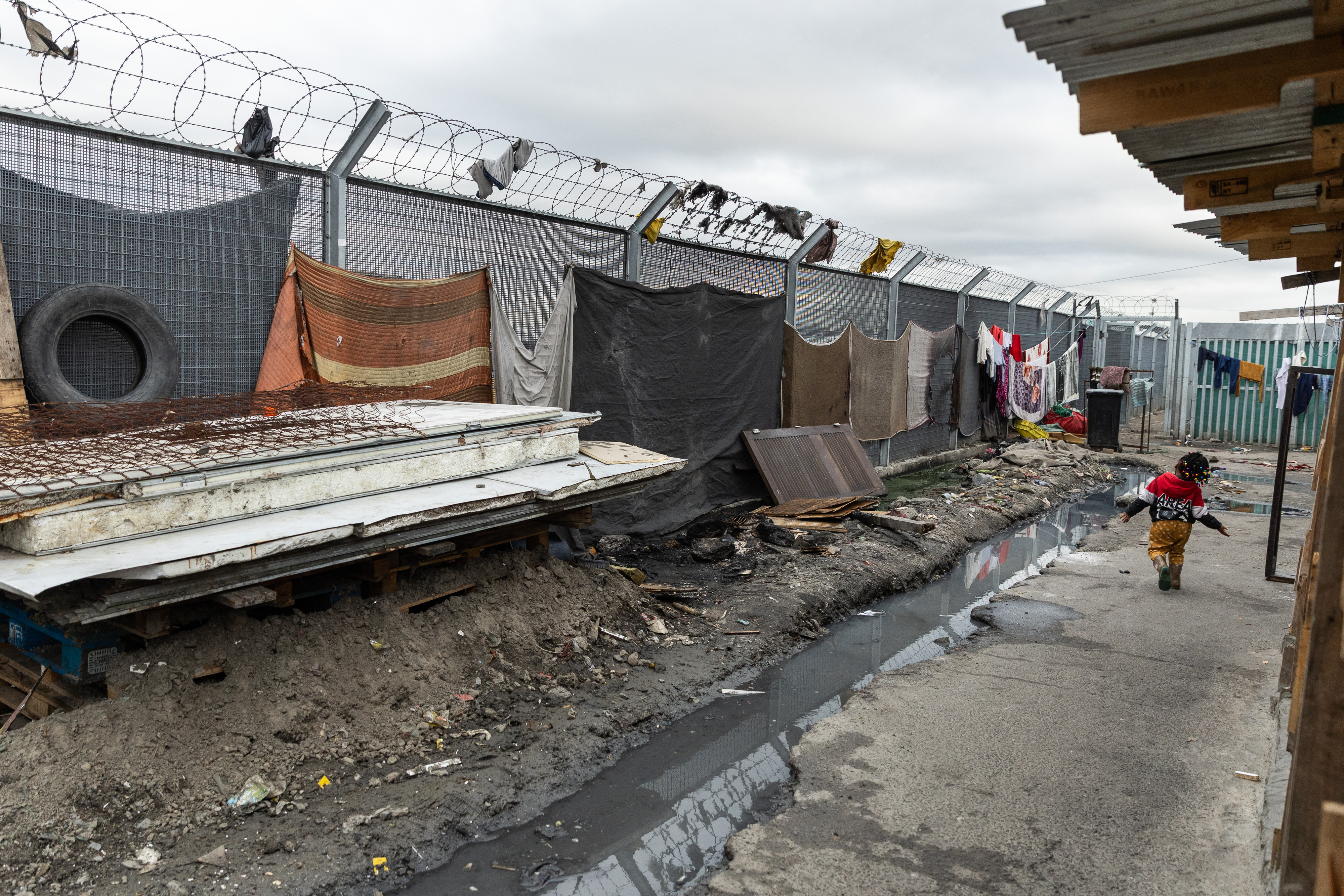
Refugees living in Paint City in Bellville, Cape Town, say life in the camp is tough during winter. Archive photo: Ashraf Hendricks
An application to evict hundreds of refugees from emergency housing at Wingfield in Maitland and Paint City in Bellville was to be heard in the Western Cape High Court last week but is now set down for 28 October.
Last year, GroundUp reported on the joint application by the City of Cape Town and the national departments of Home Affairs and Public Works to remove the two groups of refugees. Notices were served at both sites last year. The refugees have opposed the application.
Large white tents were erected during covid to house refugees who had demanded that the United Nations High Commissioner for Refugees (UNHCR) resettle them in Europe, citing fears of xenophobia.
In November, a fire destroyed the tent at the Wingfield site.

According to court papers seen by GroundUp the matter has been postponed to October. The UNHCR is expected to host negotiations between the parties and file a report by 2 June.
In response to questions, City spokesperson Luthando Tyhalibongo said, “The City is seeking an order to repatriate or reintegrate the groups back into South African society, which they have refused to do to date”.
Tyhalibongo previously told GroundUp that to date, “the fears of widespread xenophobic violence cited in the original occupation demands have not materialised”.
Faraja Augustin, who has been living at the Wingfield site, said he fled the Democratic Republic of Congo when he was young. Since last year’s fire at Wingfield, he says the community has been staying in makeshift structures.
Augustin said he was concerned about the winter. “We are worried and no one seems to care,” he said.
He said he was open to reintegration but the refugees needed help with documentation. However, he was worried about groups like March and March, he said.
Louise du Plessis, an attorney at the Land and Housing Unit at Lawyers for Human Rights, said that for some of the refugees, the threat of xenophobia was “very real” because they had lost relatives “to attacks from South Africans”.
Du Plessis said people with refugee status had the same housing rights as South Africans. Both municipalities and the national government had obligations towards refugees and asylum seekers, she said.
Duniya Aslam of the UNHCR said their role is “strictly humanitarian”.
“We remain ready to support individuals willing to pursue lawful and available solutions, in cooperation with the authorities and partners.”
Support independent journalism
Donate using Payfast

Don't miss out on the latest news
We respect your privacy, and promise we won't spam you.
© 2026 GroundUp. This article is published under the GroundUp Republication Licence Version 1.0. Email [email protected] to request permission to republish.