
Quota bungle: Small-scale fishers battle to survive
Several West Coast cooperatives given even lower allocations than they had before their appeals
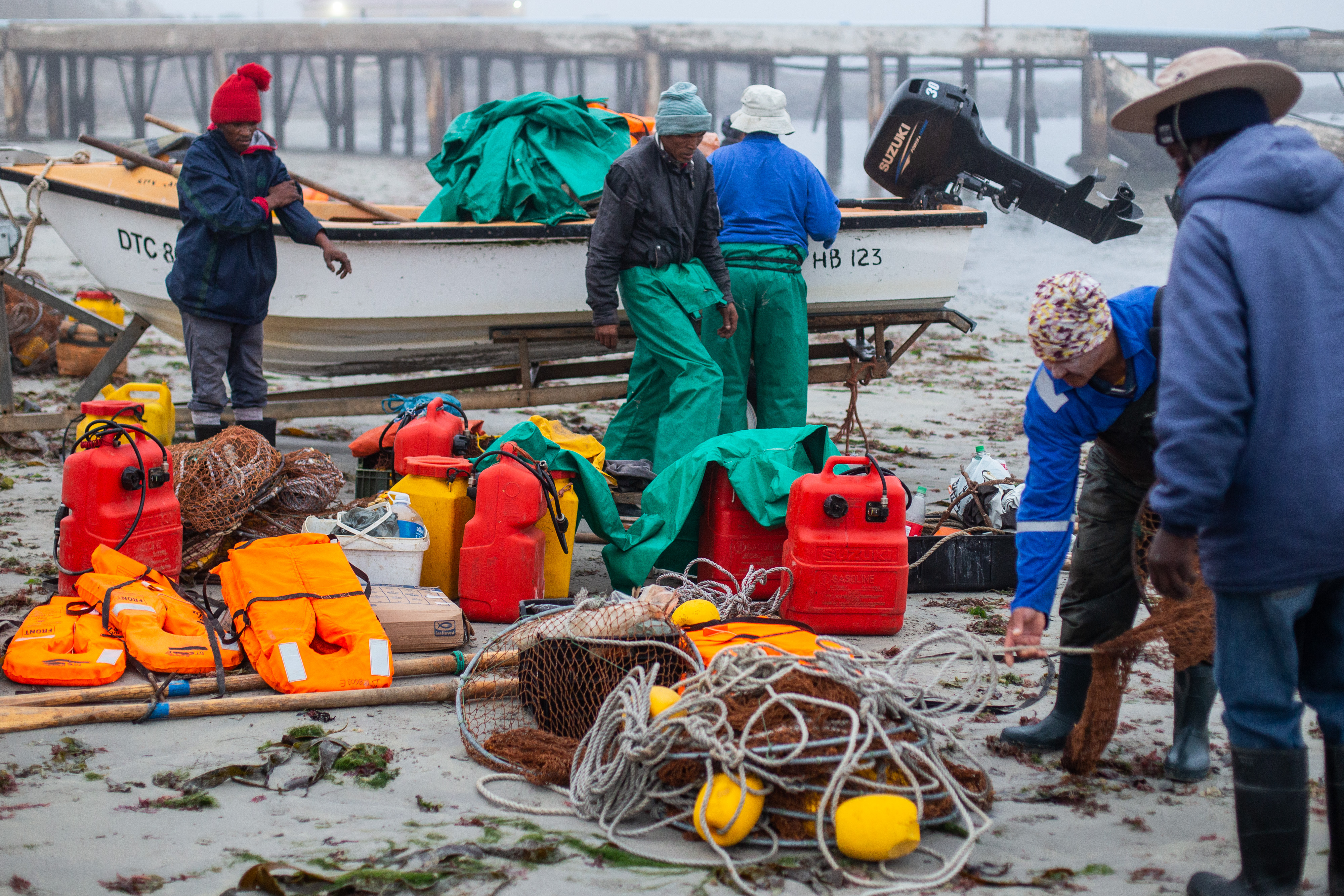
As the crayfish season draws to a close, West Coast small-scale fishers are still battling with delays and miscalculations in their current quotas by government. Photo: Ashraf Hendricks
- This year several small-scale fishing cooperatives were given decreased quotas for West Coast rock lobster.
- Despite assurances from the Department of Forestry, Fisheries and the Environment to fix erroneous calculations for quotas, many of the affected cooperatives remained in uncertainty.
- On 31 March the Legal Resources Centre sent an urgent letter to the department on behalf of the cooperatives, demanding that quotas be clarified and corrected.
- An issue with the department’s system used to process permits caused further delays. The department then issued an exemption for affected fishers who hold expired permits, but without the new allocations for crayfish.
Confusion over miscalculated quotas has left many West Coast small-scale fishers desperate. Every day lost during the lobster season endangers their survival.
In December last year, several small-scale fishing cooperatives were allocated decreased quotas, despite an announcement that the West Coast rock lobster (crayfish or kreef) quota would be increased by 58% overall.
The process was marred by administrative bungles after the Department of Forestry, Fisheries and the Environment (DFFE) erroneously miscalculated the quotas for some cooperatives.
Many fishers appealed their quotas.
In March, Minister Willie Aucamp committed to upholding the fishers’ appeals and extended the lobster season by another month. Aucamp admitted to “computational discrepancies” in the crayfish quotas.

In a statement, the DFFE said, “These appeals came after some fishing cooperatives received smaller allocations than they had in previous years, despite the overall quota of [lobster] increasing … In this instance, the minister has upheld the appeals regarding the discrepancies in the distribution of the TAC [total allowable catch].”
The minister said he had requested that the calculations for each cooperative be redone.
After Hilda Adams, chairperson of the West Coast Small-Scale Fishers Cooperative Forum, sent numerous letters to the department, the forum received a spreadsheet of new allocations for the 17 fishing cooperatives. But the revised allocations made no sense, Adams told GroundUp.
While some cooperatives got substantial increases, others saw further decreases in their quotas. Around eight cooperatives received even lower allocations than they had before their appeals.
On 31 March, the Legal Resources Centre (LRC) sent an urgent letter to the department, alerting officials to possible further calculation errors.
“After waiting more than two weeks after the deadline for this information to be shared, our clients are feeling desperate. You are well aware of the prejudice that these “errors” cause our clients: for them, every day of the [lobster] season is a matter of survival,” the LRC stated.
The LRC asked the department to explain the quota allocations and provide exemptions for fishers who have delays and are losing income.
“Since no information was provided about how these calculations were done and on what basis, they are, on the face of it, irrational and contrary to the Minister’s statement that he had “upheld all appeals”,” said the LRC.
“These repeated ‘computational errors’ obscure much deeper problems with how the sector is treated by the department,” said Wilmien Wicomb of LRC.
Crayfish season draws to a close
In March, there were also delays in getting new permits from the department due to IT issues. DFFE officials informed cooperatives that they had “technical challenges” with the system used to process permits.
After about two weeks, they issued an exemption for those who hold expired permits, however without the new TAC allocations for crayfish.
Adams, on behalf of the Forum, raised concerns with the department over its lack of “administrative progress”.
“The continued delays have serious economic consequences for the livelihoods of small-scale fishing communities,” said Adams.
Responding GroundUp, DFFE spokesperson Zolile Nqayi acknowledged that “delays in the issuance of catch permits may have operational and livelihood implications for fishing communities, including disruptions to fishing activities and income streams”.
To mitigate these impacts, he said the department had issued exemptions to affected fishers, allowing fishing operations to continue while administrative processes were being finalised.
With regards to the 58% quota increase, Nqayi said it was applied to the overall total allowable catch and “cascaded to the relevant concession areas, except for areas identified to be affected by poaching and over-exploitation”.
“Given that the [lobster] resource remains severely depleted (estimated at below 2% of pristine biomass), strict adherence to area-specific TACs is critical to support stock recovery and ensure long-term sustainability,” said Nqayi.
Support independent journalism
Donate using Payfast

Don't miss out on the latest news
We respect your privacy, and promise we won't spam you.
© 2026 GroundUp. This article is published under the GroundUp Republication Licence Version 1.0. Email [email protected] to request permission to republish.