
Life in Lesotho’s historic Kome Caves
The dwellings were occupied in the early 1800s by families fleeing the Lifaqane wars
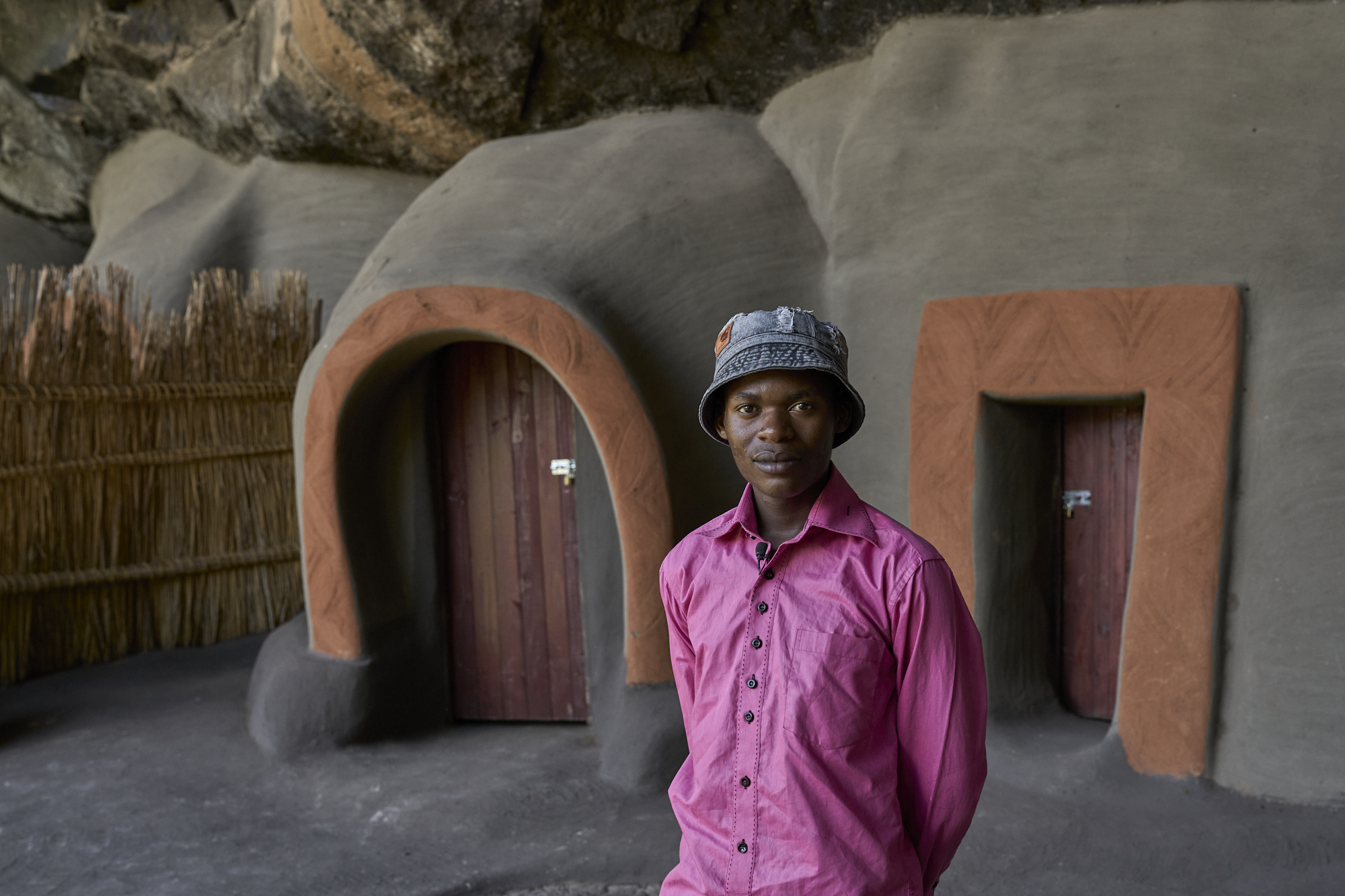
Local tour guide Motlalepula Kome takes tourists through the Kome Caves which are located in the district of Berea, 25 kilometres east of Teyateyaneng town. The dwellings were occupied in the early 1800s by families fleeing the Lifaqane wars. Photos: Barry Christianson
- The historic Kome Caves, located in the district of Berea, 25km east of Teyateyaneng town, were occupied in the early 1800s by families fleeing the Lifaqane wars.
- The caves are now a tourist attraction managed by the local Ha Kome villagers in partnership with the Lesotho Tourism Development Corporation.
- But for the last resident living there, Ntefane Ntefane, it is still home.
Video/editing: Ashraf Hendricks
Ntefane Ntefane lives high in the sandstone cliffs of rural Lesotho.
“I was born in this house in 1983,” he says, seated next to a round, mud-plastered dwelling carved into the hillside. “I have never lived anywhere else.”
While other families have long since moved out and built modern homes, Ntefane remains the last resident of the historic Kome Caves, located in the Berea district, 25km east of Teyateyaneng town.

The caves, now a tourist attraction, are managed by the local Ha Kome villagers in partnership with the Lesotho Tourism Development Corporation.
The caves were occupied in the early 1800s by families fleeing the Lifaqane wars and famine. Also known as the Mfecane, Lifaqane was a period of intense warfare, forced migration, and state formation in Southern Africa roughly from 1815 to 1840.
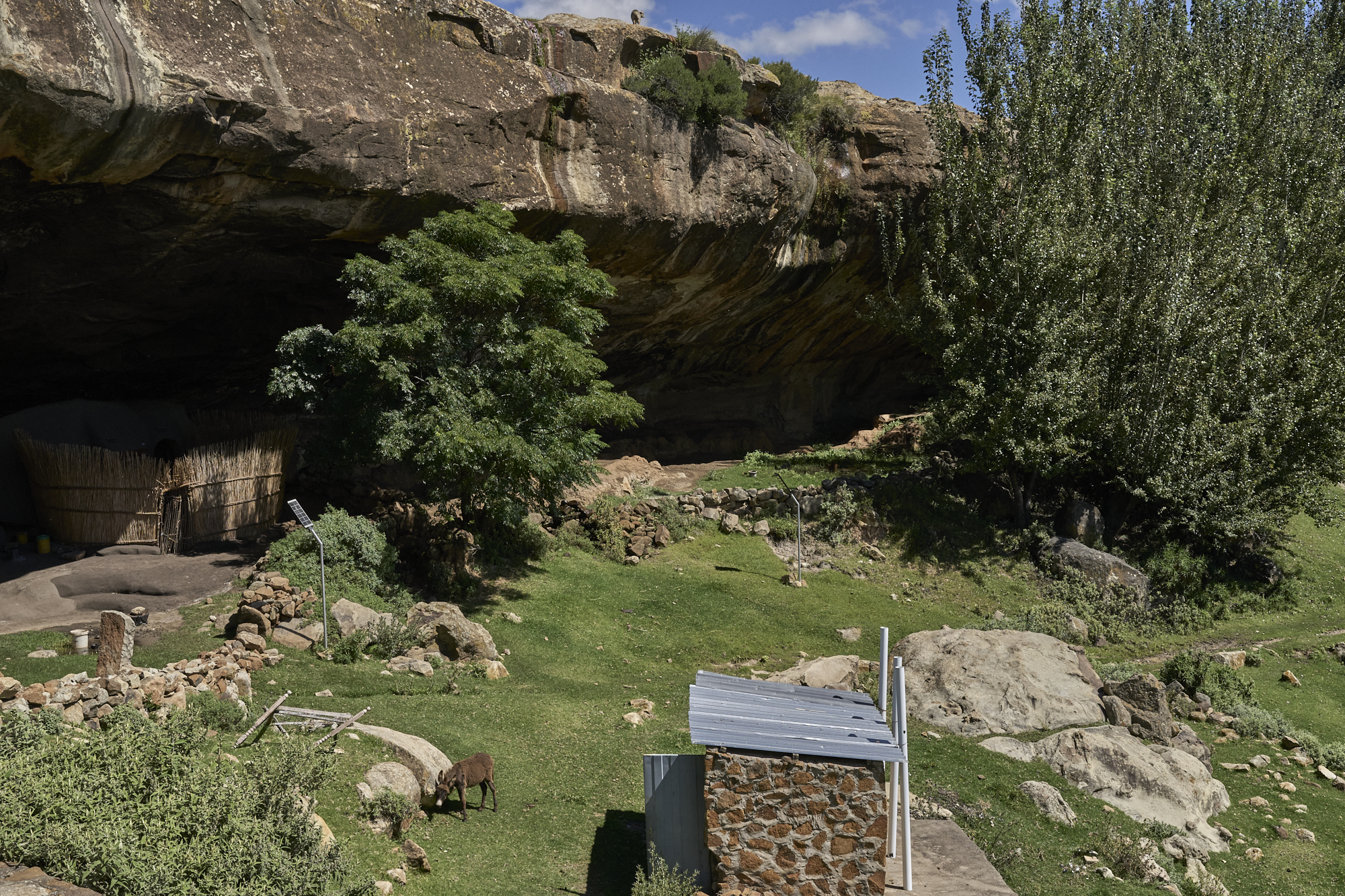
The Ha Kome caves are managed by the local community in partnership with the Lesotho Tourism Development Corporation.
The last resident
Ntefane lives alone in the cave.
“There were five of us in our household,” he says. “But my parents and my three siblings have all passed away. I am the only one left.”
His father, Lebaka Ntefane, and a generation before him lived in the same cave house. Then interior is divided according to clan lineage, he explains, these being the Bataung, Batlokoa and Basia families, who once shared the caves.
Their descendants have moved out, building modern homes in the nearby village of Ha Kome.
“I don’t have money to build up there,” says Ntefane. “But even so, I am comfortable here.”
His life revolves around livestock – herding animals, rotating grazing areas, fetching water, and tending to his fields.
There is no electricity in the caves. At night, he relies on candles for light and cooks on a Primus stove. “I am used to this life.”
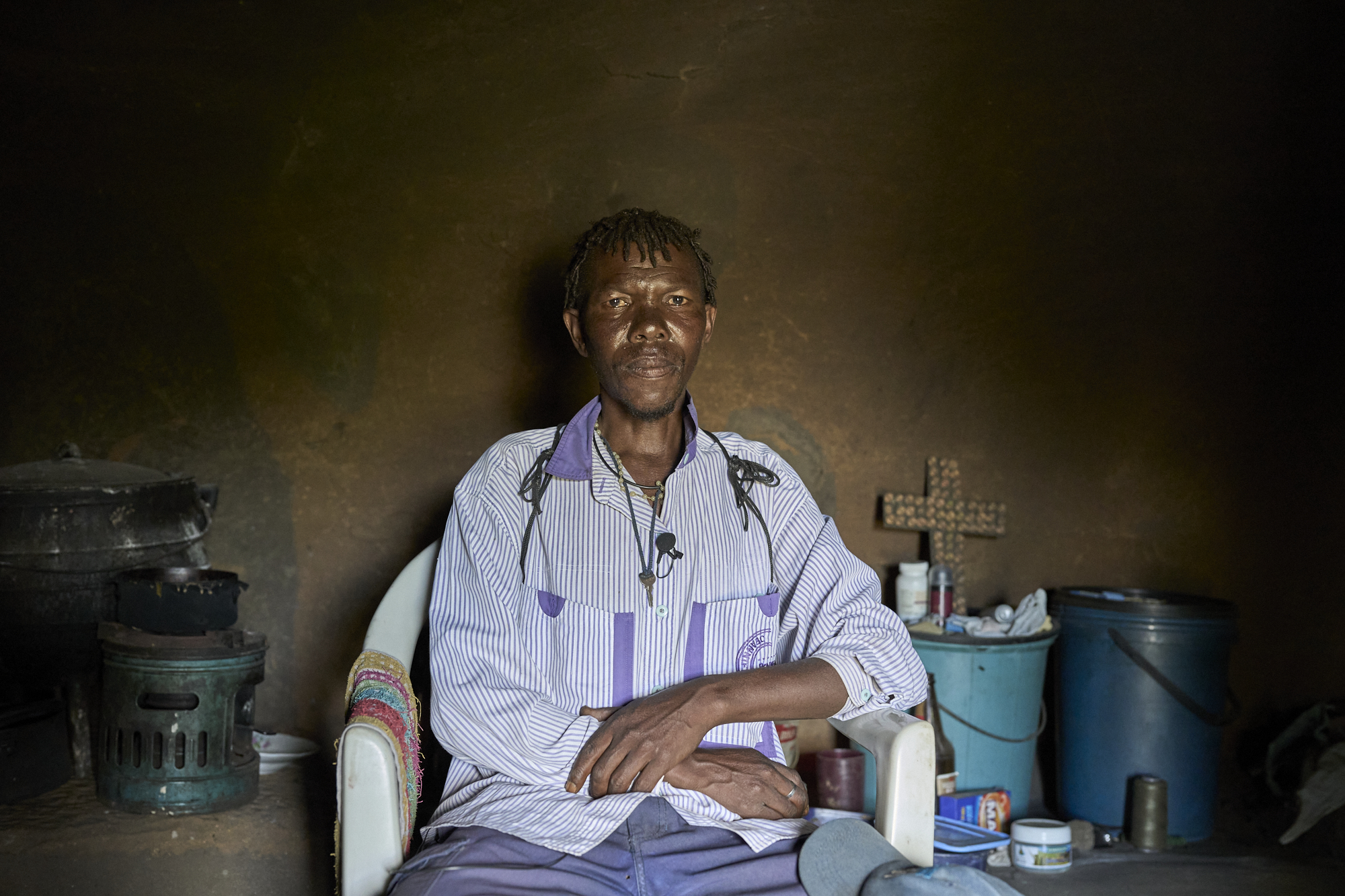
Ntefane Ntefane is the last resident of the Kome Caves.
A refuge from war
According to local tour guide Motlalepula Kome, around 1824, Teleka Kome fled the Lifaqane wars in Matatiele in South Africa’s Eastern Cape with his brothers, Sootho and Makhokolo.
Initially, they settled in open areas, but constant threats, including attacks and cannibalism, forced them to seek better protection.
“They first stayed in a nearby village above the caves called Ha Mateka,” Kome says.
They then moved to Malimong Ha ‘Matjotjo. “While at Malimong Ha ‘Matjotjo, they were close to caves used by cannibals. They then left and came to settle here at Ha Kome, inside these caves.”
“They built these round houses, which we call Libopi, shaped like ovens,” Kome says. “They hid here.”
Local belief is that Teleka Kome, a traditional healer, used medicinal charms to protect the settlement.
Over time, others joined the settlement, including Moteletsane Khutšoane from Thaba Nchu in the Free State, and later Ntefane’s grandfather who is also his namesake from Mokhotlong. He was fleeing the fight between Basotho founder Morena Moshoeshoe I and Batlokoa led by Manthatisi.
The caves also bear older markings of human presence. Faint rock paintings, believed to have been made by San people, remain on the cave walls.
“They were the first people to live here,” says Kome. “They hunted, and when the animals became scarce, they moved on but left these paintings behind.”
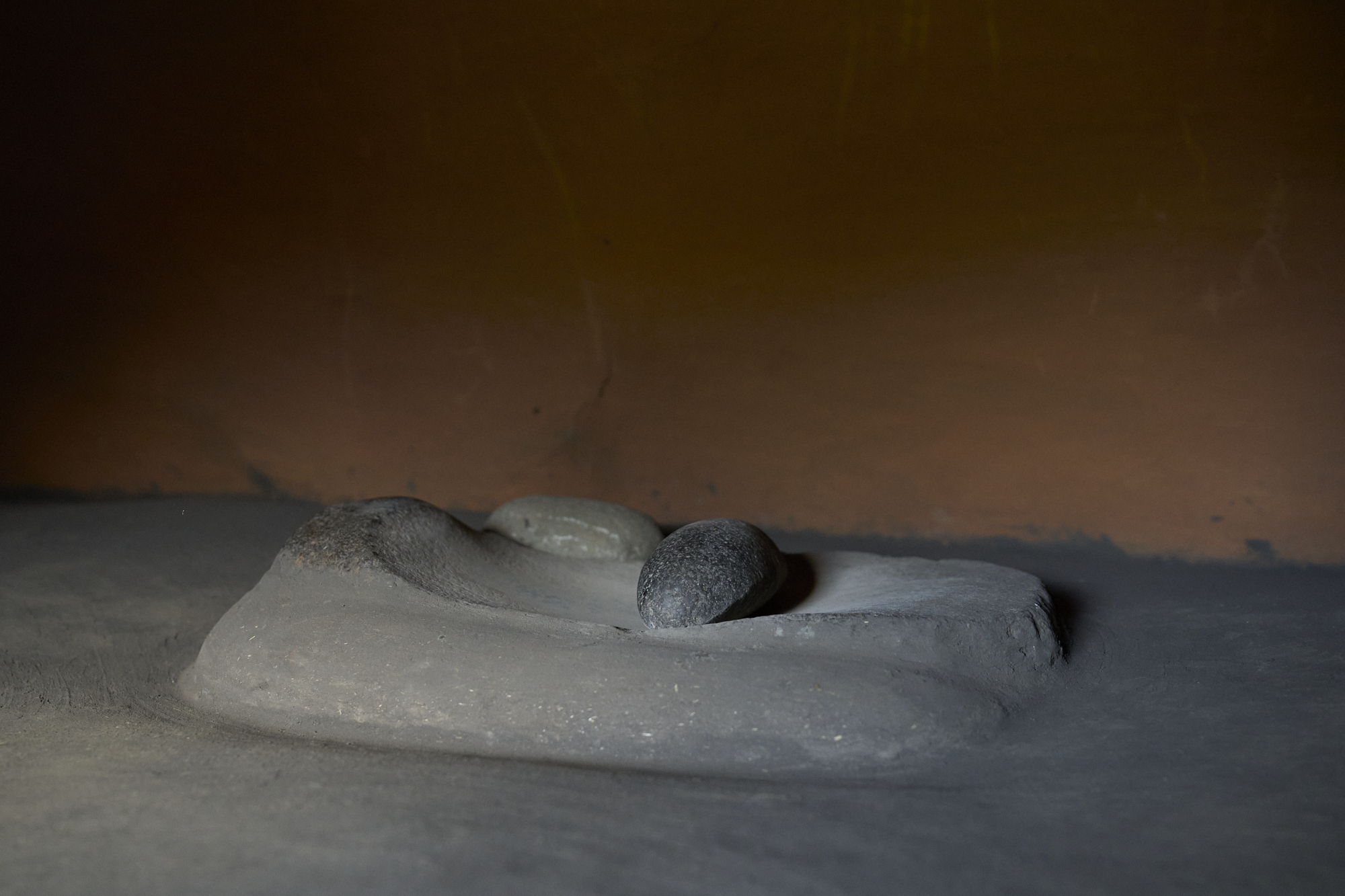
A traditional stone mill that was used by the cave dwellers to grind grains into fresh flour.
Community survival
The Ha Kome caves is managed by the local community in partnership with the Lesotho Tourism Development Corporation. A committee oversees operations, including tour guides and security staff.
“The money we collect helps the community,” says Kome. “It is used for development and to assist families during times of funerals.”
Part of the income is also shared among five descendants of the original cave dwellers, including Ntefane. “Sometimes we receive M200 (M1 = R1), sometimes M500, sometimes M800,” he says.
“It depends on how many tourists come that month. I know I will not go hungry because of it … I can buy soap, paraffin, candles and all the things I need at home,” he says.
The community also uses the tourism income to maintain the steep, rocky road to the caves, a job they do entirely by hand, according to Kome.
Workers earn about M100 a day. “Many visitors turn back when they see how bad it is,” says Kome. “Small cars cannot reach the site.”
Kome says another challenge is the lack of electricity, which discourages overnight stays. “People want to charge their phones, to use their devices,” she says. “When they can’t, they leave.”
Despite these challenges, the caves continue to attract visitors. GroundUp’s visit coincided with a visit by a couple from Australia.
But the future of the site depends on whether interest in the caves can be sustained and whether infrastructure improves.
For now, life at Ha Kome exists in a delicate balance between preservation and change.
Support independent journalism
Donate using Payfast

Don't miss out on the latest news
We respect your privacy, and promise we won't spam you.
© 2026 GroundUp. This article is licensed under a Creative Commons Attribution-NoDerivatives 4.0 International License.
You may republish this article, so long as you credit the authors and GroundUp, and do not change the text. Please include a link back to the original article.
We put an invisible pixel in the article so that we can count traffic to republishers. All analytics tools are solely on our servers. We do not give our logs to any third party. Logs are deleted after two weeks. We do not use any IP address identifying information except to count regional traffic. We are solely interested in counting hits, not tracking users. If you republish, please do not delete the invisible pixel.