
Lesotho’s only snake park: one man’s 30-year battle
Nkhooa Molahlehi has faced witchcraft allegations while building a snake conservation park under a sandstone cliff in Qacha’s Nek
 Add GroundUp on Google

Nkhooa Molahlehi has spent nearly 30 years building Lesotho’s only snake park, largely without government support. Here he fixes electrical wiring for his snake enclosures’ lighting and heating system. Photos: Sechaba Mokhethi
- Nkhooa Molahlehi grew up killing snakes as a child but later turned to saving them, even though this led to rejection and being accused of witchcraft.
- After first applying to secure land in 2006, this month, he finally received a lease for the 2.4-hectare park, removing a major obstacle to attract investment.
- But the park that once housed 121 snakes now holds just 14, and Molahlehi still manages almost every aspect of the park himself.
Beneath a towering sandstone cliff known as Letloepe on the outskirts of Qacha’s Nek near the border between Lesotho and South Africa, Nkhooa Molahlehi gives visitors a tour of the glass-fronted, brick enclosures housing the reptiles that have shaped nearly three decades of his life.
Letloepe is the Sesotho word for the flared hood of a cobra, which the rock formation is said to resemble, and the animals Molahlehi keeps are Lesotho’s native species of snakes.
“Here we have a viper,” he says, pointing to a snake under a rock on dry grass. “We have arranged the rocks and grass, so it still feels like it is in its natural habitat.”

Other snake species include a zebra spitting cobra, a mole snake and a rinkhals.
“All of these, except the mole snake, are among the most venomous snakes found in Lesotho,” he says. “They deserve protection. They should be conserved not only for venom extraction and education, but also to attract tourists, create employment and help preserve our country’s biodiversity.”
He currently has 14 snakes. At its peak, his park housed 121. Their decline tells the story of a project that has spent more than two decades caught between his determination and successive governments that recognised its potential but never fully committed to turning it into a national conservation attraction.
Only in July, after waiting two decades, has Molahlehi finally received the land lease he believes should have been issued in 2006 when he first applied. For him, this is the first time he has legal certainty over the 2.4-hectare property in which he has invested most of his adult life.

A non-venomous mole snake inside one of the park’s enclosures. In nature, it spends much of its life underground feeding on rodents.
A childhood killing snakes
Molahlehi grew up in a remote mountain area, where the districts of Mohale’s Hoek, Thaba-Tseka and Qacha’s Nek meet.
Like many Basotho boys, he spent much of his childhood herding livestock.
“My life revolved around cattle posts, hunting and surviving off whatever the mountains provided. We hunted wild animals, and whenever we saw snakes, we either ran away or killed them,” he recalls.
Every winter, grasslands were burned to improve grazing. Only afterwards did the boys notice dead snakes scattered across the blackened mountainsides.
“At that time, we did not realise we were destroying our country’s wildlife,” he says
Those memories stayed with him until high school when he chose as a development studies research topic: The Conservation of Snakes in Lesotho.
“Teachers asked why I had chosen such a strange topic,” he says.
The problem, his teachers pointed out, was that Lesotho had no snake park, museum or research centre where such work could be studied.
Molahlehi says he then travelled to KwaZulu-Natal, where he found the Pure Venom Snake and Reptile Park. Their relationship continues today. Whenever he encounters snakes requiring specialised treatment, he still turns to the South African facility for assistance.
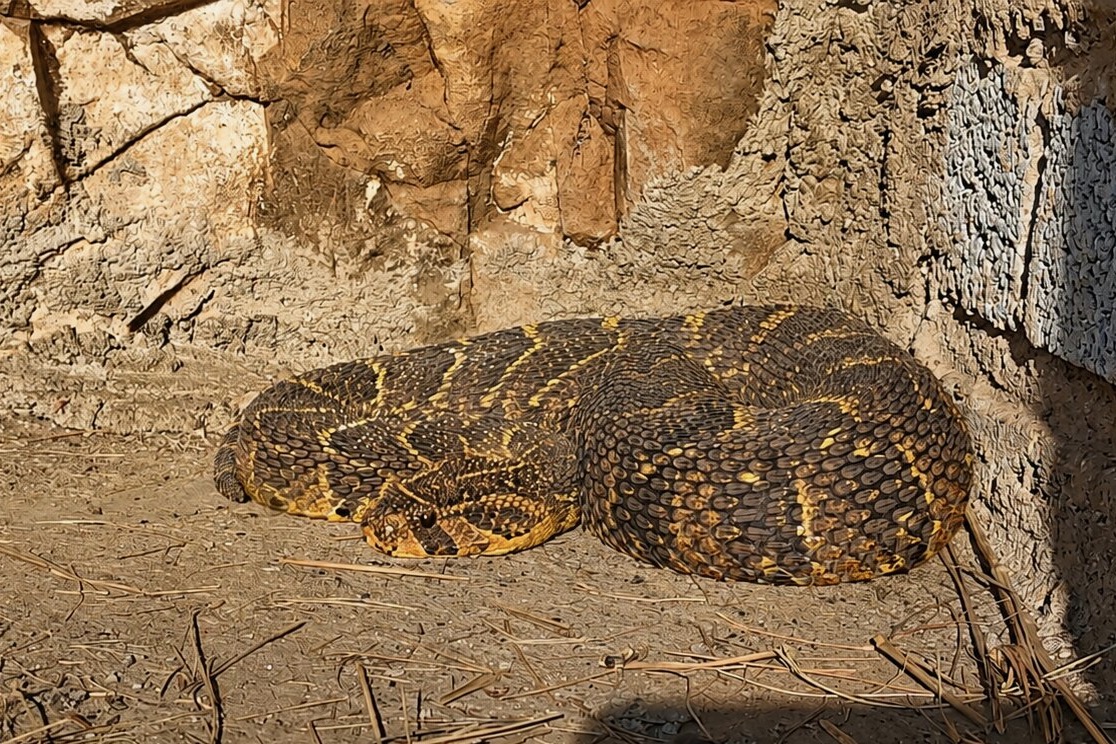
A viper in its enclosure.
Branded a witch
Molahlehi fascination with snakes came at a cost. Villagers began looking at him with suspicion. One day, the village chief summoned him to a community gathering where villagers accused him of carrying evil spirits or practising witchcraft. He says some villagers demanded that he be expelled from the village, but the chief defended him.
The rejection extended to his family. His father feared snakes so much that his mother asked him to leave home before conflict erupted.
He moved to a small shack and started his snake collection while he completed his final years of high school. “I kept the snakes in a small box covered with thick transparent plastic.”
“People were afraid of me,” he says. “I had very little social life, because I was isolated.”
When his parents stopped paying for his education because they no longer understood his obsession with snakes, Molahlehi says he found support from an unlikely source.
In 1998, on his way from an animal post carrying the second snake he had ever captured, he met a German development planner, Fred Walser, who was then working in the district administrator’s office in Qacha’s Nek. (They have since lost contact and we were unable to reach him.)
Before leaving Lesotho for Uganda, he secured sponsorships that enabled Molahlehi to study herpetology in Tanzania, before pursuing criminal investigation and criminology in Zimbabwe, and local government in Zambia.
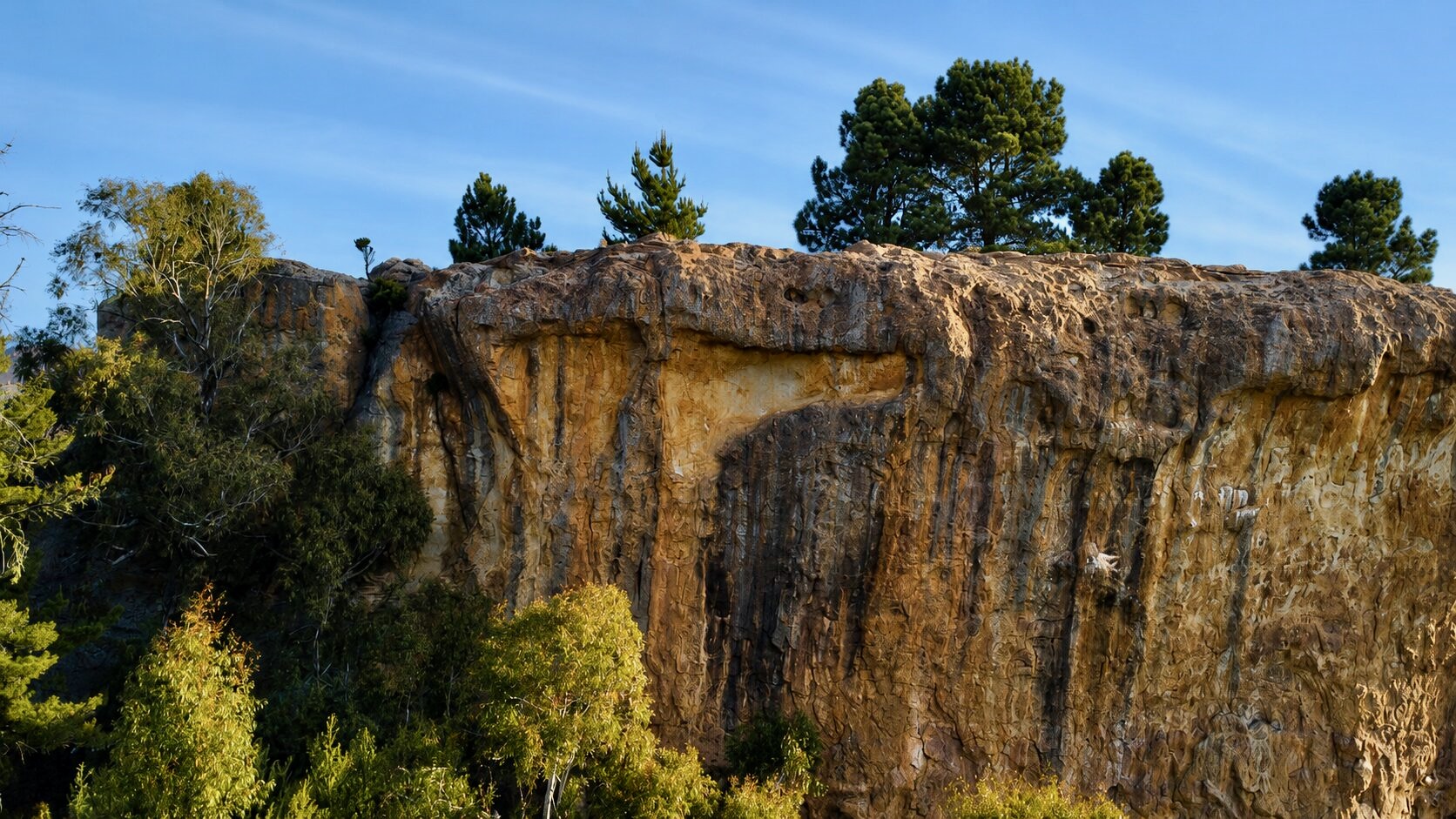
Letloepe cliff, named after the Sesotho word for the flared hood of a cobra, which the rock formation is said to resemble.
Building a snake park
When Molahlehi returned home, he applied in January 2006 for land to build a snake park.
He secured the site in 2010, but he did not receive a formal lease.
“Without the lease there was no security for investment,” he says. “Investors wanted proof that I legally owned the land before putting money into the project. For many years, I feared I could be evicted at any time.”
He continued investing his own salary while working for the German Embassy between 2010 and 2015, hoping eventually to build the park himself.
The buildings visitors see today, he says, were largely financed through his own income and support from the German government.
He says he envisions the park to include accommodation, environmental education, snake rescue services, training for schools and construction companies, venom extraction facilities, and research laboratories.
Yet, on top of his formal training, much of what he learned about snakes came through trial and error.
“When I first started, I knew very little about snake husbandry,” he says. “I didn’t even know what snakes ate.”
Assuming they fed on dead animals, he and village boys collected rats, frogs and tadpoles. The snakes ignored them. “One day we brought them live frogs instead. As the frogs started jumping around, I watched the snakes become active with excitement. That was the first time I realised snakes eat only live prey.”

A viper shelters beneath rocks arranged to imitate its natural habitat inside its snake park enclosure.
Government takes notice
The project eventually began attracting government attention. Between 2015 and 2016, Molahlehi says officials from the Ministry of Tourism, Environment and Culture and the Qacha’s Nek Urban Council visited snake parks in South Africa to study how similar facilities operate.
The ministry later commissioned a four-month feasibility study to determine whether the snake park could become a viable tourism and conservation attraction. The report concluded that redeveloping the existing park was preferable to relocating it.
For Molahlehi, the recommendation appeared to vindicate the years he had already invested in the project.
“I found it painful when people suggested relocating the park,” he said. “I built it here with the support of this community. These are the people who stood by me from the beginning, hunting rats and frogs together.”
The report provided a clear roadmap for developing the park. But Molahlehi says little has changed on the ground. Instead, the project became entangled in Lesotho’s recurring cycles of political instability as successive coalition governments collapsed before completing their terms. Molahlehi believes those political changes repeatedly stalled the project as officials changed.
Years later, the government drafted a Memorandum of Understanding proposing an annual subsidy of M200,000 (M1=R1) to help pay professional staff between April 2017 and March 2019. In return, the government proposed taking a 90% share of the park’s profits.
“I couldn’t understand that proposal,” Molahlehi said. “I had built this project largely on my own, yet the government wanted 90% of the revenue.”
Although he signed the agreement, hoping it would finally unlock government support, he says the promised funding never materialised.
Ministry of Tourism spokesperson Mamolise Falatsa said the ministry was only a beneficiary and referred questions to the Ministry of Environment.
Environment director Qongqong Hoohlo did not respond.
Today, Molahlehi keeps afloat with proceeds from his other farming initiatives. He still manages almost every aspect of the park himself, caring for the snakes, breeding rats and chickens for food, maintaining the enclosures and guiding the occasional visitors through the collection beneath Letloepe.

Nkhooa Molahlehi has spent nearly 30 years building Lesotho’s only snake park, largely without government support.
Support independent journalism
Donate using Payfast

Don't miss out on the latest news
We respect your privacy, and promise we won't spam you.
Next: Five gambling myths that may bankrupt you
Previous: Not a single house has been built for land claimants after 26 years
© 2026 GroundUp. This article is published under the GroundUp Republication Licence Version 1.0. Email [email protected] to request permission to republish.