
Court halts solar company from seizing Lesotho’s assets
The Supreme Court of Appeal in South Africa has overturned a High Court ruling that allowed a German solar company to attach Lesotho state assets
 Add GroundUp on Google
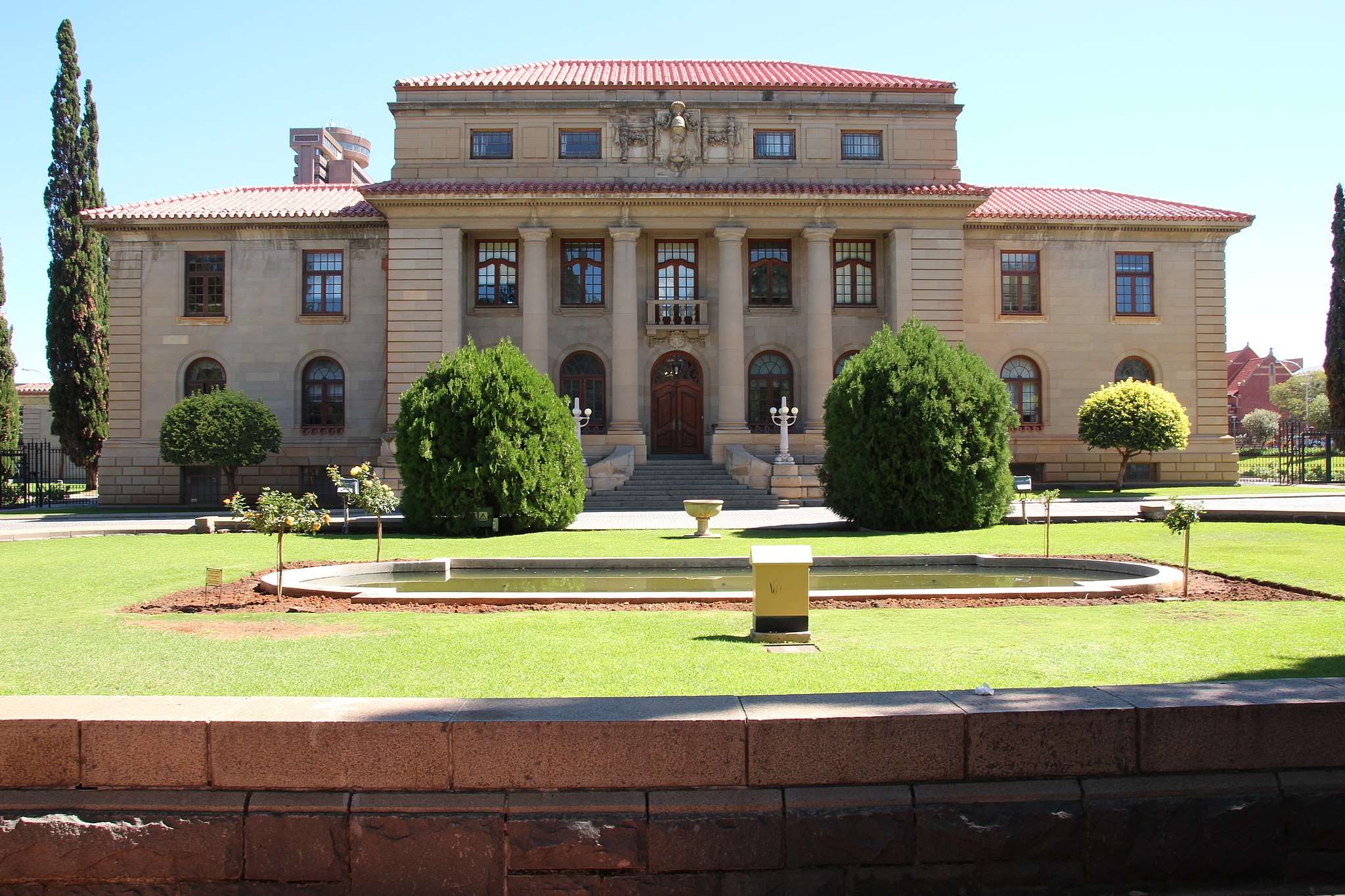
The Supreme Court of Appeal has overturned a Gauteng High Court ruling that allowed German firm Frazer Solar to attach Lesotho state assets worth R950-million. Photo: Ben Bezuidenhout via Wikimedia (CC BY-SA 4.0)
- South Africa’s Supreme Court of Appeal (SCA) has overturned a Gauteng High Court ruling that allowed German firm Frazer Solar to attach Lesotho state assets worth R950-million.
- The dispute arose after the company said Lesotho had reneged on a massive renewable energy contract.
- Lesotho said the contract was unlawfully signed and concluded without cabinet approval or proper procurement processes.
- Frazer Solar had used the arbitration award to pursue Lesotho assets internationally, including attempting to seize water royalties from the Lesotho Highlands Water Project, a shareholding in a cable company, and the bank account of Lesotho’s embassy in Brussels.
- Meanwhile, Lesotho’s Court of Appeal has revived a corruption prosecution against the former minister who signed the original agreement.
Lesotho has won a significant legal victory in South Africa to stop the enforcement of an arbitration award in favour of the German company Frazer Solar GmbH, worth €50-million (R950-million).
In a judgment delivered on Friday, South Africa’s Supreme Court of Appeal (SCA) overturned an earlier decision by the Gauteng Division of the High Court in Johannesburg, which had dismissed Lesotho’s application to set aside the arbitration award.
The SCA ruled that the High Court had wrongly concluded that Lesotho’s application lacked merit; had failed to properly consider allegations that the underlying agreement had been unlawfully concluded; and that the arbitration had proceeded without proper notice to the Lesotho government.
In September 2018, Frazer Solar signed a major solar and energy-efficiency project agreement with the Lesotho government. According to Frazer Solar’s website, the project was intended to include 40,000 solar water heating systems, 20MW of solar photovoltaic capacity, one million LED lights, and 350,000 solar lanterns nationwide.
Frazer Solar says the project was to be financed through the German government via development bank KfW-IPEX Bank GmbH.

The company claimed the project had been approved by then Prime Minister Thomas Thabane and was intended to reduce Lesotho’s electricity imports while expanding access to energy for rural communities.
But the project quickly became one of the most controversial state contracts in Lesotho’s recent history.
Breach of contract
At the centre of the dispute was a former minister in the prime minister’s office, Temeki Tšolo, who signed the agreement on behalf of Lesotho.
The government later argued that Tšolo had no authority to bind the state to the contract and that mandatory procurement and constitutional requirements had been ignored.
The agreement contained an arbitration clause requiring disputes to be resolved through arbitration in South Africa, and Frazer Solar initiated proceedings in December 2019.
The company accused Lesotho of breaching the agreement after the project stalled. It eventually obtained an arbitration award of €50-million, which in 2020 was made an order of the Gauteng High Court. Lesotho was not represented in the matter.
Assets attached
That order gave Frazer Solar the ability to pursue enforcement proceedings against Lesotho’s assets internationally.
According to Frazer Solar’s website, the company sought to attach multiple Lesotho assets and revenue streams.
It served notice on the Trans-Caledon Tunnel Authority SOC Ltd, directing the transfer of royalties annually owed to Lesotho under the Lesotho Highlands Water Project. The company also said it had moved to attach payments allegedly owed by Eskom to Lesotho in connection with the water project.
Frazer Solar said that the Supreme Court of Mauritius had recognised the arbitration award and provisionally seized Lesotho’s shareholding in the West Indian Ocean Cable Company held through the Lesotho Communications Authority.
Frazer Solar also announced in October 2022 that it had obtained an order in Belgium allowing it to seize Lesotho assets there “valued at €50 million … including the bank account of the Lesotho embassy in Brussels”.
Lesotho goes to court
Lesotho eventually launched proceedings in South Africa seeking rescission of both the arbitration award and the order making it enforceable.
Lesotho argued that the award had been obtained improperly and that the agreement upon which it was based was unlawful and invalid. It noted that the High Court of Lesotho had declared the agreement unconstitutional and unlawful.
That judgment, delivered in November 2022, found that Tšolo lacked authority to conclude the agreement on behalf of the government and that mandatory procurement laws had been ignored. The SCA noted that Lesotho had argued that the agreement “was concluded in breach of the Constitution of the Kingdom of Lesotho, the Public Financial Management and Accountability Act 2011 and the Public Procurement Regulations 2007”.
Lesotho also argued that the agreement had “not been approved by Cabinet” and had not gone through the legally required procurement processes.
Frazer Solar disputed those claims and argued throughout the proceedings that Tšolo had authority to bind the government. The company further argued that the arbitration award had already become final and binding.
The Gauteng High Court dismissed Lesotho’s rescission application, concluding that Lesotho failed to provide satisfactory explanations for delays in bringing the application and had not demonstrated prospects of success.
The SCA ruling
Lesotho appealed to the Supreme Court of Appeal.
In its ruling delivered on 22 May, the SCA found that the High Court did not properly consider the significance of the Lesotho High Court judgment declaring the agreement unlawful and unconstitutional.
The appeal court also found that the High Court had not sufficiently considered Lesotho’s allegation that it had not been properly notified of the arbitration proceedings.
The SCA said, “the allegations of fraud and concealment required careful consideration”. The rescission application could not be determined without properly considering whether the underlying agreement itself was lawful.
The court said public policy considerations were central to the dispute because the matter involved allegations of constitutional and procurement violations relating to a major public contract.
It stated that “a court cannot enforce an agreement that is contrary to public policy”.
The SCA said the Lesotho High Court had already declared the agreement unconstitutional and invalid, and held that the implications of that finding required fuller consideration.
The court accepted that there were “serious disputes of fact” regarding both the conclusion of the agreement and the arbitration proceedings that followed.
But the SCA ultimately concluded that Lesotho had established sufficient grounds for rescission to justify reopening the matter. It therefore upheld Lesotho’s appeal, set aside the order dismissing the rescission application, and remitted the matter for reconsideration.
Corruption
In Lesotho, questions surrounding the legality of the agreement eventually resulted in criminal proceedings against Tšolo, who was charged by Lesotho’s Directorate on Corruption and Economic Offences (DCEO) in 2022 in connection with the Frazer Solar agreement.
The charges formed part of the government’s broader allegations that the agreement had been unlawfully concluded and concealed from relevant state authorities.
In November 2025, however, the Lesotho High Court granted Tšolo a permanent stay of prosecution. Frazer Solar later claimed this showed allegations surrounding the agreement were fanciful, fabricated and without merit.
“Falsely accused Tšolo is now permanently free from these egregious allegations,” the company noted on its website.
But the DCEO appealed that ruling, and on 15 May, just a week before the SCA judgment, Lesotho’s Court of Appeal overturned the permanent stay and revived the corruption prosecution against Tšolo. It is expected to continue before the High Court in Lesotho.
Support independent journalism
Donate using Payfast

Don't miss out on the latest news
We respect your privacy, and promise we won't spam you.
Next: Khayelitsha streets fill with rainbow flags for pride march
Previous: Blind soccer coach keeps Motherwell teens out of crime
© 2026 GroundUp. This article is published under the GroundUp Republication Licence Version 1.0. Email [email protected] to request permission to republish.