
Langa learners beat the heat in their “pocket forest”
Siyabulela Primary School learners can escape their sweltering classrooms
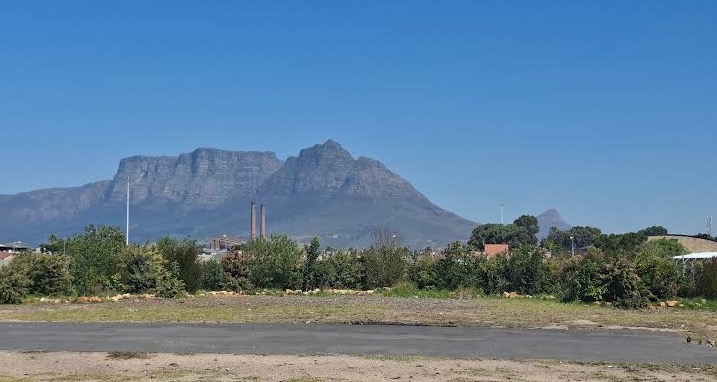
The “pocket forest” at Siyabulela Primary School in Langa, Cape Town, offers learners an escape from the heat. Photo: Jacques Malherbe
As Cape Town sweltered in Wednesday’s heat, the temperature in one of the classrooms in Siyabulela Primary School topped 40 degrees Celsius. But grade 7 learner Cebu Mnqwazi and his friends could escape to the school’s “pocket forest”, where the temperature was just 29 degrees.
The Langalibalele “pocket forest”, set up by the school together with organisations Sugi and Mzanzi Organics, is a 300 square metre piece of land planted with more than 1,000 indigenous trees.
GroundUp measured the temperature in the prefab classroom at 42 degrees - too high for learners to concentrate, says teacher Yamkela Dyakopi.
But with the temperature in the forest 13 degrees lower, learners “can come outside and breathe”, says Principal Sithembele Khamsholo, who oversees the use of the area for lessons and recreation.

“The forest gives me peace of mind,” said Cebu, who was involved with the planting of the forest two years ago. “I just like to sit in the shadow between the trees.”
“We’ve measured temperatures in schools in excess of 40 degrees,” says Professor Caradee Wright who served as technical advisor for the Department of Health’s National Heat Health Action Guidelines. “That temperature is not conducive to learning.”
“Lower-income communities are more at risk from extreme heat,” she says.
Aghmad Gamieldien of Mzanzi Organics hopes the project will have longer lasting impacts on ecological inequality. “The forest is a way to deal with spatial apartheid,” he said. “We’re bringing green spaces closer to communities instead of them having to travel out.”
At least for learners of Siyabulela Primary, this approach seems to have taken root. “They own this forest,” says Dyakopi. “They feel like it is a part of them.”
Support independent journalism
Donate using Payfast

Don't miss out on the latest news
We respect your privacy, and promise we won't spam you.
Next: In Photos: How people survived Cape Town’s heat on Wednesday
Previous: Tongaat: A ticking time bomb set to go off in April
© 2026 GroundUp. This article is licensed under a Creative Commons Attribution-NoDerivatives 4.0 International License.
You may republish this article, so long as you credit the authors and GroundUp, and do not change the text. Please include a link back to the original article.
We put an invisible pixel in the article so that we can count traffic to republishers. All analytics tools are solely on our servers. We do not give our logs to any third party. Logs are deleted after two weeks. We do not use any IP address identifying information except to count regional traffic. We are solely interested in counting hits, not tracking users. If you republish, please do not delete the invisible pixel.