
Is construction at the Lesotho Highlands Water project polluting rivers?
The Lesotho Highlands Development Authority will refer suspected pollution for testing
 Add GroundUp on Google
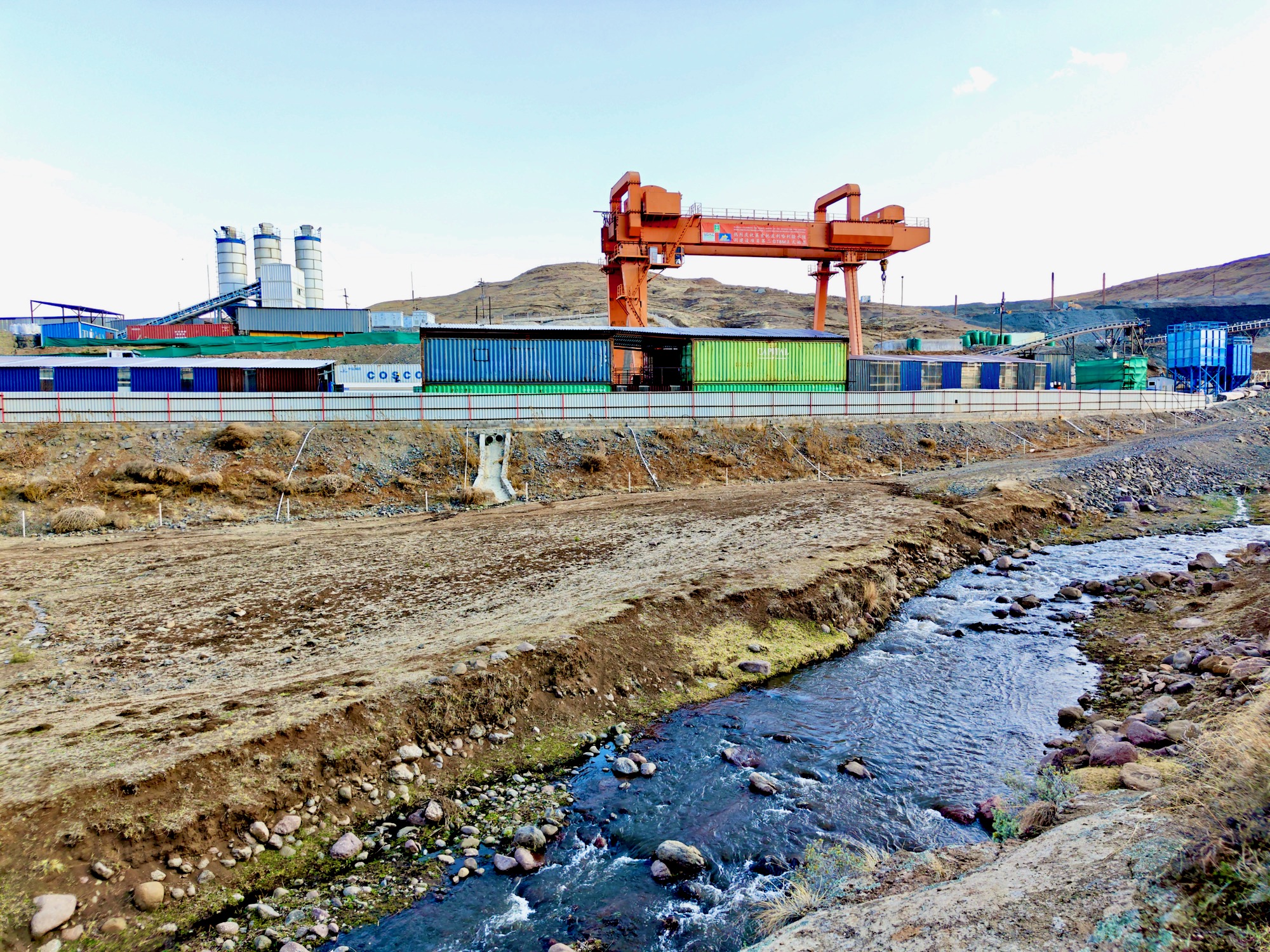
The Lesotho Highlands Development Authority will refer suspected pollution for testing. We previously revealed that Kopano Ke Matla’s wastewater-treatment systems were found to be non-compliant, despite repeated warnings. The photo shows the Sekoai River and the tunnel access site. Photo: Sechaba Mokhethi
- A contractor responsible for work on the Lesotho Highlands Water Project was suspended for 18 days last year for dumping acidic and oily wastewater into nearby rivers and the Katse reservoir.
- Now residents along the Sekoai River near a construction site are reporting seeing suspected pollution in the waterways.
- The Lesotho Highlands Development Authority says it will refer evidence of suspected pollution to the project engineer for inspection and testing.
Concern continues about pollution flowing through the Sekoai River in Mokhotlong near a Lesotho Highlands Water Project construction site. The contractor responsible for the site was allowed to resume work last year following a suspension for dumping acidic and oily wastewater into nearby rivers and the Katse reservoir.
In May 2025, we reported that Kopano Ke Matla Joint Venture, which is building the Polihali transfer tunnel, was suspended for discharging oily and acidic wastewater into nearby rivers and the Katse reservoir. The reservoir supplies drinking water to South Africa. The suspension sent home 1,400 workers on the M42-billion (M1 = R1) project between Lesotho and South Africa.
During a visit to Mokhotlong in August, we observed wastewater discharging from Kopano Ke Matla’s tunnel boring machine access adit at Polihali.
The perimeter fence is approximately ten metres from the river. Wastewater appeared to flow continuously from an outlet pipe onto the land before reaching the river.
On 7 September, residents of Tloha-re-Buoe said foamy water was seen flowing in the Sekoai River in the same tunnel access area.
Villager Thomello Ramotloenya said he went to the river that morning to graze his animals only to find foamy white bubbles in the river.
The Lesotho Highlands Development Authority (LHDA) has said it will refer the evidence of suspected pollution we collected to the project engineer for inspection and testing.
Previous wastewater-treatment failures
We previously revealed that the supervising engineers found Kopano Ke Matla’s wastewater-treatment systems to be non-compliant, despite repeated warnings.
A suspension letter dated 5 May 2025 stated that the contractor had addressed only three of 26 issues identified as non-compliant. The concerns included missing effluent test results, a malfunctioning sulphuric acid dosing pump, high pH levels in treated water, and evidence of oil contamination.
The engineers had raised concerns about untreated construction wastewater being discharged into the Ntšupe River, untreated tunnel effluent in the Katse reservoir, and failures to maintain sewage and wastewater-treatment plants.
Responding to our questions, LHDA spokesperson Mpho Brown said the suspension “was a precautionary and corrective step, taken to address identified shortcomings in wastewater treatment before they could result in harm”.
Work resumed on 25 May after the project engineer inspected the upgrades. Independent laboratory results confirmed that Kopano Ke Matla’s treated effluent met the required standards, he said.
Brown said the contractor was required to upgrade the treatment system, including additional settling capacity and pH correction, revise its operating procedures, and appoint a qualified process specialist to run the plant.
“The contractor revised the wastewater treatment plant method statement to provide for additional clarifier capacity for primary settlement, a pH correction stage ahead of final discharge, and a firm commitment to specialist supervision of the plant. The revised method statement was approved by the engineer.”
LHDA to refer suspected pollution for testing
Responding on behalf of Kopano Ke Matla, Brown said the discharge observed during our visit was part of the approved wastewater-treatment system.
“The outlet observed during your visit is the plant’s designated discharge point. It is an approved and monitored part of the treatment system, through which only treated effluent is released. The LHDA has received no complaints or reports of foaming, discolouration or pollution of the Sekoai River linked to the works.”
Brown noted that an inspection and tests had not yet been carried out.
Should non-compliant effluent quality be identified, Brown said the discharge would be stopped immediately and Kopano Ke Matla would be required to correct the cause before discharge resumed.
“The LHDA will take whatever further action the contract allows. The LHDA remains committed to transparency with the communities of the project area and to holding its contractors to the environmental standards the project requires.”
Brown did not respond to follow-up questions.
SA minister raised concerns
In May 2025, South African Minister of Water and Sanitation Pemmy Majodina’s office issued a statement expressing concern about reports of non-compliance over effluent discharge by a contractor responsible for constructing the Polihali transfer tunnel.
Referring to the May 2025 suspension, the minister said a meeting had been held with a South African delegation in the Lesotho Highlands Water Commission and the Trans-Caledon Tunnel Authority. “The suspension was prompted by persistent failures to meet treatment standards across multiple sites, despite prior warnings and formal Non-Conformance Reports emanating from concerns on the inadequate management and treatment of wastewater and effluent generated during tunnel construction activities.”
The DA also called on Majodina in May 2025 to ask the Auditor-General to investigate financial and environmental concerns surrounding the project.
“Construction has again halted at LHW phase 2 due to a contractor polluting nearby rivers and the Katse Dam, contaminating crucial drinking water supplies with acidic wastewater. This irresponsible breach of environmental standards poses serious risks to the existing water supply, which millions of South Africans rely upon.”
The DA stated that the project’s financial and environmental integrity was essential to securing affordable water supplies across Gauteng, the Free State, the North West and beyond. “Municipalities already struggle with significant debts exceeding R28-billion owed to water boards. Further financial mismanagement and environmental setbacks could severely compromise water affordability and sustainability, intensifying local water crises.”
This story was produced by MNN Centre for Investigative Journalism and syndicated by the IJ Hub on behalf of its member centre network in Southern Africa. It is co-published with GroundUp.
Support independent journalism
Donate using Payfast

Don't miss out on the latest news
We respect your privacy, and promise we won't spam you.
© 2026 GroundUp. This article is published under the GroundUp Republication Licence Version 1.0. Email [email protected] to request permission to republish.