
Immigrant traders abandon shops in Springs after threats
Vigilante groups in Kwathema say immigrants must be out by 30 June or else
 Add GroundUp on Google
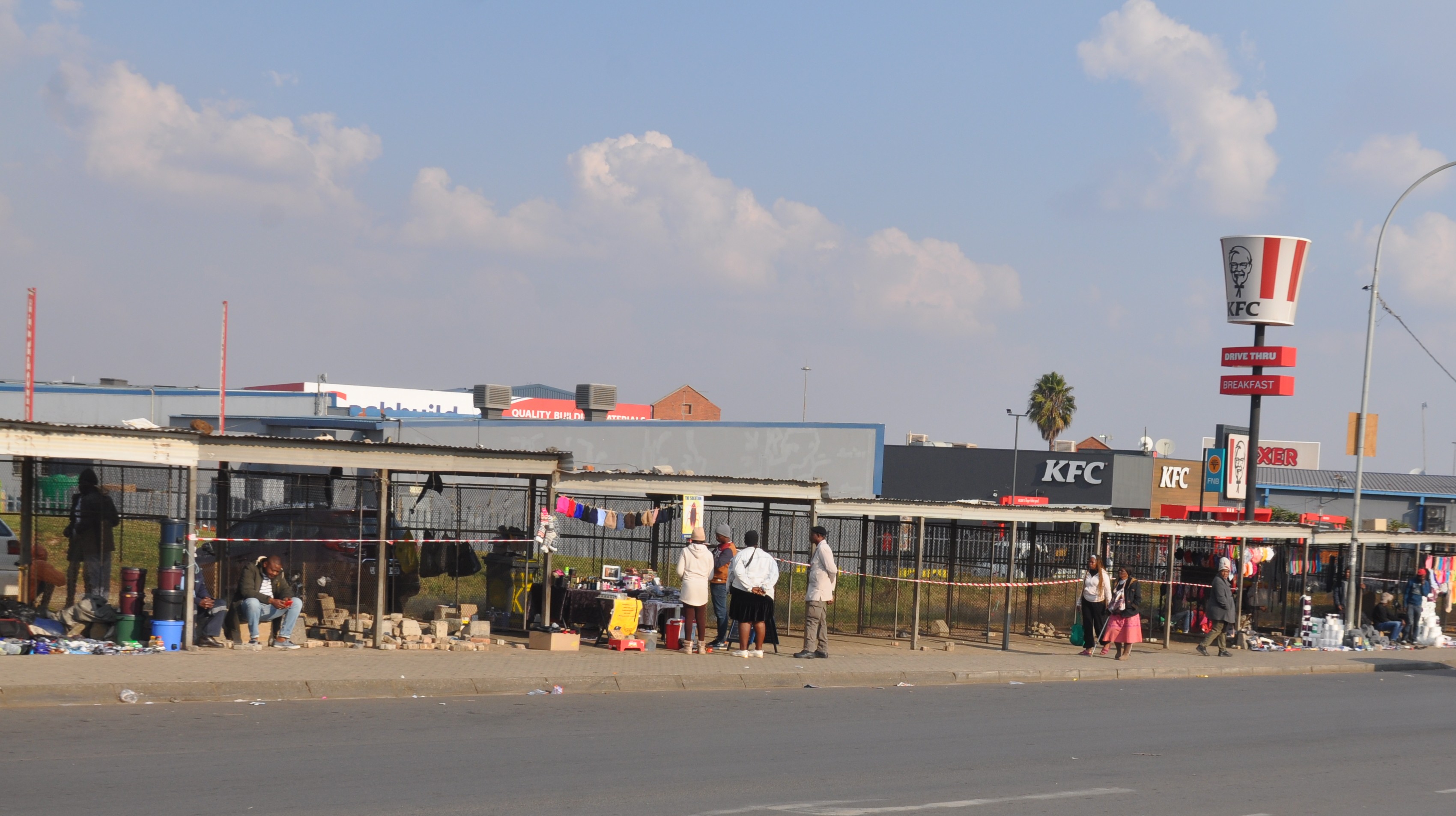
Once a busy sidewalk with informal traders has become a ghost town in Kwathema’s White City as immigrant shop owners threatened to give up their businesses. Photos: Kimberly Mutandiro.
- Following protests by March and March in Springs in recent weeks, many immigrant informal traders have closed their stalls because they fear further attacks.
- Many immigrants have fled the community and those who remain say they are trying to raise money to leave before 30 June.
- This is not the first time the community has been upended by a wave of xenophobic attacks.
Vainet Spatini moved to South Africa from Mozambique in March to run a chips and bunny-chow shop from her brother’s home in Kwathema’s White City in Springs.
Every month, Spatini returns home to visit her three children and to get her passport stamped at the border. Towards the end of May, just after paying rent and sending money to her children, a mob of about 15 people broke away from a March and March protest and went around Kwathema closing stalls and food containers run by immigrants. Some stalls made from zinc sheeting were destroyed.
Weeks later, most of the immigrant shop owners are too scared to reopen or unable to reopen as most of their wares were looted. They say they were told that South Africans will take over their businesses after the 30 June deadline for all undocumented immigrants to leave the country set by groups like March and March.

Kwathema has a long history of anti-immigrant action. In 2021 and in 2024, community members forcefully closed spaza shops run by Somalis, Pakistanis, Bangladeshis and Ethiopians, accusing them of selling expired goods. Their container shops were ransacked. This also happened in neighbouring Duduza in 2018.
This week, we spoke to several immigrants in Kwathema who say problems started with the March and March protest in May. Since then, there have been more sporadic protests.
Walking through Kwathema, we found many food spots and stalls previously operated by immigrants either empty or ransacked.
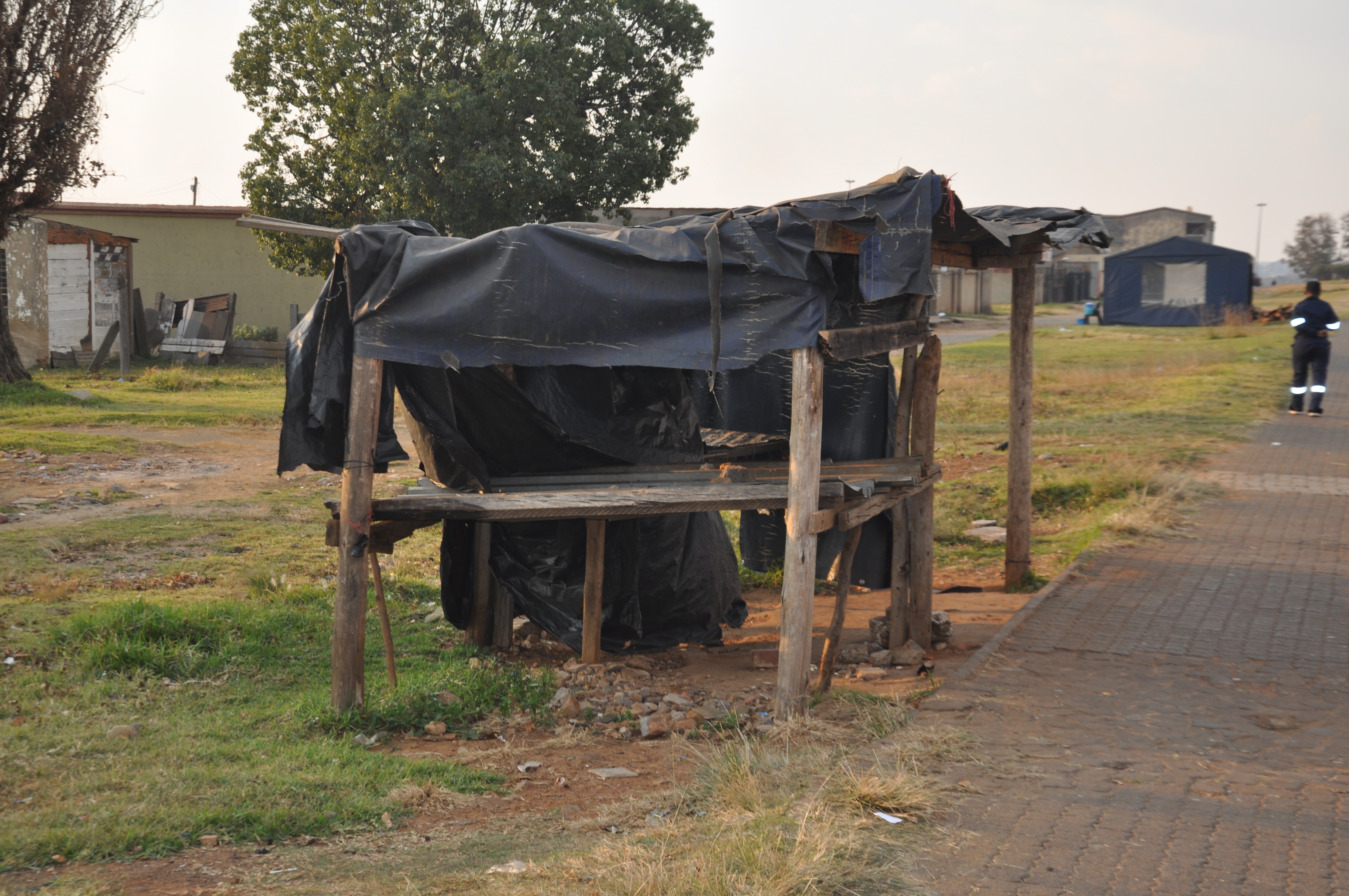
A fruit seller has abandoned his stall after he was chased away by March and March supporters earlier this month.
Recalling the terrifying moments when the mob attacked her shop and forced her to close, Spatini said, “They do not care that I am legally in the country.”
Spatini said she had pleaded with the mob to allow her to continue operating to raise enough money to go home but they refused. Her landlord told her to close, claiming the community threatened to burn down his house if she continued to operate there.
All her stock, about 40 bags of potatoes, bread and other ingredients have spoiled.
“My brother and I are trying to raise money to go home. At least at home we will be safe,” said Spatini.
Fatima Mabonda has been selling snacks and homeware at the rank in Duduza since 2015. She travelled regularly to Mozambique to keep her status legal and her passport stamped. But in early June, mobs began to terrorise her, she says.
While many people have opted to return, Mabonda does not want to go empty-handed. But business has slowed down due to tensions in the community.
“They say people with passports are no longer allowed, that we are taking away jobs and business opportunities, and that locals will take over after 30 June,” she said.
Sergeant Maxwell Mabunda, the SAPS spokesperson for Ekurhuleni District, said police are maintaining visibility in Springs.
Asked how police planned to deal with action around 30 June, Mabunda said police would “always act to protect all people in the country against any criminal elements”.
“Anything which is reported to the police, we will always act within the laws of the country, and we promise to protect everyone,” Mabunda said.
Sharon Ekambaram, head of the refugee and migrants programme at Lawyers for Human Rights(LHR) and Kopanang Africa Against Xenophobia member, said the country should focus on solving the unemployment crisis.
She said the government needs to enforce its own policies on migration as set out in the Immigration Act.
Ekambaram said KAAX and LHR are in talks with refugees and asylum seekers, many of whom are documented but have been harassed by South Africans.
“Many are afraid for their lives, and all are severely traumatised by just the extent of hate and threats that are posted on social media,” she said.
Support independent journalism
Donate using Payfast

Don't miss out on the latest news
We respect your privacy, and promise we won't spam you.
Next: Hundreds of Zimbabweans camp outside consulate in Cape Town
Previous: R1-million project for six school toilets abandoned three years ago
© 2026 GroundUp. This article is published under the GroundUp Republication Licence Version 1.0. Email [email protected] to request permission to republish.