
CPUT students defy order to leave residences
Only a few students have left their residences after university gave them 24-hours to leave
 Add GroundUp on Google
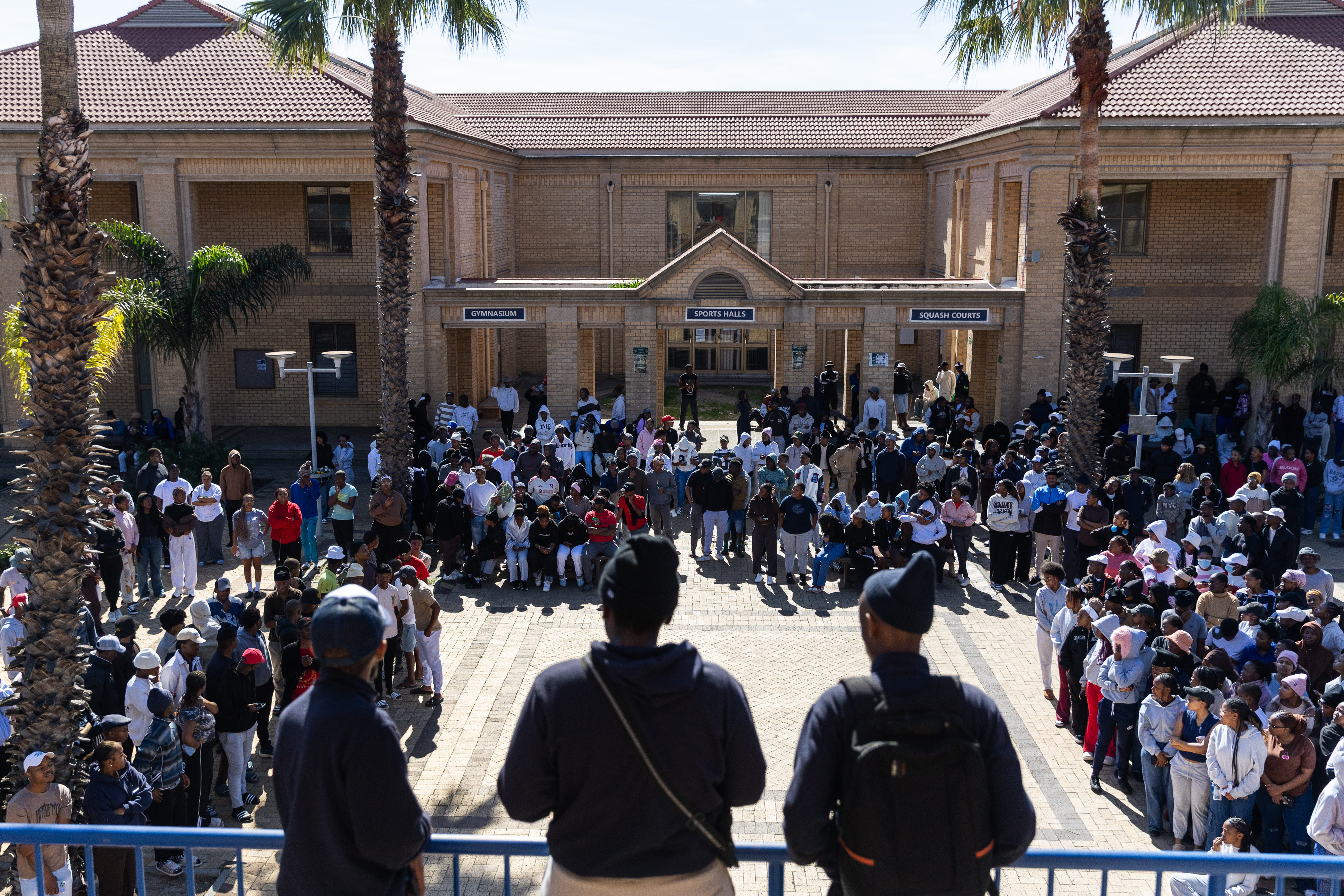
During a mass meeting on Wednesday, Cape Peninsula University of Technology student leaders told students not to vacate their residences. Photos: Ashraf Hendricks
- On Tuesday, the Cape Peninsula University of Technology told students to leave their residences within 24 hours.
- This followed days of protest, which included incidents of violence and destruction of property.
- But by 4pm on Wednesday, only a few students had left.
- The university said it aimed to de-escalate violence and students would not be evicted.
Most students at the Cape Peninsula University of Technology (CPUT) remained at their residences on Wednesday, despite being told they have 24 hours to vacate.
This comes after days of protest about the financial exclusion of students. Some demonstrations have turned violent and led to the destruction of property and people being assaulted.
On Tuesday, the university told students to leave by 4pm on Wednesday.
But during a mass meeting at the Bellville campus just after lunchtime on Wednesday, student leaders told the crowd to stay put. By 4pm, only some students had left.
Thabang Nhlapo, a civil engineering student from Limpopo living in student accommodation in Bellville, said he did not want to return home but would have to buy a ticket for Friday if he was forced to leave. He has had to ask his parents for money to go back home.

He described the university’s decision as harsh, saying students had not been given sufficient time to make arrangements.
During the mass meeting on Wednesday, Central Student Representative Council (SRC) deputy president Membathisi Tumelo Ndzimande told students that the decision to evacuate students was unconstitutional.
He said many students did not have money to travel home at short notice, while some students were completing work-integrated learning, internships or other work commitments in Cape Town.
Students said that, during past protests, the university has cut off WiFi and water at residences.
CPUT spokesperson Lauren Kansley said there was no plan to “violently evict anybody” and that the “emergency evacuation has been successful”.
“The aim of the emergency evacuation was to de-escalate the violence … and provide clear communication to our community to say it’s okay to leave,” said Kansley.
She said that student leaders have not attended meetings set up with the CPUT council. “The doors to meaningful and constructive engagement are open,” she said.
She said residence coordinators were working with vulnerable students to determine how they could be supported to return home safely. Security has also been increased to ensure students leaving campus were not intimidated, she said.
Kansley said classes will only continue when campuses are safe.
Kansley confirmed that the current CPUT student debt is R2.1-billion (not R4.2-billion as reported by Parliament in May this year).
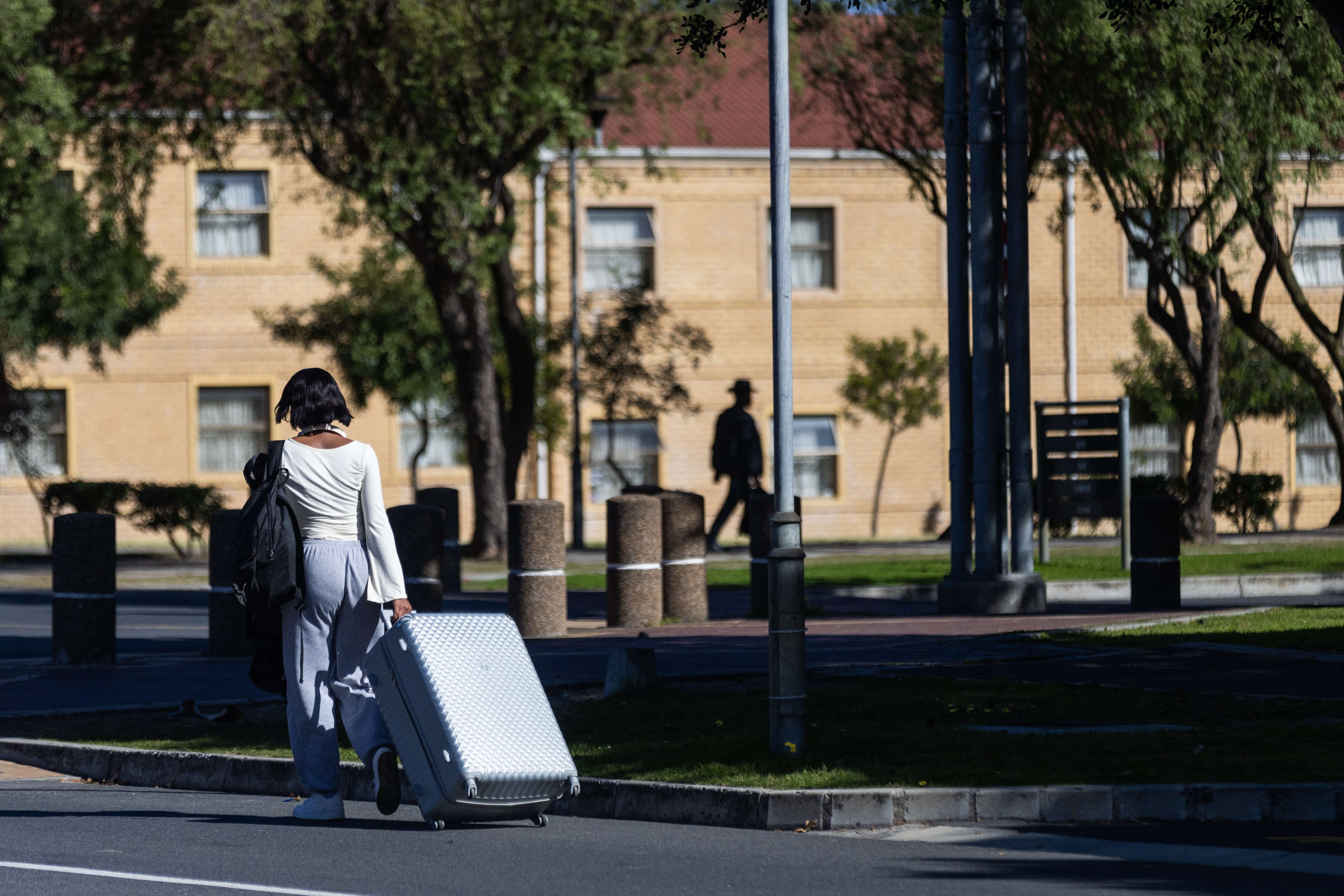
Only a few students left the residences on Wednesday afternoon.
Protesters had demanded that a proposed financial recovery plan for 2027, which would introduce a registration fee of up to R7,000 for non-NSFAS students, be withdrawn.
CPUT’s council announced on 12 August that the financial recovery plan would be withdrawn “for further explanation, clarification and thorough consultation”.
But protests continued. On Tuesday, the SRC submitted a 20-page memorandum to Parliament’s Portfolio Committee on Higher Education. Demands included maintenance and refurbishment of all CPUT-owned residences, the release of academic transcripts for students who owe money, and the reduction of residence fees that exceed the NSFAS accommodation limit.
Ndzimande said on Wednesday that while other universities have decided to stop withholding academic certificates from in-debt students, CPUT has not.
Public Protector Kholeka Gcaleka recommended on Tuesday that academic certificates no longer be withheld as a form of debt collection. Gcaleka also found systemic issues within NSFAS, which have led to “direct and foreseeable prejudice, including food insecurity, accommodation instability and exposure to unsafe living conditions”, Gcaleka said.
Since protests erupted last week, buildings on the District 6 and Bellville campuses have been torched, fire extinguishers were set off under doors in residences, and a security guard was hit on the head by a brick and ended up in hospital, said Kansley.
Late last week, the SRC called the vandalism and destruction of property “opportunistic behaviour of external people hijacking a peaceful protest”. GroundUp has not been able to verify these claims.
Support independent journalism
Donate using Payfast

Don't miss out on the latest news
We respect your privacy, and promise we won't spam you.
Next: Government admits it unlawfully withheld billions from schools
Previous: “They failed us”: Gang violence victims demand justice from Parliament
© 2026 GroundUp. This article is published under the GroundUp Republication Licence Version 1.0. Email [email protected] to request permission to republish.