
Health workers to stage protests across Cape Town this month
Community health workers are demanding permanent public service jobs
 Add GroundUp on Google
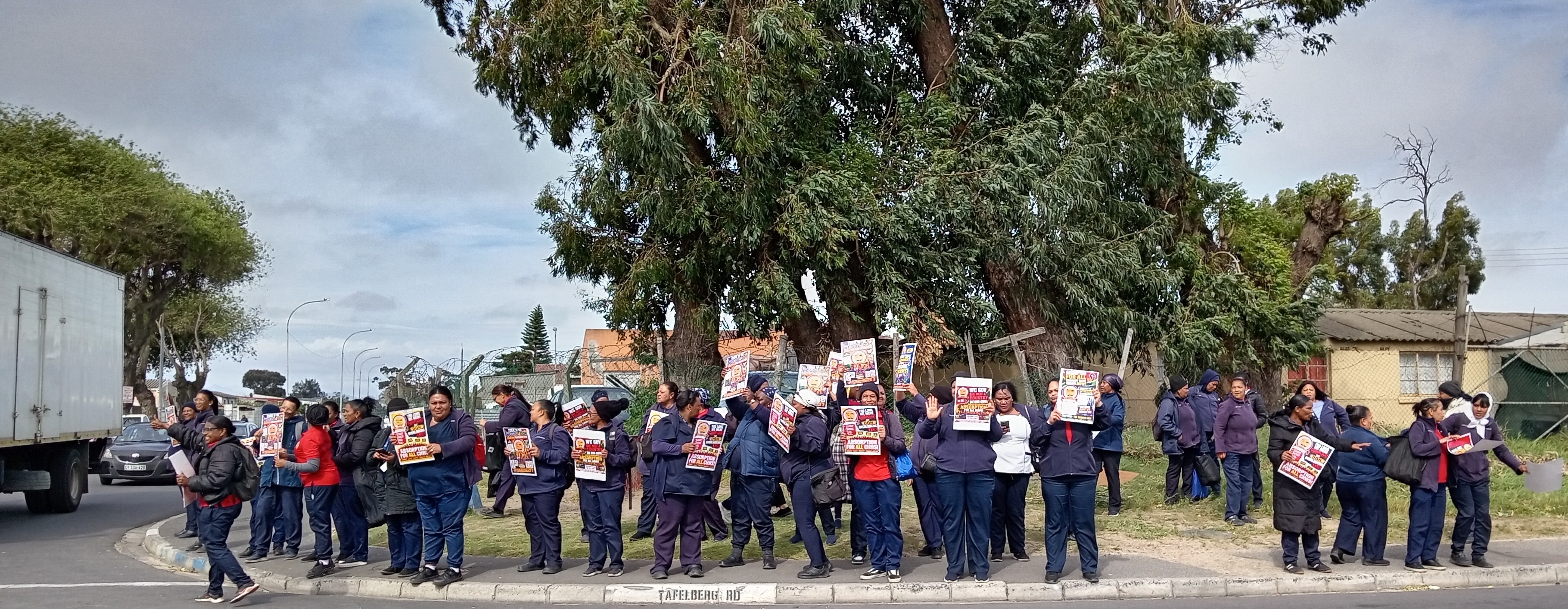
Members of the National Union of Public Service and Allied Workers protest with community health workers in Bishop Lavis, demanding permanent public service jobs. Photos: Abonge Chiya
- Community health workers, supported by the National Union of Public Service and Allied Workers, will stage protests across Cape Town this month to demand permanent jobs.
- They are currently employed by non-profit organisations contracted by the Western Cape Department of Health and Wellness.
- The department says it recognises and values the important contribution made by community health workers, but it currently has no plans to permanently absorb them.
Members of the National Union of Public Service and Allied Workers (NUPSAW) will hold protests with community health workers (CHWs) across Cape Town this month, demanding permanent public sector jobs.
The Western Cape Department of Health and Wellness (WCDHW) says it recognises and values the important contribution made by community health workers but has made no decision to permanently absorb them.
Last week, about 50 union members and community health workers employed by The Caring Network organisation in Bishop Lavis picketed at the police station.
They say that because they are employed by organisations and not the state, they only get a stipend and do not get benefits such as medical aid and pension.
“We are demanding to be permanently employed by the department of health,” said Jabu Khanyile, NUPSAW provincial organiser.
“We’ve been talking to the government several times. We’ve been marching, we’ve done everything. We are going to picket until someone with eyes and ears listens to us,” said Khanyile.
He said they chose to picket outside the police station because they wanted a safe place to demonstrate as “Bishop Lavis is a red zone”.
Salaama Abrahams has been a community health worker for eight years. “I visit approximately ten households per week through door-to-door visits. I also attend to patients who are referred to us by healthcare facilities,” said Abrahams.
“We want to provide the best possible service to our communities, but it becomes difficult when the necessary resources are not available,” said Abrahams.
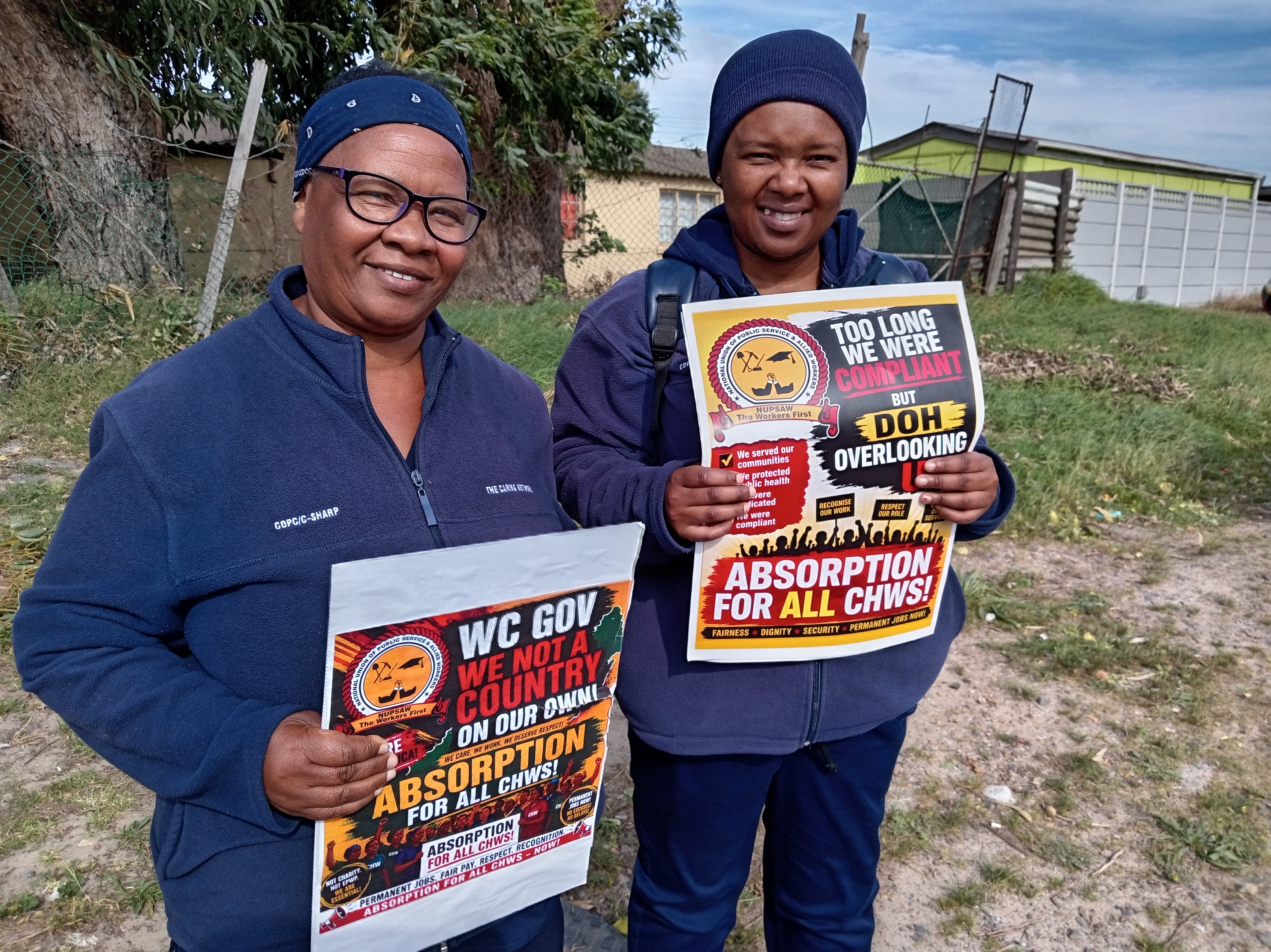
Bishop Lavis community health workers Hennah Idas and Sindisiwe Duma picketing.
“One of the biggest challenges is gang violence … It is not always safe for us to walk around or visit households. Despite these challenges, we continue trying to reach patients because many community members depend on the services we provide,” she said.
Abrahams said she is a single parent, and she battles to meet her monthly expenses with the stipend she gets.
“Having a proper and sustainable wage would make a significant difference to my household. It would provide greater financial stability, help us meet our basic needs with dignity, and allow me to contribute more meaningfully towards my family’s future. I believe the work we do in our communities should be recognised and fairly valued,” said Abrahams.
“We work every year without a salary increase … and there are no benefits,” said Hennah Idas, who is employed by The Caring Network.
Western Cape an outlier
In January 2025, the Johannesburg Labour Court ruled that community health workers, who for years were employed by the health department on recurring fixed-term contracts, must be deemed permanent government employees.
The Western Cape is the only province not included in the ruling because community health workers are employed through health organisations and not directly by the provincial department.
But NUPSAW has argued that the Western Cape department still has a responsibility to community workers in the province.
Dwayne Evans, spokesperson for the WCDHW, told GroundUp that the province operated with a different, long-standing service delivery model in which community health services are contracted through organisations.
“The WCDHW’s position remains that the Labour Court matter concerning the permanent employment of certain CHWs does not apply to the Western Cape in the same manner,” said Evans.
“Employment conditions, remuneration and benefits are matters between the employing organisation and its employees and should be confirmed by the respective employer.”
He said the department “takes concerns about the wellbeing and working conditions of people delivering healthcare services in our communities seriously”.
The Caring Network director Isabella Cootee said the organisation provides Integrated Health and Wellness Services in the Bishop Lavis community through funding from the Western Cape Department of Health and Wellness.
“As a funded non-profit service provider, The Caring Network’s role is to employ and manage staff in accordance with the conditions of its funding agreements, applicable labour legislation, and organisational policies while delivering essential health and wellness services to communities.”
“The recent picket was organised in support of CHWs’ concerns regarding employment matters. The Caring Network respects the constitutional rights of employees to participate in lawful and peaceful labour activities. However, the issues relating to permanent employment within the public health sector are matters primarily involving employees, organised labour, and the relevant government authorities. The Caring Network remains committed to ensuring the continued provision of quality integrated health and wellness services to the residents of Bishop Lavis and surrounding communities.”
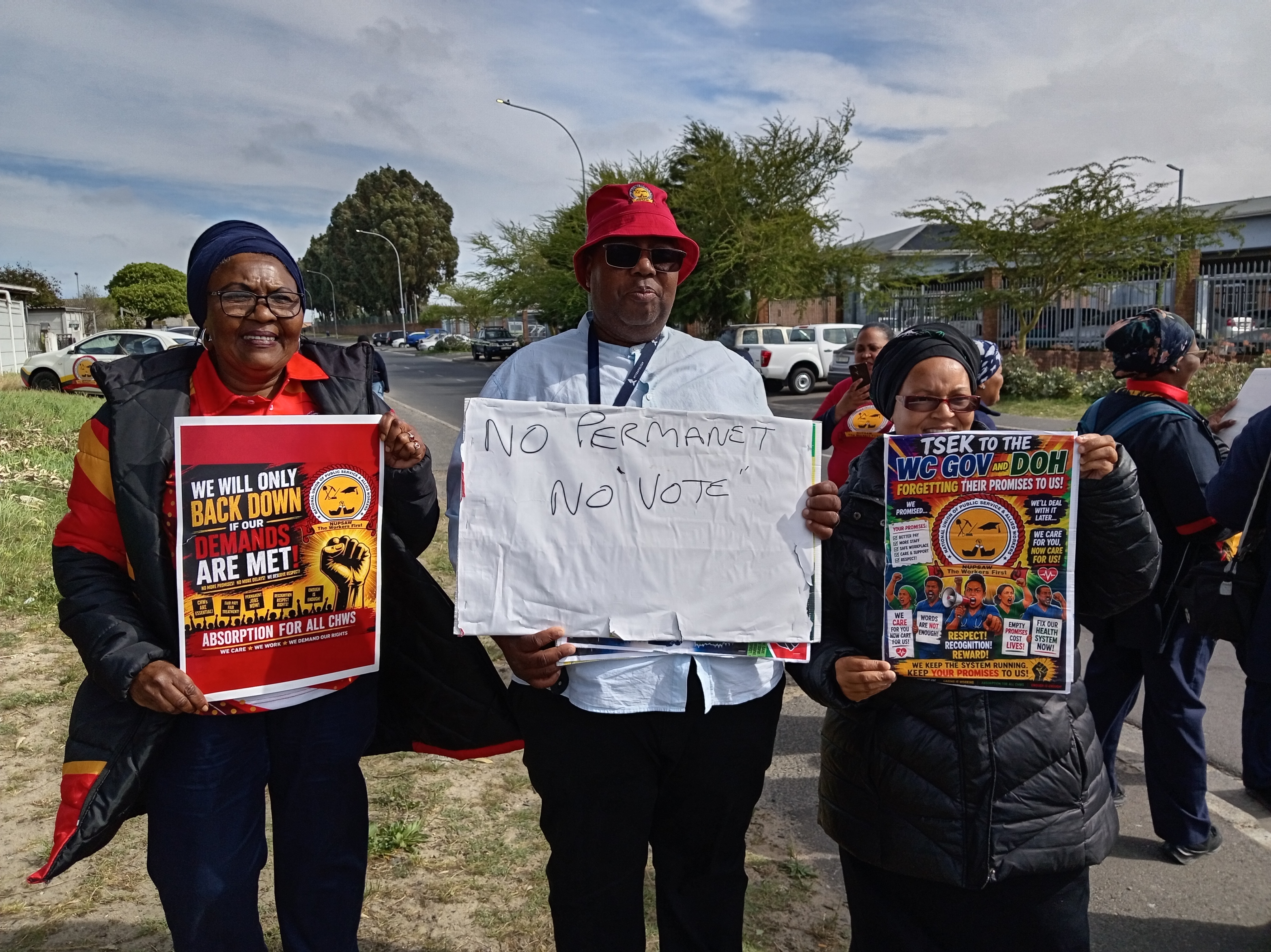
Community health worker Mary-Anne Jantjies, NUPSAW provincial organiser Jabu Khanyile and community health worker Salaama Abrahams.
Support independent journalism
Donate using Payfast

Don't miss out on the latest news
We respect your privacy, and promise we won't spam you.
Next: Asylum system reopens after ConCourt judgment
Previous: Thousands join 17th Walk for Freedom in Johannesburg
© 2026 GroundUp. This article is published under the GroundUp Republication Licence Version 1.0. Email [email protected] to request permission to republish.