
A R7-billion dam but no tap water for villagers in Lesotho
“We host this project. But we do not benefit,” says village spokesperson
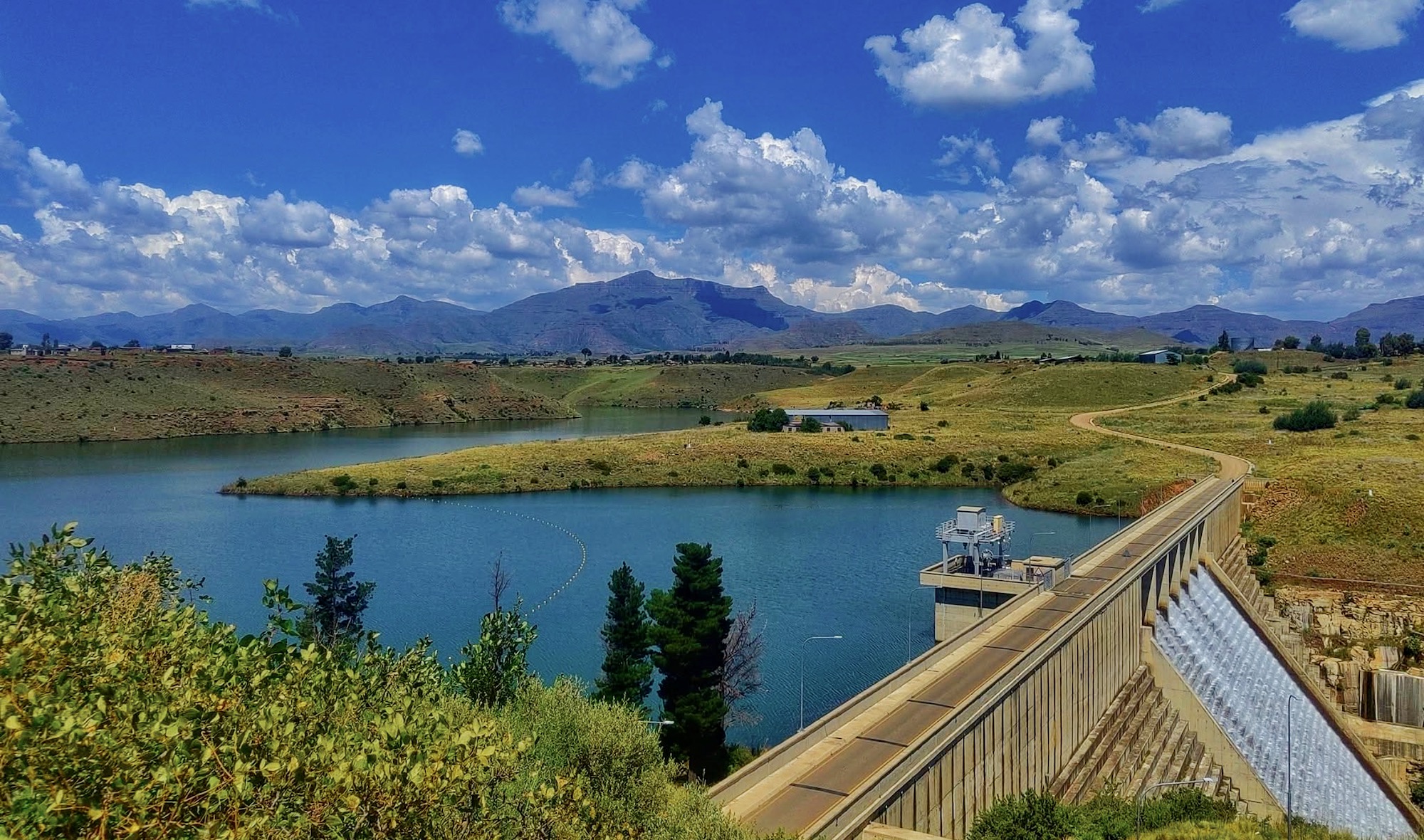
The Metolong Dam, built at a cost of R7-billion to supply water for Maseru, holds 63-billion litres of water. But communities living around the dam have no access to tap water. Photos: Sechaba Mokhethi
- Communities living around the Metolong Dam, built at a cost of R7-billion to supply water to Maseru and other towns, have no access to tap water.
- Instead they rely on water from untreated wells and streams shared with livestock.
- Pleas from the Machache Water Supply Movement have been ignored by government.
- Minister of Natural Resources Mohlomi Moleko says the communities will be supplied by the Greater Maseru Water Supply Project launched last year which is expected to benefit more than 90,000 people by 2040.
The Metolong Dam, built at a cost of R7-billion to supply water for Maseru, is designed to hold 63-billion litres of water. But communities living around the dam have no access to tap water.
Instead, they rely on untreated wells and streams, while water from the dam is piped to the capital 30km away, and to other towns, including Teyateyaneng, Morija, Mazenod and Roma.
Financed by a consortium of international lenders including the World Bank and the Lesotho government, the dam was completed in 2016.
In 2023, residents formed the Machache Water Supply Movement to press for access to safe, treated water.
“We host this project. It is on our land,” says spokesperson Masheane Nkhetše. “But we do not benefit.”
The movement has repeatedly tried to meet with the responsible minister, but without success. On one occasion, Nkhetše said, Minister of Natural Resources (then called the minster of water) Mohlomi Moleko, arrived two hours late and left shortly afterwards, citing an engagement with the Prime Minister.
Letters sent to Prime Minister Samuel Matekane have gone unanswered, according to the movement.
On 29 March 2024, the group wrote to Moleko, requesting an update on earlier promises that Machache would receive water once the dam was completed. They say they have never received a response.
On 30 May 2024, they wrote again to Moleko and copied senior government officials, including the Prime Minister. The committee expressed “dissatisfaction over the lack of progress regarding access to Metolong Dam water.” They also complained that they had waited “till late” for Moleko, who failed to pitch up to a 7am meeting he had scheduled.
On 7 October 2024, the committee requested the Prime Minister’s intervention. Nkhetše said the community has yet to receive a response.
Replying to GroundUp, Moleko did not address our questions about him having missed meetings. He said Machache and surrounding villages would receive treated water through the Greater Maseru Water Supply Project, launched last year and expected to benefit more than 90,000 people by 2040.
Meanwhile, residents fetch water from open sources shared with cattle, sheep and donkeys. Nkhetše said that in winter elderly residents must break through layers of ice on wells to reach water.
In Ha Ralejoe, GroundUp met Malira Maiketso pushing a wheelbarrow with two 20-litre containers she filled at a well 2.5km from her home. She said she sees the pipelines from the Metolong Dam passing her village on their way to Roma.
In Ha Phaloane, reliable wells are at the base of a steep cliff. Residents say they often see snakes here. Women report being harassed by shepherds while fetching water.
Marethabile Konyana, a teacher, said, “I can only come here during the day because it’s scary. If I find water finished late in the afternoon or evening, I just sleep without water and collect it the following day.”
The Ratau Community Council offices in Nazareth rely on rainwater tanks installed in 2020. Receptionist Palesa Mothibeli says the water stinks, and staff bring water from home.
At Little Dynamites Primary School, which has 160 learners, water tanks run dry during hot weather. Teacher Matlhohonolofatso Konyana said staff often drive to a neighbouring high school in Ha Ntsi to ask for water. Learners also fetch water from nearby wells with five-litre containers, and the school asks children to bring large bottles of water from home.
The Prime Minister’s press attaché Thapelo Mabote has not responded to GroundUp’s questions.
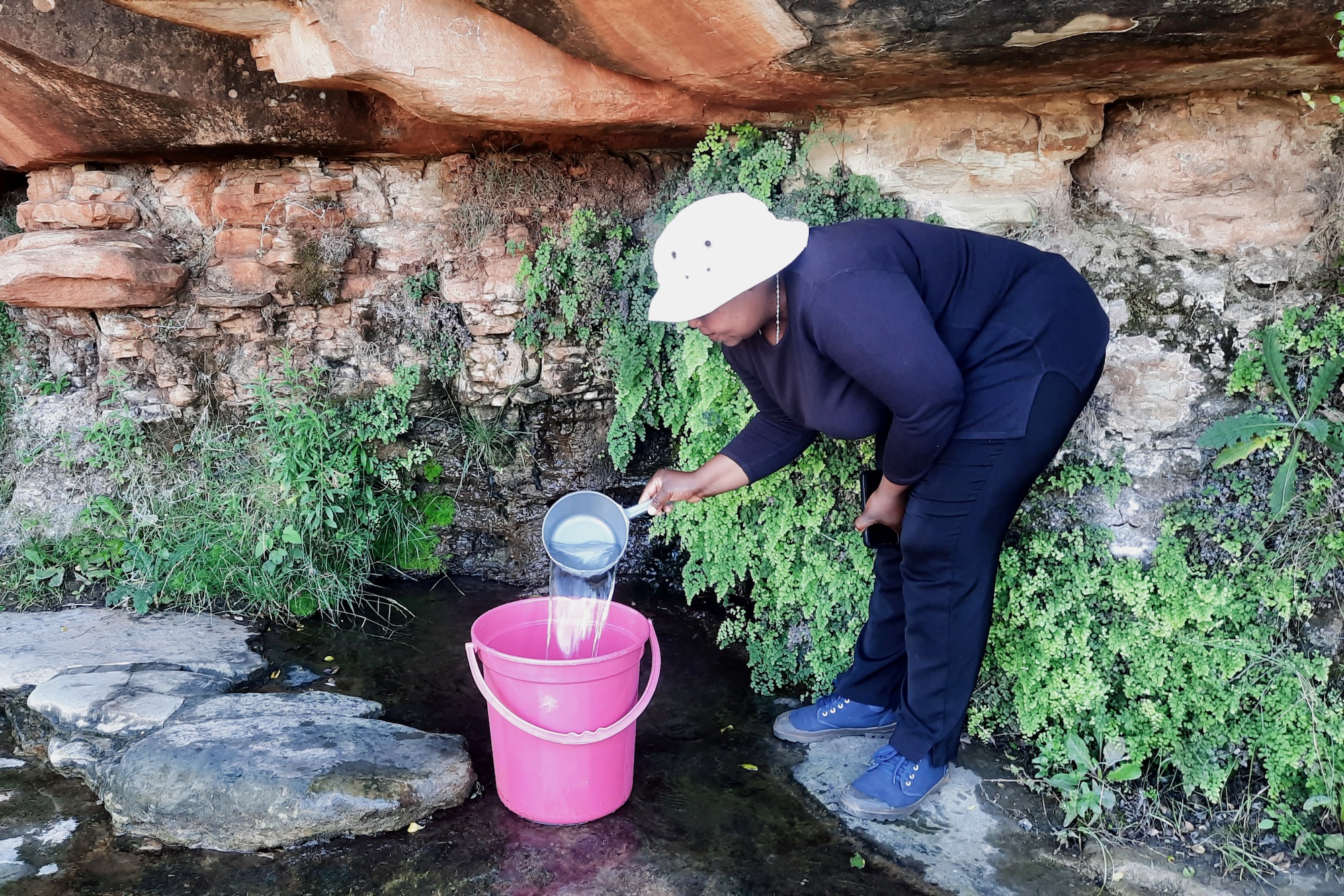
Marethabile Konyana, a teacher at Little Dynamites Primary Schooling, has to descend a steep cliff to fetch water from a well.
Support independent journalism
Donate using Payfast

Don't miss out on the latest news
We respect your privacy, and promise we won't spam you.
Next: Pensioners in court for seizing municipal vehicle
Previous: Hundreds march on Parliament demanding an increase in alcohol tax
© 2026 GroundUp. This article is licensed under a Creative Commons Attribution-NoDerivatives 4.0 International License.
You may republish this article, so long as you credit the authors and GroundUp, and do not change the text. Please include a link back to the original article.
We put an invisible pixel in the article so that we can count traffic to republishers. All analytics tools are solely on our servers. We do not give our logs to any third party. Logs are deleted after two weeks. We do not use any IP address identifying information except to count regional traffic. We are solely interested in counting hits, not tracking users. If you republish, please do not delete the invisible pixel.