
Central Karoo lags behind Western Cape’s progress
Teenage pregnancy, low birth weights, and high neonatal mortality plague the areas around Beaufort West and Laingsburg
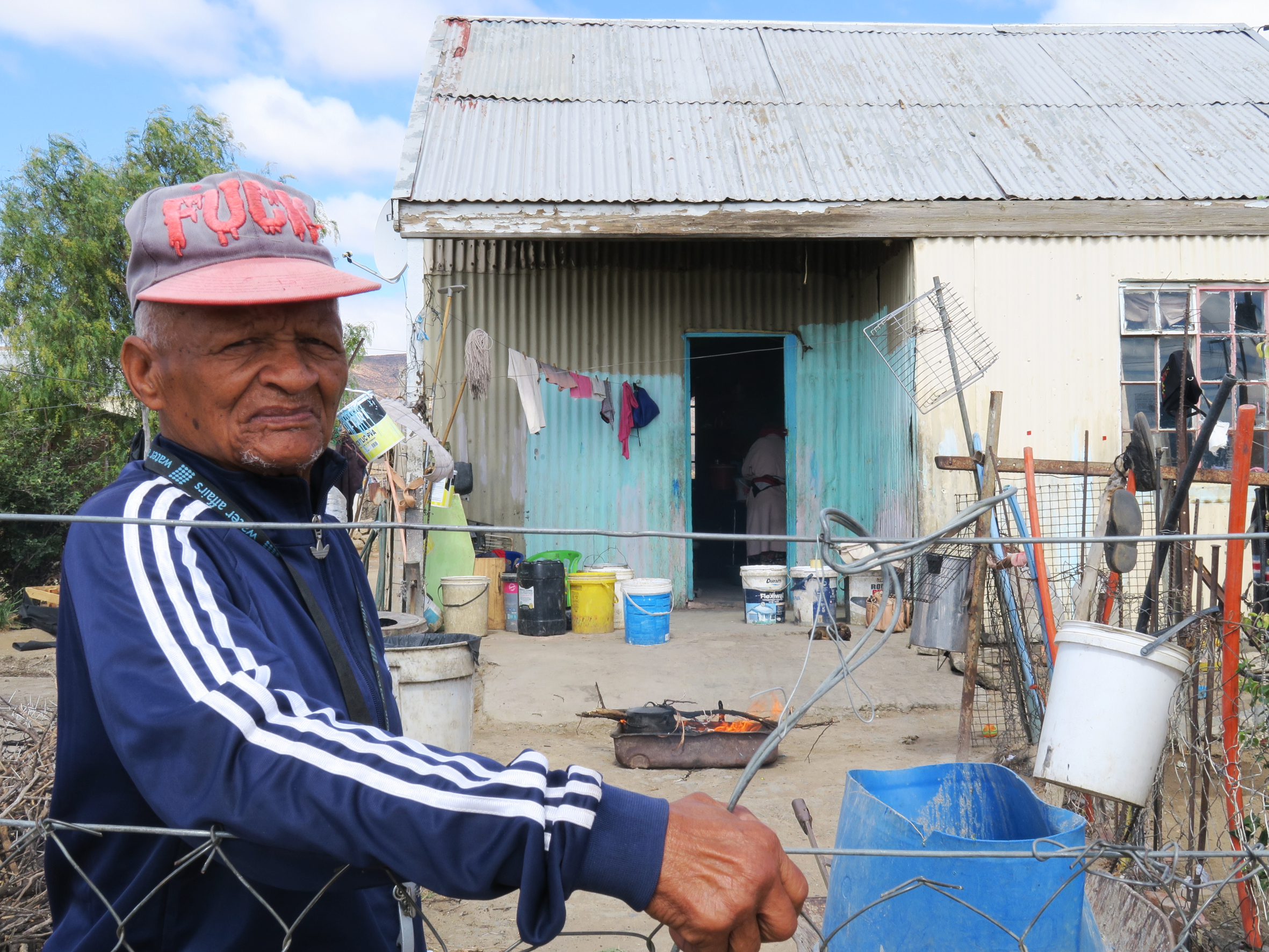
Hendrik Lottering, who lives in Matjiesfontein, is one of the many older inhabitants of Laingsburg Local Municipality, which according to the latest economic review by the Western Cape Government is experiencing an outward migration of young people in search of jobs and opportunity. The municipality has a neonatal mortality rate almost five times higher than the national average and more than two-thirds of all newborns suffer from low birth weight. Photo: Steve Kretzmann
- The Western Cape Municipal Economic Review and Outlook was tabled in the provincial Parliament on Thursday.
- The province is able to boast some economic growth against strong national and international headwinds, along with the lowest unemployment rate in the country.
- However, health and economic indicators in rural, and in some cases politically unstable, areas of the province are concerning.
Out of all district municipalities in the Western Cape, the Central Karoo scores worst on almost all indicators in the latest Municipal Economic Review and Outlook, tabled in the provincial legislature on Thursday.
The 2025/26 review, based on data from the previous financial year, paints a cautiously optimistic picture for the province overall, but reveals bleak conditions in its Laingsburg, Beaufort West and Prince Albert local municipalities.
The review is presented in detailed reports for each of the province’s five district municipalities and the Cape Town metro. Finance MEC Deidré Baartman presented an overview of the six reports in her address to the legislature.

Most of the province’s internal challenges are in rural districts, with the Central Karoo standing out.
Central Karoo’s Laingsburg local municipality had the highest neonatal mortality rate in the province, with 48.8 deaths for every 1,000 infants within the first 28 days of life. South Africa’s average rate is about 11.5 per 1,000.
More than a third (36.6%) of babies born in the Laingsburg municipality had low birth weights, followed by Kannaland in the Garden Route district with 31%.
“These figures reflect socio-economic pressures, gaps in reproductive-health education, and barriers to accessing contraception for adolescents,” said Baartman.
Teenage pregnancy was nearly 18% in Central Karoo, followed by the Garden Route district with 15%, and the Cape Winelands at 14%.
Although the Central Karoo had the highest overall prevalence, some Garden Route municipalities are hotspots. In both Hessequa and Knysna local municipalities, more than one in five teenage girls fall pregnant.
Nationally, the rate of teenage pregnancy is about 13%. The Western Cape has the second-lowest rate, and Gauteng has the lowest.
Baartman noted “marginal declines” in teenage pregnancies in several Overberg municipalities and the Cape Town metro over the past financial year, as well as declining rates in nine municipalities between 2022 and 2024. She attributed this to “strengthened reproductive health programmes and targeted community outreach”.
She said the provincial government “continues to make significant investments in expanding access to healthcare”.
Economic gains
Despite international geopolitical tensions, national infrastructure failures and local “climate shocks”, Baartman noted modest economic gains for the province.
The agriculture sector (about 5% of the province’s GDP) contracted by 8%, contributing to reduced economic output in the rural Central Karoo and West Coast, the only district municipalities where output declined.
Other municipalities, including the Cape Winelands, where agriculture contributes 10% to the regional GDP, are “growing marginally”. This was due to economic diversity, with the tertiary sector (trade, transport, finance, general government and personal services) acting as a stabiliser.
Services contribute “between 66 to 75% of output across districts”, said Baartman, serving as an “anchor activity” in all districts except Central Karoo.
Tourism was a key contributor to the province’s growth. Baartman said despite some “high-appeal” municipalities failing to capitalise on their advantages, tourism stabilises district economies by supporting small businesses and “absorbing labour”.
Challenges with freight, port, and rail – which are national responsibilities – “choked” the province and limited job creation in other labour-intensive sectors such as manufacturing, construction, and agriculture.
The Western Cape still recorded R210-billion in exports.
The Western Cape achieved the lowest unemployment rate in the country at 18%, but job creation remains a priority.
Speaking afterwards to high school learners who attended the legislature session, Premier Alan Winde said the next goal was bring unemployment down to 10%.
Meanwhile, the province’s population of 7.5 million is expected to grow by between 1.5% and 1.9% annually — an increase of roughly 112,500 to 142,500 people at the current population level.
Infrastructure investment
The most direct way to stimulate the provincial economy was through municipal infrastructure investment, said Baartman. Across all municipalities this financial year, R18.1-billion will be spent on capital assets and infrastructure. The largest infrastructure spend is in the Cape Town metro, with a R12.6-billion capital budget.
Among district municipalities, the Garden Route had the highest capital expenditure at R2-billion, followed by the West Coast District with R939-million.
The Central Karoo will spend R128-million, mainly on roads and water, and the N1 corridor, which is critical for freight and tourism. Although this is the lowest capital budget among districts, it is the highest per capita spend in the province – R15,609 per person.
Baartman said this reflects “a deliberate focus by the Western Cape Government to invest in the region by building on the basics”.
Municipal capital spending will be reinforced by a “growing pipeline of public and private investment commitments” totalling R24-billion between the 2025/26 and 2027/28 financial years.
Within this, R541-million will fund 25 projects in the Central Karoo, investing in housing, transport, health facilities, education, environment, and development planning.
Baartman said the Western Cape Government was committed to working with municipalities, the private sector, and residents to maintain what was working and fix what was not.
Support independent journalism
Donate using Payfast

Don't miss out on the latest news
We respect your privacy, and promise we won't spam you.
Next: Nine taxis torched in Nyanga
Previous: Canegrowers warn Tongaat liquidation will devastate economy
© 2026 GroundUp. This article is licensed under a Creative Commons Attribution-NoDerivatives 4.0 International License.
You may republish this article, so long as you credit the authors and GroundUp, and do not change the text. Please include a link back to the original article.
We put an invisible pixel in the article so that we can count traffic to republishers. All analytics tools are solely on our servers. We do not give our logs to any third party. Logs are deleted after two weeks. We do not use any IP address identifying information except to count regional traffic. We are solely interested in counting hits, not tracking users. If you republish, please do not delete the invisible pixel.