
New battle looms over future of Tokai and Cecilia pine plantations
SANParks ordered by forestry department to clear all remaining pines
 Add GroundUp on Google
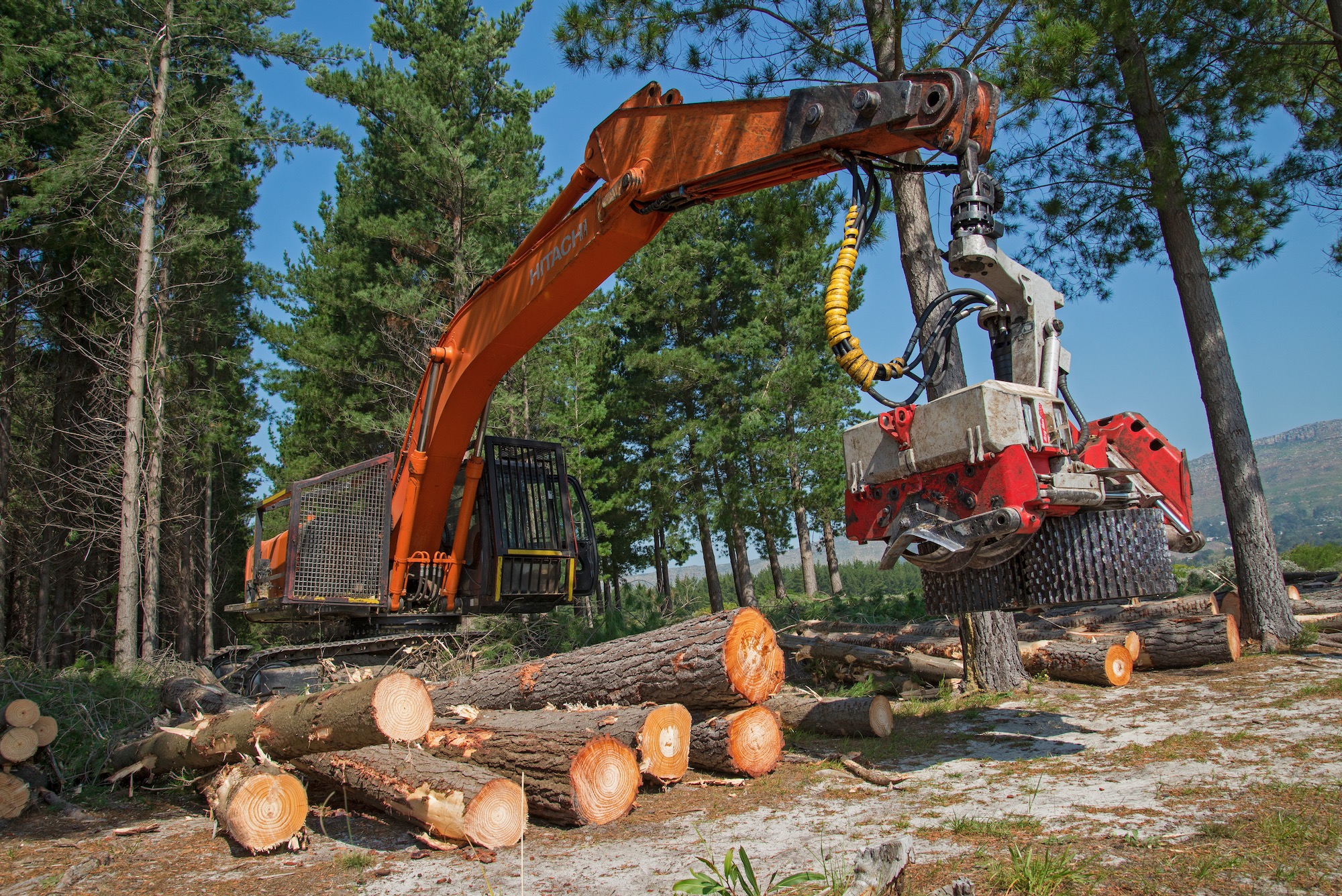
Harvesting pine trees in the Dennedal compartment of Lower Tokai on 30 August 2016. Work was halted later that day by an urgent High Court interdict. Photos: John Yeld
- Department of Forestry, Fisheries and the Environment has issued a directive to SANParks to remove pines and other invasive trees from former Tokai and Cecilia plantations in Cape Town.
- The lease to harvest pines in the Table Mountain National Park expired in January 2025. This means the pines no longer have protected plantation status.
- Provision can be made for shaded walkways along the perimeters of some former pine blocks using indigenous trees.
A new push to promote ecological restoration in the Table Mountain National Park (TMNP) and reduce fire risk could see the removal of all remaining pine trees and other invasives from former plantation areas at Tokai and Cecilia.
This is if the South African National Parks (SANParks) confirms and acts on its legal obligation to implement a recent directive from the national Department of Forestry, Fisheries and the Environment (DFFE) to clear remaining alien species, such as pines, some eucalyptus gums and poplars from the two areas.
But the directive could include the creation of shaded walkways the perimeters of some cleared areas that involve the use of some pines for a short period.
Protection expires

Harvesting of commercial timber at Lower Tokai and Cecilia has been stalled for a decade, following a successful High Court interdict in November 2016 by a then newly established community group, Parkscape.
DFFE’s current directive was addressed to TMNP manager Megan Taplin and sent on 17 June, warning the park to comply with the National Environmental Management: Biodiversity Act (NEMBA) to control listed invasive species and to remove such species from its properties.
The lease to harvest pine trees in the two plantations expired in January 2025.
DFFE has been reminded that neither it nor SANParks is legally empowered to extend an expired contract. This means both Tokai and Cecilia no longer enjoy legal status as plantations, and the remaining pines no longer have protected status and must be removed.
In recent weeks, there have been acrimonious social media posts about the future of the former plantation areas and the value of alien clearing efforts in various areas of the Park, notably in the Upper Tokai where initial clearing was done after the huge fire of 2015.
The latest development will inflame longstanding tensions between environmentalists involved in restoration efforts in the former plantation areas (Tokai and Cecilia were both established on what are now critically endangered vegetation types) and those who want to retain the remaining blocks of pine trees, for recreational use and shade.
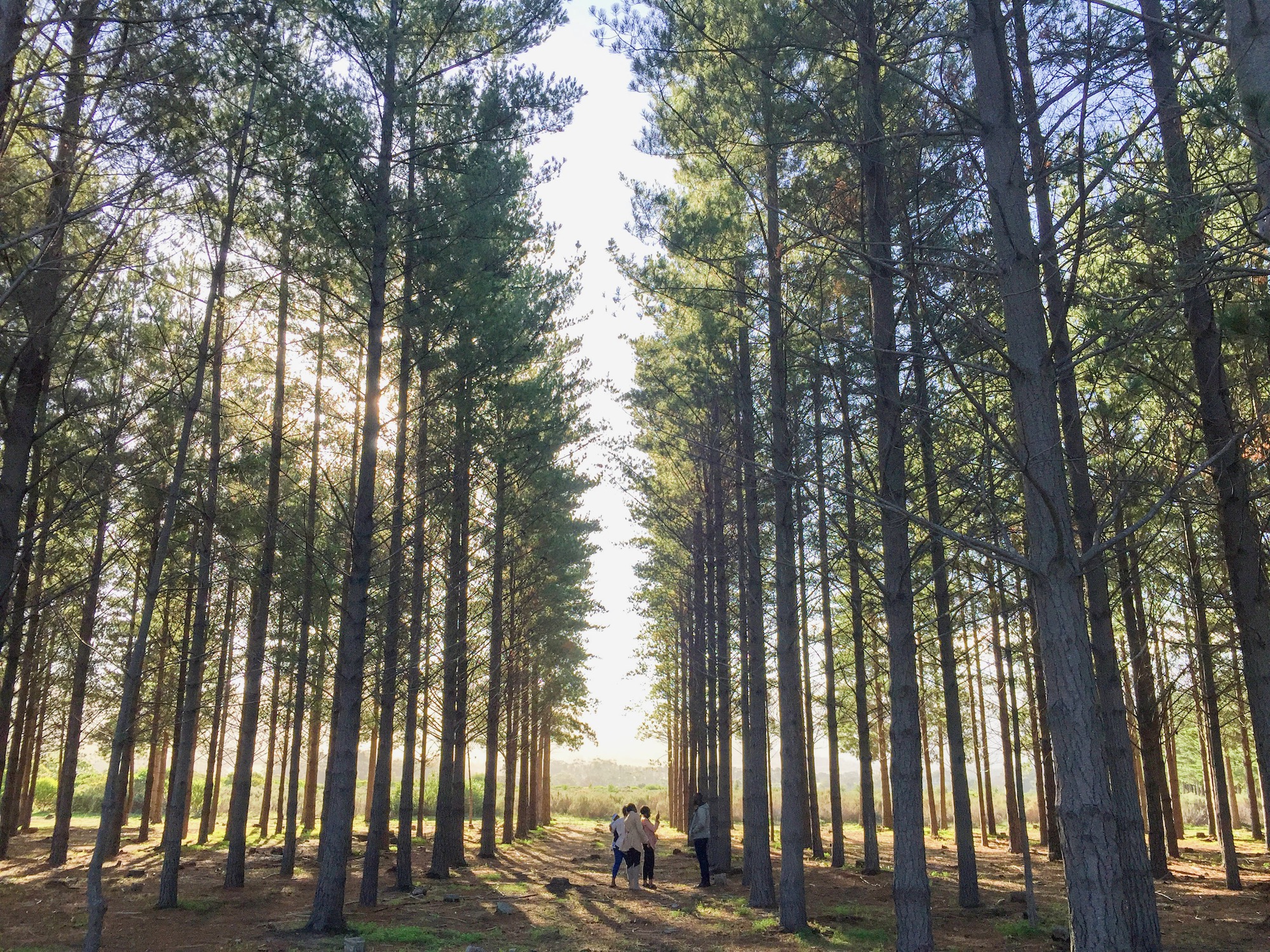
The Dennedal compartment of Lower Tokai pine plantation where no harvesting has occurred since 2016.
20-year lease
The 2016 interdict application centred on a 20-year lease to harvest pine trees in the Park. It was signed in January 2005 by SANParks and privately-owned timber company, Mountains to Oceans Forestry (MTO).
However, a massive fire swept through large parts of the Park in 2015, severely damaging pines over some 600-hectares, including in the Dennedal compartments of Lower Tokai.
As a result, MTO successfully applied, on business grounds, to SANParks to accelerate harvesting the remaining, undamaged pines.
But when clear-felling operations started on 30 August 2016 at Dennedal – an area popular with hikers, dog walkers and cyclists – many users were taken by surprise.
Parkscape was hastily convened as an organisation, initially to oppose further harvesting of pine trees in Dennedal, but the group subsequently broadened its mission to “promoting urban recreational areas in buffer zones around the TMNP”.
Parkscape’s application was upheld by the High Court. Judge Pat Gamble ruled that changing the agreed clearing schedule without further public consultation had contravened the Tokai Celia Management Framework and constituted procedural unfairness.
In terms of the interdict, no further felling of pines was permitted at Dennedal, pending a new public participation process.
The judge noted that there was no legal right to shade.
SANParks appealed, but the interdict decision was upheld by the Supreme Court of Appeal.
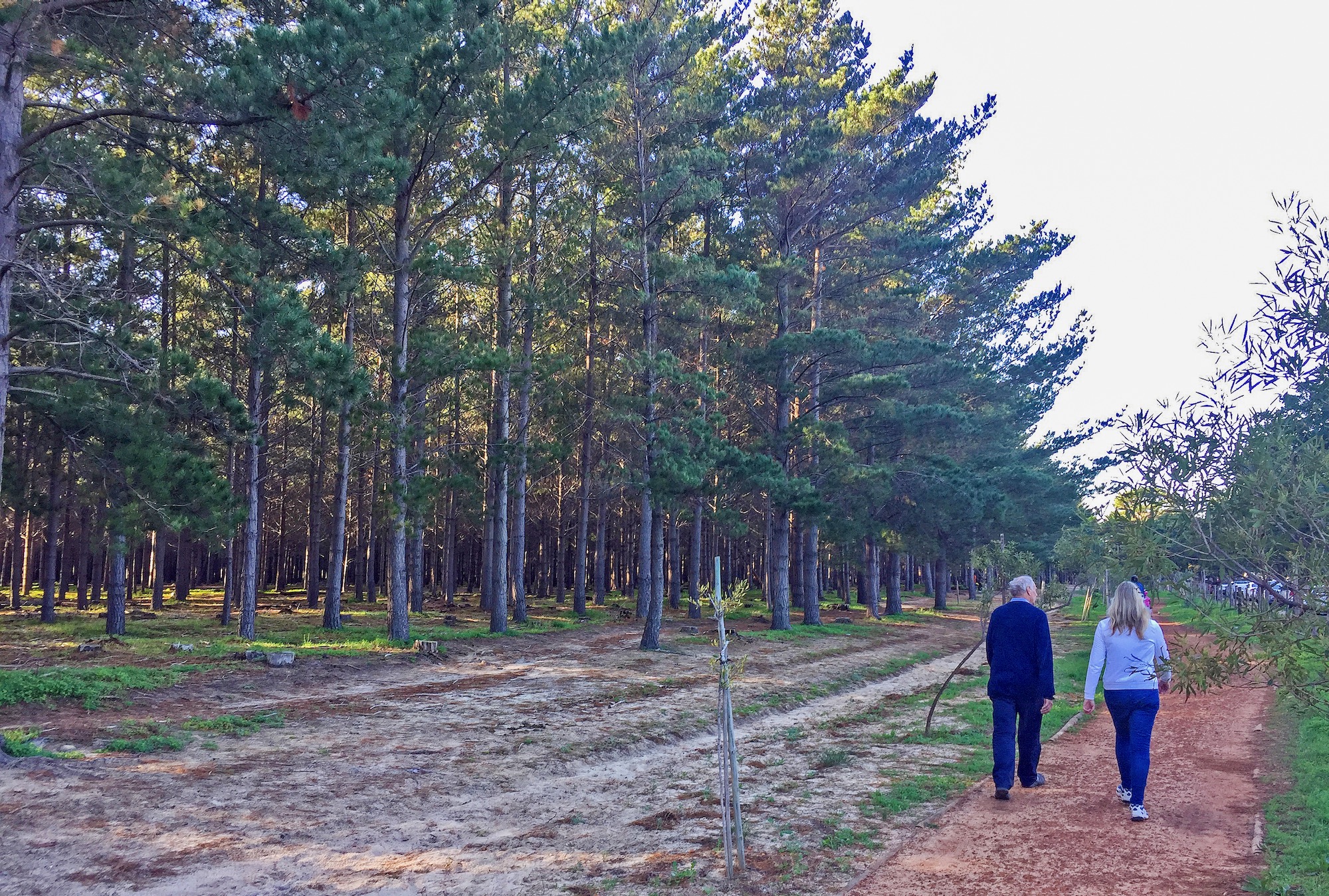
The walking and riding track along the southern perimeter of the Dennedal compartment of Lower Tokai plantation. Photo taken in 2018.
Now, a new round in the saga has been initiated by Guy Preston of Hout Bay. When he retired in 2020, Preston was deputy director-general for environmental programmes at DFFE, with responsibilities that included managing invasive species.
Pines and a handful of other commercial species, such as some eucalypts and poplars in these plantations, are among 383 terrestrial plants listed in the Alien and Invasive Species (AIS) regulations promulgated under NEMBA in 2020. Preston was one of the chief architects of the regulations.
On 24 May he sent a letter to DFFE, requesting it to serve notice on SANParks to clear invasive plants from the two former plantations: Lower Tokai (Dennedal) and Cecilia above Constantia. Preston quoted section 74(1) of NEMBA: “Any person may request a competent authority, in writing, to issue a directive in terms of section 73(3)” – the section that relates to the statutory duty of care to deal with listed invasive species.
There are four categories of listed invasives which impose different responsibilities on landowners:
- Category 1a: Invasive species which must be combatted and eradicated. Any form of trade or planting is strictly prohibited;
- Category 1b: Invasive species which must be controlled and wherever possible, removed and destroyed. Any form of trade or planting is strictly prohibited. Plants in riparian areas fall into this category;
- Category 2: Invasive species, or species deemed to be potentially invasive, where a permit is required to carry out a restricted activity. Category 2 invasives include commercially important species such as pine, wattle and gum trees that are cultivated and harvested under permit;
- Category 3: Invasive species which may remain in prescribed areas or provinces. However, further planting, propagation or trade is prohibited.
In his letter, Preston said the plantations were legal in term of the original agreement between the then Departments of Environmental Affairs and Water Affairs and Forestry (DWAF) when establishing the Table Mountain National Park. But the lease to harvest these trees expired in January 2025, and neither DFFE nor SANParks was legally empowered to extend an expired contract.
Preston wrote, “These erven in the park are therefore no longer legal plantations”.
He pointed out that the now mature Monterey pines in the Dennedal compartments in Lower Tokai had been established on what was critically endangered Cape Flats fynbos vegetation. “In terms of the listing of the Monterey Pines in the AIS Regulations, they are category 1b, being within a protected area, and must be removed.”
Similarly, the Cecilia plantation was on critically endangered Peninsula granite fynbos and Southern Afro-temperate forest vegetation.
“Here [Cecilia], there were still stands of Monterey pines, cluster pines, canary pines, sugar gums, karri and grey poplars. These are all now Category 1b species in terms of the AIS Regulations, and must be removed,” he wrote.
Besides being illegal and having a detrimental impact on two critically endangered vegetation types in the fynbos biome, the invasive trees were also impacting water security and were a very significant fire risks. “They are also more dangerous in terms of falling over, or shedding branches, having lost the protection of the trees that have been harvested,” wrote Preston.
He added that grey poplars were an accelerator species for the polyphagous shot-hole borer that is currently posing a serious threat to Cape Town’s urban forests.
“You are requested to serve notice on SANParks to clear these erven of listed invasive species forthwith,” his letter concluded.
Preston told GroundUp it was “unthinkable” that SANParks could allow land to continue to be under invasive plants at the potential cost of the extinction of indigenous species.
“The law is quite clear that the trees must now be removed. You cannot have listed invasive trees forming a recreational area in a National Park.”
But there was also “an easy compromise” for the authorities, Preston suggested.
“Retain a few rows of pine trees on the periphery of Tokai Park, plant non-invasive shade trees, water them until they are of a reasonable size, and then remove the remaining pines. You then retain a shaded walkway for those [people] living in the area.”
A similar approach could be considered in Cecilia where there were already areas of indigenous forest, he added.
Although SANParks is nominally an independent body, it falls within the political responsibility of, and derives most of its income from, DFFE.
DFFE confirmed sending the directive to Taplin on 17 June and told GroundUp that SANParks acknowledged receipt. A follow-up meeting to discuss progress will be held.
Taplin has been on leave.
SANParks has been asked to comment, but had not yet responded at the time of publication.
The Sugarbird Project, one of the organisations involved in clearing invasive plants in the Park, has invited the public to a demonstration of its work on Saturday 25th. Meet at the Tokai Picnic Area at 8:30am.
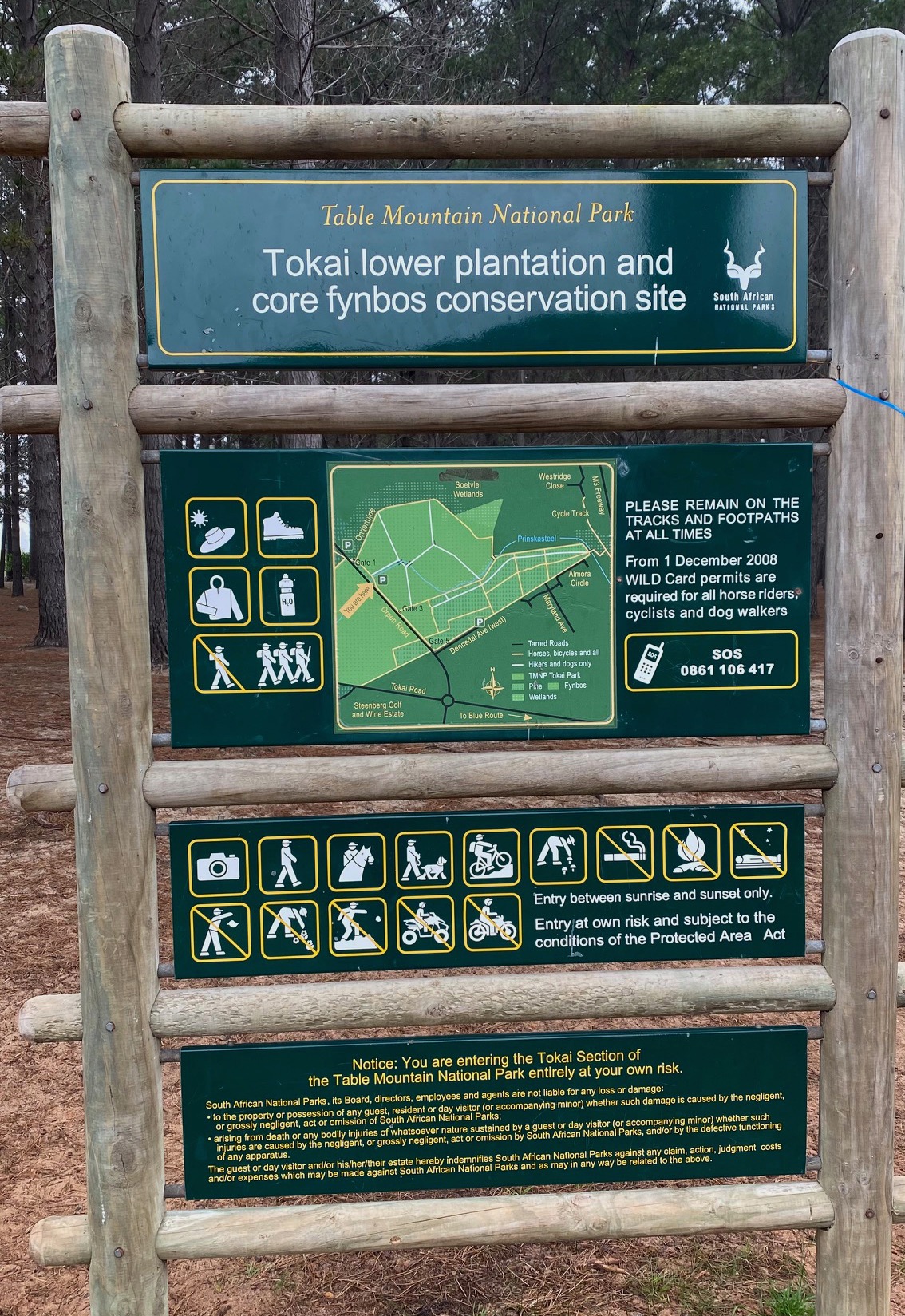
A Table Mountain National Park notice board explaining the layout of Lower Tokai Park.
Support independent journalism
Donate using Payfast

Don't miss out on the latest news
We respect your privacy, and promise we won't spam you.
Next: Botrivier farm owner accused of “constructive eviction” tactics
Previous: Lesotho citizens lose millions to SGK pyramid scheme
Letters
Dear Editor
I mountain bike extensively in the Tokai area. I'm also involved in alien clearing.
Large parts of the upper section of Tokai have been cleared of the pine plantations, and large parts of this land have been reinfested with other, worse alien growth: Port Jackson, Wattle & I think some Hakea.
It's a mess compared to what it looked like when the Pine plantations were properly managed. And it's going to cost a lot of money to rectify this situation. The outcome is very far from ideal.
© 2026 GroundUp. This article is published under the GroundUp Republication Licence Version 1.0. Email [email protected] to request permission to republish.