29 July 2026
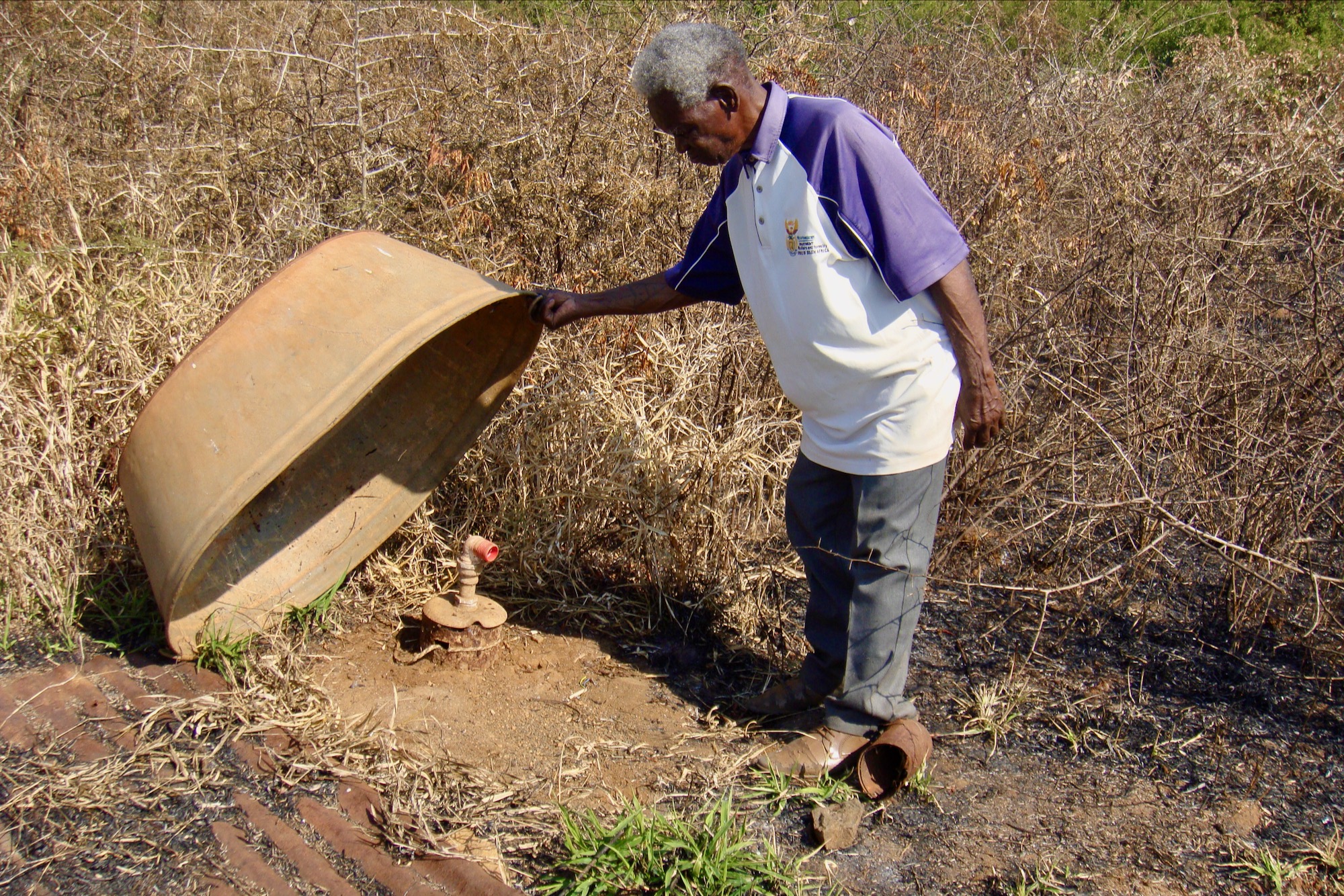
Ephraim Hlungwani shows the donor-funded borehole which is no longer operational due to cable theft. Photo: Bernard Chiguvare.
Ephraim Hlungwani is 86 and the owner of Xifaki Farming, which he runs with his son, George, as its manager in Thomo village outside Giyani in Limpopo. But because of water shortages, his 16-hectare farm has shrunk and is a shadow of what it could have been had the government delivered on its promises.
Hlungwani, who is also chair of the Middle Letaba Water Users Association, says he is among 72 farmers still waiting for irrigation water to be provided by the Giyani Water Project.
The bulk water project began in 2014 and was expected to be completed by 2017. Billions have been spent, and the project, mired in delays, corruption allegations and broken promises, is ongoing.
“Each water minister made promises, but none delivered a solution,” says Hlungwani. “We are tired of such promises from ministers. They come and go while we continue struggling to get water.”
About 800 metres from Hlungwani’s farm is a canal, but he never used it because he did not have a water licence then. When his licence was approved in 2007, water had stopped flowing through the canal. A year later, the canal was decommissioned due to low water levels.
A March 2025 water department report recommended replacing it with a pipeline. The report noted: “the Giyani bulk water pipelines and reticulation projects are at various stages of construction”. The pipeline is classified as a “long-term” intervention.
Thomo is among 29 villages supplied by the Mapuve water works adjacent to the canal running between the Middle Letaba and Nsami dams.
The report noted that water issues were “exacerbated by the department not taking timeous action to address the system underperformance”.
Hlungwani has grown vegetables, such as carrots, beans, tomatoes, pumpkins and onions, commercially since 2009 after a donor-funded borehole was sunk. But last year, thieves stole the electricity cables, rendering it unusable.
Before the theft, he’d secured a five-year contract to supply local Spar supermarkets and a Johannesburg market.
But without adequate irrigation, he has had to scale down, growing vegetables on less than a quarter of a hectare and selling them on the street. He used to have ten employees, but can only pay three now. They work Monday to Friday fetching water with buckets from the Nsami, about 200 metres away.
Had the Giyani water project been successful, Hlungwani and other farmers would be in a very different situation today.
