
This water project started 20 years ago. But taps are still dry
Eastern Cape villagers say at least four contractors have worked on the Buthongweni Water Supply Scheme
 Add GroundUp on Google
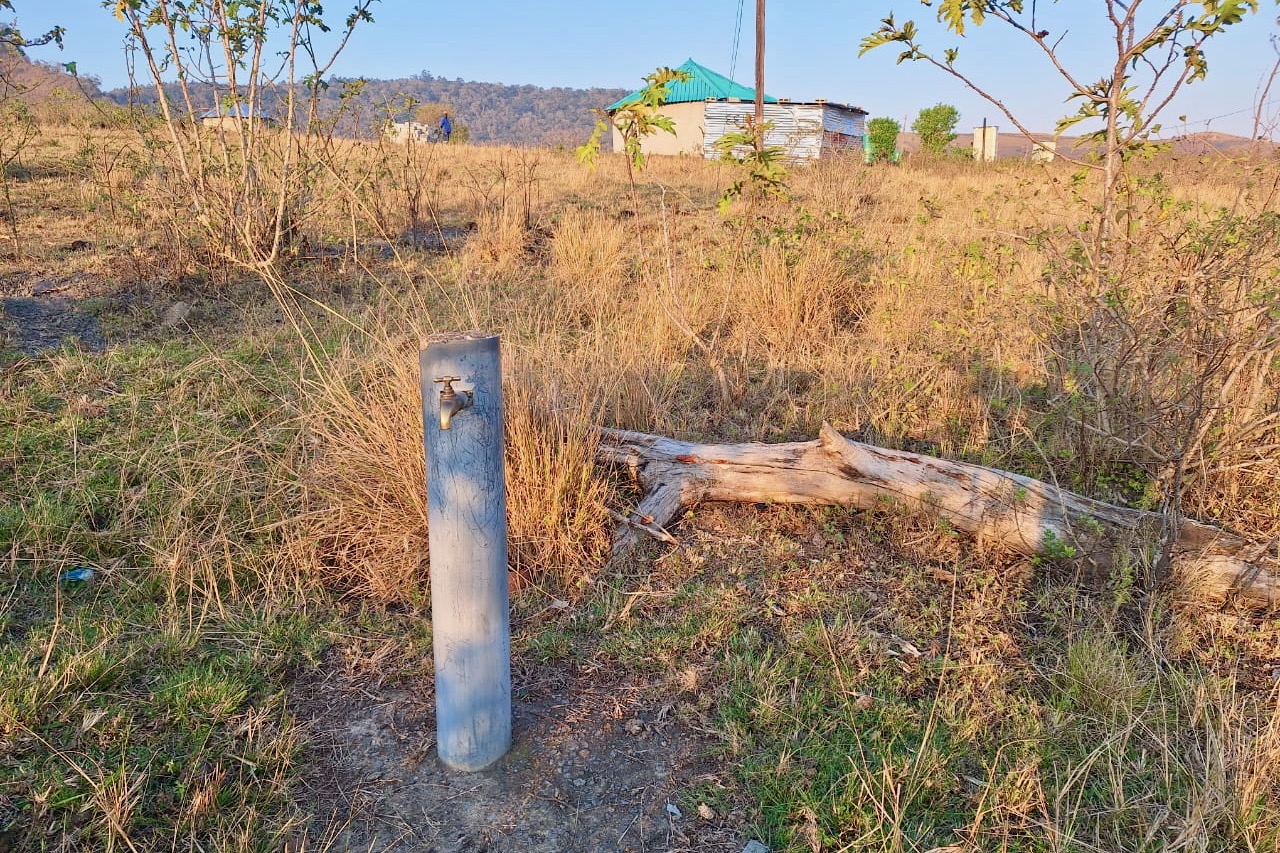
Chief Mfanelo Mnatule says this tap installed in 2016 in Mntsholobeni village near Mthatha, Eastern Cape, has never seen water, and neither have the taps installed in 2009. Photos: Nombulelo Damba-Hendrik
- Villagers near Mthatha say a water scheme started in 2006 has never delivered water to them, even though taps were installed between 10 and 17 years ago.
- Residents say at least four contractors have worked on the Buthongweni Water Supply Scheme.
- The OR Tambo District Municipality says the project faced contractual, technical, electricity and community-related problems.
- The municipality says the scheme is now operating on a rationing schedule, but GroundUp found dry taps. Villagers said they still rely on untreated water.
A water scheme that began 20 years ago to supply thousands of households near Mthatha, Eastern Cape, is still unfinished. Residents of villages around Ngqeleni say that over the decades they have seen at least four contractors come and go.
The Buthongweni Water Supply Scheme was meant to serve about a dozen villages – including Buthongweni, Mabhetshe, Zingonyameni, Mhlakotshane, Qokama, Sidanda, KwaZulu, Mntsholobeni, Mayalweni, Lushini and Sikhova.

According to resident Zamekile Dyubhele, the first contractor left in late 2007 after installing several pipes and building a tank. Water was to come from the Ngqeleni dam.
A second contractor, appointed in 2009, installed taps and raised the villagers’ hopes, said Dyubhele. But that contractor also left.
In 2016, another contractor arrived.
“We were hoping that they would finally finish the project … Unfortunately, they also left,” said Dyubhele.
He said the contractor did build another big tank, but spent most of its time fixing pipes laid by previous contractors.
“There are guards who are looking after the machines at the Ngqeleni dam. I’m sure they are being paid. What we see is that the municipality keeps on pumping money while the project keeps on failing,” he said.
Dyubhele said a fourth contractor started work in 2024, but made little progress.
“Even this new contractor, it looks like it is repeating what the previous contractors did, fixing what was already done,” said Dyubhele.
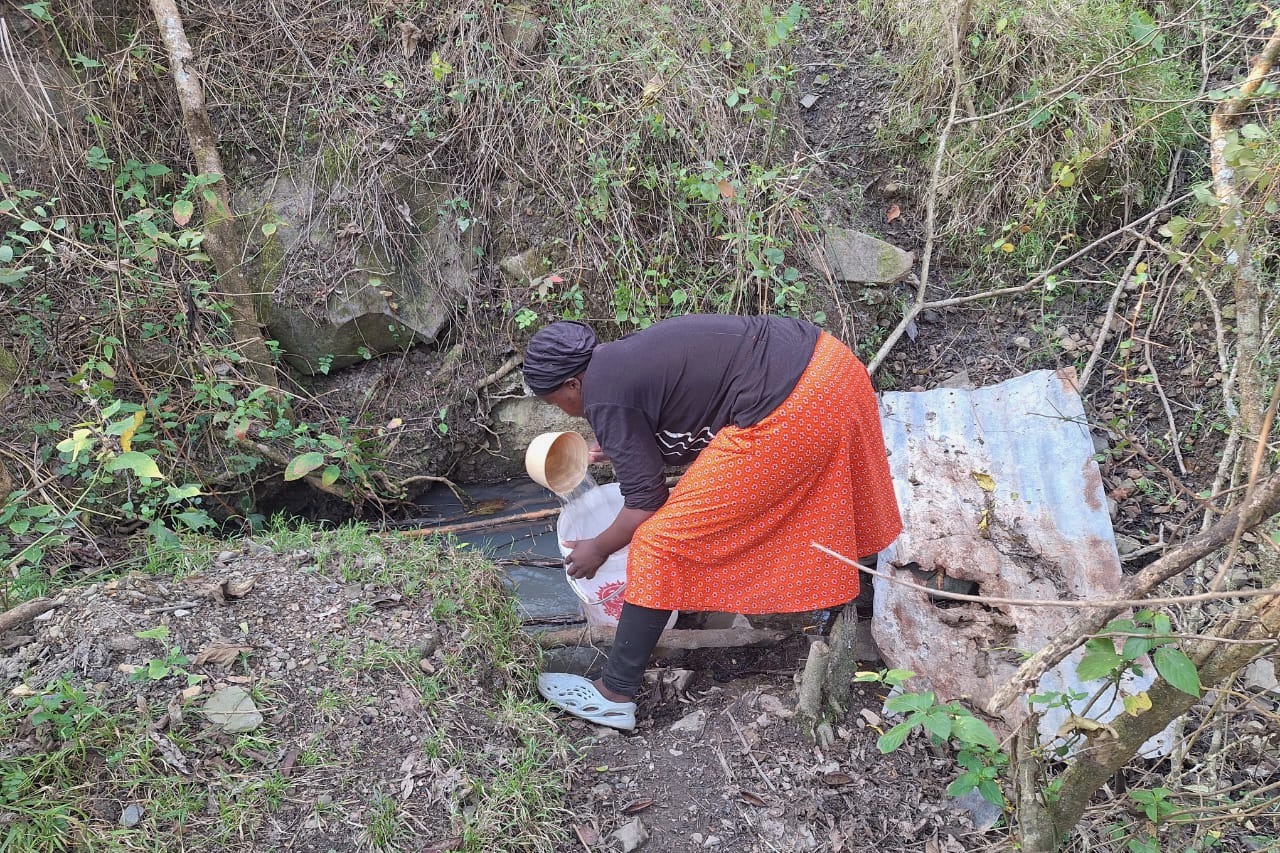
Villagers of Qokama collect water from this stream.
The OR Tambo District Municipality did not say how much has been spent on the scheme since 2006.
According to OR Tambo District Municipality spokesperson Ncebakazi Kolwane, the Buthongweni Water Supply Scheme was hindered by contractual issues and could not be fully commissioned because there was no electricity supply from Eskom to energise the raw water abstraction works and the water treatment plant.
She said this left the infrastructure idle for a prolonged period, and it was vandalised. The municipality started a refurbishment project in 2009. Generators were installed to power the extraction and treatment of the water.
She said the refurbishment was completed, but then there were further delays when residents demanded that they be employed as plant operators and security personnel. She said, “The municipality accommodated some of these requests, allowing the scheme to be partially … brought into operation.”
However, further problems arose when the reticulation network was damaged during road construction.
She said the municipality repaired the damaged pipes in 2016, which restored the functionality of the scheme and enabled water supply.
In 2024, the generator failed. The municipality carried out several repairs, but there were recurring breakdowns. A new generator was delivered in November 2025. She said the scheme has been operational since then. Water is supplied through a rationing schedule to keep the system stable.
“Although the scheme is operational and supplying communities through a rationing schedule, some parts of the reticulation network continue to experience leakages and plumbing-related faults, which can delay supply to certain villages,” said Kolwane.
Chief Mfanelo Mnatule, who lives in KwaZulu village, told GroundUp that villages in his area have taps, but they have never produced a single drop of water. He said people rely on untreated water. He challenged the municipality to visit the villages.
“Since this project started in 2006, we have never received water from it. The only thing that we see is the changing of contractors, and we don’t even know what is happening. As residents, we are kept in the dark,” he said.
“Even now there’s a contractor working and fixing the water infrastructure, but we are still waiting. Currently, we are sharing water with animals, while some people have bought water tanks,” he said.
“We are not getting any proper explanation from our municipalities about the project,” said Mnatule.
GroundUp visited several villages, including Qokama, Mabhetshe and Sizindeni. Their taps were dry. Several residents told us that the taps had never had water.
“It would not be accurate to characterise the successive interventions as failed projects. Rather, the municipality has undertaken various phases of construction, refurbishment and restoration in response to changing technical and operational challenges,” said Kolwane.
Kolwane said the municipality attended to faults as they were reported, and “maintenance teams continue to undertake repairs to improve the reliability of the system”.
Support independent journalism
Donate using Payfast

Don't miss out on the latest news
We respect your privacy, and promise we won't spam you.
Next: Two years into her tenure, Gwarube faces a R140-billion school infrastructure crisis
Previous: One year later, sewage is still running through these Cape Town streets
© 2026 GroundUp. This article is published under the GroundUp Republication Licence Version 1.0. Email [email protected] to request permission to republish.